
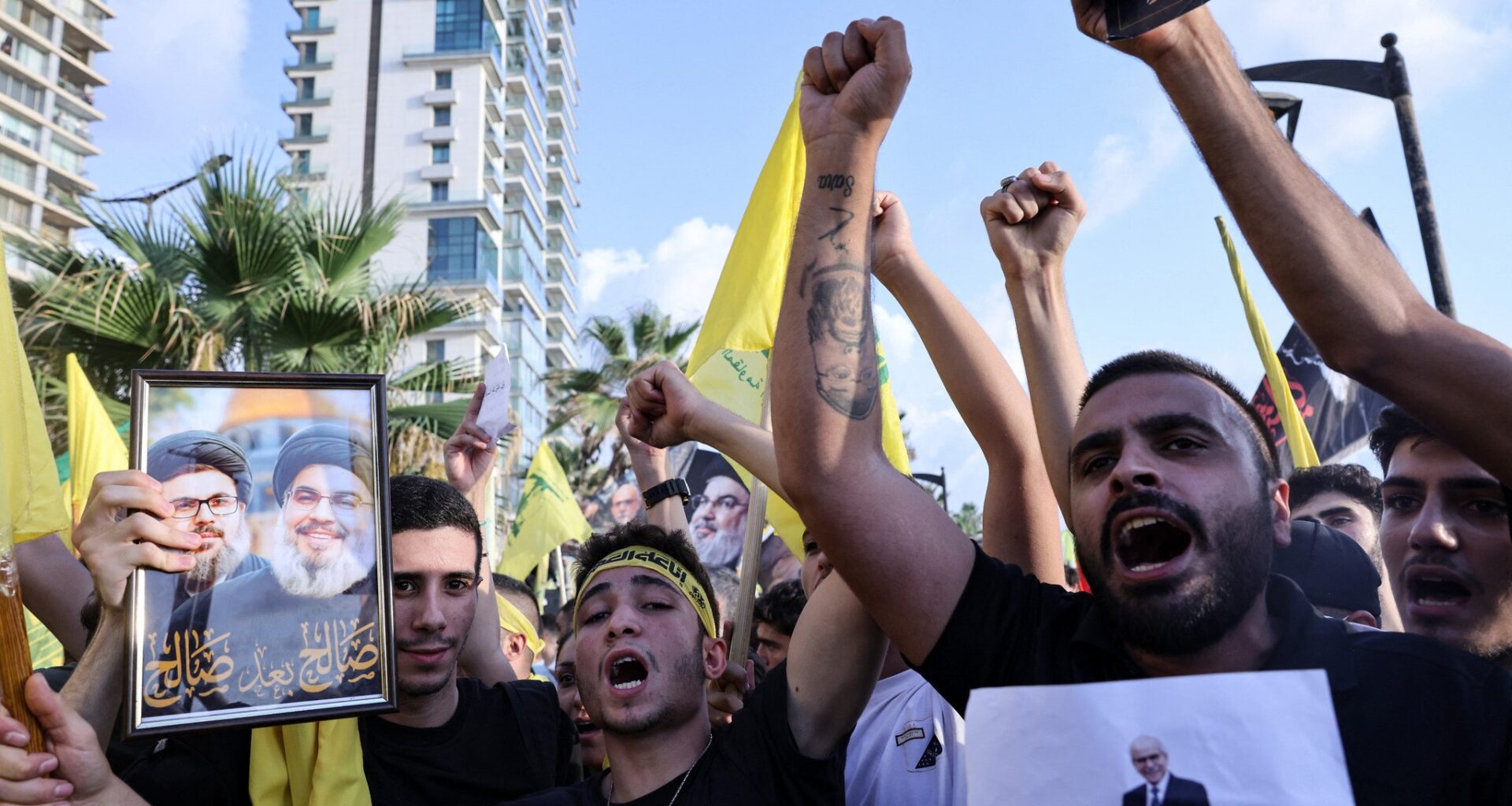
Lebanon’s army has blown up so many Hezbollah arms caches that it has run out of explosives, as it races to meet a year-end deadline to disarm the Shiite terror group in the south of the country under a ceasefire agreed with Israel, two sources told Reuters.
The explosives shortage, which has not been previously reported, has not stopped the army quickening the pace of inspection missions to search for hidden weapons in the south, near Israel’s border, the two said, one of whom is a security source and the other a Lebanese official.
It would have been unimaginable for Lebanon’s military to embark on such a task at the zenith of Iran-backed Hezbollah’s power just a few years ago, and many observers were skeptical even after the ceasefire agreement.
But Hezbollah was hit hard by its war with Israel, with thousands of fighters killed, including figures in the upper echelons of both the military and political wings, including leader Hassan Nasrallah.
The war started on October 8, 2023, when Hezbollah opened fire with rockets and drones on Israel, in support of fellow Iran-backed terror group Hamas, which had invaded Israel from Gaza a day earlier. It continued on a low burn for most of a year before escalating into two months of open fighting in the fall of 2024, including an Israeli ground invasion, and ended with a November 2024 ceasefire.
Get The Times of Israel’s Daily Edition
by email and never miss our top stories
By signing up, you agree to the terms
Israel has kept troops stationed at specific points in Lebanon, and has struck at Hezbollah attempts to rearm. The US has also kept up pressure on Lebanon to disarm Hezbollah. US President Donald Trump’s deputy Middle East envoy Morgan Ortagus is in Beirut this week to discuss momentum on disarmament with Lebanese officials.
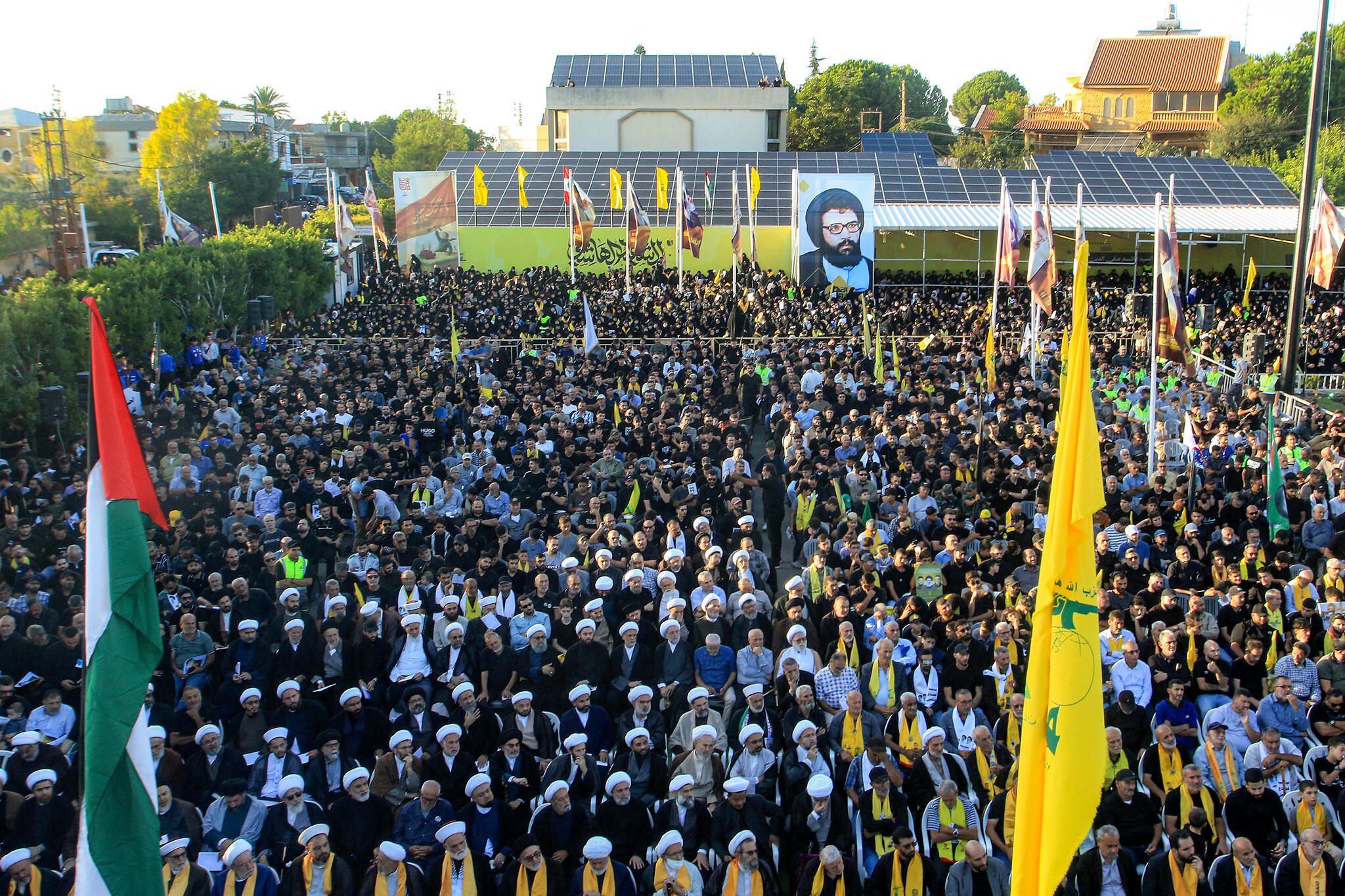
Mourners attend a ceremony marking the first anniversary of Israel’s assassination of the longtime leader of Hezbollah, Hassan Nasrallah, and other group leaders in the town of Deir Qanoun al-Nahr near Tyre in southern Lebanon on September 27, 2025. (Mahmoud ZAYYAT / AFP)
As they wait for US deliveries of explosives charges and other military equipment, Lebanese troops are now sealing off sites they find instead of destroying them, said one of the sources and two other people briefed on the army’s recent activities.
Their searches yielded nine new arms caches in September, the two other briefed officials said. The security source said dozens of tunnels used by Hezbollah had also been sealed and more soldiers were being steadily recruited to deploy to the south.
Reuters spoke to 10 people, including Lebanese officials, security sources, diplomats and a Hezbollah official, all of whom said the army expects to complete its sweep of the south by the year’s end.
Disarmament outside country’s south is more complicated
Progress in the rest of the country looks far less certain.
Despite its advances, the army wants to avoid inflaming tensions and to buy time for Lebanon’s politicians to reach a consensus about the terror group’s arsenal in other parts of the country, a second Lebanese official who is close to Hezbollah and two security sources said.
Under the November 2024 ceasefire, Lebanon agreed that only state security forces should bear arms in the country. That would mean fully disarming Hezbollah.
The terror group has publicly committed to the ceasefire but is not a formal signatory. It insists the disarmament as mentioned in the text only applies to the south of Lebanon.
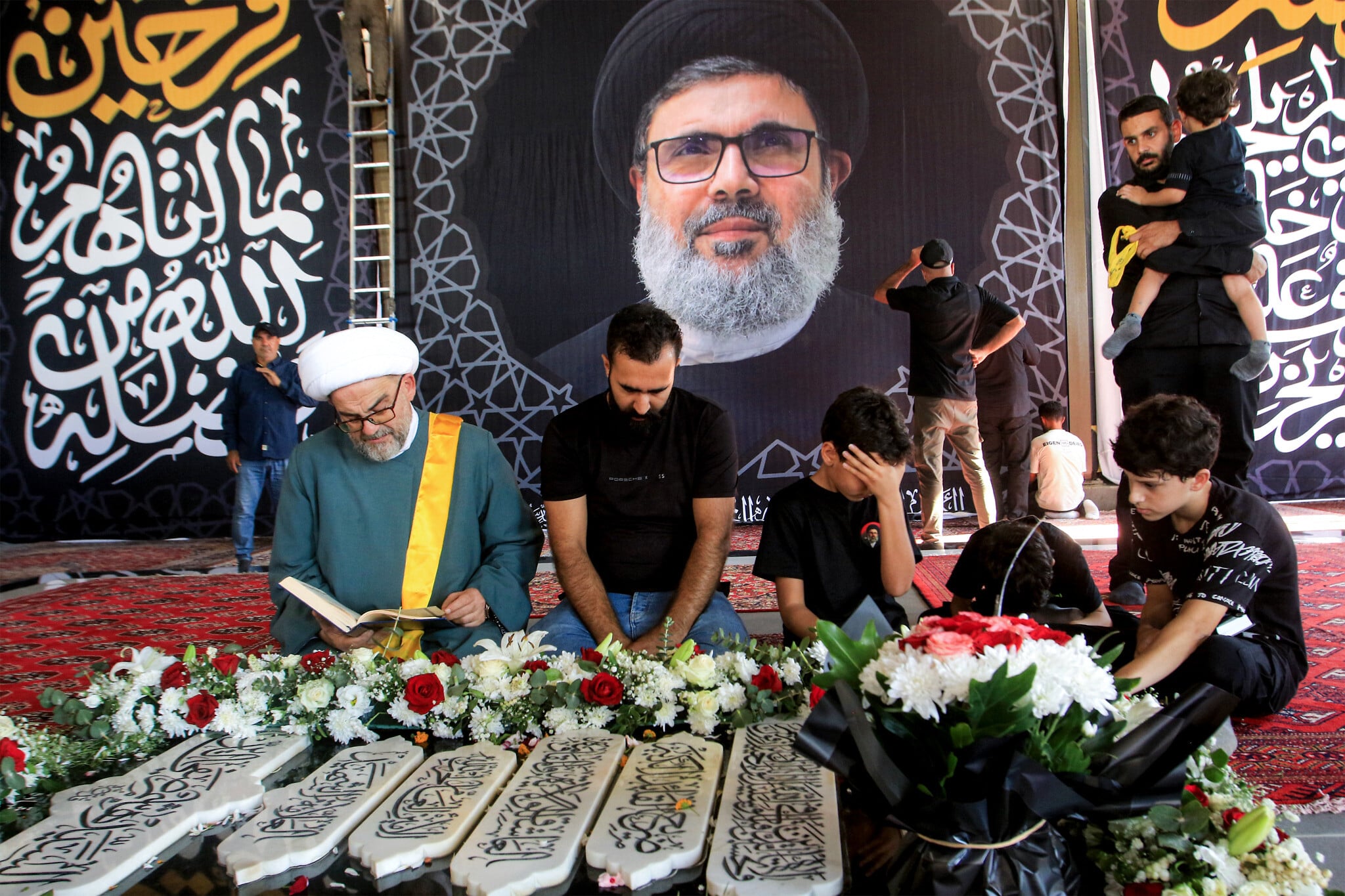
Mourners pray by the grave of Hashem Safieddine, the slain leader of Hezbollah, during a ceremony marking the first anniversary of Israel’s assassination of Safieddine alongside the group’s longtime leader Hassan Nasrallah and other officials, at Safieddine’s shrine in the town of Deir Qanoun al-Nahr near Tyre in southern Lebanon on September 27, 2025. (Mahmoud ZAYYAT / AFP)
On September 5, Beirut adopted a more detailed five-phase plan for imposing the state monopoly on arms — starting in the south and gradually moving north and east, the security sources and the second Lebanese official said.
The government has said the plan is contingent on Israel halting its airstrikes, which Israel says come in response to Hezbollah violations of the ceasefire.
Hezbollah has not opposed the seizures of unmanned weapons caches in the south and has not fired on Israel since the November truce. However, it has publicly refused to relinquish its weapons elsewhere, hinting conflict was possible if the state moved against the group.
Moving north and east without a political consensus risks confrontation with Hezbollah fighters or street protests by Lebanon’s Shiite community, among whom Hezbollah remains popular, the two security sources and the second Lebanese official said.
The army still fears a standoff with Hezbollah’s constituency could again fracture the army, which split during Lebanon’s 15-year civil war, one Lebanese official told Reuters.
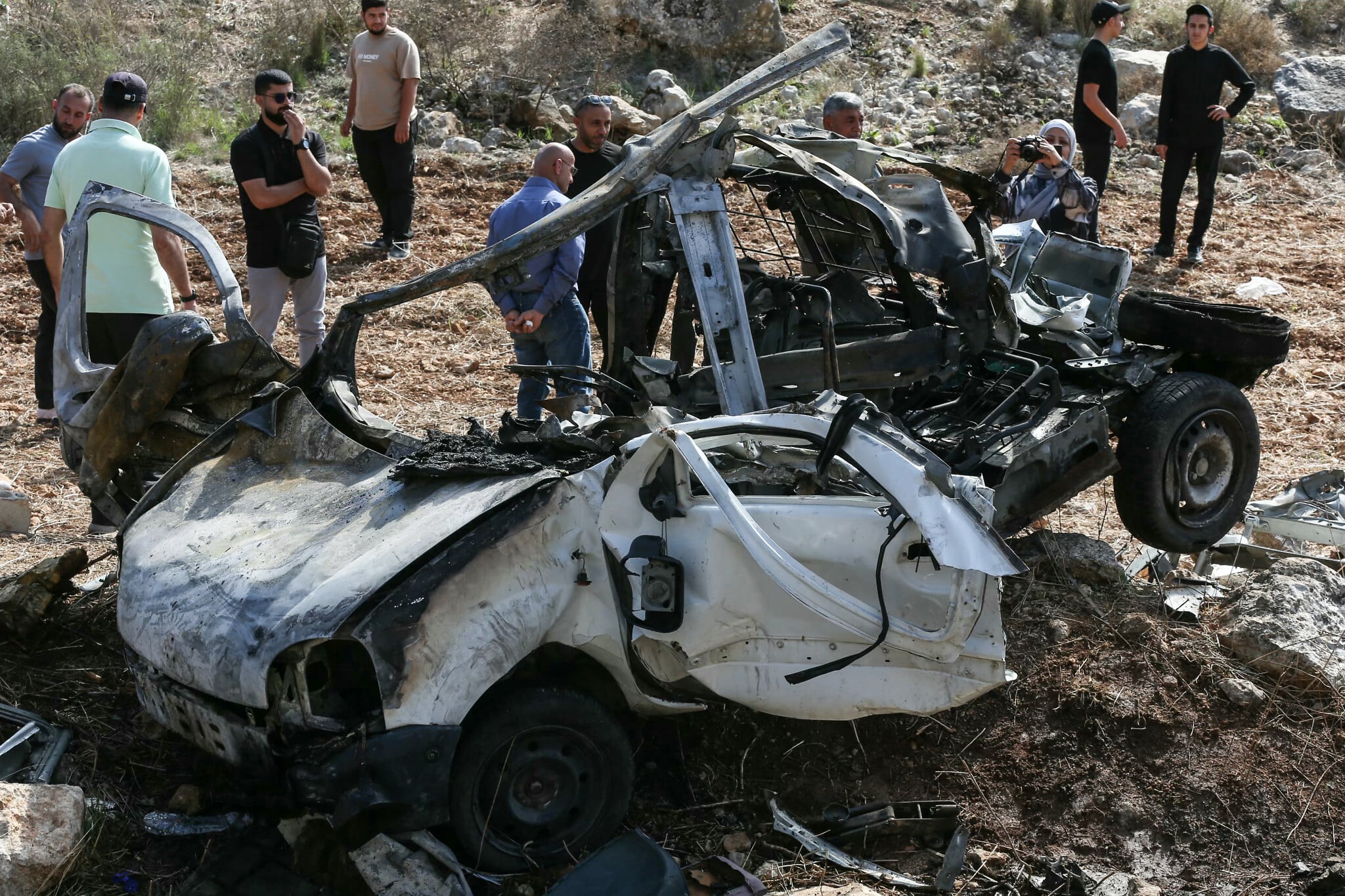
People inspect the wreckage of a vehicle targeted by an Israeli strike in the southern Lebanese village of Haruf on October 25, 2025. (MAHMOUD ZAYYAT / AFP)
In a speech on Sunday, Hezbollah secretary general Naim Qassem described the army’s approach as good and balanced but also issued a warning, saying he hoped the army was not considering clashing with the Shiite community.
The media offices of the Lebanese army, cabinet and presidency did not respond to questions from Reuters for this story. The Israeli military did not respond to requests for comment either.
Beirut relying on Israeli intel to locate Hezbollah arms
Lebanon’s army does not possess its own information on where Hezbollah’s stockpiles are located, two security sources told Reuters.
It has relied on intelligence supplied by Israel to “the Mechanism,” the sources said, referring to a committee established by the truce deal, chaired by the US and including France, Israel, Lebanon and UN peacekeepers.
In late May, the army was receiving so many reports from the Mechanism that it could not keep pace with the requests for inspections, the two sources said.
If troops found a depot, they kept any ammunition or new equipment compatible with their own arms and destroyed rockets, launchers and other material, the two sources said.
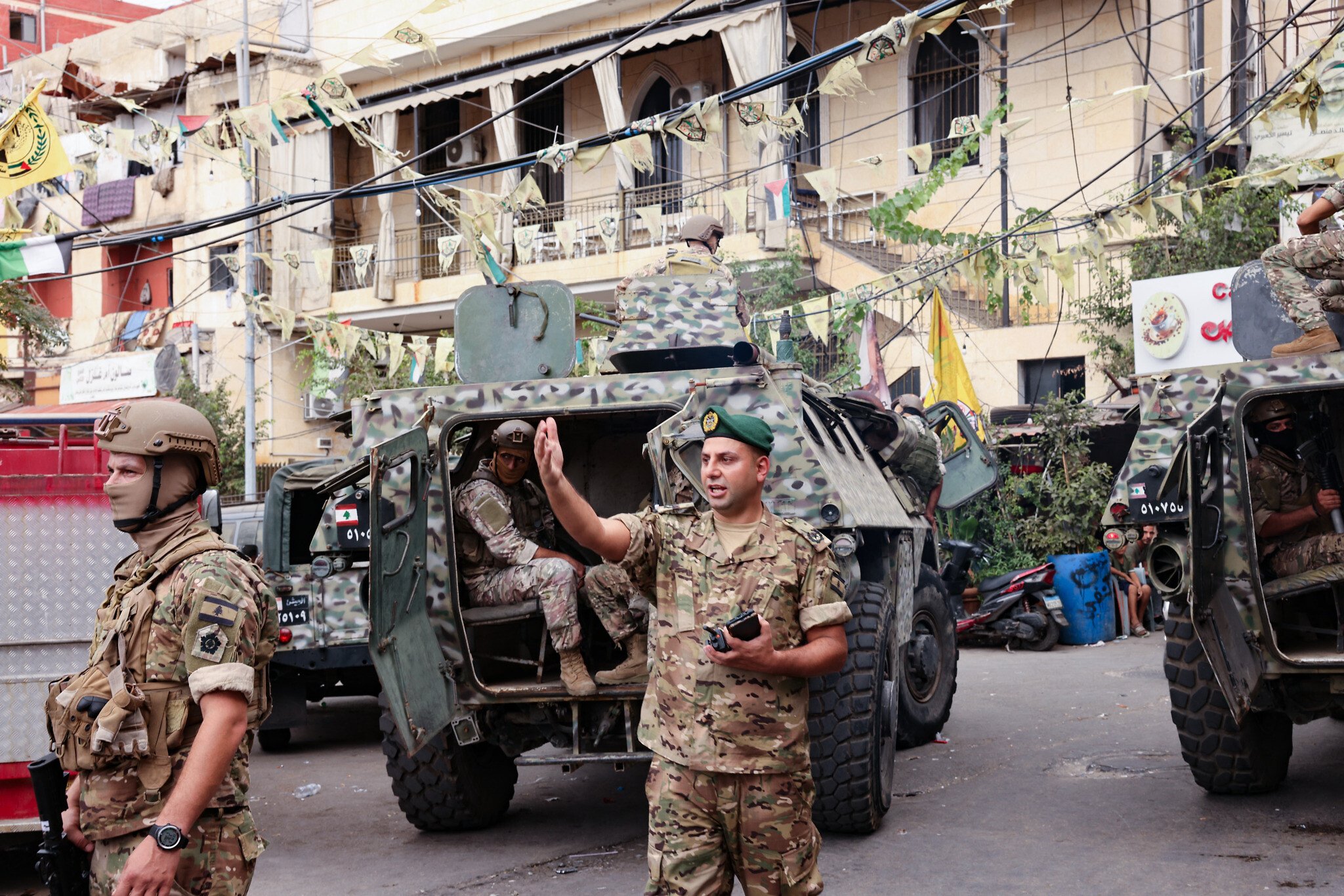
Lebanese army soldiers are stationed at the Burj al-Barajneh camp for Palestinian refugees in Beirut’s southern suburbs on August 29, 2025, as armed Palestinian groups in the refugee camps continue to hand over their weapons to the Lebanese authorities (ANWAR AMRO / AFP)
The US is eager to help: In September, it announced $14 million in demolition charges and other aid to help Lebanese troops “degrade Hezbollah” and approved $192 million aid to the army the day before the US government shutdown.
Hezbollah’s stance on disarmament has appeared fluid of late
In recent months, Hezbollah’s position about the future of its weapons has appeared fluid. In public statements, the terror group warned the state against trying to seize its arsenal — but also said it would be willing to discuss the fate of its arms if Israel commits to a real ceasefire.
In private, some representatives of the group have floated the possibility that progress could be made elsewhere if reconstruction allowed Shiite constituents to return to villages and towns destroyed in the war, the Lebanese official close to the group said. Others have flatly rejected decommissioning its weapons under any circumstances.
The group is still conducting internal discussions on the future of its arsenal and is also playing for time, the Lebanese official close to Hezbollah and a Lebanese political source said.
The security sources say that a lack of information makes it difficult for the army to estimate what exactly Hezbollah has stored, and where, including in the eastern Beqaa — a vast plain where Hezbollah is thought to store the bulk of its long-range missiles and other strategic arms.
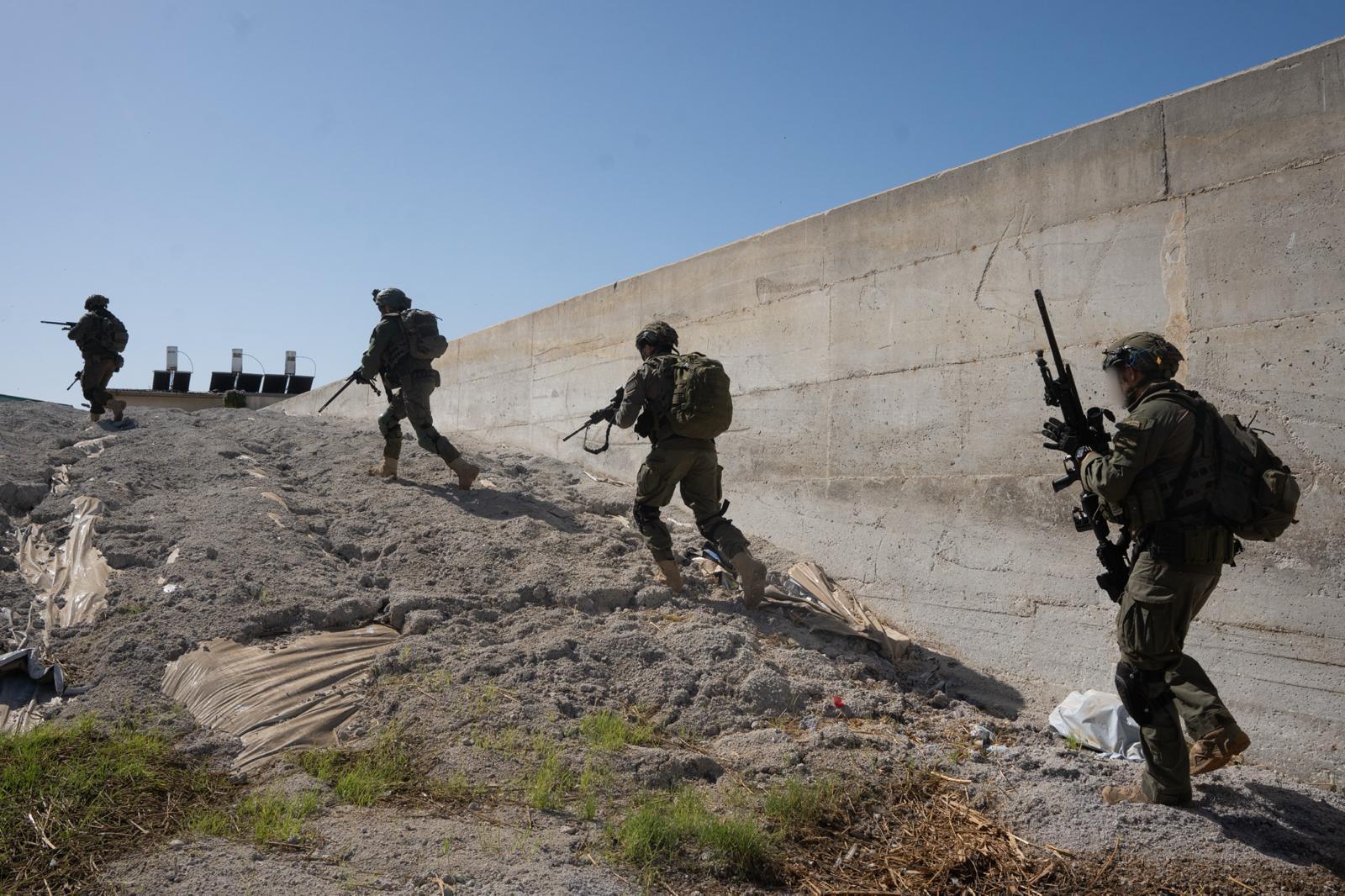
IDF troops conduct a drill along the border with Lebanon, in a handout photo issued on October 24, 2025. (Israel Defense Forces)
Israel provided some reports of weapons in areas north of the Litani but the Lebanese army deemed them too sensitive to act on without a consensus on whether and how to disarm Hezbollah there, one of the security sources and one of the diplomats based in Lebanon said.
Despite providing intelligence on weapons locations, Israel is proving another obstacle in the south, the officials briefed on the cabinet meeting said.
Several Lebanese soldiers have been wounded by Israeli fire while on inspection missions, the two security sources said. Israeli drones have dropped grenades near soldiers and UN peacekeepers in the south, UNIFIL has said.
The army has also warned that Israel’s occupation of five hilltops within Lebanon near the border with Israel could delay a full sweep of the area, the two security sources said.
And when Lebanese troops tried to erect a rudimentary watchtower to monitor the border, Israel objected, the two security sources said. The tower remains unmanned.
The Israel Defense Forces did not respond to questions about the wounded Lebanese troops and the abandoned watchtower.

An armored vehicle of the United Nations Interim Force in Lebanon (UNIFIL) moves past destroyed buildings along a road in the village of Kfar Kila in southern Lebanon near the border with northern Israel on August 27, 2025. (ANWAR AMRO / AFP)
Washington is eager to see Lebanon expedite disarmament in the rest of the country after meeting the year-end deadline for the south, the congressional aide said. US envoy Tom Barrack has warned of possible Israeli action if that deadline is not met.
“The US sees that Lebanon needs to do more, and faster,” Gabriel said.
The United States fully supports Lebanon’s “courageous and historic decision to disarm Hezbollah,” a US State Department spokesperson said in response to Reuters questions.
“The region and the world are watching carefully,” the spokesperson said.