
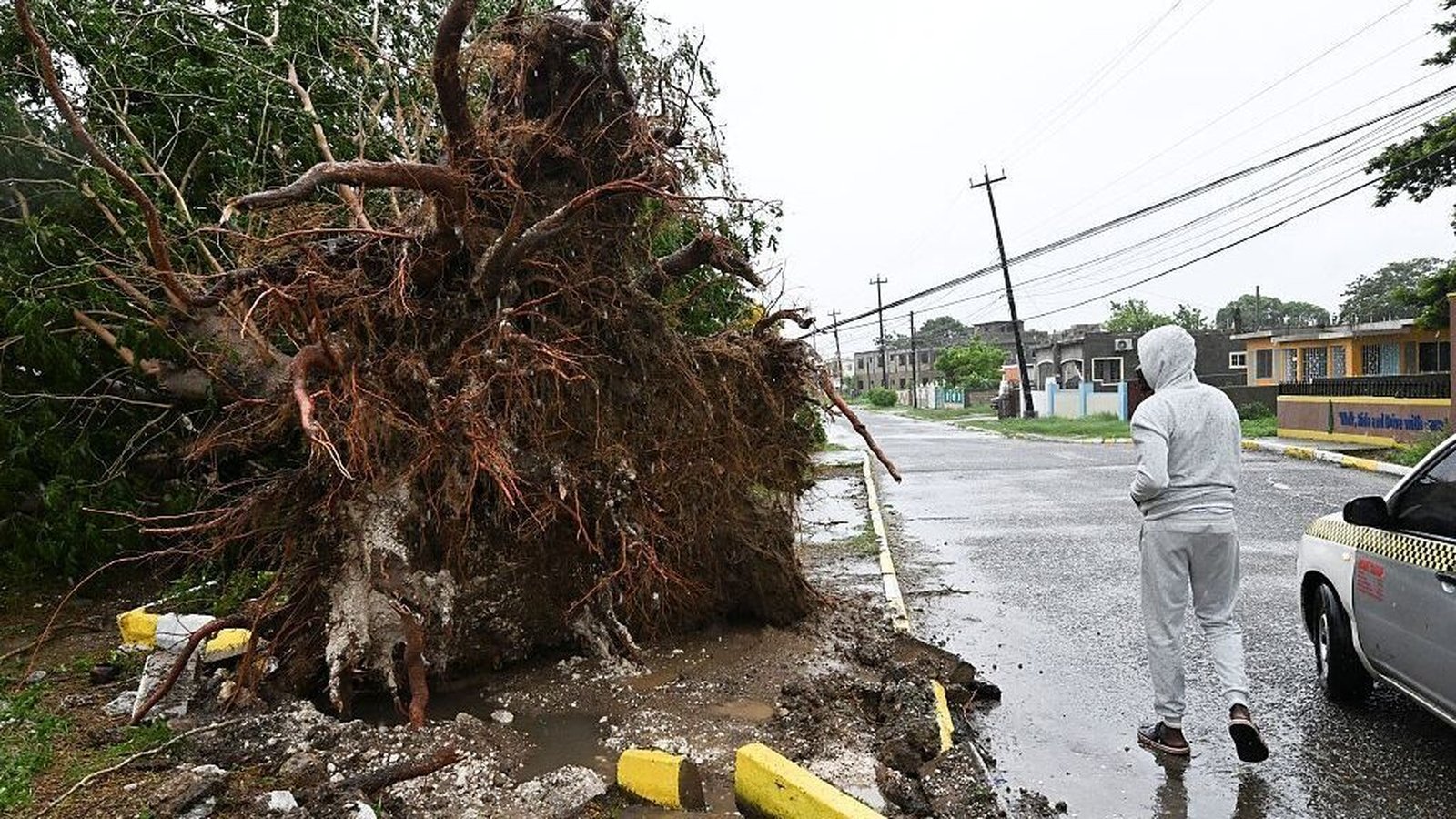
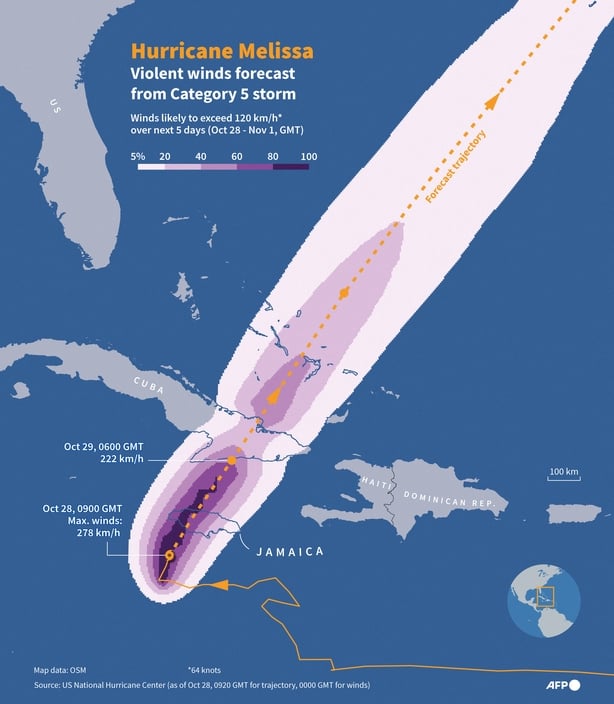
Hurricane Melissa has made landfall in Jamaica today as a category five hurricane, the US National Hurricane Center (NHC) said in its latest advisory.
It was one of the most powerful hurricane landfalls on record in the Atlantic basin, the NHC added.
The hurricane is also the most powerful tropical storm recorded this year globally, according to an AFP analysis of US weather data.
It is the most potent in terms of wind speed and pressure, surpassing typhoon Ragasa, which lashed east Asia in September and had winds of 267km/h, according to the analysed data from the US National Oceanic and Atmospheric Administration (NOAA).
Melissa made land of 295km/h, the US National Hurricane Center said in its latest advisory.
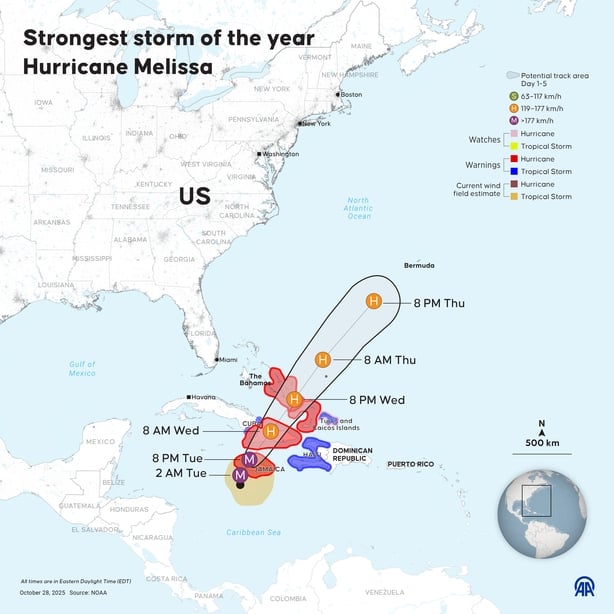
The slow-moving storm is forecast to remain a powerful hurricane as it crosses the mountainous island, whose highland communities are vulnerable to landslides and flooding, and heads towards Santiago de Cuba, Cuba’s second-largest city.
The Miami-based hurricane center warned that “total structural failure” was likely in Melissa’s path.
US forecaster AccuWeather’s lead hurricane expert, Alex DaSilva said: “The island has never taken a direct hit from a Category 4 or a Category 5 hurricane in recorded history.”
Watch: Hurricane Melissa bears down on Jamaica
Tánaiste Simon Harris said he strongly advises all Irish citizens in the region to “seek appropriate shelter and to closely follow the advice of Jamaican authorities”.
The Jamaican authorities have also warned that heavy rainfall caused by the hurricane is also expected to cause serious flash flooding and landslides, even after the hurricane has passed.
“The Embassy of Ireland to Canada, is accredited to Jamaica. My officials in Dublin and Ottawa, as well as Ireland’s Honorary Consul in Kingston are monitoring this evolving situation closely,” Mr Harris said.
“We stand ready to provide consular assistance to any Irish people impacted.”
Irish citizens in Jamaica who require consular assistance are being asked to contact: +1 613 233 6281.
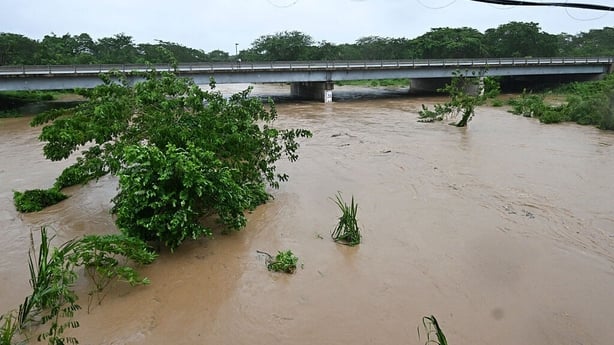
The Rio Cobre comes out of its banks near St Catherine, Jamaica after Melissa makes landfall
1.5m people ‘may be impacted’
The hurricane could affect 1.5 million people in Jamaica alone, the International Federation of Red Cross and Red Crescent Societies (IFRC) said.
“1.5 million people may be impacted,” Necephor Mghendi, the IFRC’s head of delegation for the English- and Dutch-speaking Caribbean, told reporters in Geneva from Trinidad and Tobago, warning that number could be “an underestimate”.
Jamaican officials have urged people to get to higher ground and shelters, with the prime minister warning it could bring massive devastation.
The Category 5 storm – which could be the island’s most violent on record – is charting a painstakingly slow path through the Caribbean, and has already been blamed for three deaths in Jamaica, three deaths in Haiti and one in the Dominican Republic.
The Department of Foreign Affairs has advised any Irish citizens currently in Jamaica to see appropriate shelter and follow the advice of local authorities.
Its heavy rains combined with intense winds could wreak devastation on par with historic hurricanes, including 2017’s Maria or 2005’s Katrina, which left indelible impacts on Puerto Rico and the US city of New Orleans.
Scientists say human-driven climate change is causing such massive storms to become increasingly common in the region.
Local government minister Desmond McKenzie said yesterday evening that of the island’s 880-odd shelters standing by, only 133 were hosting locals.
They “should be seeing people now”, Mr McKenzie said, adding: “I want to urge persons in these parishes to get to high ground as quickly as possible.”
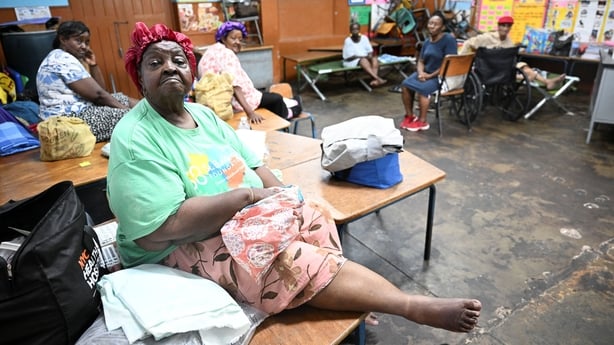
People sit in a shelter at Holy Family Primary School in Kingston
Jamaican Prime Minister Andrew Holness said the island’s western end faced the worst destruction.
“I don’t believe there is any infrastructure within this region that could withstand a Category 5 storm, so there could be significant dislocation,” he told CNN.
But despite pleas to evacuate, many Jamaican residents were staying put.
Watch: ‘Hurricane hunters’ fly through eye of Melissa
“I am not moving. I don’t believe I can run from death,” Roy Brown said in Kingston’s seaside area of Port Royal.
The plumber and tiler said he was reluctant to flee because of his past experiences with the poor conditions of government hurricane shelters.
Fisherwoman Jennifer Ramdial agreed, adding: “I just don’t want to leave.”
Mr Holness told a press briefing that the evacuation was about “the national good of saving lives”.
“You have been warned. It’s now up to you to use that information to make the right decision,” he said.
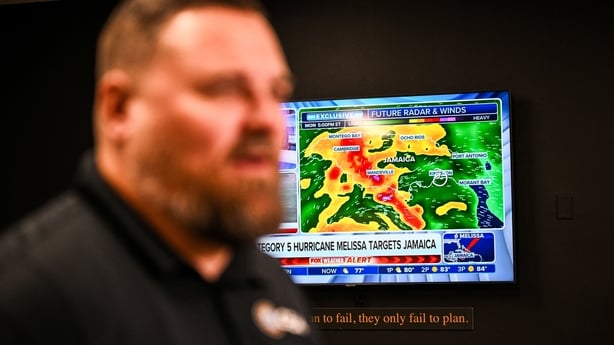
Hurricane Melissa updates are seen on a news channel
Part of Melissa’s punch stems from its slow pace: it is lumbering along slower than most people walk, at just 4km/h.
That means areas in its path could endure punishing conditions for far longer than during most hurricanes.
The NHC warned of “catastrophic” flash flooding, landslides and destructive winds that could cause lengthy power and communications outages, along with “extensive infrastructural damage”.
We need your consent to load this rte-player contentWe use rte-player to manage extra content that can set cookies on your device and collect data about your activity. Please review their details and accept them to load the content.Manage Preferences
Up to 100cm of rainfall is forecast, with flash flooding and landslides expected in Jamaica as well as Haiti, the Dominican Republic and Cuba.
A storm surge is likely along Jamaica’s southern coast, with waters potentially rising four metres, along with “destructive waves”.
In the Flagaman farming community of St Elizabeth, residents hunkered down in a shop.
Owner Enrico Coke said he opened it for fear that his neighbours had nowhere to go: “I’m concerned about farmers, the fishermen will be suffering after this.
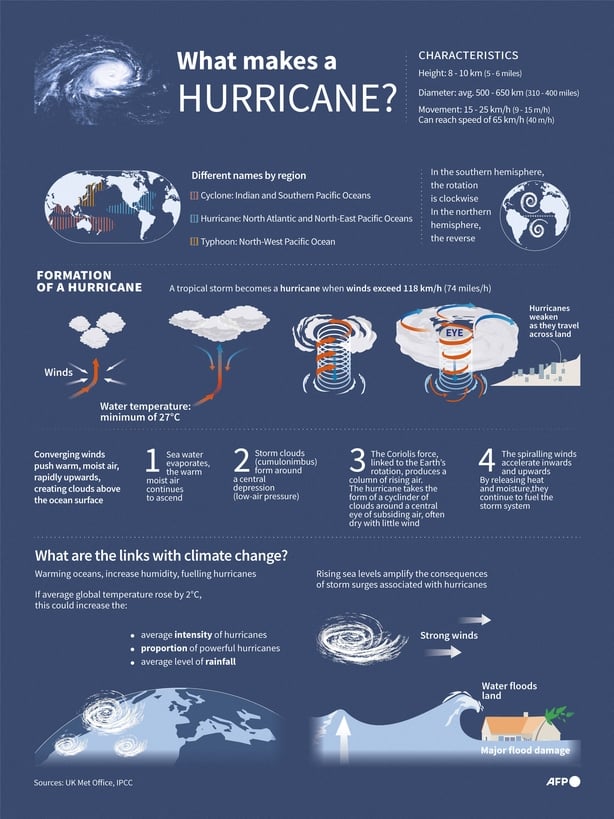
“We’ll need help as soon as possible, especially water for the people.”
After pummelling Jamaica, Melissa is forecast to cross over eastern Cuba tomorrow night.