
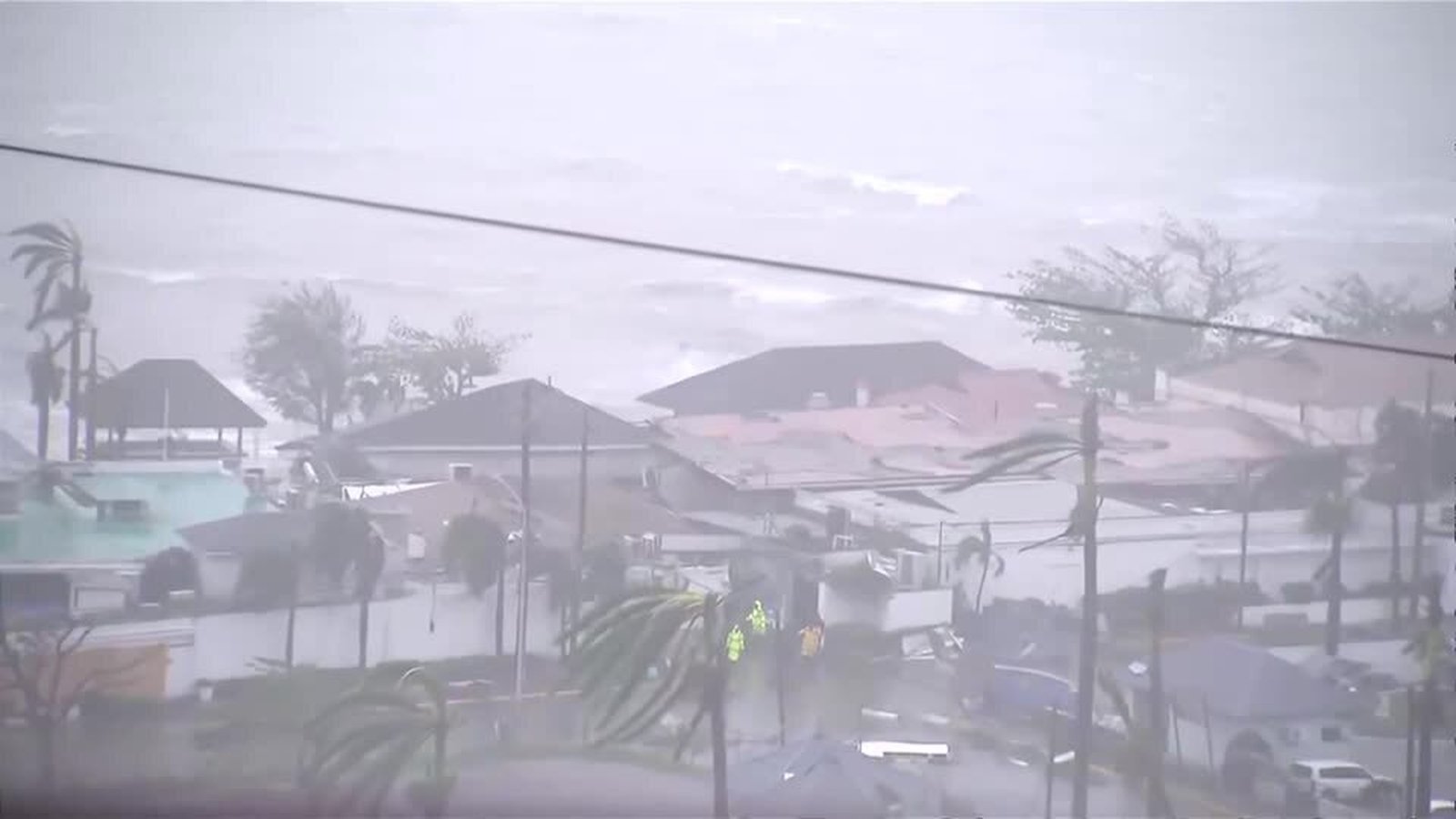
Hurricane Melissa has made landfall in eastern Cuba as a Category 3 storm after pummelling Jamaica as one of the strongest Atlantic hurricanes on record, the US National Hurricane Center (NHC) said.
Authorities have designated Jamaica a “disaster area.”
“Extremely dangerous hurricane Melissa makes landfall on southern coast of eastern Cuba,” the NHC said in an updated advisory.
Around 735,000 people were evacuated from their homes in eastern Cuba as the storm approached, authorities said.
Cuban President Miguel Diaz-Canel warned that the storm would cause “significant damage” and urged people to heed evacuation orders.
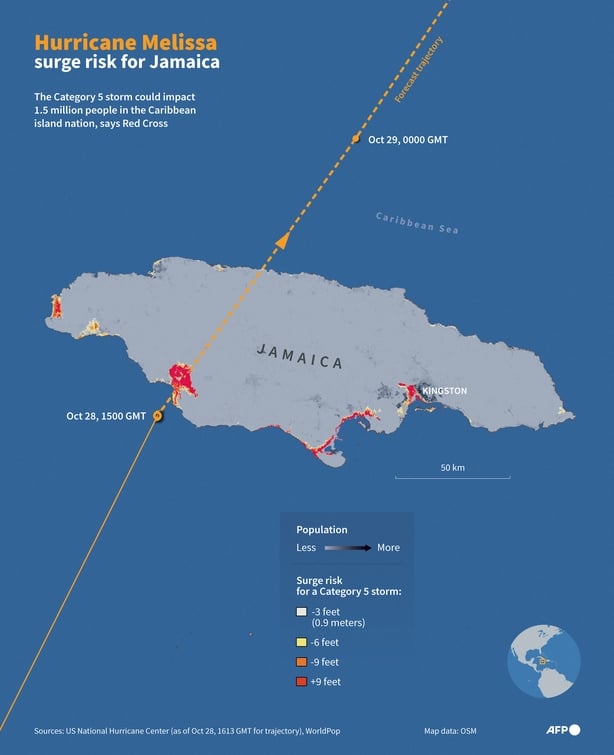
Melissa had weakened to a still dangerous Category 3 hurricane after roaring ashore near Jamaica’s southwestern town of New Hope yesterday, packing sustained winds of up to 297km/h, according to the Miami-based forecaster.
Category 5 storms, the highest level on the Saffir-Simpson hurricane scale, carry winds of 252km/h and over.
In southwestern Jamaica, the parish of St Elizabeth was left “underwater,” an official said, with more than 500,000 residents without power.
Watch: Satellite footage shows Melissa crossing over Jamaica
“The reports that we have had so far would include damage to hospitals, significant damage to residential property, housing and commercial property as well, and damage to our road infrastructure,” Jamaica’s Prime Minister Andrew Holness said on CNN after the storm had passed.
Mr Holness said the government had not received any confirmed storm-related fatalities, but given the strength of the hurricane and the extent of the damage, “we are expecting that there would be some loss of life.”
Melissa’s winds subsided to 233km/h, the NHC said, as the storm drifted past the mountainous island, lashing highland communities vulnerable to landslides and flooding.
“There will be a lot of work to do. We know that this cyclone will cause significant damage,” he said.
Cuban authorities said some 500,000 people were ordered to move to higher ground. In the Bahamas, next in Melissa’s path to the northeast, the government ordered evacuations of residents in southern portions of that archipelago.
Farther to the east, the island shared by Haiti and the Dominican Republic had faced days of torrential downpours leading to at least four deaths, authorities there said.
Local media reported at least three deaths in Jamaica during storm preparations.
No stranger to hurricanes, Jamaica had never before been known to take a direct hit from a Category 4 or 5 storm, and the government called for foreign aid even as it prepared for Melissa’s arrival.
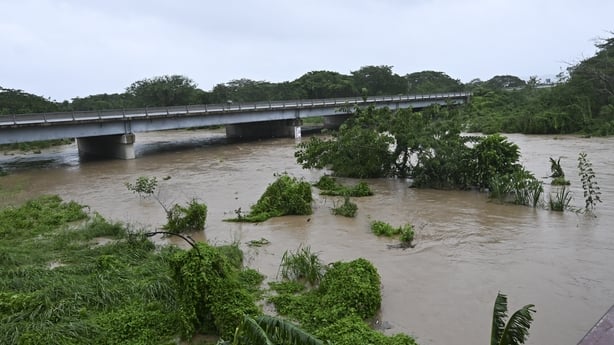
The Rio Cobre bursts its banks near St Catherine in Jamaica
Meteorologists at AccuWeather said Melissa ranked as the third most intense hurricane observed in the Caribbean after Wilma in 2005 and Gilbert in 1988 – the last major storm to make landfall in Jamaica.
“It’s a catastrophic situation,” the World Meteorological Organization’s tropical cyclone specialist Anne-Claire Fontan told a press briefing, warning of storm surges up to 4m high. “For Jamaica, it will be the storm of the century for sure.”
A resident in Kingston said her home was devastated by the storm, which lashed the island nation with brutal winds and torrential rain.
“Parts of our roof was blown off and other parts caved in and the entire house was flooded,” Lisa Sangster said.
“Outside structures like our outdoor kitchen, dog kennel and farm animal pens were also gone, destroyed.”
The scale of Melissa’s damage in Jamaica was not yet clear: a comprehensive assessment could take days and much of the island was still without power, with communications networks badly disrupted.
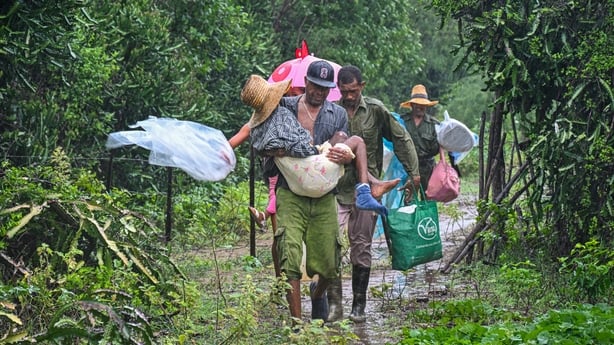
Residents evacuate ahead of the arrival of Hurricane Melissa in Santiago de Cuba, Cuba
Jamaican MP Desmond McKenzie said several hospitals had been damaged, including in Saint Elizabeth, a coastal district he said was “underwater”.
“The damage to Saint Elizabeth is extensive, based on what we have seen,” he told a briefing.
“Saint Elizabeth is the breadbasket of the country, and that has taken a beating. The entire Jamaica has felt the brunt of Melissa.”
Even before Melissa slammed into Jamaica, seven deaths – three in Jamaica, three in Haiti and one in the Dominican Republic – had been blamed on the deteriorating conditions.
Jamaica’s climate change minister told CNN that Melissa’s effect was “catastrophic,” citing flooded homes and “severely damaged public infrastructure” and hospitals.
Watch: ‘Hurricane hunters’ tracked Melissa from the inside as it bore down on Jamaica
Mathue Tapper, who lives in Kingston, said that those in the capital were “lucky” but feared for fellow Jamaicans in the island’s more rural areas.
“My heart goes out to the folks living on the Western end of the island,” he said.
Melissa lingered over Jamaica long enough that the rains were particularly dire.
Scientists warn that storms are intensifying faster with greater frequency as a result of warming ocean waters. Many Caribbean leaders have called on wealthy, heavy-polluting nations to provide reparations in the form of aid or debt relief to tropical island countries.
Melissa’s size and strength ballooned as it churned over unusually tepid Caribbean waters, but forecasters warned that its slow movement could prove particularly destructive.
“Human-caused climate change is making all of the worst aspects of Hurricane Melissa even worse,” said climate scientist Daniel Gilford.
The Jamaican Red Cross, which was distributing drinking water and hygiene kits ahead of infrastructure disruptions, said Melissa’s “slow nature” exacerbated the anxiety.
The UN is planning an airlift of some 2,000 relief kits to Jamaica from a relief supply station in Barbados once air travel is possible.
Assistance is also planned to other impacted countries including Cuba and Haiti, UN spokesperson Stephane Dujarric told journalists.
Jamaican officials said around 25,000 tourists were in the country.
The Department of Foreign Affairs has urged Irish citizens to heed the instructions of local authorties.