
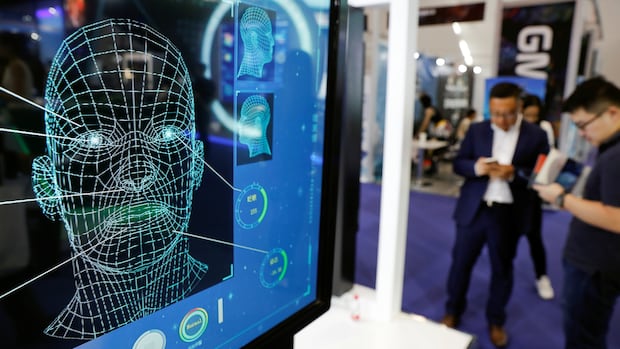
Crossing the Canada-U.S. border is part of daily life for some Windsorites. But a new rule may cause some Canadians to think twice before going south.
The U.S. Department of Homeland Security (DHS) announced on Friday that it will make it mandatory for all non-American citizens, including Canadians, to take part in the U.S.’s facial biometric program.
That means Canadians travelling to and out of the U.S. will have their picture taken and stored for up to 75 years in a DHS database, whether they’re travelling by air, land or sea.
The regulation is set to take effect on Dec. 26 — even though full implementation of the program could take years.
U.S. Customs and Border Protection (CBP) spokesperson Jessica Turner told CBC News facial biometrics “is about ensuring accurate records, enhancing security, and enforcing immigration laws.”
WATCH | U.S. to photograph travellers entering and leaving the country: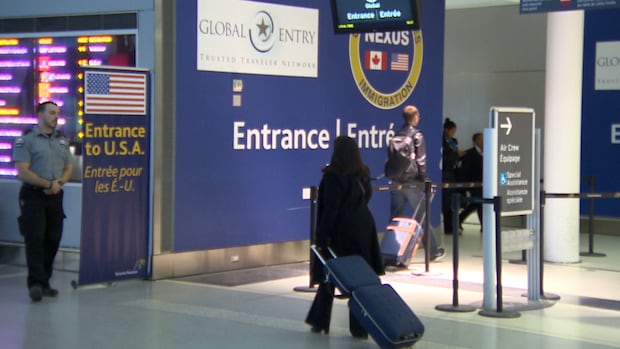
U.S. to photograph all travellers entering and leaving the country
Starting Dec. 26, travellers to and from the U.S. will be subject to mandatory photographs, with full implementation by 2026.
But the new rule and decades-long storage has some surveillance and privacy experts pondering what Donald Trump’s administration could use people’s photographs for going forward.
“I do think that the administration that we’re seeing now has been sort of willing to go in different directions when it comes to surveillance, policing and enforcing borders within the country as well as at the physical land border,” Kristen Thomasen, a law professor at the University of Windsor, told Windsor Morning.
Tracking travellers’ exits also helps CBP pinpoint those who stayed in the country longer than allowed, according to the new DHS rule.
LISTEN | Privacy expert weighs in on new U.S. rule:
Windsor Morning6:38Smile! Your picture will be taken every time you cross the border into Detroit. Privacy expert weighs in
You could be photographed at the border without even realizing it. The United States says it will start doing this at land border crossings soon. What will happen to that image? Windsor Morning host Amy Dodge spoke to University of Windsor law professor Kristen Thomasen about the associated privacy issues.More surveillance?
Facial biometrics isn’t something new, not even in Canada. The Canada Border Services Agency (CBSA) said in a statement that they use facial recognition technology on a voluntary basis to help verify the identities of incoming travellers through its kiosks at select airports.
“The process consists of a comparison between the photo of the traveller taken at the kiosk and the photo stored on the chip in the travellers’ ePassport,” they said, adding that travellers still have the option to present themselves to a border services officer if they don’t want to use the kiosks.
South of the border, the U.S. Customs and Border Protection (CBP) has used facial biometrics — including photographing travellers and biometric facial comparison technology — to confirm the identities of internationals arriving at U.S. airports for close to a decade.
But the program wasn’t mandatory and didn’t include internationals departing from the U.S. Furthermore, it only used to involve people travelling by air.
That, along with the fact that the photos will be stored in a DHS database for 75 years, tells Thomasen that the photographs will be used to inform biometric analysis.
“[It’s] basically using artificial intelligence algorithms to do an analysis of the dimensions of your face and compare it to a photograph,” she told CBC Windsor.
“So once there is a database where your name and photograph are associated, then that analysis can be done through, say, surveillance footage that can be collected.”
WATCH | Canadian snowbirds photographed, fingerprinted at U.S. border: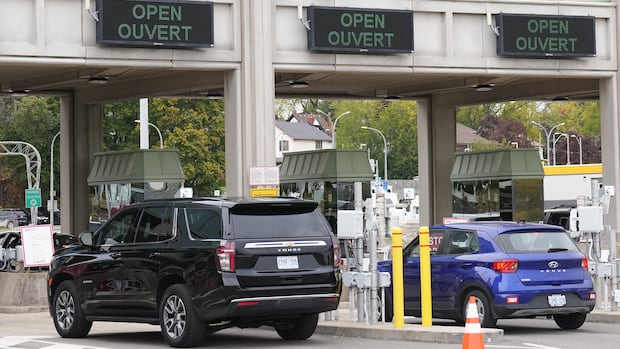
Snowbirds fingerprinted at U.S. land borders
Numerous Canadian snowbirds who’ve crossed at a land border to the U.S. were told they needed to be photographed and fingerprinted as part of a new registration process.
This expansion is concerning for Thomasen because it seems to imply that “there is going to be more surveillance, including facial recognition surveillance in particular, of everyone in the United States.”
“If the idea is to look for people who have overstayed the permitted time that they can be in the country, that means mass public surveillance in order to find those individuals. Or at least it signals it,” she said.
The fact that the photographs will be held for 75 years leads Thomasen to believe this too.
“It’s a very specific but very long amount of time and it signals to me that that might be an anticipation, that there will be other ways we use these images down the road,” she said.
Questions about accuracy
Catherine Mondloch, a distinguished professor of psychology at Brock University in St. Catherines, Ont., says she’s not surprised by the program’s expansion. But, she’s troubled by how accurate these photos will be and how they could impact travellers.
For one, Mondloch — whose research focuses on facial recognition — says taking a photo of someone in their car at a land crossing is not like photographing a traveller in an airport.
The conditions at an airport are very controlled, from the camera position to the way you orient your head for a shot, she said.
“But in a car, the lighting’s going to vary depending on what time of day it is and where you are in the car and the kind of vehicle you have. The angle isn’t going to be the same,” she told CBC Windsor.
“I don’t think we have very good evidence yet that the computer algorithms are very good at making judgments when we’ve got that kind of variability in image quality and the perspective.”
Furthermore, while it’s easy for an algorithm to compare how you look now to a recent photo, there are questions as to whether it can do that with the same accuracy over a 75-year period.
WATCH | He was wrongfully jailed because of facial recognition tech: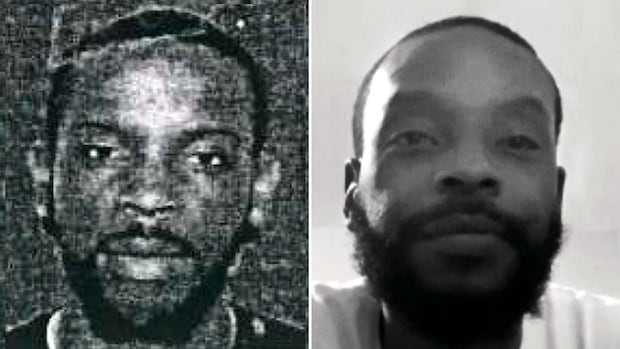
He was wrongfully jailed because of facial recognition tech now used in Ontario
Two Ontario police forces are now using facial recognition software that wrongly identified a New Jersey man who ended up in jail. The man is now suing for wrongful arrest and says the technology is biased.
“That’s a little more troubling because I don’t think we know whether image matches are accurate when people age,” she said.
“So if I haven’t entered the country for 20 years and I come back, how well will I be able to match my current appearance to images that were stored 20 years ago?”
And while Mondloch says errors made by algorithms are decreasing, she adds that some faces are over-represented, such as male and white faces.
Given the algorithms are “best at what they’re trained on,” she says that could result in some groups getting pulled aside more often than others.
“The accuracy of the algorithm is going to be higher for some groups of people than it will for others,” she said. “So it’s going to be more likely to make an error for non-white individuals and for, I suspect, children and older adults as well.”