
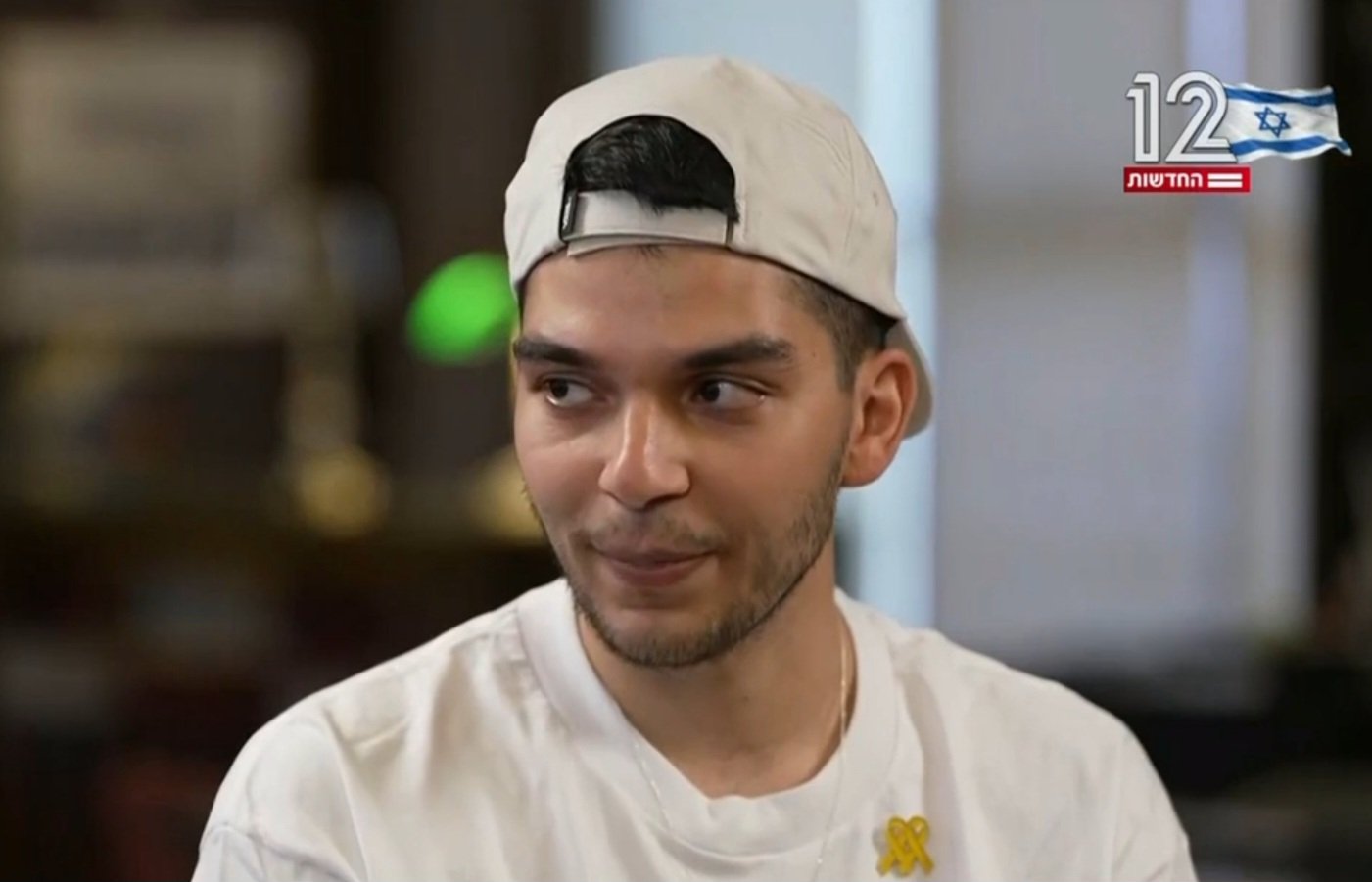
Ex-hostage Yosef-Haim Ohana, who was freed on October 13 after more than two years in Hamas captivity in Gaza, described in his first interview since being released the challenges he faces in adapting to freedom and recounted how he would sometimes think that death was preferable to a lifetime of the harsh conditions in the terror group’s tunnels.
Ohana spoke in a wide-ranging interview with Channel 12 broadcast Tuesday evening in which he described his capture from the Nova music festival on the morning of October 7, 2023, his experiences as a hostage for two years, and his release.
“The release isn’t complete, it’s still happening,” he told Channel 12’s Amit Segal. “You don’t go back to being a free man in a day after they took everything from you, including thinking logically and clearly. I need to learn to be free, I need to learn to make my own decisions.”
He added that he had dreamed of being released throughout his captivity, but when the moment came, he “didn’t know how to be really happy. The soul doesn’t adjust so quickly after two years of blocking your emotions. I was happy mentally but not emotionally.”
Another recurring thought he had during his captivity, he said, was whether he preferred “to be a prisoner there for the rest of my life with all that torture, or for the nightmare to end. I never had an answer, but I had moments when I wanted it to be over.”
Get The Times of Israel’s Daily Edition
by email and never miss our top stories
By signing up, you agree to the terms
In a preview of the interview that was aired on Monday, Ohana talked about convincing Hamas terrorists not to kill him in captivity by telling them he was “an important card” and reminding them they would get fewer Palestinian prisoners released for him if he were dead.
Taken from Nova festival
Recounting his capture, Ohana said the Nova music festival, where he was abducted, was not his regular scene as he preferred smaller parties with people he knew.
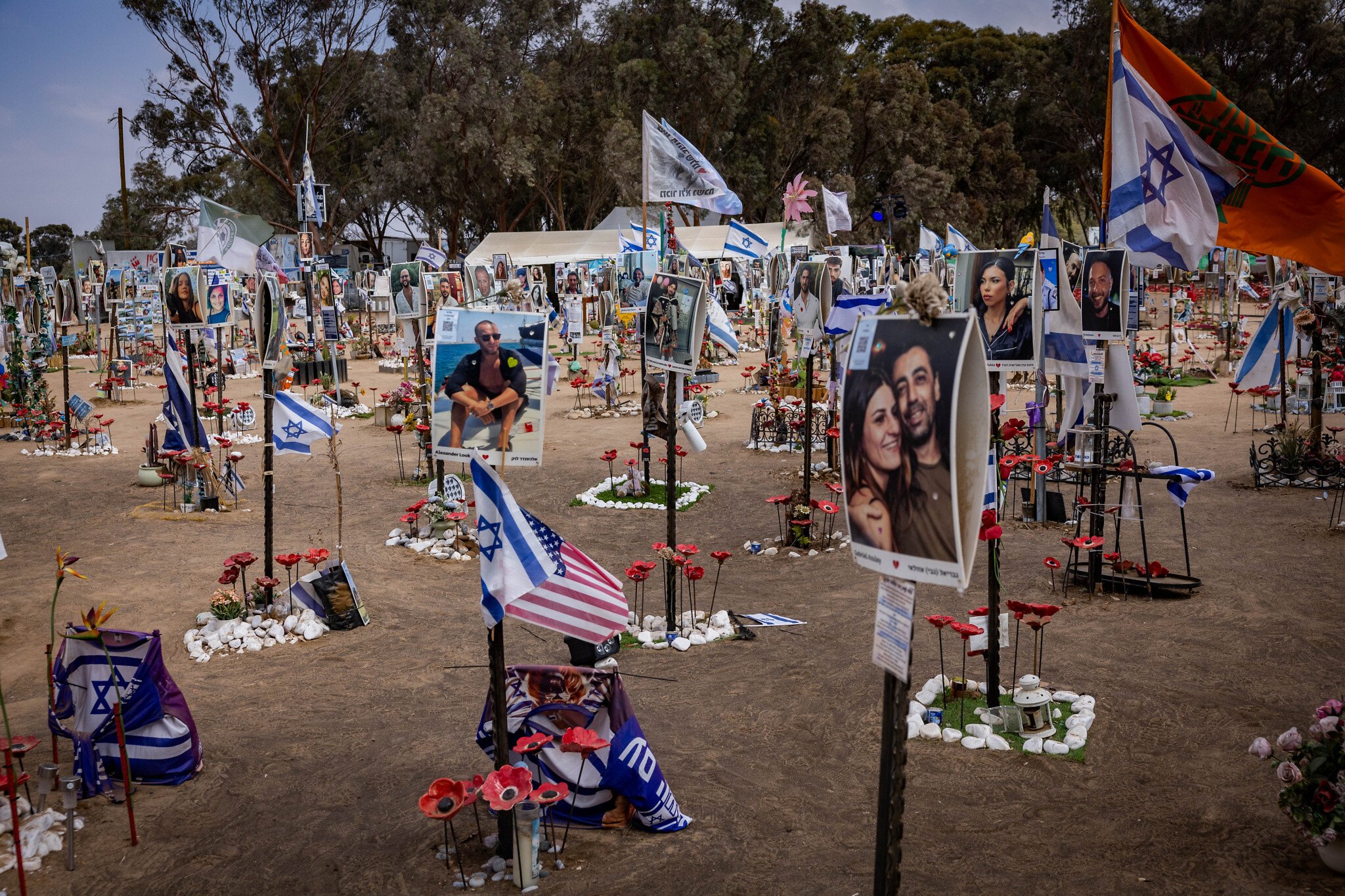
Israelis visit the site of the October 7, 2023, Reim-area Nova music festival massacre, on October 6, 2024. (Yonatan Sindel/Flash90)
This time, however, he had agreed to go, and he arrived with his friends at 2 a.m. on October 7, 2023.
“It was beautiful,” he said. “We arrived at the party, and there were so many people there I love and so many people I knew. There was good music and a good atmosphere.”
Ohana and his friends enjoyed themselves at the festival for some four hours before Hamas launched its massive surprise attack, but when terrorists showed up and started shooting at the partygoers, the group did not run away immediately.
“It didn’t cross our minds” to run away, Ohana, who is a paramedic, told Segal.
Instead, he and his friends kept running back and forth trying to save as many injured as possible, but he lost contact with his friends at a junction where they were arguing with police who tried to stop them from going back for more injured people.
“The police told us we were getting in their way, and we told them, ‘You’re wrong. The enemy is on the other side, and we just brought injured people from there,’” Ohana said.
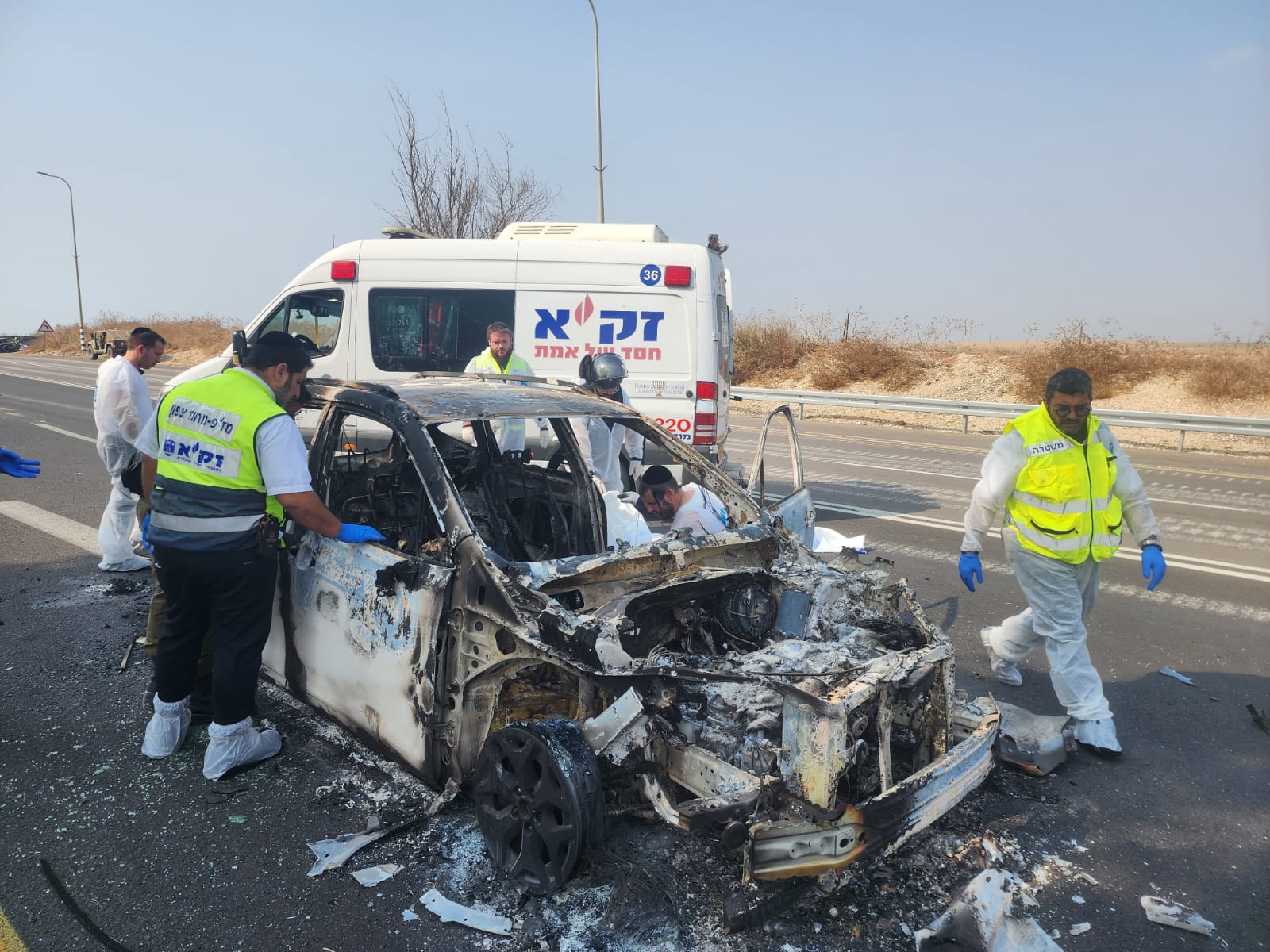
ZAKA volunteers work on the road near the Supernova Festival soon after the October 7 massacre. (Zohar Shpak/ZAKA)
As they were arguing, they saw a big vehicle approach with armed people on it and initially thought it was Israeli forces until the terrorists opened fire and the police responded. That was when Ohana lost sight of his friends.
His car blew up moments later, so he ran to another, which was hit with an RPG, so Ohana kept running until someone called him over to hide under a bush with about seven more people.
“The shooting got more intense around us, and my mistaken understanding was that so much time had passed since [Hamas] had invaded. We had already heard over the radio that the information was known, so I thought [the IDF] had come back to their senses and that the gunfire was the army. I didn’t imagine that it was all only their gunfire,” Ohana said.
After some time hiding in the bush, Ohana said the others were discovered by Hamas terrorists, who began shooting point-blank at them.
“It was the first time I recognized the feeling I had throughout the last two years of okay, that’s it, it’s over,” Ohana said. “I didn’t even know if I was alive, and I let myself open my eyes for a moment, and [the terrorists] were still there looking at me.”
He was the only person hiding in that bush who was not murdered, and while the terrorists ensured the rest of the people were dead, Ohana was pulled out and taken captive. He told Segal he did not know why they had chosen to keep him alive.
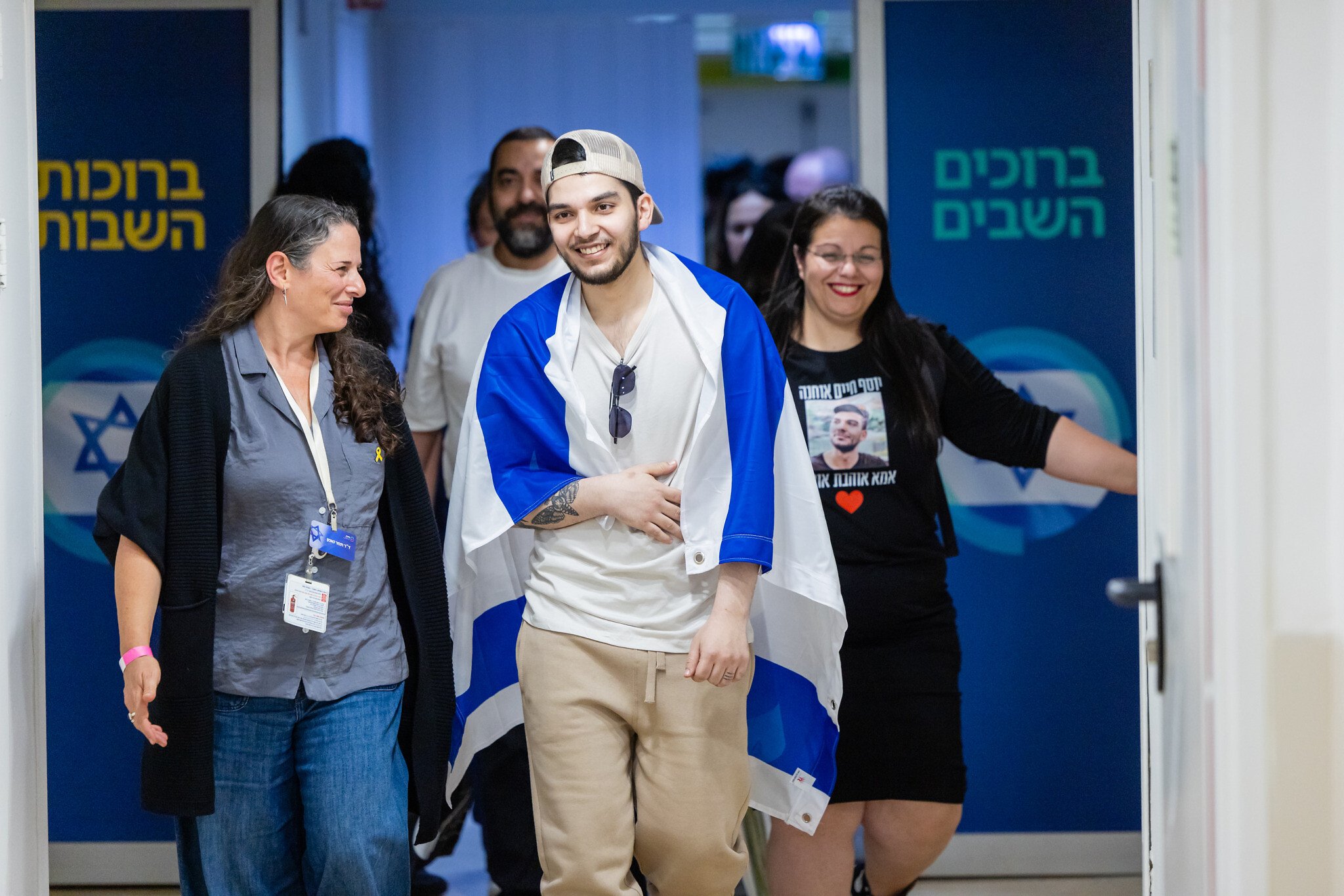
Yosef-Haim Ohana arrives at a hospital following his release from two years of captivity in Gaza, October 13, 2025. (Shauli Landner/GPO)
“Everyone around me was dressed, and I was shirtless. Maybe the fact that I was undressed communicated some weakness to them. Maybe that’s what made them decide to take me,” he speculated.
Regardless, Ohana said he did not know he was being taken hostage in that moment.
“I thought maybe they were taking me as a present for their leaders for them to kill me, but I didn’t think for one moment, ‘Okay, I’m a hostage.’ I just suffered from the fact that I had to keep being burdened by the feeling that I was going to die at any moment. They asked me questions, took an interest. It felt like they were really having fun playing with me,” he said.
Ohana was then handcuffed as tightly as possible with cuffs taken from a police officer, but the keys had been left behind, and Ohana said he was scared he would lose his hand.
“My hand got really swollen, and all I cared about was the point when they said, ‘Okay, we cannot get the handcuff open, we’re cutting off your hand,’ and I went from begging them to take off the handcuff to ‘no, please, don’t cut off my hand,’” Ohana related.
Even though his face was covered for the journey into Gaza, he could still see a little bit, and one image he said he could not forget was “when we passed through the gate, the main gate that was just open, and there were people sitting on the fences, almost like the end of a race. Here we are coming in, and everyone is cheering there.”
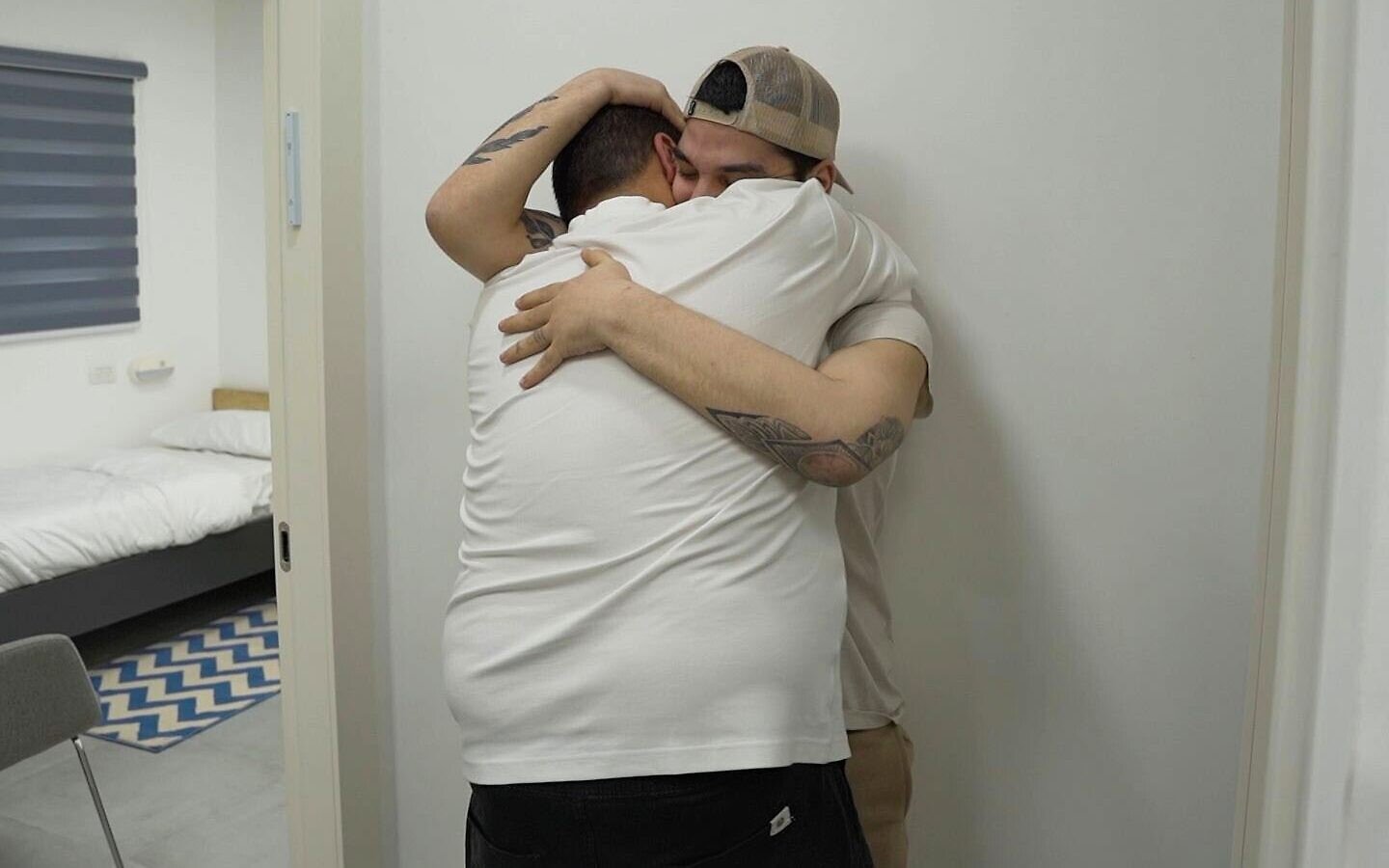
Yosef-Haim Ohana is reunited with his father after being held hostage in Gaza for two years, on October 13, 2025. (Israel Defense Forces)
It was shortly after he was brought into the enclave that he was told he was a hostage and given food and water, Ohana said, describing his first stretch in captivity as physically the most difficult.
From house to house to Hamas tunnels
“We just went from house to house until [the IDF] started bombarding, and we would run into the streets without knowing where, no plan, just looking for someone to help us,” he said, adding that his captors were severely disorganized for the first few months.
On one occasion, Ohana remembered, they were given the signal to leave the house they were in, and it was pulverized mere moments after they had left it.
Ohana’s longest stretch in captivity was 11 months in a tunnel with ex-hostage Ohad Ben Ami, who he said was “like a friend and father” to him, and a number of others he did not name.
The group being held in that tunnel was overjoyed when Ben Ami was released in February during a hostage-ceasefire deal, Ohana said, stressing that a video that Hamas released in March of him and fellow hostage Elkana Bohbot addressing Ben Ami was entirely scripted by their captors.
In the video, Ohana and Bohbot talked about the terrible conditions they were facing and appealed to Ben Ami to tell people in Israel what they were experiencing. While the whole video was scripted, Ohana said the part where they appealed to Ben Ami was filmed many times because their captors were not satisfied with his and Bohbot’s performances.
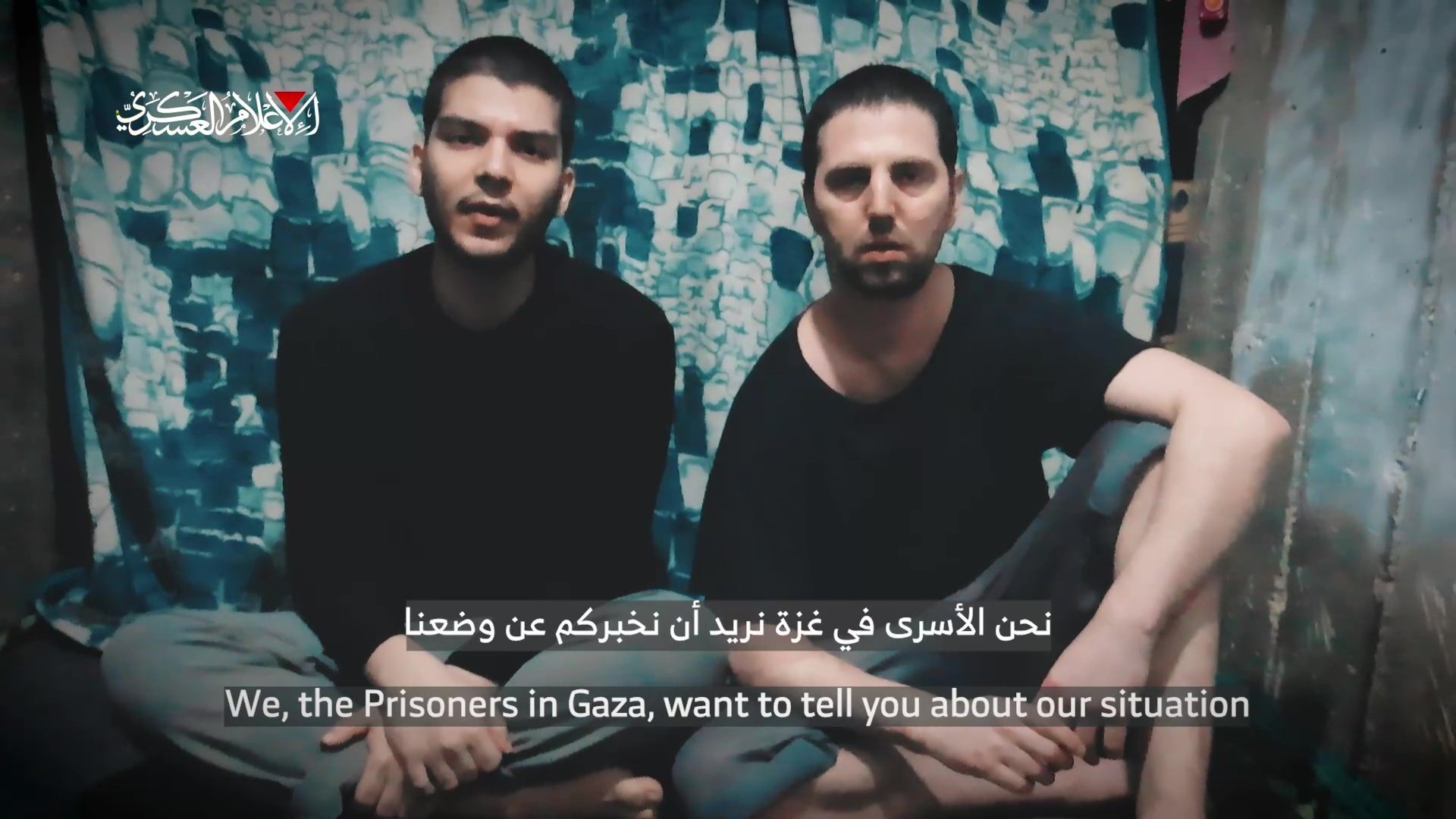
Hostages Yosef-Haim Ohana (left) and Elkana Bohbot seen in a Hamas propaganda video released on March 24, 2025. (Screenshot)
Even though everyone knew the videos of hostages that Hamas sent to their families were psychological warfare, Ohana said the hostages were still willing to make them because it would let their families know they were alive.
Asked what they did for 11 months in the tunnel, Ohana told Segal that they had to get used to having nothing to do. Eventually, he said, the group had created a running joke where someone would ask another what they were doing as they aimlessly played with a piece of fabric or something, and the other would respond, “Do I have anything better to do?”
The amount of food the hostages received depended heavily on whether aid was coming into Gaza and on their captors’ moods, Ohana said, adding that uncertainty over food was one of the elements that he found most traumatizing.
What little food they did get was often covered in worms, he said, and even when they were given fresh, warm food, they usually set it aside in case they were hungry later. They later decided to eat their food while it was still warm as a way to fight their trauma.
Ohana told Segal the hostages felt like lab rats as their captors would flash the lights as a signal for one of them to come and get the food when it was given to them, which would raise the “very important” question of who would go and get it.
“You ask, who has the best relations with them and the ability to get a little something more from them? Who has the courage to ask for more?” Ohana said, adding that they all had the courage and each had their own strategy.
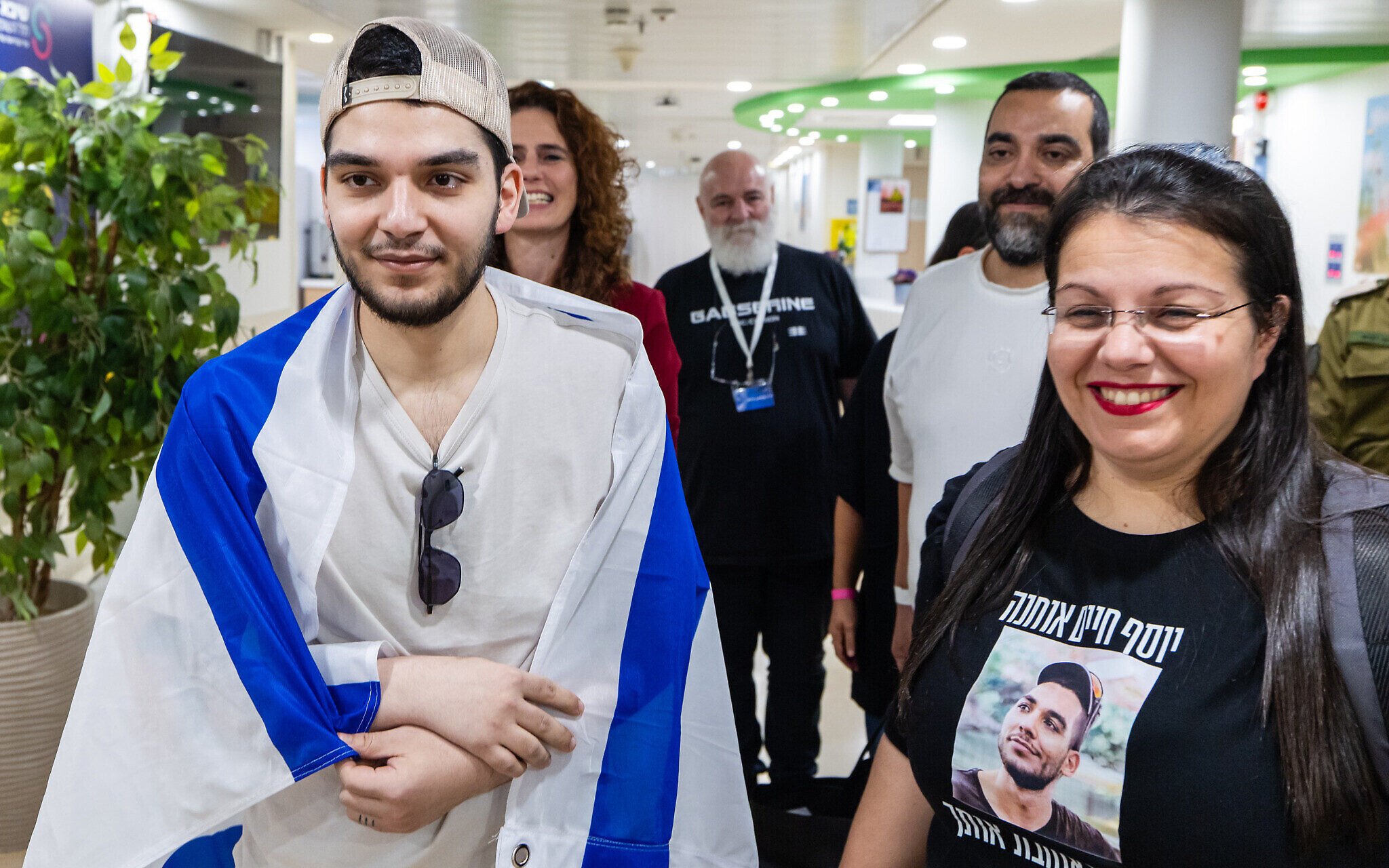
Yosef-Haim Ohana arrives at a hospital following his release from two years of captivity in Gaza, October 13, 2025. (Shauli Landner/Government Press Office)
Asked about how they were treated in general, Ohana said it was clear the terrorists enjoyed having prisoners they could control.
“It’s what they had always dreamed of, having prisoners to whom they can do whatever they want. ‘Your state did such and such a thing, so now we’re getting revenge.’ They made us choose among each other who would get killed and who they would only injure. They cast lots on us.”
“There was one time when they were ordered to beat us, and we saw the flashlights approaching, and we said hello to them, and they started beating us. They lined us up along the wall, took off our shirts and just started beating us,” Ohana recounted.
“Since then, we’ve called it ‘the lamps are coming,’” he added in a possible reference to the Israeli children’s tag-like game The Engines are Coming, where the catcher calls out “the engines are coming” and the others respond, “We’re not scared” before running away.
Ohana said he convinced his captors not to kill him on multiple occasions throughout his two years in captivity by “using their logic,” knowing that he was an “important card” for the terror group.
In one instance, he recounted telling a captor who was about to kill him: “What, now, you will take revenge on me to satisfy your people, but what about the prisoners who are waiting to be released in exchange for me in prison, to be released and see their family? If I’m dead, fewer prisoners will be released.”
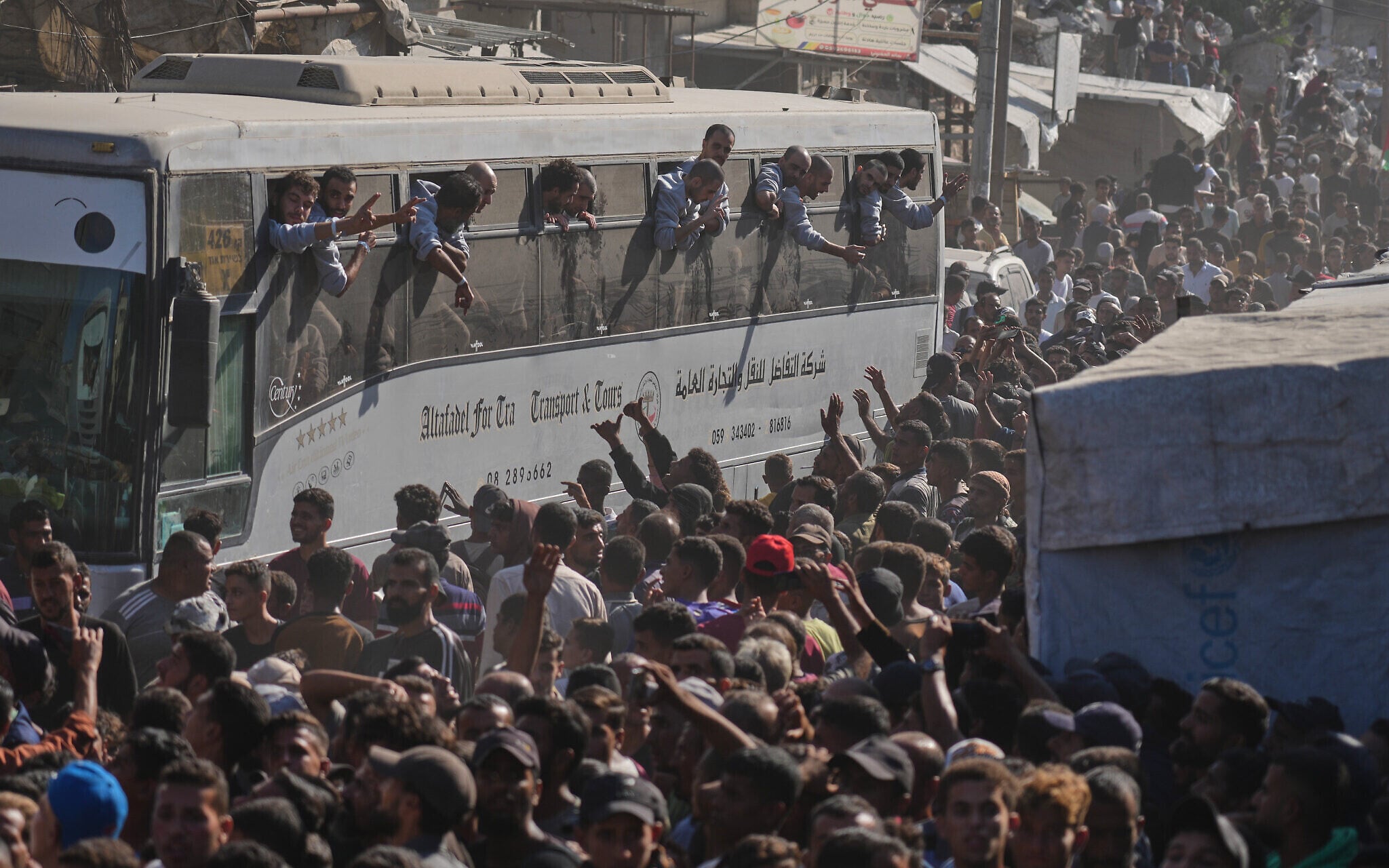
People gather to greet freed Palestinian prisoners arriving on buses in the Gaza Strip after their release from Israeli jails under a ceasefire agreement between Hamas and Israel, outside Nasser Hospital in Khan Younis, southern Gaza Strip, Oct. 13, 2025. (AP Photo/Jehad Alshrafi)
Segal asked Ohana to repeat what he had said to the terrorist in Arabic, but after trying the ex-hostage found he could not bring himself to speak the language, saying it was too triggering for him and that he wanted to speak only Hebrew.
He said he was alone for his last two months in captivity and spoke only Arabic as one of his captors taught him the language so he could read the Quran that he was given as part of numerous attempts to convert him to Islam.
His childhood growing up in Chabad helped him know how to talk to the captors who tried to convert him, but it also helped him stay grounded in his Judaism, Ohana told Segal, saying he spoke to God every day.
“I always had things I needed to talk about, and there wasn’t always someone to talk to, even though I was with other people,” he said.
Another thing that helped Ohana over the last two years was music, he said, naming two songs that he especially held onto. The first was the Hebrew theme song of the “Adventures of Pinocchio” TV series, which begins, “Good morning, world. How good it is to live and be a boy who loves the world and the world loves him.”
The other song was “Hakohav Haz’eh Met” (This Star is Dead) by Daniela Spector, which he sang to himself every time he thought he was going to die.
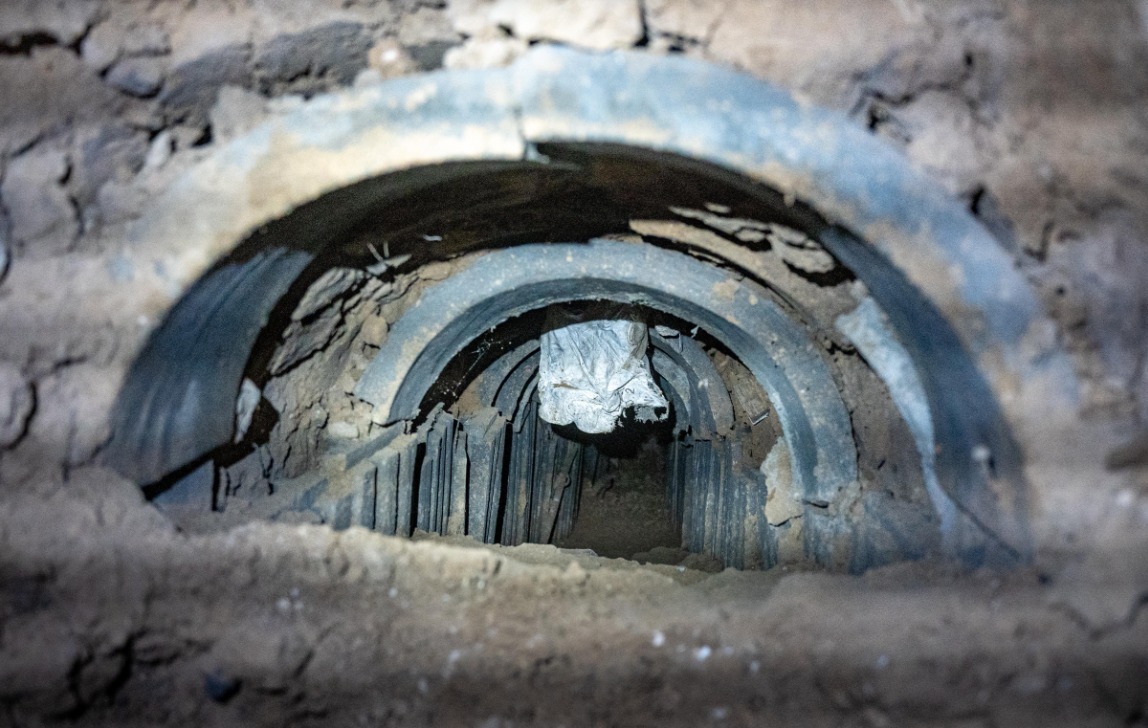
A Hamas tunnel found by troops in northern Gaza’s Jabalia, in a handout photo issued by the military on December 8, 2024. (Israel Defense Forces)
“The song says that even when we’re gone, our light continues to exist. It told me things didn’t end here. My body would, but I would go on,” he said, holding back tears as Segal played it for him for the first time since his release.
One moment when Ohana thought he was going to die was during the rescue of Noa Argamani, Shlomi Ziv, Almog Meir Jan, and Andrey Kozlov in June 2024, which happened very close by to where he was being kept at the time with Segev Kalfon and Maksim Harkin.
“We heard everything,” he said. “We heard helicopters above us, and they were scared.”
Mere days after that rescue, the three hostages were taken underground where they remained until they were released.
Regarding his release, Ohana said “the craziest moment was when we were in the Red Cross convoy, with an IDF jeep in front that we’re following, and then suddenly there were soldiers standing there cheering for us. For the first time in two years, instead of hearing bad things about soldiers, I see them, and I see them saying hello to me.”
Ultimately, Ohana said, he knows that being taken hostage wasn’t personal but that it happened because he was a Jewish Israeli.
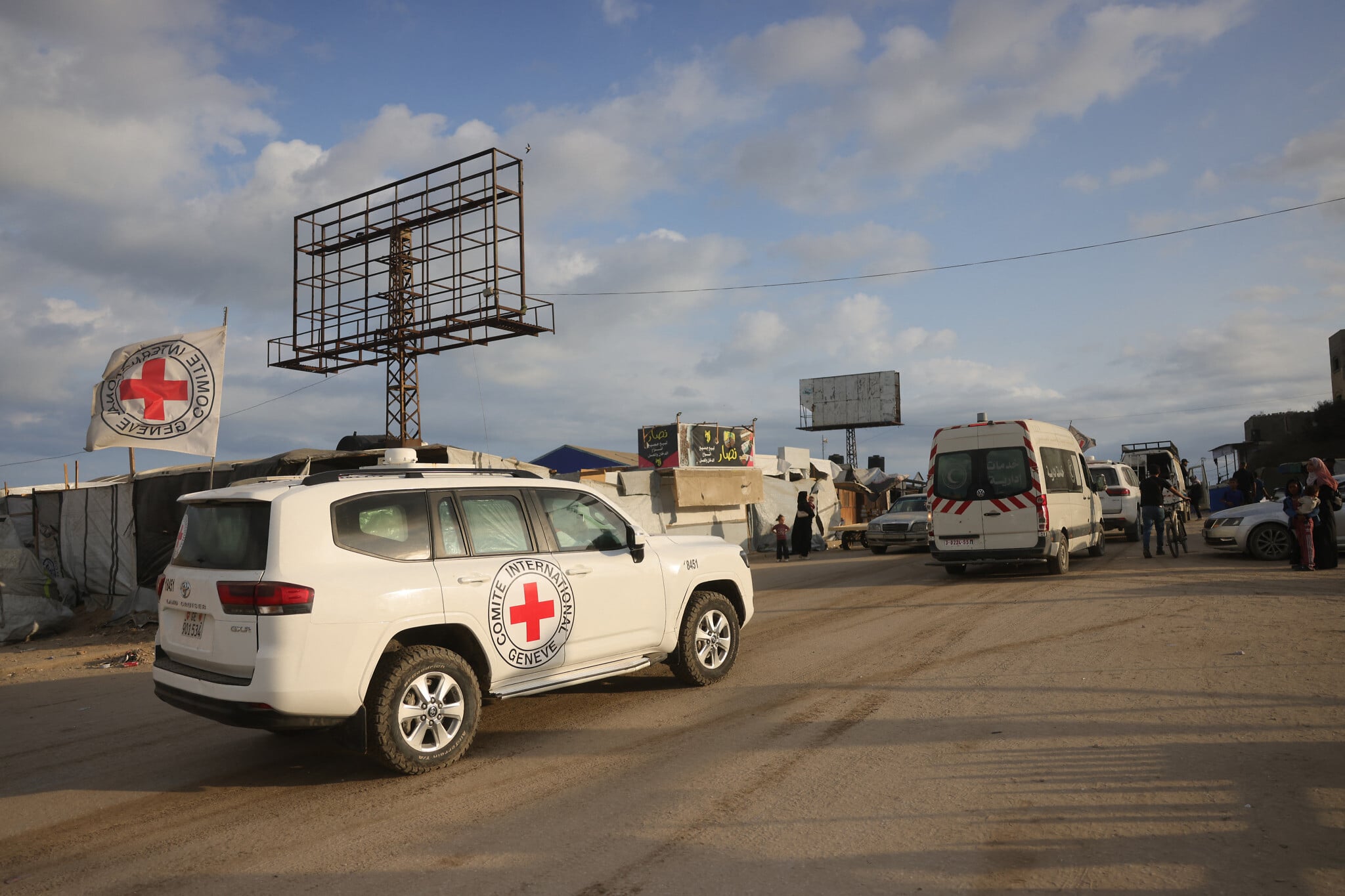
Red Cross vehicles move toward the northern Gaza Strip from Al-Zawayda city, near Deir al-Balah, in central Gaza on October 9, 2025. (Bashar TALEB / AFP)
“It helped me understand that I’m a part of something bigger, something much more powerful. These two years were just a small part of the story of 77 years of fighting for our home, and I’m happy I took part in that. I don’t regret anything I did,” he said.
“There was one thing I didn’t forget. I didn’t forget what it was to love, and when I came back and was reunited with my friends and family and all the people who were happy about my release, I understood why I didn’t forget.”