
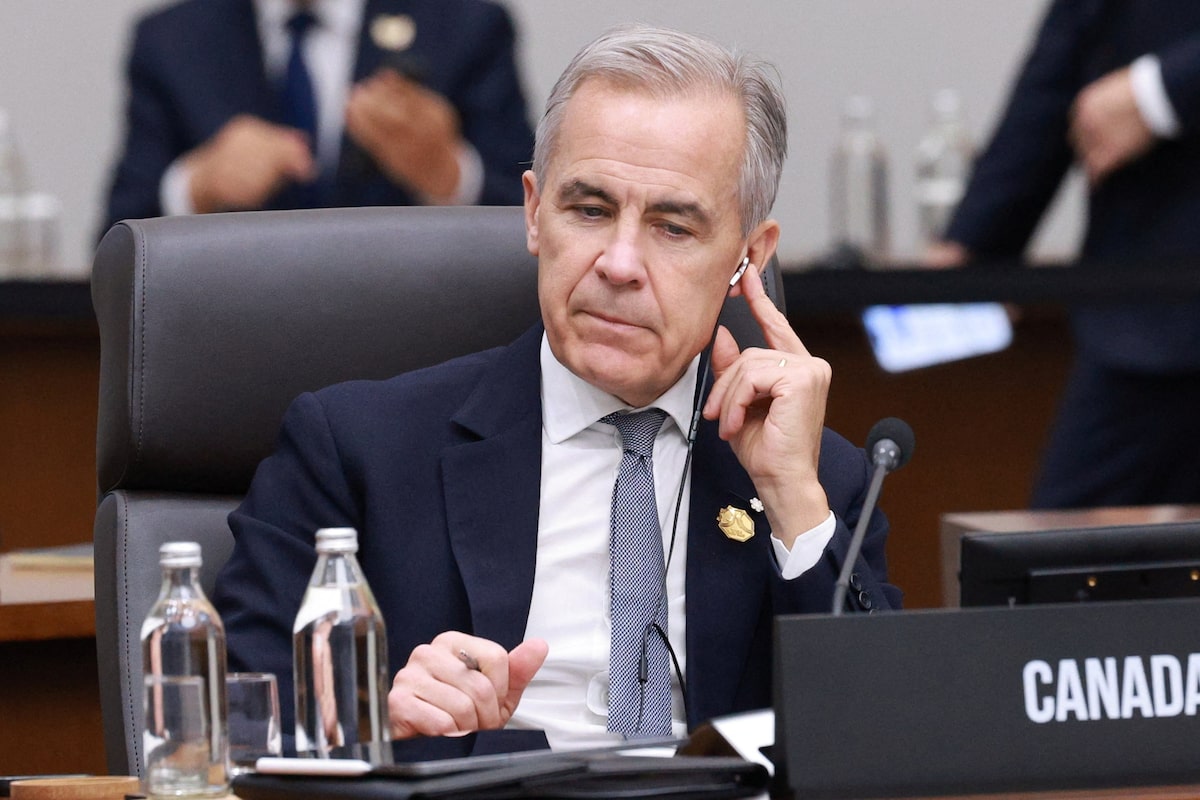
Prime Minister Mark Carney attends the Asia-Pacific Economic Cooperation summit in Gyeongju, South Korea, on Nov. 1.YONHAP NEWS AGENCY/Reuters
Prime Minister Mark Carney says he’s prepared to fight an election campaign if his minority Liberal government fails to pass the Nov. 4 federal budget.
Mr. Carney has already warned Canadians they will have to accept challenges and sacrifices in what he said would be “generational investments” to refashion the Canadian economy in the face of rising U.S. protectionism.
The Liberals will require the support of at least one opposition party to pass their fiscal plan and the government will fall if this fails because votes on the budget amount to confidence votes.
Speaking to reporters at the Asia-Pacific Economic Cooperation summit in South Korea, Mr. Carney on Saturday declined to say whether he is confident the budget will pass.
Minority Liberals weigh finances with politics in coming budget
Instead, he said his fiscal plan is what Canada needs.
“I am 100 per cent confident that this budget is the right budget for this country at this moment,” Mr. Carney told reporters.
“This is not a game.”
Government House Leader Steven MacKinnon has said the Liberals do not have the votes yet.
Asked if he is prepared to go to the polls if the Liberals fail to achieve the necessary votes and his government falls, Mr. Carney said he was.
“I’m always prepared to stand up for the right thing.”
A fall ballot would mean two elections in Canada in less than seven months.
The budget will likely mean cuts in government operations and services but more money for investments that help Canadian business.
Public service braces for billions in spending cuts ahead of Tuesday’s budget
Mr. Carney, in South Korea, said Canada has to reduce its overreliance on the United States and pay for new security challenges. He’s already committed to the biggest increase in military spending in 70 years but his budget will be the first indication of how this fits into the federal fiscal framework.
Last month, Mr. Carney announced he’s set a 10-year goal for Canada of doubling its trade with countries other than the United States to $300-billion.
“Where are we going to find the growth, given the headwinds from the new U.S. trade policy?,” Mr. Carney said. “What this budget will do is provide the answer to that question and the means to become masters in our own home: maîtres chez nous.”
The tariffs that U.S. President Donald Trump has imposed on Canada and dozens of major U.S. trading partners have disrupted worldwide supply chains and weakened the international rules-based order by disregarding free trade agreements.
“It’s an important moment in the global economy. It’s a critical moment for our country,” Mr. Carney said.
Earlier, also in South Korea, Defence Minister David McGuinty said the budget will pave the way for the government to fulfill its new NATO commitment to spend 5 per cent of GDP on defence.
“What we’ll be doing in the budget is laying track to meet the 5-per-cent target by 2035,” he said.
The steep increase in military spending – the biggest in more than 70 years – has handed Mr. Carney’s government a fresh challenge: how to pay for it.
Carney faces historic choice between South Korea and Europe for submarine fleet
Canada has yet to allocate money in the fiscal framework to buy as many as 12 new submarines. The subs will cost as much as $2-billion each, and that does not include all the weapons systems and associated costs of operating the boats. Over their operating lives, they will cost more than $100-billion when maintenance, parts and upgrades are included.
At the June, 2025, NATO leaders’ summit, the Prime Minister pledged that Canada will spend as much as $150-billion annually on defence within a decade – equivalent to 5 per cent of the country’s gross domestic product.
By comparison, the federal budget for defence-related spending this fiscal year is about $63-billion, or 2 per cent of GDP.