
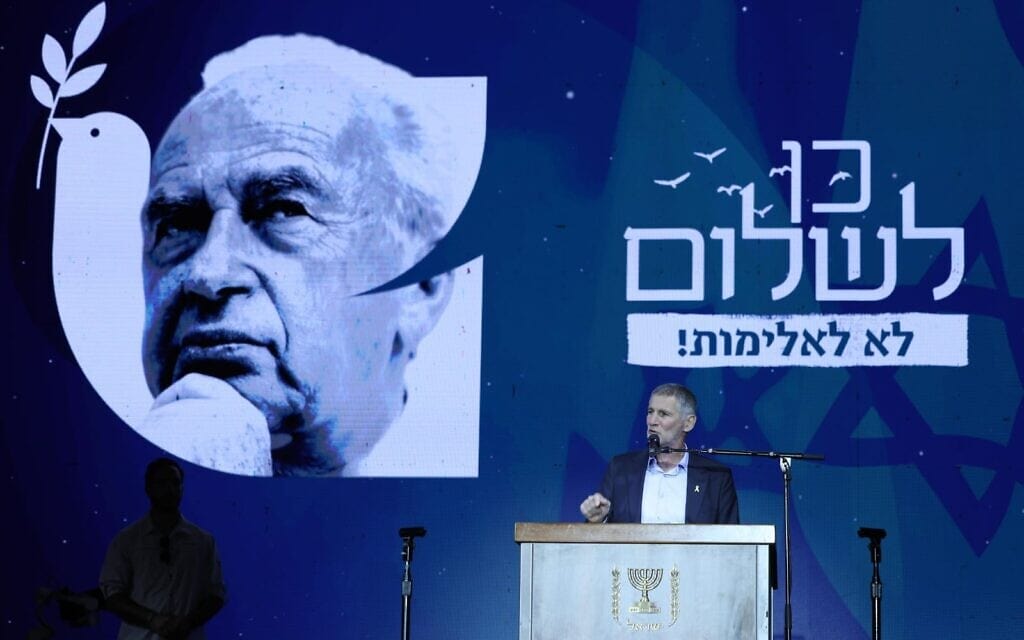
It began with footage of Yitzhak Rabin heralding “a chance for peace” and ended with a crowd of tens of thousands singing a “Song for Peace,” the same song that the prime minister had sung shortly before he was gunned down in 1995.
During those moments and in between, a massive crowd filled the center of Tel Aviv to mark the 30th anniversary of Rabin’s assassination by a right-wing extremist. At the memorial rally, where attendees held signs calling for peace and reading “Rabin was right,” a roster of politicians ascended the stage to warn that the forces behind the left-wing leader’s murder were still present in Israeli society today — and were even gaining force.
“A man was murdered; it’s our job to make sure the idea is still alive,” said Opposition Leader Yair Lapid, head of the center-left Yesh Atid party, who warned that far-right forces were “distorting what the very idea of Judaism is. They again turning Judaism into violence, murderousness, internal hatred, a thing that tears us apart.”
Lapid decried those “who distort Judaism and turn it into politics of hate and violence,” adding that “these people are sitting today also in the government.”
Rallies marking the anniversary of the November 4, 1995, assassination were once an annual event at the Tel Aviv square where Rabin was murdered, which now bears his name.
Get The Times of Israel’s Daily Edition
by email and never miss our top stories
By signing up, you agree to the terms
Organizers estimated that more than 80,000 people attended the rally, stretching far beyond the confines of the plaza, with some putting the number at 150,000. Speakers used the stage to call for a range of goals, from peace to national unity to an ongoing fight for the deceased hostages in Gaza to a state inquiry into the October 7, 2023, attack.
Others focused on Rabin’s example and legacy.
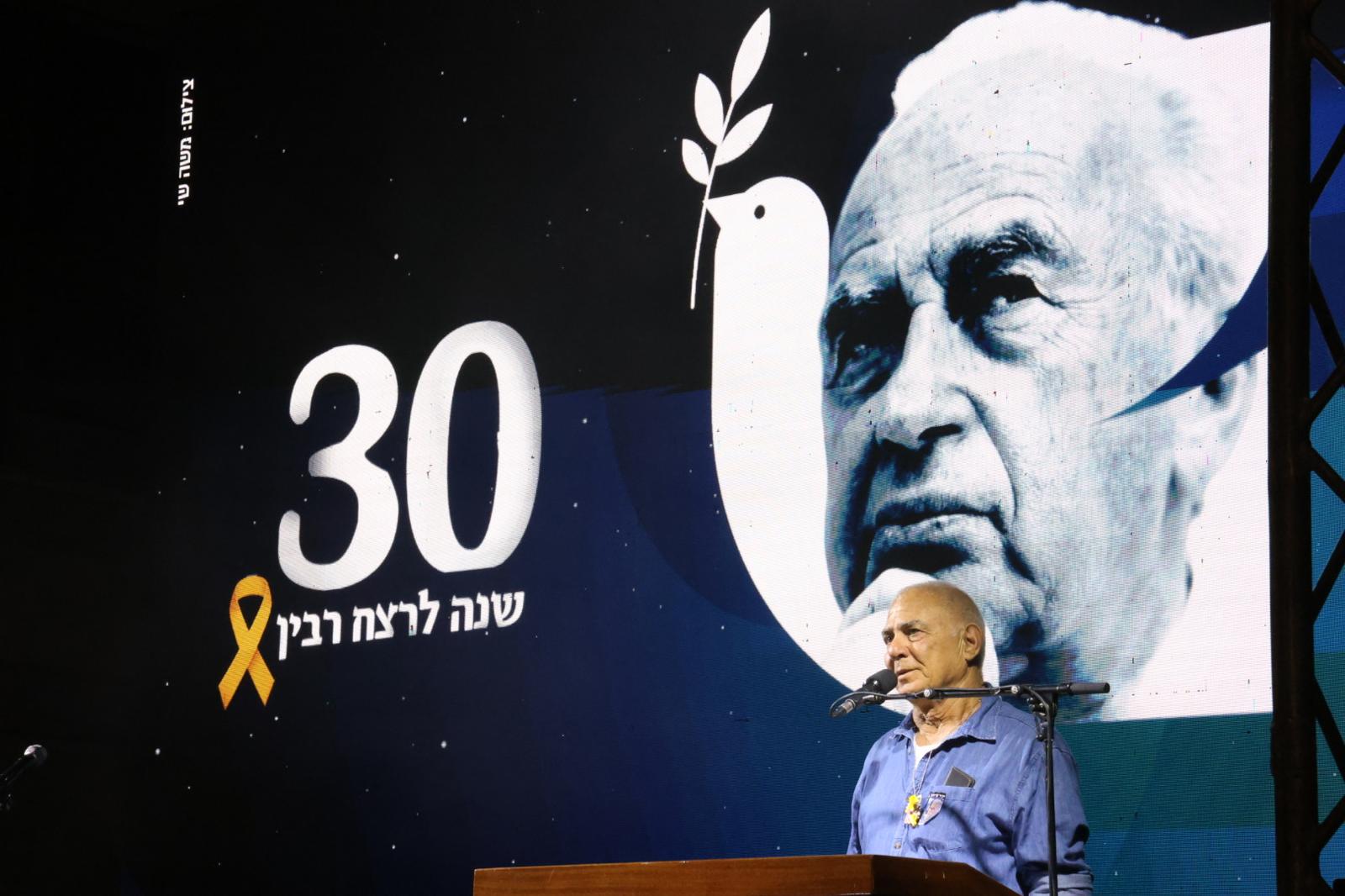
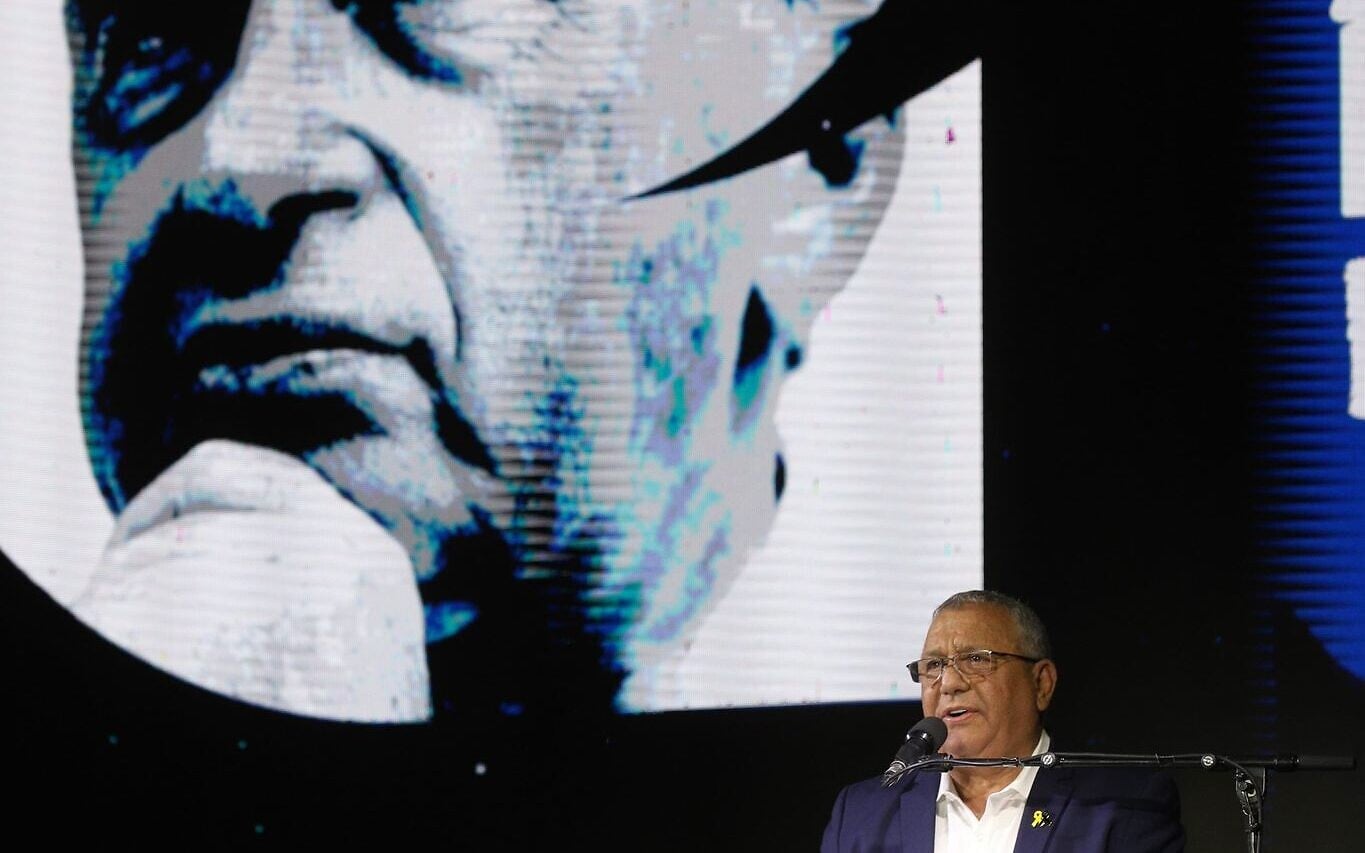
Released hostage Gadi Mozes speaks at Tel Aviv’s Rabin Square to commemorate 30 years since late prime minister Yitzhak Rabin’s assassination, November 1, 2025. (Ziv Barak)
“If Yitzhak Rabin were prime minister today, no one would have been left behind,” said Gadi Mozes, who was held hostage in Gaza for more than a year, in an emotional address. “He would not have given up on us, the hostages, for two years… He would not have slept until everyone was brought home.”
Rabin, an iconic military leader who was part of Israel’s founding generation, served as prime minister from 1974 to 1977 and from 1992 to his assassination in 1995. A leader of the Labor Party, he signed the Oslo Accords with Palestine Liberation Organization leader Yasser Arafat in 1993, launching an Israeli-Palestinian peace process that later collapsed.
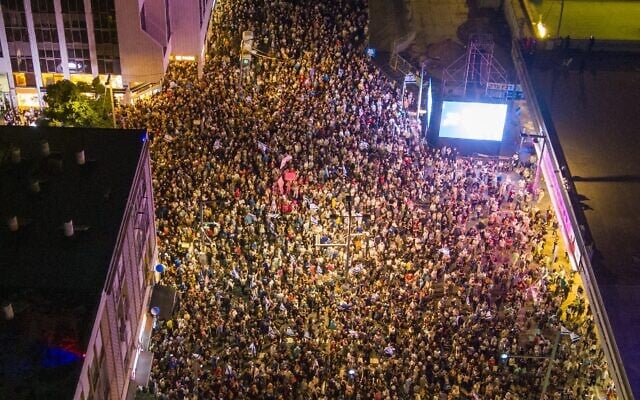
Tens of thousands of Israelis attend a rally in Tel Aviv marking the 30th anniversary of former prime minister Yitzhak Rabin’s assassination. (Tally Melamed/Israeli Pro-Democracy Movement)
He was assassinated by Yigal Amir, a Jewish extremist who opposed the accords’ transfer of West Bank territory to Palestinian control and believed Rabin deserved to die under a Jewish concept known as din rodef, in which someone who is about to kill another may themselves be killed. Amir is serving a life sentence in prison.
The fallout from the assassination has remained a source of controversy, and the politicians who came to Saturday’s rally represented only a slice of the Israeli political map. Prime Minister Benjamin Netanyahu, who was opposition leader at the time of the assassination, and who has adamantly denied accusations that he encouraged the incitement that led to the murder, did not attend. Nor did former prime minister Naftali Bennett, considered to be Netanyahu’s most credible challenger.
Centrist lawmaker Benny Gantz, who had headlined the rally marking the assassination’s 24th anniversary, was reportedly not invited.
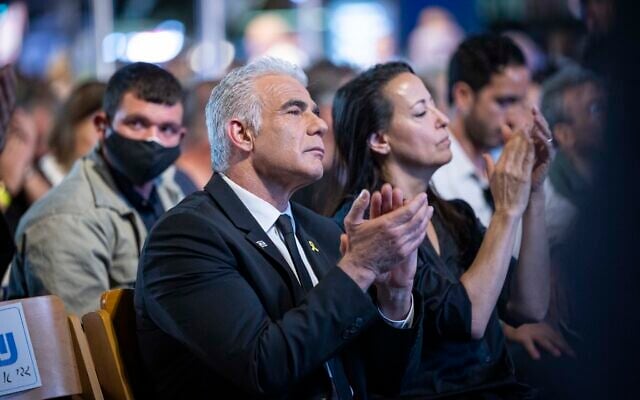
Opposition Leader Yair Lapid attends a rally marking 30 years since the assassination of former prime minister Yitzhak Rabin on November 1, 2025, in Tel Aviv. (Erik Marmor/Flash90)
While the message of the rally focused on memorializing Rabin, some of the speeches were overtly political. Many at the rally also waved Israeli flags and wore regalia from Yesh Atid and the left-wing The Democrats party.
Lapid took aim at far-right National Security Minister Itamar Ben Gvir in his remarks.
“Yigal Amir is not Judaism. The violent racism of Itamar ben Gvir is not Judaism,” he said.
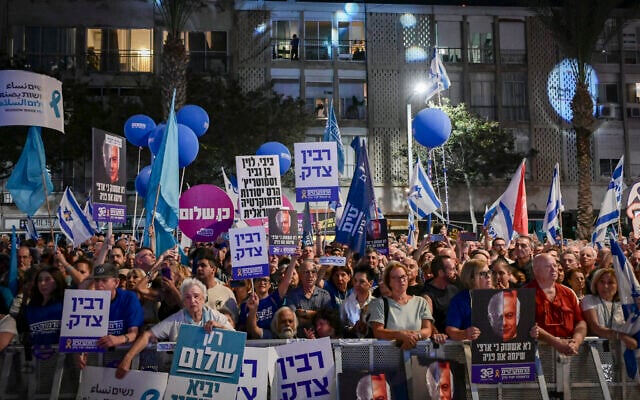
Israelis attend a rally in Tel Aviv marking the 30th anniversary of former prime minister Yitzhak Rabin’s assassination. (Avshalom Sassoni/Flash90)
The Democrats leader Yair Golan, whose party is a merger of Rabin’s Labor Party and the left-wing Meretz, drew a direct link between Rabin’s murder and what he described as ongoing “incitement and extremist nationalism” within Israel, warning that “the echoes of those three shots have not faded.”
“They still resonate today in every act of this government that works against its own people,” Golan said. “Every time patriots are called traitors, every time demonstrators fulfilling their civic duty are beaten, every time the media is silenced and the judiciary is trampled — those same shots still echo.”
He praised Rabin as “a man of truth and integrity, who time and again placed the good of the people above political and personal gain,” adding that Rabin “knew that peace is not weakness, but strength and power.”
Calling for a “renewed moral and democratic backbone,” Golan urged Israelis to reject complacency and fear.
“True unity is not when we give up our values and unite around a lie,” he said. “It is when we stand together — strong for the truth, with a democratic, moral, and security backbone forged of steel.”
“We will not bow again before violence and hate,” he declared. “We will not flatter bullies or apologize to the corrupt. Our unity is one of shared democratic and liberal values — of a Jewish and democratic Israel.”
MK and former IDF chief Gadi Eisenkot speaks at a memorial rally marking the 30th anniversary of the assassination of prime minister Yitzhak Rabin in Tel Aviv’s Rabin Square, November 1, 2025. (Noam Amir / Pro-Democracy Protest Movement)
Gadi Eisenkot, a former IDF chief of staff and centrist MK who recently founded his own party, echoed the same message.
“Rabin’s assassination was the direct result of polarization and incitement,” he said. “Thirty years later, the same warning light still flashes before us — a divisive discourse built on lies and self-serving interests.”
Eisenkot, like the other speakers a vocal critic of Netanyahu, called Rabin a “true Mr. Security,” appearing to take a shot at a nickname used by the current prime minister.
“Rabin stood at the most pivotal crossroads in Israel’s history — a true Mr. Security, the kind of leader Israel yearns for today,” Eisenkot said. “Those were different days, when leaders took responsibility — in words and in deeds. Responsibility — that’s what Israel yearns for today.”
Eisenkot urged the government to establish a state commission of inquiry into the failures surrounding the October 7 attack and to pass “a universal conscription law,” saying: “The soldiers have done and continue to do their duty. Now we must do ours.”
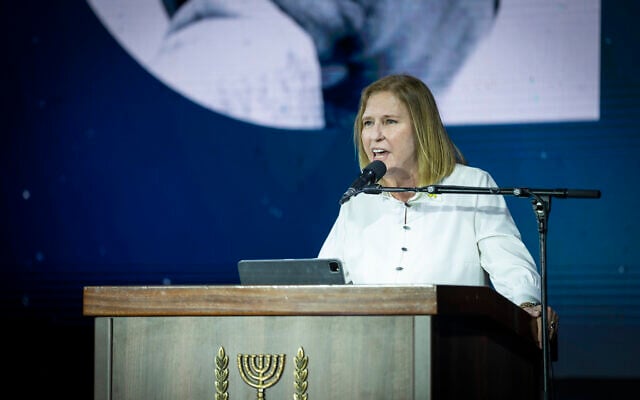
Tzipi Livni speaks a rally in Tel Aviv marking the 30th anniversary of former prime minister Yitzhak Rabin’s assassination. (Erik Marmor/Flash90)
Former foreign minister Tzipi Livni, who once headed negotiations with the Palestinian Authority, said in her speech that Amir’s bullets had sought to eliminate democracy and peace.
“Thirty years ago, Rabin was murdered, but democracy didn’t die, and we are fighting for its life, and for our lives under it,” she said.
“Today they’re trampling any future chance for peace, and they’re not just leaving it marginalized and bloodied by the side of the road, but they make sure that no one would dare get near it or speak of it, lest they be suspected of leftism, oy, oy, oy, weakness or betrayal,” she said. “But we will approach peace because that’s the future of our country.”
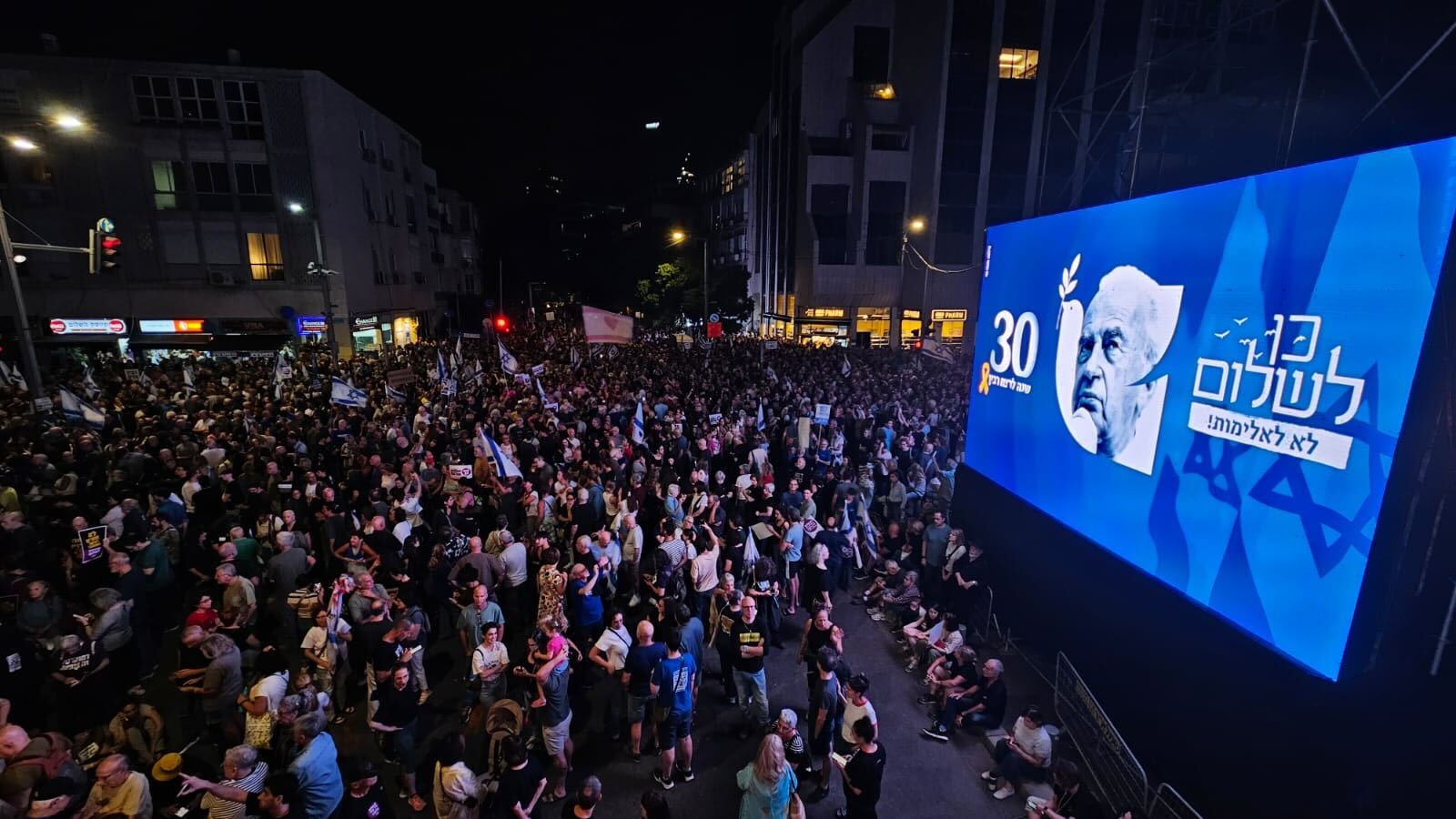
Crowds gather at the Tel Aviv ceremony commemorating 30 years since the assassination of prime minister Yitzhak Rabin, November 1, 2025. (Stav Levaton/Times of Israel)
One of the most resonant moments of the evening came near the end of the rally, when Mozes, the released hostage, ascended the podium and spoke of his fellow hostages held in Gaza. He also praised his kibbutz, Nir Oz, of which he was one of the founders, and which was ravaged in the October 7 attack.
He also repeated a play on a famous line attributed to early 20th-century Zionist activist Joseph Trumpeldor, “It’s good to die for the sake of our land.”
Mozes said, “It’s good to live for the sake of our land,” and called for diplomatic accords with the Palestinians, Syria and Lebanon.
“Yitzhak Rabin also knew how to take responsibility, and not just for his successes,” he said. “He knew that you don’t leave anyone behind.”
Mozes added: “He was an honest man and a courageous leader, and I know that if Yitzhak Rabin was prime minister today, no man would be left behind. He wouldn’t have given up on us, the hostages, for two years.”
Mozes continued: “I will not be silent or rest until the return of the last of the hostages.”
Following the rally, another weekly demonstration for the 11 remaining deceased hostages held in Gaza, took place at Hostages Square nearby.