
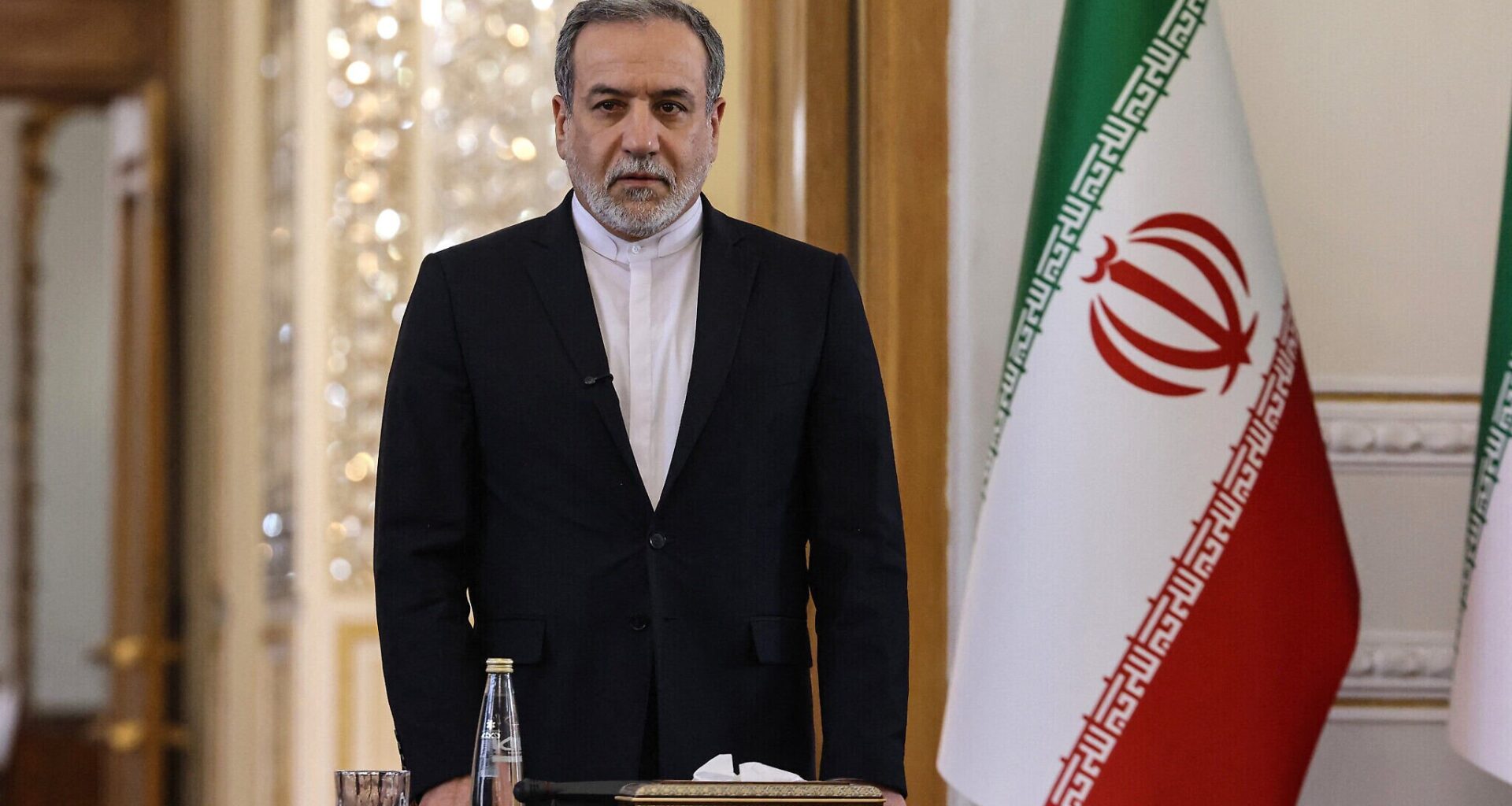
Iran’s Foreign Minister Abbas Araghchi said Tehran has no desire for direct talks with the US over its nuclear or missile program, insisting that the Islamic Republic would not give up its ability to enrich uranium, according to a Saturday report by Al Jazeera.
“We will never negotiate our missile program, and no rational actor would disarm. We cannot stop uranium enrichment, and what cannot be achieved by war cannot be achieved through politics. We have no desire for direct talks with Washington, but can reach an agreement for indirect negotiations,” he told the Qatari outlet.
“We are ready to negotiate to remove concerns about our nuclear program and are confident in its peaceful nature. Reaching a fair agreement is possible, but Washington has proposed unacceptable and impossible conditions,” Araghchi said.
“We are at the highest state of readiness at all levels, and Israel will face another defeat in any future conflict. We gained significant experience from previous wars and tested our missiles in real combat. Any aggressive move by Israel will have dire consequences,” he added.
Israel struck both the Isfahan and Natanz nuclear facilities during the 12-day war with Iran, and the US struck both sites as well, in addition to the underground and hard-to-reach Fordo site, which Israel did not have the means to target alone.
Get The Times of Israel’s Daily Edition
by email and never miss our top stories
By signing up, you agree to the terms
Araghchi went on to add that Iran’s “nuclear materials remained under the rubble of the attacked nuclear facilities and were not transferred elsewhere. The technology exists, despite the losses,” referring to Israel and the US’s attacks on the country’s nuclear program.
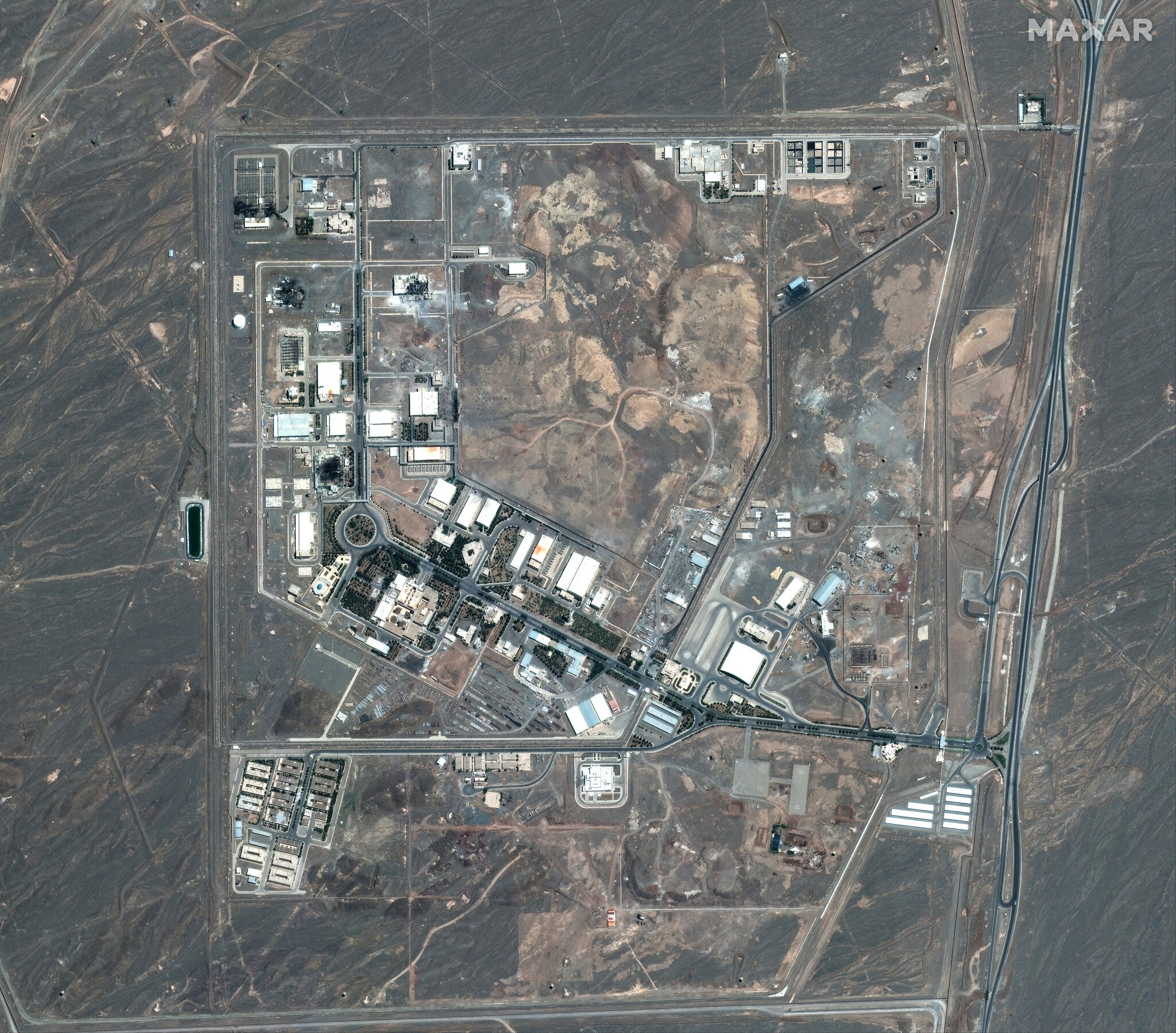
This handout satellite image released by Maxar Technologies shows the Natanz nuclear facilities near Ahmadabad, Iran after IDF airstrikes on June 15, 2025. (Handout / Satellite image ©2025 Maxar Technologies / AFP)
Despite US President Donald Trump’s repeated statements that Iran’s nuclear facilities were obliterated during the war, Rafael Grossi, the director of the International Atomic Energy Agency, revealed last week that the body believed that most of Iran’s supply of enriched uranium survived the war and is still being kept inside the damaged nuclear facilities.
He told the Swiss newspaper Neue Zürcher Zeitung that the UN body’s findings suggest that “the majority” of Iran’s 60% enriched uranium “remains in the nuclear facilities in Isfahan and Fordo, and some in Natanz,” estimating that Iran has roughly 400 kilograms of 60% enriched uranium still in its possession.
Araghchi himself made similar statements in September, saying that enriched nuclear material remained “under the rubble” of facilities damaged during the war with Israel.
Israel has assessed that the war set back the Iranian program by “years,” but has not been definitive in publicly assessing the fate of Iran’s enriched uranium.
Israel said its sweeping assault on Iran’s top military leaders, nuclear scientists, uranium enrichment sites, and ballistic missile program was necessary to prevent the Islamic Republic from realizing its avowed plan to destroy the Jewish state.
Iran has consistently denied seeking to acquire nuclear weapons. However, it has enriched uranium to levels that have no peaceful application, obstructed international inspectors from checking its nuclear facilities, and expanded its ballistic missile capabilities. Israel said Iran had taken steps toward weaponization before the June war.
Iran retaliated to Israel’s strikes by launching over 500 ballistic missiles and around 1,100 drones at Israel, killing 32 people and wounding over 3,000 in Israel, according to health officials and hospitals.
Watch DocuNation Season 3: The Heart of Israel
when you join the ToI Community
Support The Times of Israel’s independent journalism and receive access to our documentary series, DocuNation: The Heart of Israel.

In this season of DocuNation, you can stream eight outstanding Israeli documentaries with English subtitles and then join a live online discussion with the filmmakers. The selected films show Israel beyond the conflict: a place of storytellers and musicians, of dreamers, makers, and communities rooted in meaning and trust.
When you watch DocuNation, you’re also supporting Israeli creators at a time when it’s increasingly difficult for them to share their work globally.
To learn more about DocuNation: The Heart of Israel, click here.
Support ToI and get DocuNation
Support ToI and get DocuNation
Already a member? Sign in to stop seeing this
You appreciate our journalism

You clearly find our careful reporting valuable, in a time when facts are often distorted and news coverage often lacks context.
Your support is essential to continue our work. We want to continue delivering the professional journalism you value, even as the demands on our newsroom have grown dramatically since October 7.
So today, please consider joining our reader support group, The Times of Israel Community. For as little as $6 a month you’ll become our partners while enjoying The Times of Israel AD-FREE, as well as accessing exclusive content available only to Times of Israel Community members.
Thank you,
David Horovitz, Founding Editor of The Times of Israel