
On an overcast morning in Co Waterford, a dozen women sit in a circle inside a modest church hall, their white bonnets neatly pinned and Bibles open on their laps.
They belong to Ireland’s only Amish-Mennonite congregation — a branch of an American religious tradition better known for horse-drawn buggies and butter-churning than for its Irish converts. Yet for more than 30 years, this community on the Irish east coast has quietly followed its faith.
The topic this week is: how to be a virtuous woman.
“She’s definitely cultivating a life of godliness, and is careful of what she says, not just anything that comes out of her mouth,” one girl says.
“Her husband puts his whole trust in her. He will never need more from her. She always does good for him, never evil. She looks for natural resources and willingly works by hand,” says another, an American cadence in the air as she clasps the Bible with two hands.
There is a ripple of teenage mischief across the circle: two girls exchange smirks, one leans back and chews gum, apparently unmoved by the talk of a wife’s duty, servitude and sacrifice.
They take turns reading from Proverbs xxxi. A teenager in brown boots and a heavy dress smiles as it comes to her: “Where can the ideal wife be found? For she is priceless.”
MARY BROWNE FOR THE SUNDAY TIMES
It is here, apparently, in the Dunmore East Christian Fellowship.
They do not, as a rule, dabble in TikTok, consult ChatGPT for the nearest supermarket or line up pre-drinks on a Saturday night. Modesty is the point: no jewellery, no alcohol, no premarital sex, no television, no smartphones.
• Meet the original trad wives: ‘I had 13 children at 31’
It looks, at first glance, like the Irish echo of America’s “trad wife” movement — that online celebration of strict gender roles and domesticity. But this community, three decades old and largely unplugged, pre-dates the hashtag.
When the two-hour service breaks, men and women mingle for the first time; until then, they have sat on opposite sides. A 23-year-old, recently arrived from a related church in West Virginia, calls this community “more conservative”.
“In my experience, I wouldn’t even wear the head covering,” she says, touching the white bonnet pinned to her hair.
She identifies as Amish-Mennonite — her grandmother is Amish — though others here prefer “Anabaptist”, emphasising salvation without aligning fully with the wider Mennonite world.
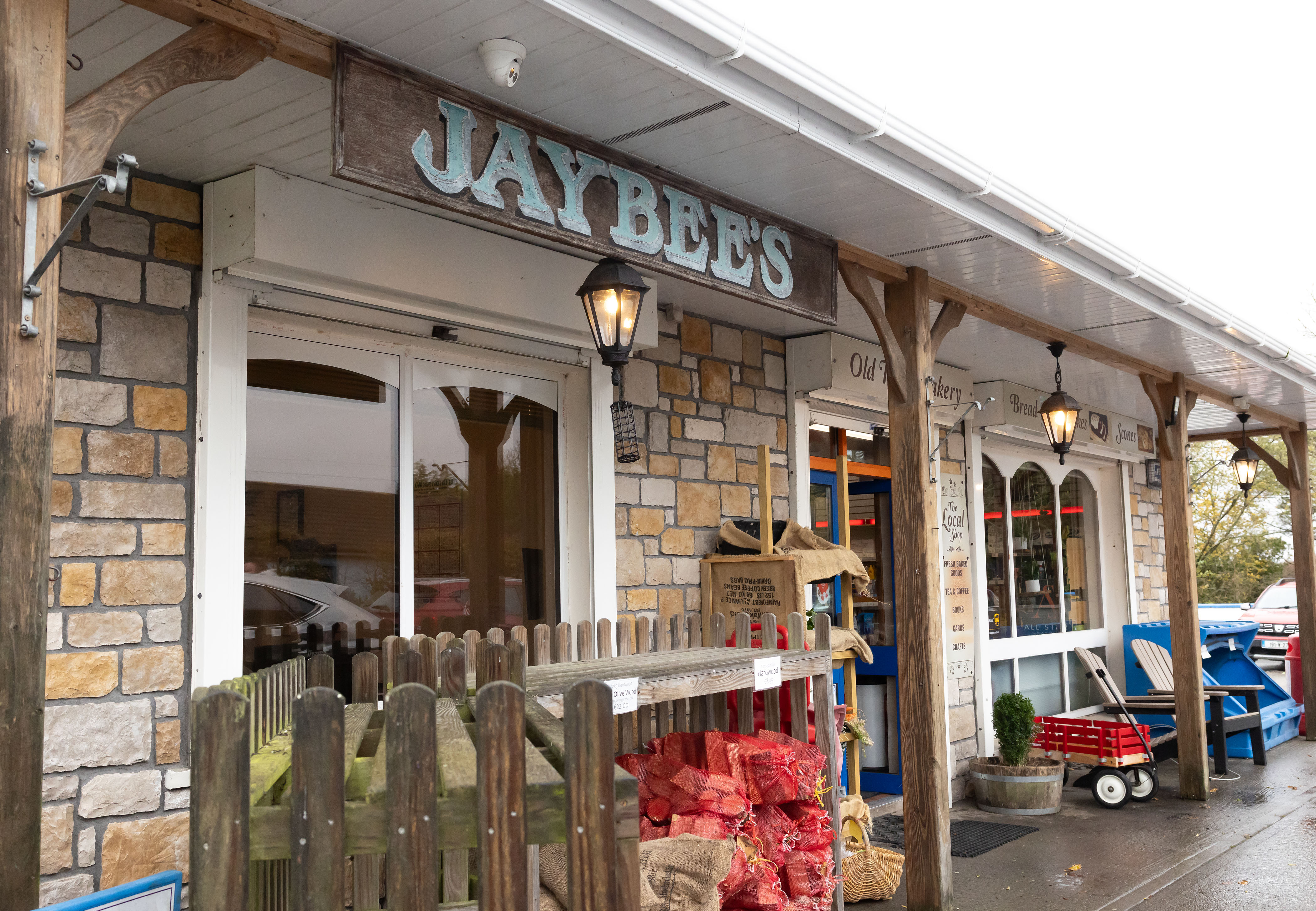
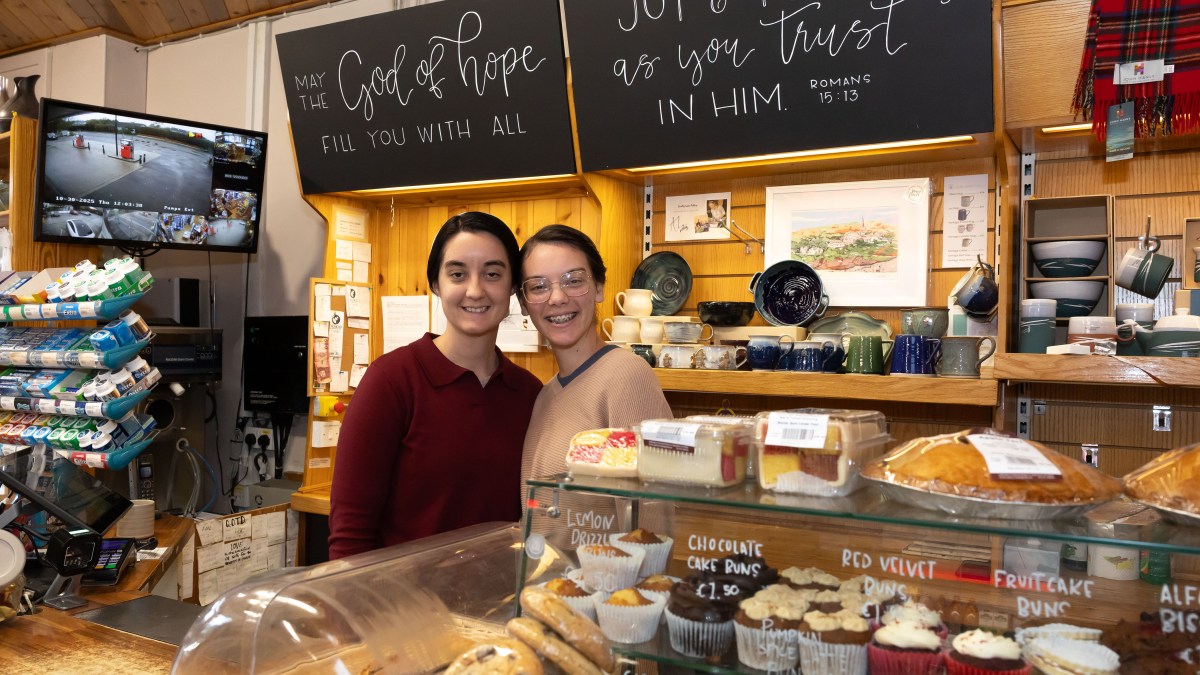
Jaybee’s is the the community’s bakery and shop
MARY BROWNE FOR THE SUNDAY TIMES
The distinctions can be slippery: Amish are stricter on technology, avoiding electricity and modern conveniences; Mennonites drive, plug in and, sometimes, carry phones. Both sit under the broad Anabaptist umbrella, and the communities often overlap.
She laughs about contrasts. “Last Sunday we were on a girls’ trip to Dublin and went to a Catholic church. It was so intriguing.” We compare notes on weekends away — mine featuring a night out — and I ask about drinking.
“Well, no. Most don’t. Unless they’re being wild. It’s discouraged,” she says. “I don’t believe a sip is wrong. It’s getting drunk — losing control — that’s the issue. We probably use coffee the way you use alcohol. If I was going on a casual date, I’d go for coffee.”
Later, a younger woman sketches the boundaries of a “hands-off courtship”: no touching while dating. Marriages tend to happen at about the age of 25, though family expectations matter. Engagements often follow six to nine months of courtship. Dancing is out. With only about a hundred people in the congregation and marriage within the church the norm, travel to other Anabaptist communities is common.
At lunch I meet the Gregory-Smiths. Jeanette settled beside me during the sermon; now, in a bright kitchen hung with pots and pans — and, unexpectedly, a scattering of plug sockets — she passes a tray of baked potatoes. “Do you have siblings?” she asks. “Five brothers,” I say. We laugh at the implied burdens.
Jeanette did a PhD, worked in publishing in London, and lived with friends in her twenties. The Docklands building she once worked in was bombed by the IRA in 1996, not long after she left. She used to wear jewellery; the marks of earrings linger, though church guidelines prohibit “outward adornment”.
Why Waterford? “Hew was a vicar in the Anglican church — but then we left,” she says. Her husband, the family patriarch, joins in: “I could see the culture shifting. The church was going where the wind was blowing, and you were part of it.” What had changed? “Marriage is between a man and a woman, and celibacy for single Christians. It’s one man and one woman — and then you’ve another group saying you can marry your dog,” he adds, half-laughing.
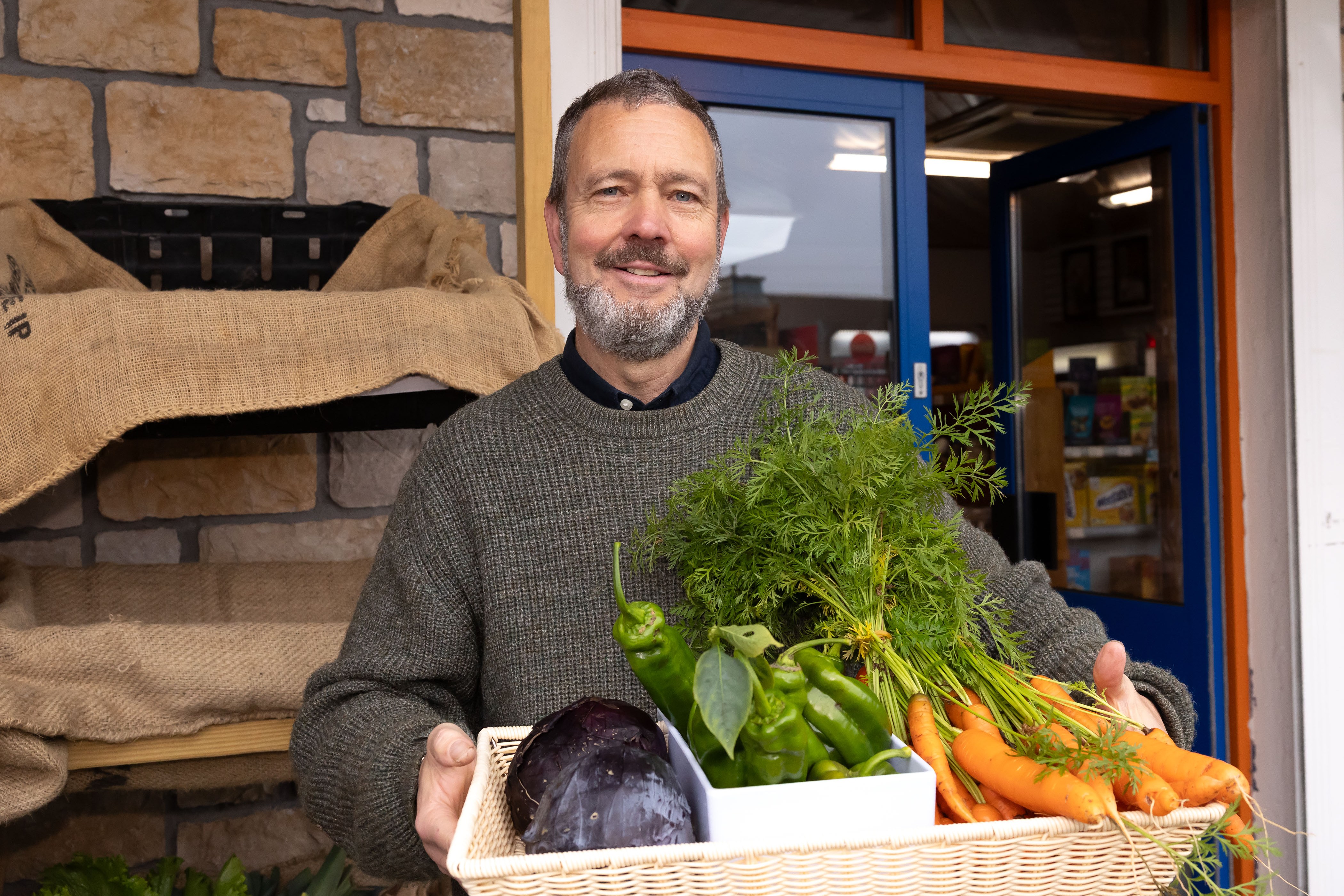
Hew Gregory-Smith was a vicar in the Anglican church before joining the Amish-Mennonite community
MARY BROWNE FOR THE SUNDAY TIMES
Lunch is chilli, baked potatoes and fresh bread. Around the table sits Rebecca, heavily pregnant, due today. She married the eldest Gregory-Smith son, Henry, five years ago, after moving from upstate New York. “It’s not very different,” she says. “Upstate is a lot of farming.” They met in 2015 when she visited with a volunteer group; by Amish-Mennonite standards, their five-year courtship was long.
The Irish diaspora have their part in this story too. William McGrath, an Irish-American who converted during the Second World War, set up the Waterford church in homage to his ancestry and his desire for an Amish-Mennonite foothold in western Europe. Many visitors come for similar reasons, curious for roots and refuge.
Earlier, a poised 20-year-old, who has recently moved from a Mennonite community in Shropshire and is not a member here, tells me there is plenty she does not agree with. No smartphone until 18? “It’s not a big deal to get rid of,” she says, glancing at my iPhone. Fewer than half the congregation, by some counts, use a phone or tablet at all. “I didn’t mind not having one in Shropshire either. It’s nice to switch off.”
So why choose a life that looks so limiting from the outside? “I can relate to dress codes, to how we use technology, to the outlook on life. At the end of the day, this world isn’t our home. I don’t want to make it my home. For now, yes, temporarily. But this isn’t the end goal,” she says, emphatically. “I haven’t met another group I feel that connection with.”
Her grandmother, visiting from England, speaks softly. “I’m not qualified to judge. In some ways it’s a little restrictive. But all churches are different. I worship in the Church of England.”
“It’s also about giving,” the granddaughter adds. “You work hard. You don’t just take and take.” Some work at Comeragh Wilderness Camp in Rathgormack, a faith-led wilderness programme for “troubled boys” aged 11 to 15 who spend 20 months in the Comeragh Mountains. Others earn a living at Jaybee’s, the community’s bakery and shop. It is closed on Sundays, Sabbath strictly observed — to my disappointment, given the glowing reports of the carrot cake.
By late afternoon I am saying goodbye to Connie and Edmund, the Gregory-Smith grandchildren tumbling through the kitchen. My own Sunday stretches back up the road to Dublin; the cake will have to wait.