
Instead, medical evidence the VFPMS presented at Casey’s trial alleged he had been shaken so violently he had been subject to “quite significant forces” equivalent to “high velocity motor vehicle accidents, significant crush injuries to the head or falls … from a height of greater than about 10 metres”.
Because of the injuries and the alleged force involved, a forensic doctor dismissed other accidental or medical explanations.
‘I was given a plea deal to say, if I plead guilty, I can stay out and look after my mum [who was ill]. I told him where to put that.’
Jesse Harvey speaking on Diagnosing Murder
But in a report produced at the request of the Diagnosing Murder podcast, forensic pathologist Stephen Cordner observed five problems with the prosecution’s medical evidence against Harvey that “seem not to have been explored, or were insufficiently explored” at his trial.
In response to questions about the case, the Royal Children’s Hospital said it would be inappropriate to comment.
At the trial, it was revealed that baby Casey spent three days in hospital in the lead up to the seizure that his father saw. He was treated for an infection, fever, irritability, poor feeding and vomiting. A lumbar puncture showed blood in his cerebrospinal fluid.
However, asked at the trial about this, the expert doctor said Casey’s illness did not show a medical cause for his seizure. It was “a separate thing from what occurred [the alleged shaking],” they said.
The evidence for shaking, according to the court transcript obtained by this masthead, was a group of clinical findings which for decades has been associated with the diagnosis known as shaken baby syndrome. Among them were subdural haemorrhage – bleeding under the dural membrane that covers the brain – bleeding on the retina, the light sensitive layer at the back of the eye, and brain swelling.
The link between these signs and shaking has come under international scientific and legal scrutiny in recent years.
Harvey was alone with the child at the time of his seizure. He pleaded not guilty at his trial but he told this masthead his own defence team did not believe him. They did not call an expert to contradict the testimony of the VFPMS doctor and did not question the diagnosis, only suggesting that perhaps Jesse Harvey’s brother had shaken the baby instead.
His lawyer suggested to Harvey that he plead guilty.
“I was given a plea deal to say, if I plead guilty, I can stay out and look after my mum [who was ill],” Harvey told Diagnosing Murder. “I told him where to put that. I said, ‘I’m not admitting to something I didn’t do to get less time’.
“If I was rich, I probably would have been able to afford good lawyers, and might have turned out different.”
Cordner’s report questioned five aspects of the prosecution case against Harvey.
Among them was “the existence of underlying heart disease”, which was different to the heart disease he was diagnosed with at the Royal Children’s Hospital, and which was “mentioned subsequently as part of the cause of Casey’s death on his death certificate”.
A medical report written by the VFPMS doctor and used in Harvey’s prosecution noted a “moderate” enlargement of Casey’s heart and said: “This is likely to be an incidental finding and while clinically significant, is unlikely to be associated with Casey’s presentation.”
‘In my opinion, if Australia had a Criminal Cases Review Commission, this is a case it should and would review.’
Former forensic pathologist Professor Stephen Cordner
Heart arrhythmias are one of the well-known causes of seizures because they can reduce oxygen to the brain, leading to brain damage. Casey’s arrhythmogenic cardiomyopathy was in addition to his other, already complicated, illness.
One MRI report referred to bilateral chronic subdural haemorrhage – evidence of bleeding over the brain some time in the past – as well as recent bleeding. The recent bleeding was one of the clinical signs that VFPMS doctors said pointed to abuse.
But Cordner said older bleeding complicates the assessment of what caused the recent bleeding – it could even itself be a cause, or a vulnerability, leading to later bleeding.
Cordner also questioned evidence from the VFPMS that changes in Casey’s neck shown in an MRI scan indicated that his spinal ligaments had been damaged. This evidence formed a major part of the prosecution’s conclusion that there had been “forceful shaking” despite the absence of any external signs of injury on Casey.
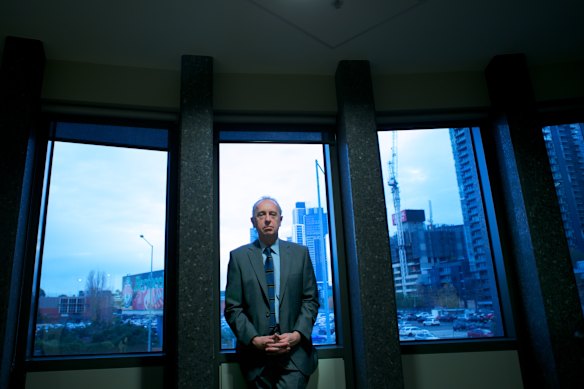
Emiturus Professor Stephen Cordner, an expert in forensic medicine, wants a public review into shaken baby syndrome.Credit: Jason South
Cordner said the evidence given that the damage was “possibly due to partial tear or oedema” was “some distance from being diagnostically sure there is traumatic neck injury”.
“In my opinion, if Australia had a Criminal Cases Review Commission, this is a case it should and would review,” Cordner wrote in his opinion.
Information obtained by this masthead also reveals the child’s mother, whom we have chosen not to name for privacy reasons, suffered from a seizure disorder when she was a child, and into adulthood.
When she was two months old, Casey’s mother suffered similar symptoms to those that affected her son 22 years later. She too was judged to be a shaken baby. She was removed from her family and put into foster care. She was later returned to her father and grew up with him, telling Harvey her father had not been abusive.
Her medical notes as a baby, like those of her son Casey, list projectile vomiting, irritability and blood-stained fluid in her head. As an adult, she took anti-seizure medication and suffered from epilepsy. All this, said Cordner, lent weight to a possible genetic factor in Casey’s illness.
Harvey raised his partner’s history of seizures with the VFPMS doctors diagnosing Casey. But, like Casey’s, his mother’s seizures as a baby were attributed to physical abuse. Full medical histories of the parents were not taken. The doctors excluded medical conditions after conducting an “extensive panel” of other tests.
Harvey also pointed to Casey’s illness before the seizure, saying he took his son to Ballarat Base hospital a week earlier and he was there for three days.
Before Casey was discharged, Harvey says: “I argued with the hospital left, right and centre [that they should keep him in] because he wasn’t right. And they pretty much told me, they’re the doctors. ‘He’s starting to feed well now, take him home. If he gets worse in the next 72 hours, bring him back’.”
Forty-eight hours later, Harvey says he found Casey pale, staring, unresponsive, and having abnormal movements. Harvey said he recognised these as likely seizures and took him back to the hospital.
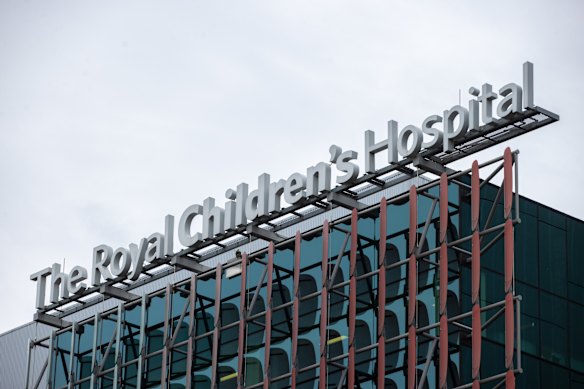
The Victorian Forensic Paediatric Medical Service (VFPMS) is based at the Royal Children’s Hospital.Credit: Simon Schluter
Casey was later transferred to the Royal Children’s Hospital, where, at the hands of the VFPMS doctors, suspicion fell on Harvey for deliberate child abuse.
Cordner has called for a broad inquiry into the science of shaken baby syndrome, saying that, while child abuse occurs, there is a real question about how well doctors can diagnose it in particular cases. In cases such as Harvey’s, and many others, the prosecution evidence is that the child had been violently shaken, but there are no external signs of injury such as bruising or abrasions.
Some convictions in Australia in shaken baby syndrome cases – which are also known as abusive, or inflicted head trauma – were likely to have been wrong, Cordner said.
Loading
He told the podcast there are likely 50 known medical conditions, and potentially more that are still unknown, that can cause one or more of the triad findings without abuse having occurred.
Diagnosing what goes on inside a brain is inherently difficult, and this masthead acknowledges that the VFPMS makes its decisions in good faith and with the best of intentions.
The Royal Children’s Hospital said in a statement that the VFPMS was “underpinned by national and international research, which is constantly reviewed”.
“VFPMS paediatric clinicians provide forensic expertise in evaluating complex situations and multiple injuries … In their evaluation, VFPMS clinicians consider many aspects related to a child’s injuries, including a wide variety of symptoms and signs, which may be caused by other conditions. Due consideration is given to the presence of these conditions.”
Start the day with a summary of the day’s most important and interesting stories, analysis and insights. Sign up for our Morning Edition newsletter.