
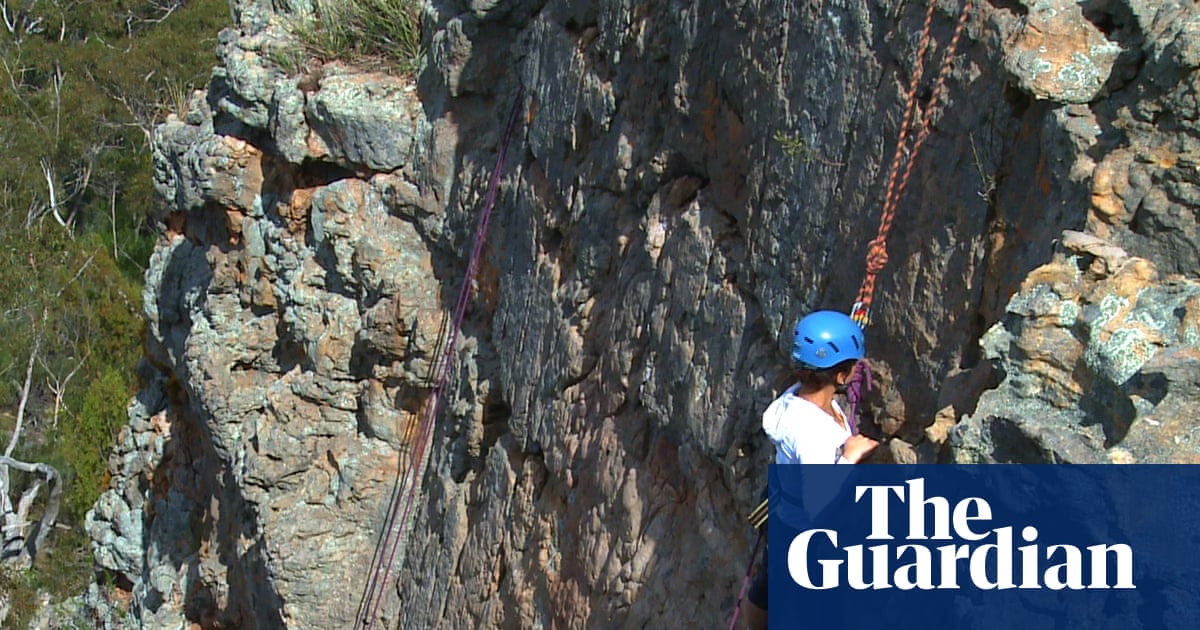
Rock climbers are openly discussing flouting Victoria’s voluntary bans on routes near Mount Arapiles despite a plea from the state government to respect the area’s Indigenous heritage.
The area in the state’s west is regarded as among Australia’s premier rock climbing destinations. It also contains millennia-old rock art, among other significant Indigenous sites.
According to a Parks Victoria management plan, the area contains tens of thousands of artefacts, scarred trees, rock art dating back at least 3,000 years, and one of the largest Indigenous stone quarry complexes found in Australia.
The agency has asked climbers not to climb five routes in the park.
“While Parks Victoria and Barengi Gadjin Land Council determine a longer term management response, and out of respect for this significant cultural landscape, visitors are requested to not enter this area,” a notice published online by Parks Victoria reads.
It is developing an amendment to the Dyurrite cultural landscape management plan, which might lead to a ban. There has been no change to climbing access at Mount Arapiles, and the Parks Victoria has no ability to enforce voluntary bans.
The plan includes some designated areas for rock climbing.
But scores of comments on a climbing Facebook page for Victorians suggest many will not comply.
“If they want to ban certain areas they better get training,” one commentator said. “What are they going to do … chase someone up a hard core 30?”
Another said: “I like resisting all proposed climbing and bouldering restrictions anywhere in Australia, its my other sport.”
Sign up: AU Breaking News email
The results of a consultation process conducted this year showed similar opposition to the bans.
It ended in February after hearing from more than 1,000 individuals, 90% of them rock climbers.
The most common “theme” recorded in a summary report on the feedback was the importance of rock climbing in the area.
“Participants felt the amendments represent a significant loss and disregard for the climbing community and diminish Mount Arapiles as a premier climbing destination,” it said.
skip past newsletter promotion
Sign up to Breaking News Australia
Get the most important news as it breaks
Privacy Notice: Newsletters may contain information about charities, online ads, and content funded by outside parties. If you do not have an account, we will create a guest account for you on theguardian.com to send you this newsletter. You can complete full registration at any time. For more information about how we use your data see our Privacy Policy. We use Google reCaptcha to protect our website and the Google Privacy Policy and Terms of Service apply.
after newsletter promotion
The consultation received 581 submissions, 1,094 online surveys and conducted an online information session with more than 365 people.
“The overwhelming majority of participants expressed concern about the consultation process and felt a strong sense of loss for their much-loved rock-climbing activity,” the report concluded.
“While many participants showed respect for the need to protect cultural heritage, there was strong feedback calling for the scope of the permanent restrictions to be reconsidered.
“The climbing community has built a special bond with the land as well that should not be ignored.”
The voluntary bans apply to Chicken Boulder, Pharos Boulders, Plaque Rock, Taylors Rock and Castle Crag, on the basis of “significant Aboriginal cultural values present”.
The state government released a draft plan last year which would have banned the sport in about half the Mount Arapiles-Tooan state park.
A spokesperson for the Victorian government said “the great outdoors are to be experienced and admired, not locked away”.
“Work on the management plan has been paused while the Community Working Group works together to create more diverse and inclusive opportunities for people to enjoy and access Dyurrite,” the spokesperson said.
Arapiles, also known as Dyurrite, contains climbs which are widely regarded as among the best in the country, and attracts many thousands of visitors annually, according to Parks Victoria.