
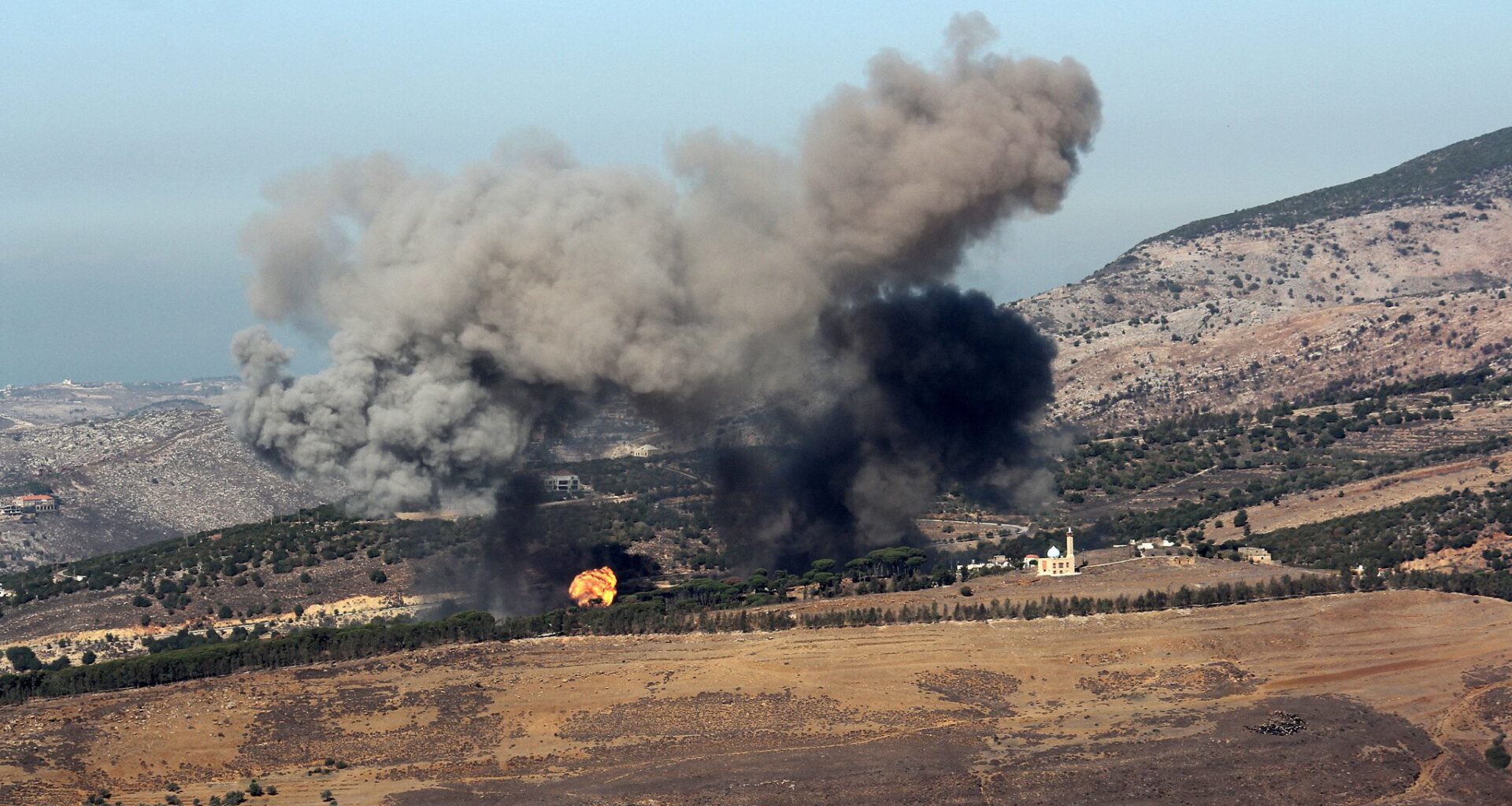
Four members of Hezbollah’s elite Radwan Force were killed in an Israeli airstrike in southern Lebanon on Saturday night, the military said, with Lebanese authorities also confirming four dead in the attack.
The military said the primary target of the strike in Kfar Roummane, close to Nabatieh, was the logistics chief of the Radwan Force.
The military did not name the man, but said he was involved in transferring weapons and “attempts to restore terror infrastructure” in southern Lebanon.
Lebanon’s health ministry said that the strike “killed four persons and wounded three in a preliminary toll.”
The three other men killed in the strike were also members of the Radwan Force, the IDF said, adding that their activities constitute a violation of the ceasefire.
Get The Times of Israel’s Daily Edition
by email and never miss our top stories
By signing up, you agree to the terms
Lebanese media named the four as Jawad Jaber, Hadi Hamid, Abdullah Kahil, and Muhammad Kahil.
استهداف سيارة في كفرمان وهناك اصابات pic.twitter.com/JwKu4BFNL7
— Jamal Chaiito (@Jamalchaiito1) November 1, 2025
The Radwan Force was previously tasked with invading Israel in a future war, and the IDF said the elite unit had advanced the terror group’s “Conquer the Galilee” plan for years, until the 2023-2024 war saw most of Hezbollah’s leadership eliminated.
Meanwhile, on Sunday, Defense Minister Israel Katz said that Lebanese President Joseph Aoun was stalling in efforts to disarm Hezbollah, and warned Israel would act if Beirut does not.
“Hezbollah is playing with fire and the Lebanese president is dragging his feet,” Katz said in a post on X after the IDF confirmed it carried out the strike in south Lebanon.
“The Lebanese government’s commitment to disarm Hezbollah and remove it from southern Lebanon must be realized,” Katz said, adding that “maximum enforcement will continue and deepen – we will not allow a threat to the residents of the [Israeli] north.”
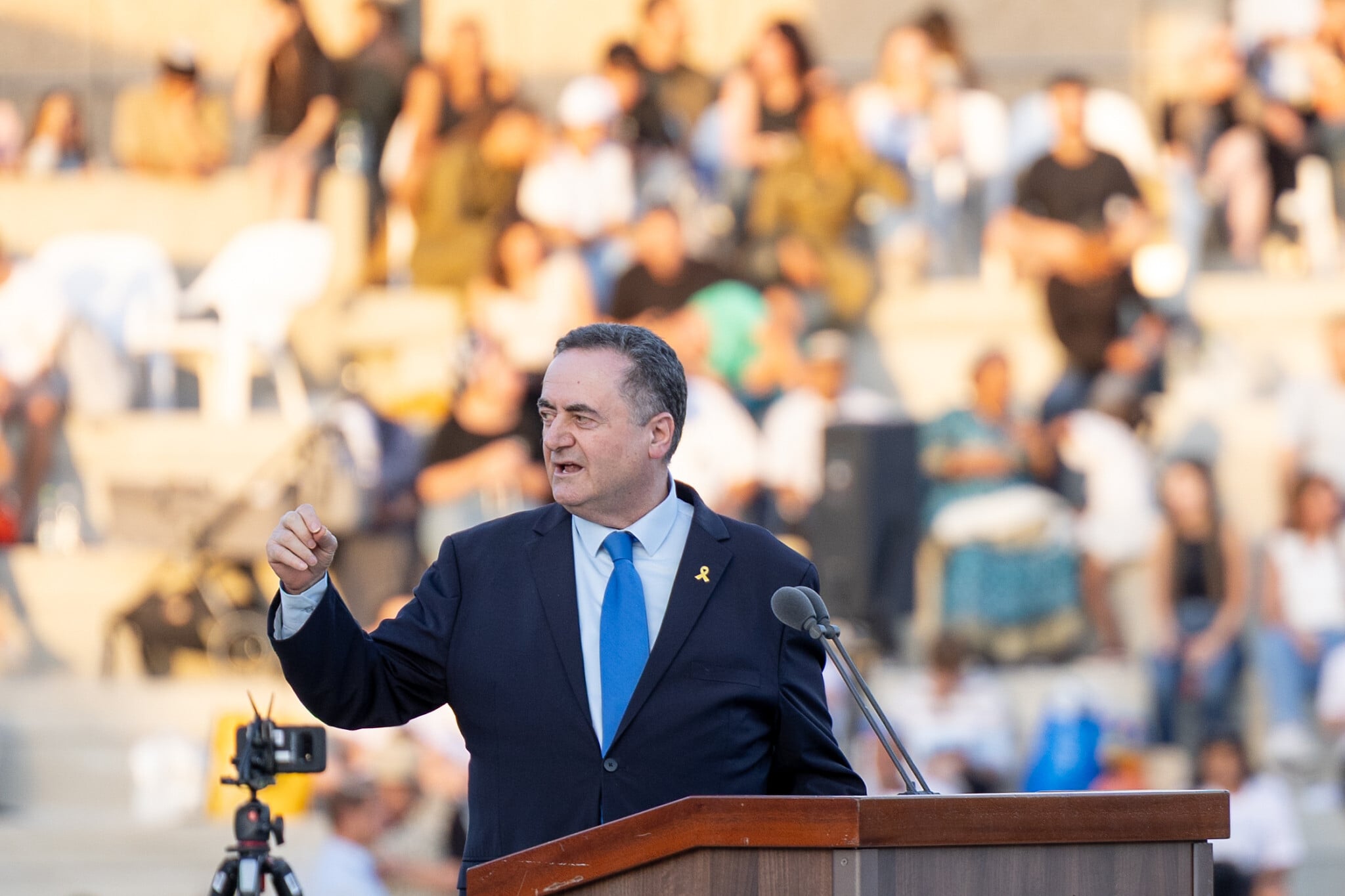
Defense Minister Israel Katz at the graduation of an IDF officers’ course, October 30, 2025. (Noam Revkin Fenton/FLASH90)
Hezbollah began attacking Israel on October 8, 2023, a day after fellow Iran-backed terror group Hamas invaded southern Israel, sparking the war in Gaza. After nearly a year of cross-border fire, Israel launched an intensive campaign against the terror group in September 2024, massively degrading its forces and eliminating most of its top leadership. A ceasefire was declared in November of that year.
The ceasefire required both Israel and Hezbollah to vacate southern Lebanon, to be replaced by the Lebanese armed forces. Israel has withdrawn from all but five strategic posts along the border, and regularly strikes what it says are Hezbollah’s attempts to rearm.
Since the ceasefire, the IDF says it has killed over 330 Hezbollah operatives in strikes, hit hundreds of Hezbollah sites, and conducted over 1,000 raids and other small operations in southern Lebanon in response to violations by the terror group.
In recent weeks, the IDF appears to have stepped up the rate of attacks on Hezbollah.
Weakened by the war and still facing regular Israeli strikes, Hezbollah is under internal and international pressure to hand over its weapons, and the Lebanese army has drawn up a plan to disarm it. However, the latter has reportedly expended so much ordnance to blow up Hezbollah stockpiles that it has run out of explosives. Hezbollah, which is backed by Iran, has vowed not to lay down its arms.
But despite those efforts, Israel reportedly believes Hezbollah has managed to amass some new weapons, raising the possibility of renewed conflict. Meanwhile, Lebanon claims that Israel rejected its overture to begin talks last month on an IDF withdrawal.
Agencies and Times of Israel Staff contributed to this report.
Watch DocuNation Season 3: The Heart of Israel
when you join the ToI Community
Support The Times of Israel’s independent journalism and receive access to our documentary series, DocuNation: The Heart of Israel.

In this season of DocuNation, you can stream eight outstanding Israeli documentaries with English subtitles and then join a live online discussion with the filmmakers. The selected films show Israel beyond the conflict: a place of storytellers and musicians, of dreamers, makers, and communities rooted in meaning and trust.
When you watch DocuNation, you’re also supporting Israeli creators at a time when it’s increasingly difficult for them to share their work globally.
To learn more about DocuNation: The Heart of Israel, click here.
Support ToI and get DocuNation
Support ToI and get DocuNation
Already a member? Sign in to stop seeing this
You appreciate our journalism

You clearly find our careful reporting valuable, in a time when facts are often distorted and news coverage often lacks context.
Your support is essential to continue our work. We want to continue delivering the professional journalism you value, even as the demands on our newsroom have grown dramatically since October 7.
So today, please consider joining our reader support group, The Times of Israel Community. For as little as $6 a month you’ll become our partners while enjoying The Times of Israel AD-FREE, as well as accessing exclusive content available only to Times of Israel Community members.
Thank you,
David Horovitz, Founding Editor of The Times of Israel