
An-Nahar, Lebanon, October 23
Unfortunately for Israeli Prime Minister Benjamin Netanyahu, the US–Russia summit that was scheduled to take place in Hungary to discuss ending the war in Ukraine was canceled—an outcome that allowed President Donald Trump to devote his full attention to advancing the Gaza ceasefire and implementing the remaining provisions of Washington’s peace plan.
At first glance, it may seem surprising that the Trump administration and Hamas are the two parties most optimistic about the ceasefire, while Netanyahu’s position appears constrained, unable to move beyond the red lines set by Washington. Israeli officials have sought to downplay their unease over the direct meeting held by US Special Envoy Steve Witkoff and President Trump’s senior adviser and son-in-law, Jared Kushner, with Hamas leader Khalil Al-Hayya in Egypt—talks that ultimately paved the way for the ceasefire agreement.
US Vice President JD Vance and Kushner have both worked to project optimism about the ceasefire’s durability, dismissing minor violations as inevitable in the early stages of implementation. Vance described the progress so far as “beyond expectations” and avoided setting a timetable for Hamas’ disarmament, acknowledging that such a process “will not be accomplished in a week.” Kushner, for his part, framed the sporadic breaches as “normal after waging a long war.”
Speaking from Cairo, Al-Hayya reaffirmed Hamas’ commitment to “carry out the ceasefire agreement to its conclusion,” emphasizing that he had received personal assurances from President Trump and other US officials that the conflict had definitively ended. Yet this atmosphere of guarded optimism faces two major challenges. On one side, Netanyahu insists that a permanent peace must include Hamas’ full disarmament and removal from power. On the other, Hamas regards disarmament as a strictly Palestinian issue. Israeli media reported that the Hamas delegation in Cairo intends to propose several figures to serve on the technocratic committee that will govern Gaza under the US plan, though it remains uncertain whether Israel will veto any of these candidates.
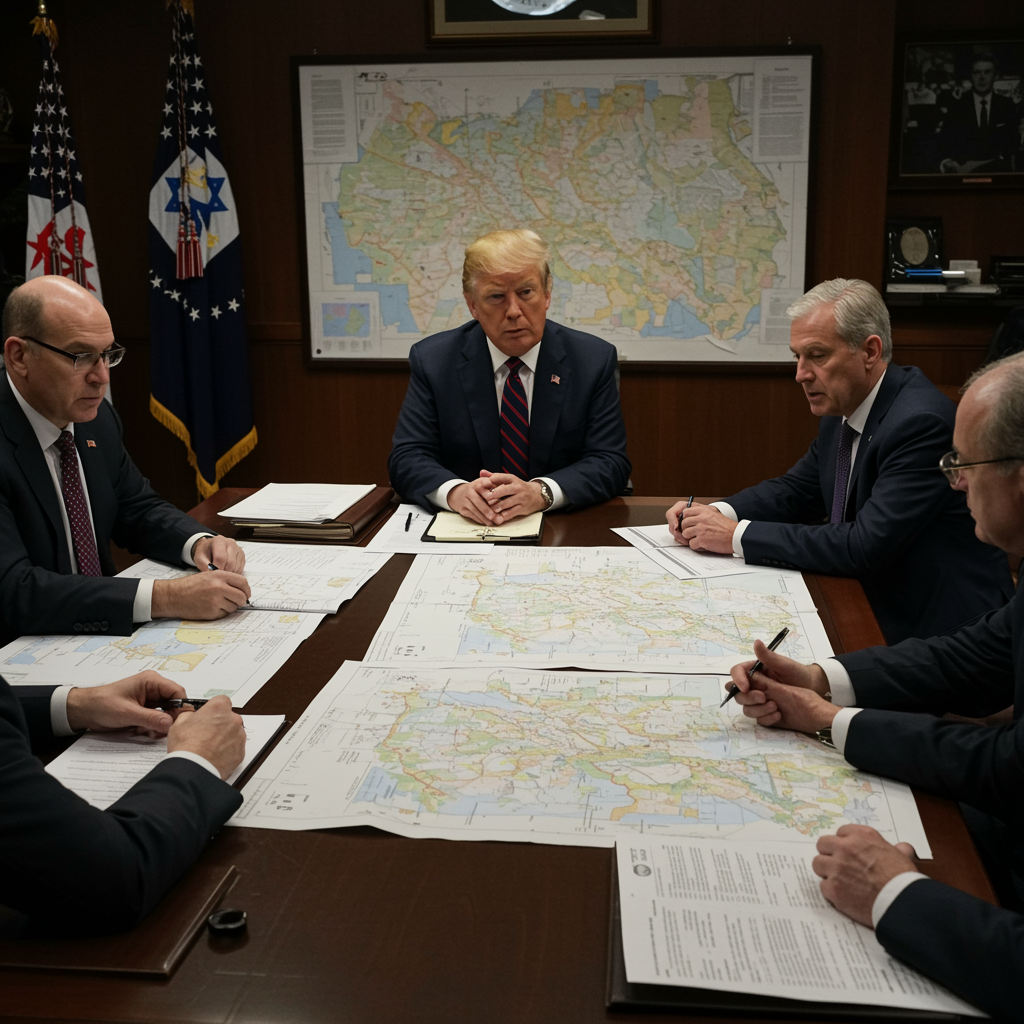
The final decision on the matter ultimately rests with President Trump, who chairs the Peace Council overseeing the committee’s work, the stabilization force, and the broader reconstruction process—an agenda expected to be discussed further during his upcoming meeting with Saudi Crown Prince Mohammed Bin Salman at the White House on November 18. In a bid to accelerate movement toward the plan’s second phase, Kushner suggested beginning reconstruction in areas outside Hamas’ control, an idea Netanyahu strongly opposed until the group fully disarms. However, since the authority to resume large-scale hostilities lies with President Trump rather than Netanyahu, the current ceasefire—monitored by 200 US Central Command troops stationed in southern Israel and closely supervised by Washington and the agreement’s signatories—creates space for substantive negotiations on the second phase, even as complex political and logistical challenges loom ahead.
Samih Saab (translated by Asaf Zilberfarb)