
The Israel Defense Forces said Monday that it killed two Hezbollah operatives in separate strikes within an hour in southern Lebanon, as violence escalated on the northern frontier.
Israel recently threatened to expand its attacks against the Iran-backed terror group, claiming the Lebanese government was not keeping its commitment to disarm it.
The first strike, in the Nabatieh area, killed Muhammad Ali Hadid, who the IDF said was a commander in Hezbollah’s elite Radwan Force.
“The terrorist advanced numerous terror attacks against the State of Israel, and, recently, he continued attempts to reestablish Hezbollah terror infrastructure sites,” the IDF said.
The second strike, in Ayta ash-Shab, killed an unnamed operative who was carrying out surveillance on Israeli troops, the military said.
Get The Times of Israel’s Daily Edition
by email and never miss our top stories
By signing up, you agree to the terms
Lebanon’s health ministry confirmed two people were killed in Israeli strikes, and said that seven others were injured.
תוך פחות משעה: צה״ל חיסל שני מחבלים מארגון הטרור חיזבאללה בדרום לבנון
צה״ל תקף וחיסל מוקדם יותר היום, בהובלת פיקוד הצפון ובאמצעות חיל האוויר, את המחבל מוחמד עלי חדיד – מפקד ביחידת ׳כוח רדואן’ של ארגון הטרור חיזבאללה במרחב נבטייה שבדרום לבנון.
המחבל קידם מתווי טרור רבים לעבר… pic.twitter.com/HFEDfuEDwV
— צבא ההגנה לישראל (@idfonline) November 3, 2025
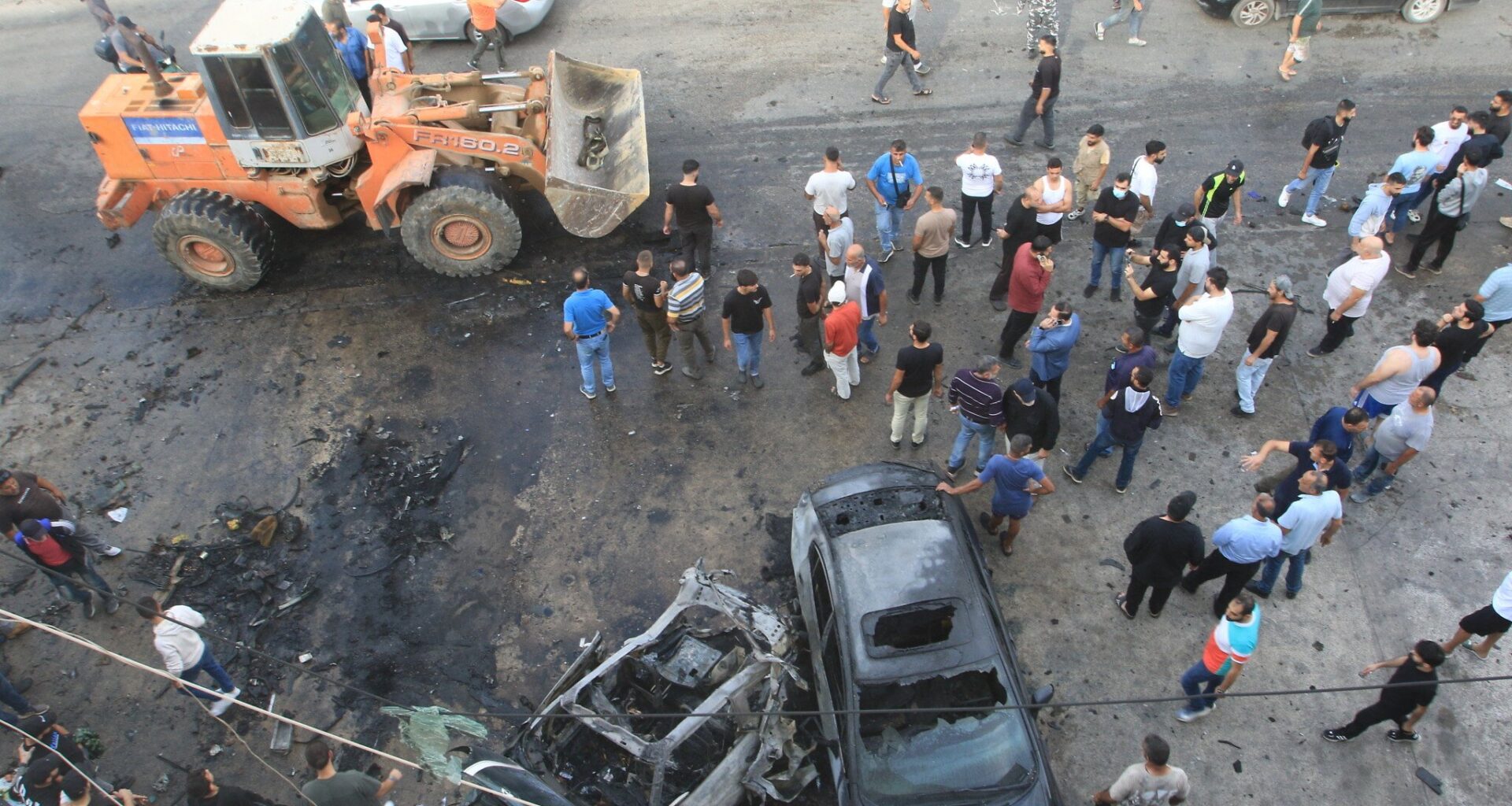
Lebanon’s state-run National News Agency reported that an Israeli drone targeted a car in Doueir, causing it to catch fire.
An AFP photographer in Doueir saw firefighters extinguishing flames in the targeted vehicle and around five other damaged cars.
He also saw workers removing shattered glass from shops damaged by the blast.
The NNA said that the strike caused damage to a local shopping center.
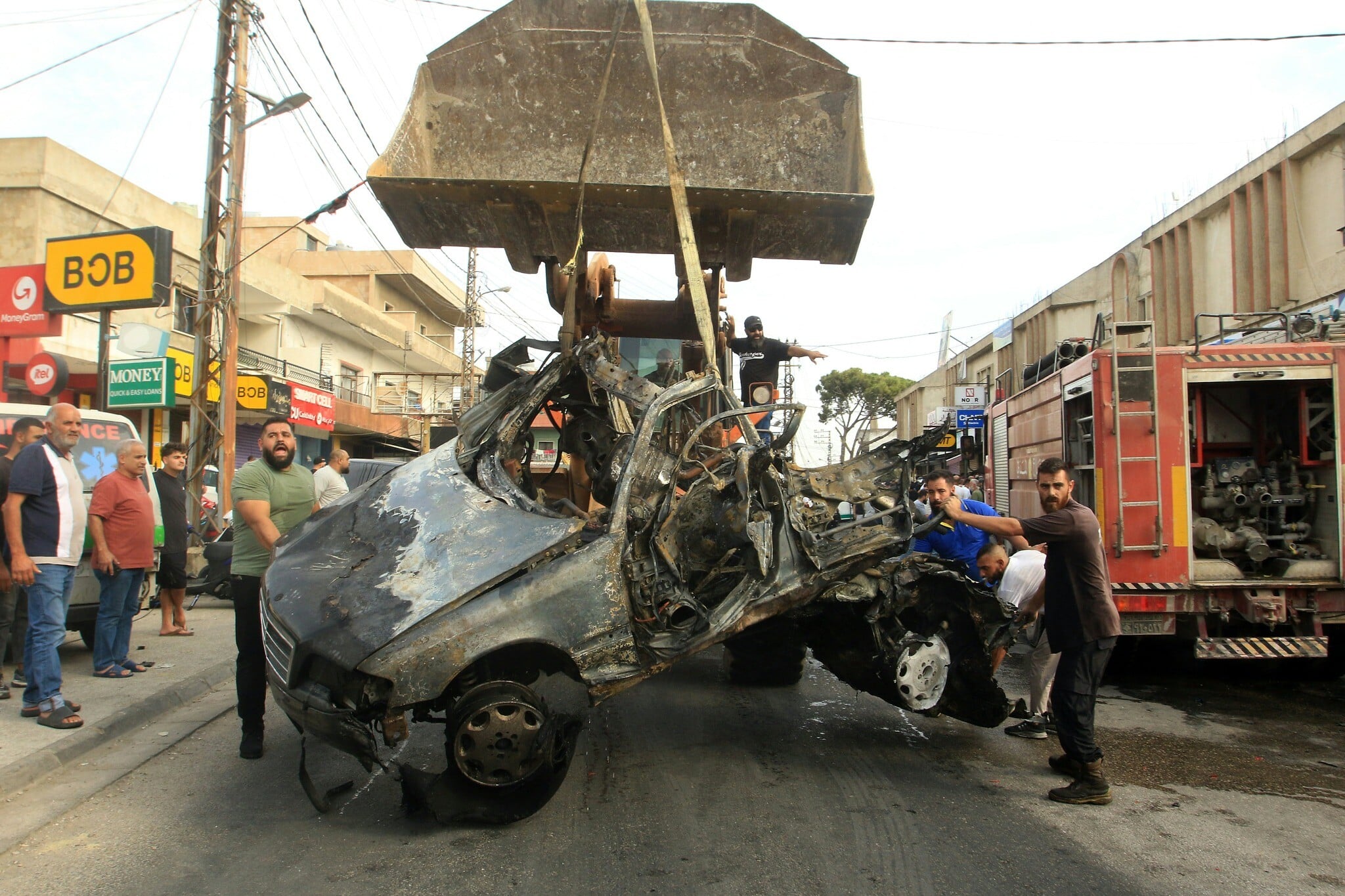
A bulldozer removes the wreckage of a vehicle targeted by an Israeli drone strike in the southern Lebanese village of Doueir near the city of Nabatiyeh, on November 3, 2025. (Mahmoud ZAYYAT / AFP)
On Saturday, four people were killed in an Israeli strike on a car in the Nabatiyeh district, according to the Lebanese health ministry. A day earlier, a strike killed a Hezbollah logistics officer working to reestablish Hezbollah’s infrastructure in south Lebanon, according to the IDF.
Under a November 2024 ceasefire deal, which followed more than a year of hostilities, Hezbollah was required to vacate southern Lebanon and be replaced by the Lebanese military. Israel, which invaded Lebanon in late September of that year, was also required to withdraw, but regularly strikes what it says are Hezbollah targets breaching the ceasefire, and maintains a troop presence in five strategic locations over the border. Israel says that under the terms of the ceasefire, it has the right to strike at Hezbollah threats to its security.
Despite those efforts, Israel reportedly believes Hezbollah has managed to amass some new weapons, raising the possibility of renewed conflict. Meanwhile, Lebanon claims that Israel rejected its overture to begin talks last month on an IDF withdrawal.
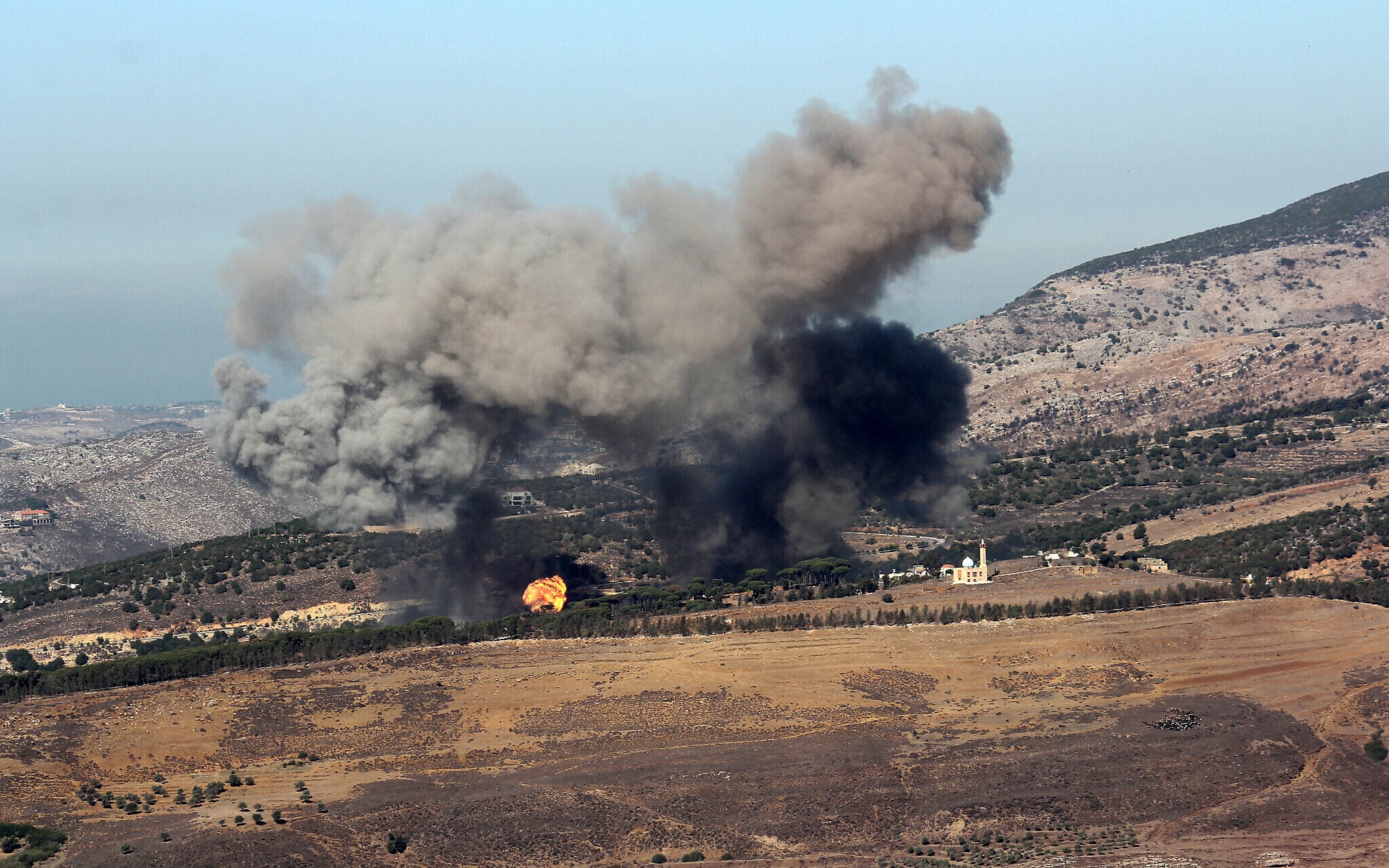
Smoke rises following an Israeli airstrike on the outskirts of the southern Lebanese village of Ej Jarmaq on October 30, 2025. (Rabih DAHER / AFP)
Hezbollah was badly weakened during the war, and the United States has pressured Lebanon to disarm the Iran-backed group.
While Lebanese authorities have held indirect talks with Israel in the past, US envoy Tom Barrack told reporters in Bahrain on Saturday that his country was pushing for direct negotiations. He also said he doubts that Lebanon can disarm Hezbollah.
The conflict between Israel and Hezbollah was sparked when the terror group began near-daily attacks on northern Israel on October 8, 2023 — a day after fellow Iran-backed terror group Hamas invaded southern Israel, sparking the Gaza war.
Watch DocuNation Season 3: The Heart of Israel
when you join the ToI Community
Support The Times of Israel’s independent journalism and receive access to our documentary series, DocuNation: The Heart of Israel.

In this season of DocuNation, you can stream eight outstanding Israeli documentaries with English subtitles and then join a live online discussion with the filmmakers. The selected films show Israel beyond the conflict: a place of storytellers and musicians, of dreamers, makers, and communities rooted in meaning and trust.
When you watch DocuNation, you’re also supporting Israeli creators at a time when it’s increasingly difficult for them to share their work globally.
To learn more about DocuNation: The Heart of Israel, click here.
Support ToI and get DocuNation
Support ToI and get DocuNation
Already a member? Sign in to stop seeing this
You appreciate our journalism

You clearly find our careful reporting valuable, in a time when facts are often distorted and news coverage often lacks context.
Your support is essential to continue our work. We want to continue delivering the professional journalism you value, even as the demands on our newsroom have grown dramatically since October 7.
So today, please consider joining our reader support group, The Times of Israel Community. For as little as $6 a month you’ll become our partners while enjoying The Times of Israel AD-FREE, as well as accessing exclusive content available only to Times of Israel Community members.
Thank you,
David Horovitz, Founding Editor of The Times of Israel