
Amid rising global insecurity and regional instability, the Central African Republic stands out as a reminder that peace is possible.
Once gripped by widespread violence, the country has seen steady, tangible progress towards stability over the past decade. With support from international partners and the peacekeeping mission, MINUSCA, the Central African Republic has become relatively stable in an unstable region – proof that international engagement and national efforts can yield results.
MINUSCA has been at the heart of this progress. Deployed as signs of genocide were raising alarms, the Mission protected civilians from violence and helped the country reach the 2019 Peace Agreement, saving countless lives and laying the foundations for long term peace.
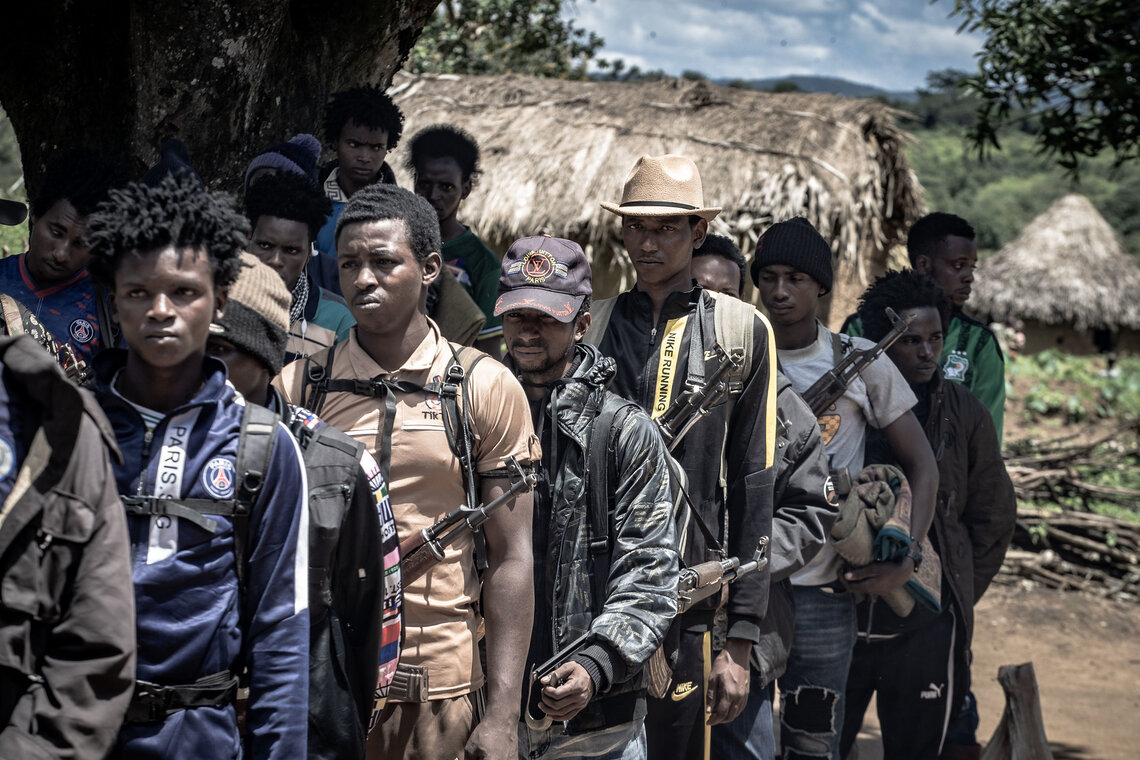
In recent months, renewed political momentum has allowed for further security gains. Last April, two of the country’s most active armed groups – the Unité pour la paix en Centrafrique (UPC) and the Retour, réclamation et réhabilitation (3R) – recommitted to the Peace Agreement. Their return, along with the dissolution of two more armed groups in October, brought the total number of disbanded armed group signatories to the Peace Agreement to 11 out of 14.
Disarmament and demobilization efforts have also gathered pace and are further improving security. With MINUSCA’s logistical, technical and security support, more than 800 combatants have now been disarmed and demobilized since July 2025 alone — a concrete step that has reduced threats to civilians in key regions of the country.
As security has begun to progressively take root in the country, MINUSCA has been working with national authorities to build the foundations of stable governance, facilitating the deployment of officials, rebuilding administrative and judicial infrastructure, and helping strengthen internal security forces across the territory, expanding access to security, justice and essential services. As of 1 November, 208 local administrative authorities out of 210 had been appointed and were present at their posts, including all seven governors, all 13 prefects, 83 out of 85 sub-prefects and all prefectural secretaries.
The Permanent Representant of Central African Republic to the United Nations, Ambassador Nzessioué, commended the progress being made with MINUSCA’s support at a briefing to the Security Council last Tuesday, where MINUSCA’s mandate was being discussed. He called on the Council to “unequivocally renew MINUSCA’s mandate.” The mission, he said, has been able “to restore hope, re-establish the presence of the state, and protect millions of civilians… Reducing MINUSCA’s capacity or mandate now would weaken the very foundations of the stability that we have painstakingly built.”
Concerns have been raised about a reduction in MINUSCA’s mandate because, despite the significant progress, the situation remains extremely fragile. Conflict in neighbouring Sudan is testing the country’s stability. Cross-border incursions and armed violence have displaced civilians in the country’s northeast, particularly in Am Dafock, where temporary UN bases have helped facilitate aid delivery and civilian returns.
Other challenges – including political tensions, humanitarian needs, and the persistent presence of armed groups in some parts of the country – underscore the need for continued investment and engagement from the international community to help consolidate peace and contribute to broader regional stability.
MINUSCA’s continued presence is essential to addressing these ongoing challenges and building on recent gains. This includes protecting civilians, continuing to support the implementation of the Peace Agreement including through disarmament and demobilisation of combatants, building the capacity of national defence and security institutions to enable them to take over full responsibility for security in the country, and providing the stability needed for economic activity to take root – a prerequisite for lasting peace. Critically, it also includes supporting national authorities in preparing for the upcoming presidential, legislative, regional and municipal elections – the first local polls since 1988.
However, funding pressures have triggered staff reductions and cuts to operations, which Valentine Rugwabiza, head of MINUSCA, warned will affect the delivery of the mission’s mandate at this critical juncture. “[MINUSCA] remains central in the consolidation of security and peace gains made in the Central African Republic, which were made possible with the critical, active and unified support of this Council” she stressed, calling for the renewal of MINUSCA’s mandate for one year at its current authorized strength.
For the international community’s peace efforts, MINUSCA continues to be a smart investment and deserves to be supported as it works to finish its job. The cost of the alternative cannot be overstated.
Background
The Central African Republic (CAR) has faced decades of instability and conflict. Violence reignited in late 2012 when the mainly Muslim Séléka rebel coalition launched attacks against the regime of then-President François Bozizé, who had come to power through a coup in 2003. They seized the capital, Bangui, in early 2013, forcing the president to flee. By late 2013, the conflict had taken on sectarian dimensions as Christian “anti-Balaka” militias mobilized in retaliation to the Seleka, triggering renewed inter-communal clashes.
The violence devastated state institutions and left millions in urgent need. By 2014, 2.5 million people – over half the population – required humanitarian assistance. More than 650,000 were displaced inside the country, and over 290,000 fled to neighbouring countries, threatening to destabilize the wider region. In 2019, the Political Agreement for Peace and Reconciliation was signed between the government and 14 non-state armed groups operating in CAR, followed by the adoption of the Joint Road Map for Peace in 2021.
These efforts helped reduce violence in some areas. However, the security situation remains challenging in the southeast and northeast border areas. On the axis Birao-Am Dafock in Vakaga prefecture, at the border with Sudan, the spillover from the conflict in Sudan has intensified, including increased cross-border incursions by Sudanese armed elements. In the Haut-Mbomou prefecture, southeast of the country at the border with South Sudan and the Democratic Republic of the Congo, the situation remains fragile due to persistent insecurity and intercommunal tensions due to Azande Ani Kpi Gbe activities targeting national defense and security forces, civilians, and even MINUSCA.
Established in 2014, the United Nations Multidimensional Integrated Stabilization Mission in the Central African Republic (MINUSCA) is working to protect civilians, implement the 2019 peace agreement including by supporting the government to disarm former combatants and restore rule of law and basic services. Particularly critical in the coming months will be MINUSCA’s work to help CAR prepare for free, fair, and peaceful elections. The Mission also plays a vital role in helping humanitarians deliver aid to hard-to-reach communities.