
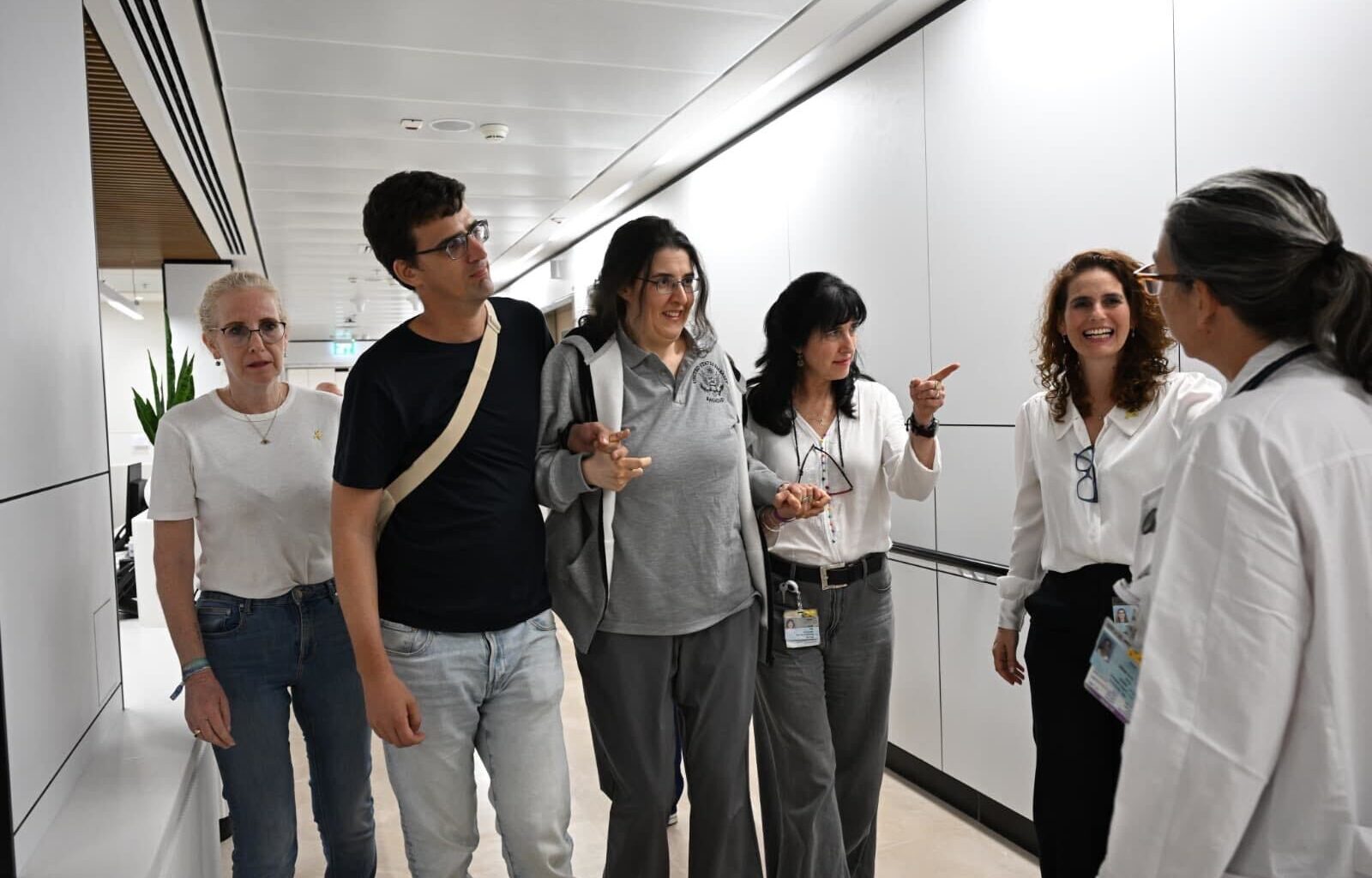
Freed Israeli hostage Elizabeth Tsurkov said she was beaten, tortured, electrocuted, and sexually assaulted during the two and a half years she was held by the Kataib Hezbollah terrorist group in Iraq, in an interview published on Wednesday.
Speaking to The New York Times in her first interview since she was freed in September, Tsurkov said her captors “basically used me as a punching bag,” particularly during the first months after her kidnapping.
Tsurkov, a dual Israeli-Russian national who was studying at Princeton University, said that “I genuinely believe I would have died” if Trump administration officials had not “engaged so consistently and with such incredible determination” to demand her release.
She said that she is missing a tooth due to her beatings and spends much of her days since gaining freedom lying on her back because her injuries make sitting or standing too painful.
Tsurkov recalled the day of her kidnapping, March 21, 2023, when she planned to meet a woman who claimed over WhatsApp that she needed help researching the Islamic State terror group.
Get The Times of Israel’s Daily Edition
by email and never miss our top stories
By signing up, you agree to the terms
After the woman didn’t show up to the planned meeting at the Baghdad coffee shop, Tsurkov was forced into an SUV by several men, who beat her and sexually assaulted her. The Times said it agreed not to describe the specifics of the sexual assault.
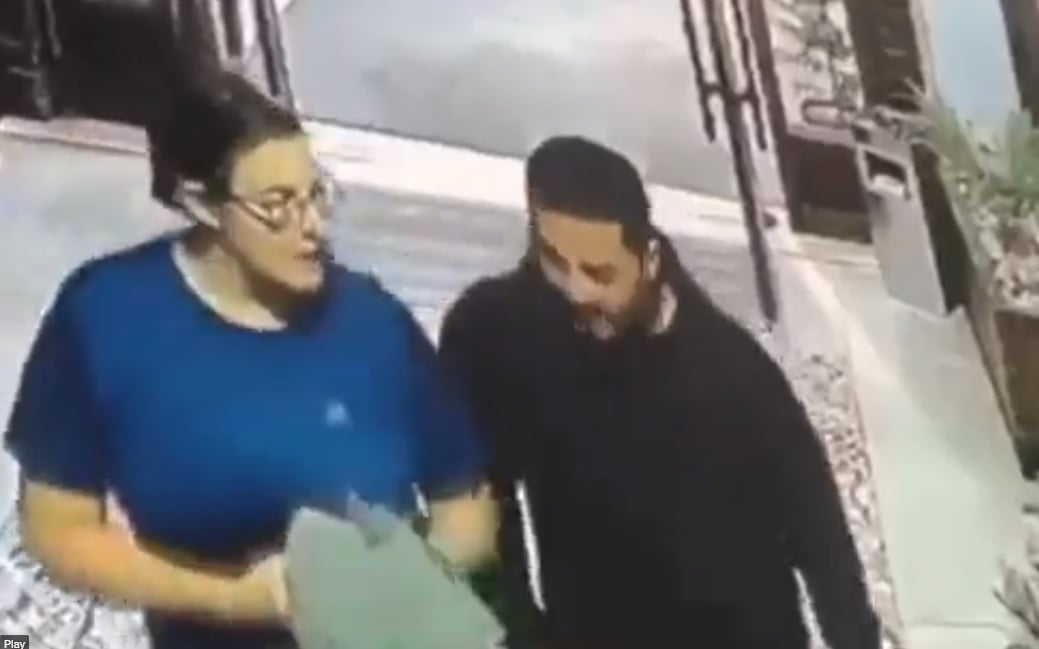
A screen grab from footage aired by Iraq’s Alrabiaa TV that is said to show abducted Israeli-Russian researcher Elizabeth Tsurkov in a Baghdad cafe before her disappearance. (Screenshot from Twitter/used in accordance with Clause 27a of the Copyright Law)
“They started twisting my pinkie, almost breaking it,” Tsurkov said. “So I thought resisting more was pointless.”
She has said she was held by Kataeb Hezbollah, an Iran-aligned terror group, though it has never explicitly admitted to abducting her.
Tsurkov was imprisoned, alone, in a windowless room in a big house. She said that she initially kept her identity a secret, but her captors eventually found proof she was Israeli on her phone and accused her of being a spy.
Despite pleading with her captors to read her pro-Palestinian online posts, her conditions deteriorated. When she didn’t confess to the allegations, Tsurkov said she was “strung up and tortured.” She began to invent false, believable stories — such as that she was organizing anti-government protests with a French journalist — to spare herself from torture.
She recalled one of her worst days, in July 2023, when she was interrogated about her mandatory military service, in which she served in the IDF Military Intelligence Directorate some 20 years ago. She initially lied, but told the truth after two captors repeatedly beat her, knocking out a tooth, Tsurkov said.
One of her captors, referred to by others as “the colonel,” was “very filthy and very obsessed with sex,” she said, adding that he threatened her with rape and grabbed a tattoo on her thigh.
In August 2023, a month after the Israeli government acknowledged Tsurkov’s kidnapping, she was moved to another location, which she and Israeli officials told The Times they believe was a Kataib Hezbollah base close to the Iranian border. She recounted feeling Israeli strikes shaking the compound during the war with Iran in June 2025.
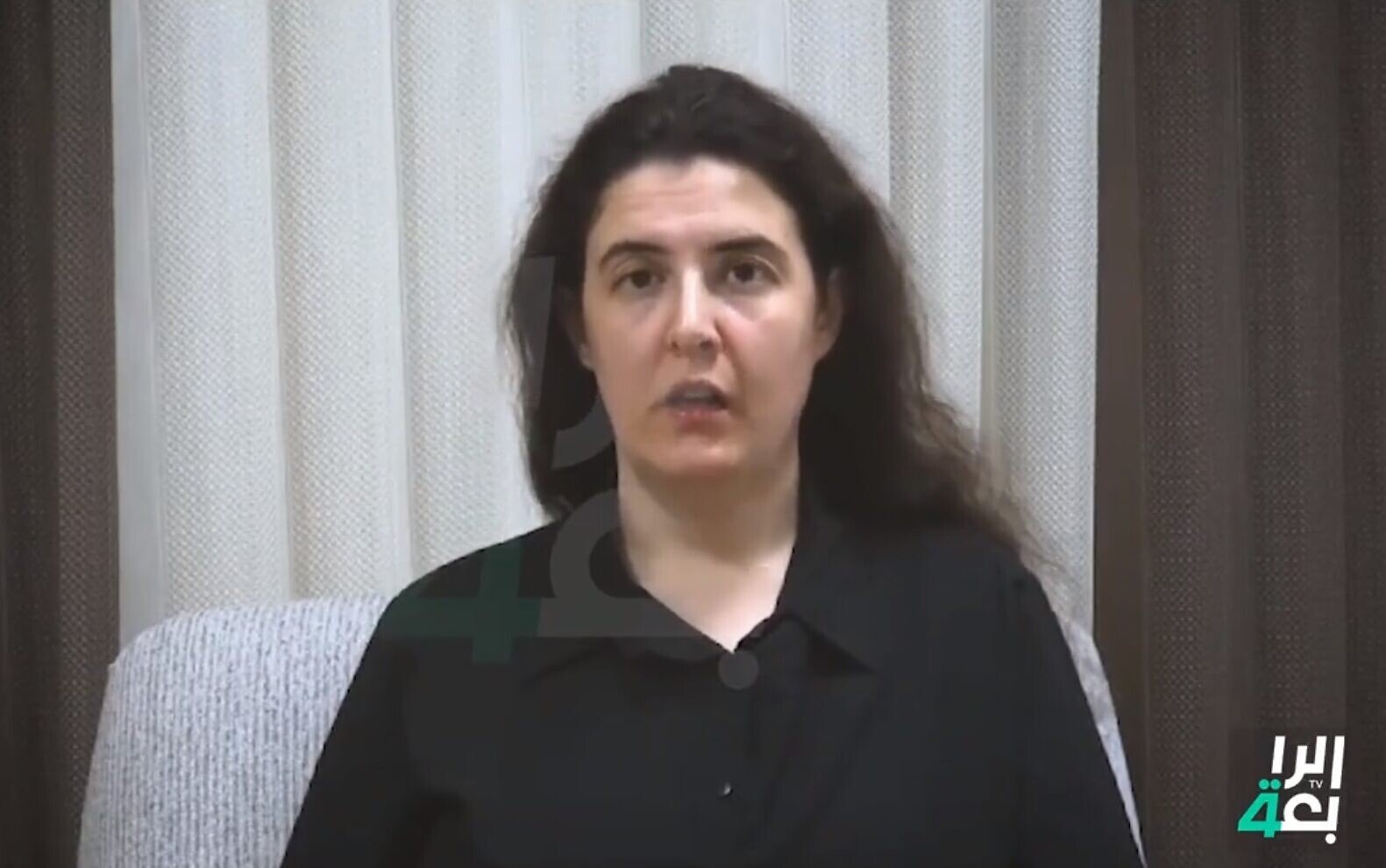
Elizabeth Tsurkov, an Israeli-Russian academic who was kidnapped in Iraq in March 2023, speaks in a clip aired November 13, 2023, by Iraq’s Al Rabiaa satellite TV network. (Screenshot: X; used in accordance with Clause 27a of the Copyright Law)
While she remained in solitary confinement there for two years, she was not tortured, was provided with “varied and plentiful” food, and was treated by a male nurse. She was provided with books, writing supplies, a television, and an Arabic thesaurus, she told The Times.
However, she still suffered constant pain due to her torture, for which she is undergoing rehabilitation in Israel.
During her captivity, she used the notebook she received to keep her mind working, planning her doctoral thesis and developing ideas for articles.
Tsurkov remained in a windowless, third-floor room, and in June 2024, her quarters were renovated, providing her with a kitchen and bathroom. However, she “never saw the sun” during her captivity, she said.
Seeing people advocating for her release, including one of her sisters on TV, kept her spirits up, she added.
In the first proof that she was alive, Tsurkov appeared on Iraqi TV in November 2023 and was instructed to say that she worked as an Israeli and US spy. She used “coded messages,” such as falsely claiming to live in the Gan Hashmal neighborhood in Tel Aviv, to convey that she had been tortured.
She also invented fake names for her supposed handlers, including “Ethan Nuima,” a name sounding like the Hebrew word for torture, inuyim.
Although that did not make it into the broadcast, Kataeb Hezbollah spokesman referenced the name in a Telegram statement detailing Tsurkov’s false confessions in a statement after her release — a claim that she said proved the group had imprisoned her.
On September 9, Tsurkov said she was handed over to the Iraqi government. Female Iraqi doctors examined her at an affluent guesthouse, which was the first time she had contact with women since her abduction.
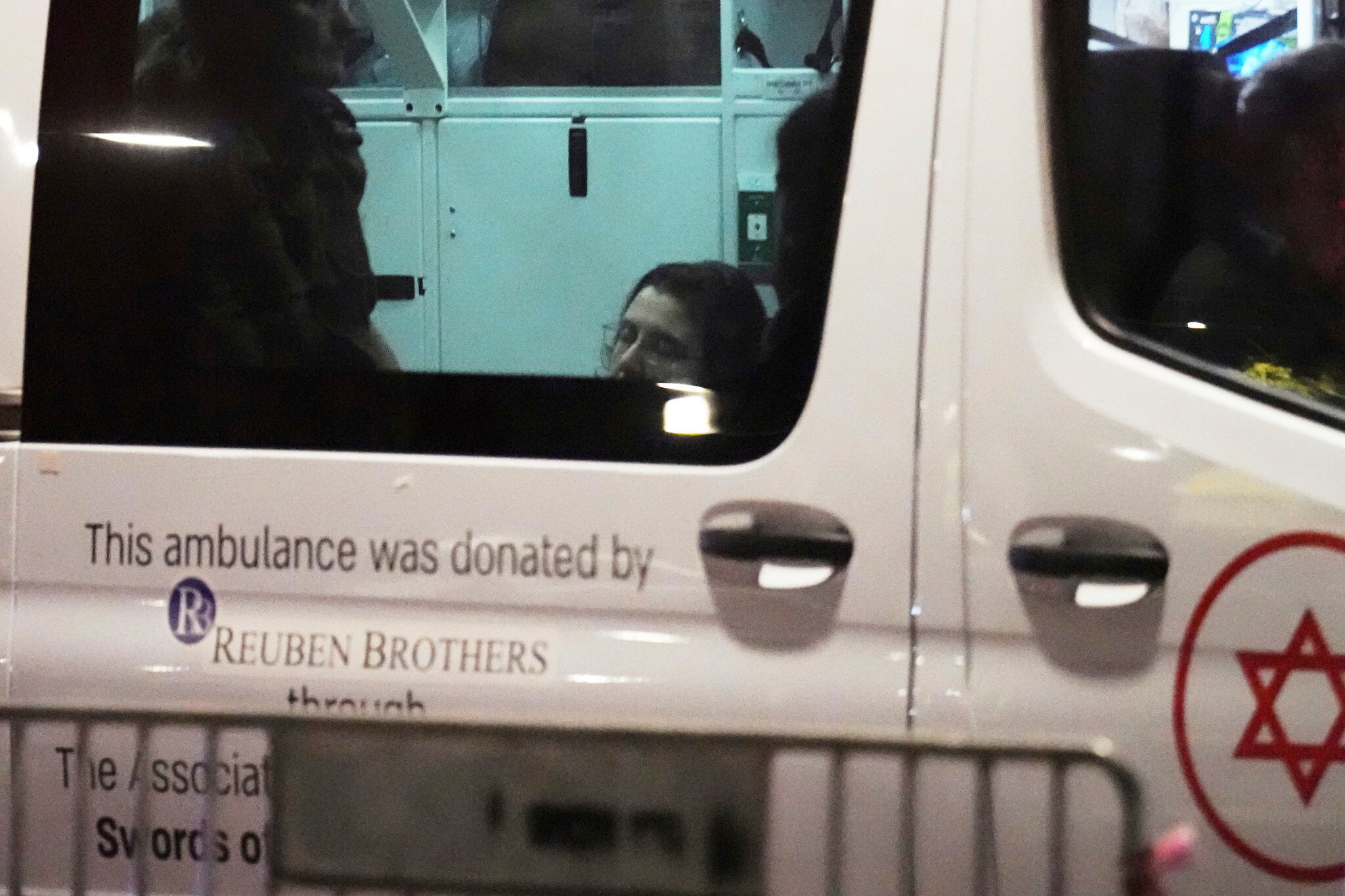
Elizabeth Tsurkov, an Israeli-Russian student who was freed after over two years of captivity by an Iraqi militia, is seen in an ambulance upon her arrival at Sheba Hospital in Ramat Gan, Israel. September 10, 2025. (AP/Ariel Schalit)
Upon her release, she thanked US President Donald Trump, as well as several members of his administration who were involved in securing her freedom. She also thanked Gal Hirsch, Israel’s hostages and missing persons coordinator. Notably, she did not thank Prime Minister Benjamin Netanyahu.
Israel was said to have had very little to do with freeing her, and The Times of Israel reported following her release that without the intervention and pressure of the US administration she might have remained in captivity in Iraq for many more years.
You appreciate our journalism

You clearly find our careful reporting valuable, in a time when facts are often distorted and news coverage often lacks context.
Your support is essential to continue our work. We want to continue delivering the professional journalism you value, even as the demands on our newsroom have grown dramatically since October 7.
So today, please consider joining our reader support group, The Times of Israel Community. For as little as $6 a month you’ll become our partners while enjoying The Times of Israel AD-FREE, as well as accessing exclusive content available only to Times of Israel Community members.
Thank you,
David Horovitz, Founding Editor of The Times of Israel