

It said the doctor issued more than 700 scripts per week on average, but noted that the actual number of scripts dispensed was far lower.
“When cancellations, repeats not filled, medicine strength variations and different forms are factored in, the actual number of scripts dispensed to patients is significantly lower.”
Another leaked document shows the company’s consultations were scheduled to last no longer than 10 minutes, despite a spokeswoman previously claiming they could last up to 30 minutes.
“They encouraged us to have a few more patients every hour,” said one doctor who quit Montu after a year and requested anonymity to speak openly about internal processes. “Like, 10-minute sessions are already horrendously short, but then when you’re starting to do five-minute sessions, you’re literally not even talking to the patient. You’re just giving them cannabis.”
The doctor said while the prescription numbers seemed astronomical, not all of those scripts would have been filled. “One of the frustrations in the industry is just supply chain, and so you’ll often give patients a back-up option for when, inevitably, the product you prescribe is out of stock,” they said.
Loading
The number of patients seen by each doctor on the list was “still ridiculous”, the doctor said.
Former employees also allege non-clinical staff were “re-scripting” Montu patients — replacing prescribed medications with higher-margin alternatives, sometimes after falsely declaring a product out of stock.
Former operations manager Tom Farmery, who resigned in early 2024, said this since-abandoned practice was handled without medical oversight. “If something was out of stock, or sometimes it was a fabricated ‘out of stock’ because the business saw an opportunity to transition patients to a Montu home brand that had a higher margin, the patient was redirected to that stock,” Farmery said.
He said that even when replacement products had similar properties – similar THC levels and flower type, for instance – if a choice existed “between one that was marginally more appropriate for the patient, and one that was more profitable, the more profitable product would be chosen”.
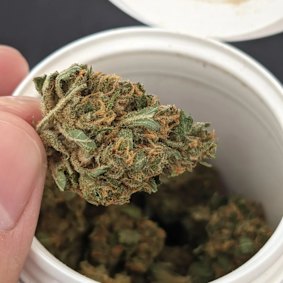
Montu’s Circle brand of cannabis.Credit: Reddit
The result, he said, was that doctors “did not know what the medication would be replaced with … It was handled operationally, not medically.”
After Farmery raised the issue with legal and compliance teams, Montu eventually ceased the practice after a “long and drawn-out process”.
He said it was emblematic of what drove the company: “Montu is a business entirely consumed by greed. It’s a commercial business that is not interested in patient outcomes — it’s interested in profit margin. That’s not what healthcare should be.”
This masthead is not suggesting that allegations about Montu’s culture are verified only that they have been made.
A Montu spokesman denied non-medical staff were currently “re-scripting” patients but did not respond when asked if the practice had occurred in the past.
Health Minister Mark Butler has already tasked his department with lifting standards for telehealth prescribing of medicinal cannabis, with federal and state ministers set to discuss regulations at a meeting later this year.
“I am deeply concerned about unscrupulous and possibly unsafe behaviour by some telehealth medicinal cannabis providers. It is dangerous behaviour that puts profits over patient welfare,” Butler said in response to the Montu data obtained by this masthead.
“Telehealth business models have emerged that use aggressive and sometimes misleading advertising that targets vulnerable people.”
The Therapeutic Goods Administration is already pursuing Montu over illegal advertising by Alternaleaf, in a case before the Federal Court.
Federal opposition health spokeswoman Anne Ruston said Butler could not “simply delegate this issue away to his department. He must be transparent about the steps being taken to protect against any potentially unsafe prescribing practices in our country, and if those steps are producing any real outcomes”.
Montu’s rise has been meteoric, with revenue soaring from $103,000 in 2020, its first full year, to $263 million by 2024. On LinkedIn, one current employee boasts Montu “has grown from 40 to 900 employees in just two years”.
But numerous former employees described a “brutal” work culture at the firm.
As scrutiny has increased on Montu’s high-volume prescribing, and on the TGA’s court case against it over its advertising, the company has also moved to reassure regulators.
In May, it backed the appointment of former health minister Greg Hunt to chair a “telehealth sector working group”, which is fully funded by Montu.
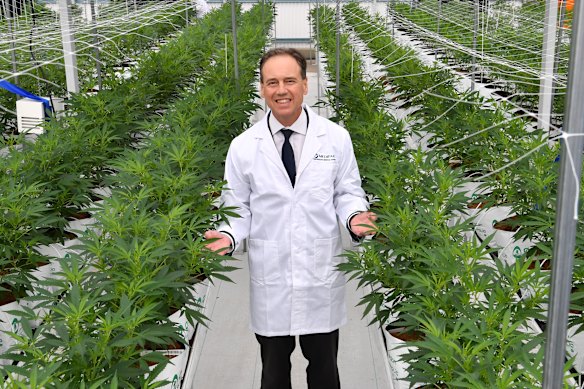
Greg Hunt, in 2019 when he was federal health minister, at the opening of a Sunshine Coast cannabis farm.Credit: AAP
Hunt said he was engaged as the independent chair of the group one day a month, with administrative support for the telehealth group being provided by Montu.
The company has also shifted its business focus away from its competitive Alternaleaf brand towards its Leafio distribution platform, which supplies more than 3000 pharmacies around Australia with cannabis.
The move follows redundancies in April that led to 40 employees in its patient experience division leaving, a decision a spokesman said was to “improve the patient experience”.
The company is also now defending at least 11 unfair dismissal claims at the Fair Work Commission. Montu’s spokesman said it was defending these cases because “the claims are without merit”.
Farmery, the former operations manager who left of his own volition, said the profit-first mindset was reflected in a “brutal” hiring and firing culture.
He recalled how in group online interviews for new staff the company started doing just before he left, if anyone appeared an unsuitable candidate “they’d literally be removed from the interview at that point – just cut off mid-call”.
Farmery came from emergency radiology, where overnight reporting “was literally life and death and patient care was all-consuming. And then I came into Montu where that’s not the case at all.”
The friends he made while at the company have also since quit or have been fired and, with them having departed, he said he wanted to speak publicly because of his concern over what was occurring in the medicinal cannabis sector.
“Cannabis can be a fantastic treatment and a fantastic drug. But not when exploited by greed.”
The Morning Edition newsletter is our guide to the day’s most important and interesting stories, analysis and insights. Sign up here.