
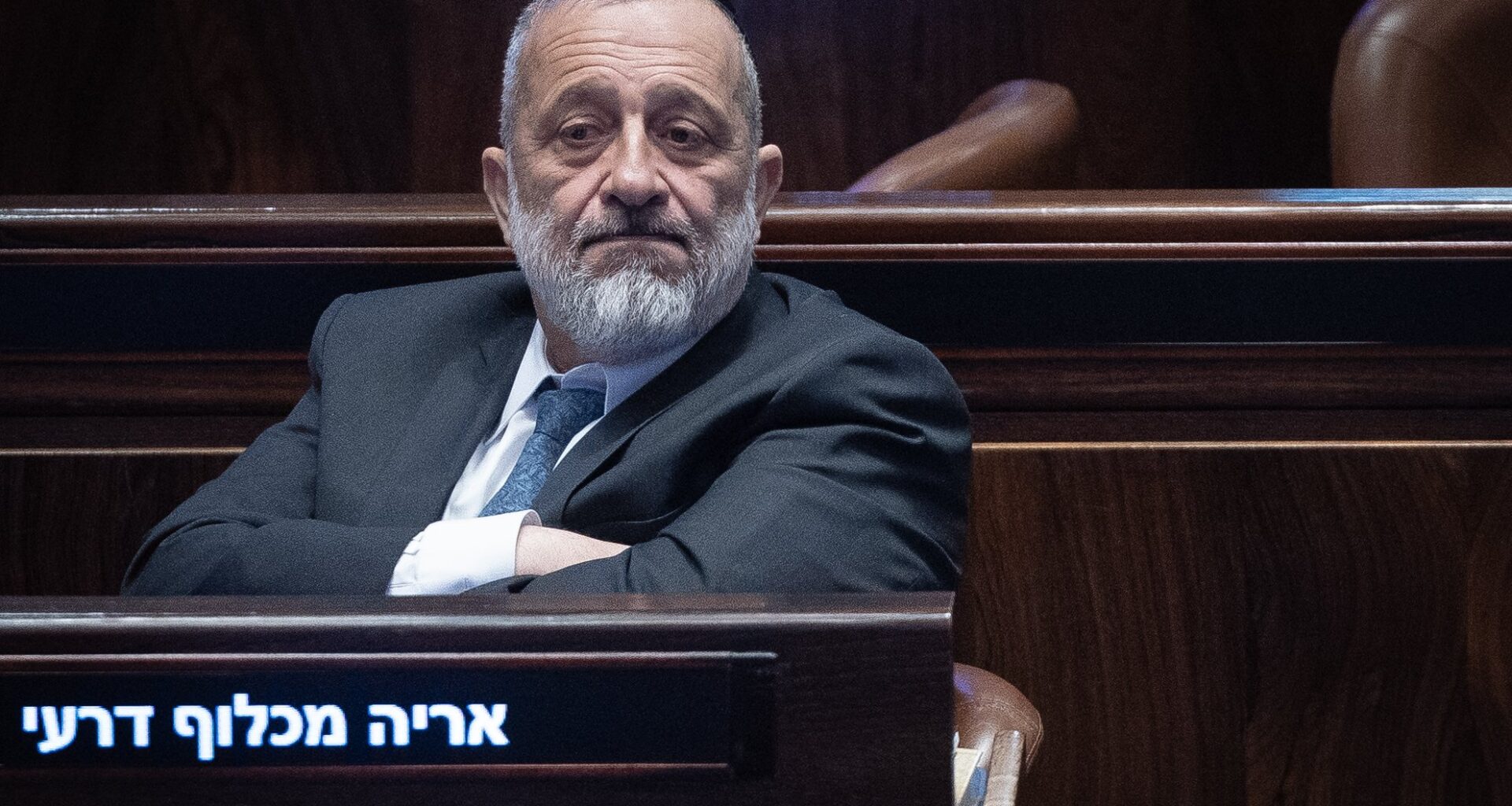
Prime Minister Benjamin Netanyahu reportedly decided this week to move forward with a government-backed bill regulating Haredi military conscription and draft exemptions after receiving the go-ahead from the ultra-Orthodox Degel HaTorah and Shas parties.
However, despite its apparent outward support for the controversial legislation, the Sephardic Shas is deeply divided internally, with disagreements over enlistment highlighting a deeper cleavage between the party’s political leadership, embodied by chairman Aryeh Deri, and its Council of Torah Sages.
In recordings published by Channel 12 on Wednesday, senior members of the council, which ostensibly controls the party and has the final say over policy issues, were heard complaining that Deri had packed the panel with outside ringers.
These rabbis, such as Rabbis Avraham Salim and Shmuel Betzalel, maintain a more accommodationist approach than hardliners like Rabbi Moshe Maya or former chief rabbi Yitzhak Yosef, the son of Shas founder Rabbi Ovadia Yosef, who have said on multiple occasions that no Haredi, even those not learning in yeshiva, should enlist.
While more moderate rabbis assess that the law is unlikely to have a significant practical impact on the ground, others, like Yosef, believe that the proposed legislation would disproportionally affect members of the Sephardic community.
Get The Times of Israel’s Daily Edition
by email and never miss our top stories
By signing up, you agree to the terms
Yosef also alleged that Salim and Betzalel had subordinated themselves to the leadership of the so-called Lithuanian stream of ultra-Orthodoxy and that their appointment to the council by Deri had been intended to dilute more traditional Shas rabbis’ influence so that he could exert control himself.
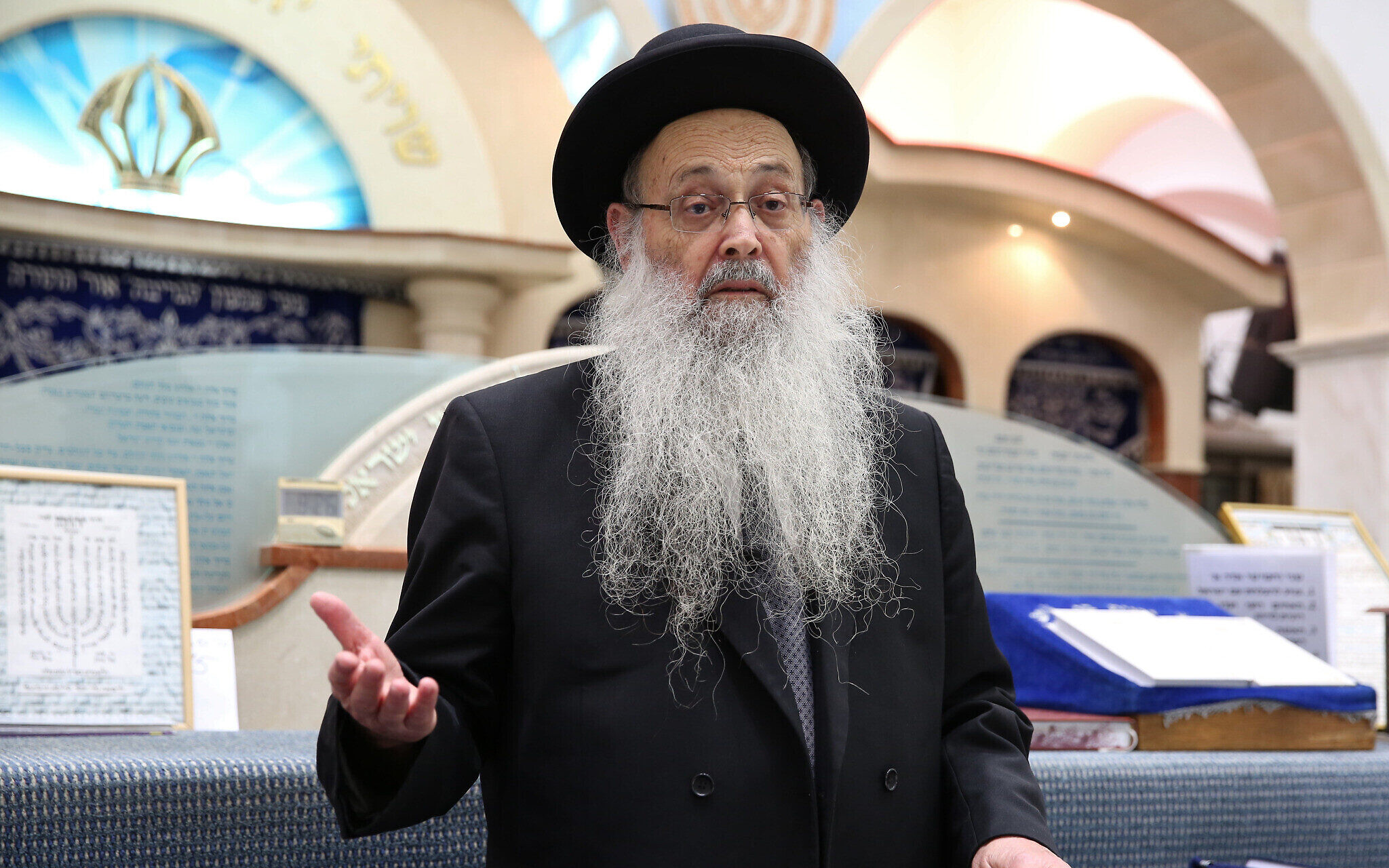
Rabbi Moshe Maya speaks during a rally marking one year since the death of Rabbi Shimon Hirari in Tel Aviv on February 28, 2016. (Yaacov Cohen/Flash90)
“When Rabbi Ovadia founded Shas, he wrote its bylaws, saying the Council decides everything and the president rules. Today, there’s no president of the council. So no one can convene it. The one who runs everything is only Aryeh,” Channel 12 quoted Maya as saying. He reportedly threatened to resign if Shas rejoins the government.
These latest attacks on Deri follow a previous round of leaked recordings aired by Channel 12 last month, in which several members of the council could be heard advocating for fresh elections and for boycotting a future governing coalition if their demands on draft exemptions for Haredi yeshiva students aren’t met.
“If my father were alive, none of this would be happening,” Yosef could be heard saying, blaming Deri for the lack of progress in regulating Haredi draft exemptions and for remaining in the coalition despite failure to procure the desired legislation. “If my father were alive, he would yell at him.”
Shas continued to circle the wagons Thursday, after Channel 13 aired additional recordings of party rabbis criticizing Deri, with Yosef admitting he was unfamiliar with the details of Bismuth’s plan while fellow council member Rabbi Shlomo Machpud expresses his opposition to the proposal, declaring that “we need to revolt so that they don’t pass a law.” Following the report, Shas sent the network a copy of a letter by Machpud expressing his support for Deri and “regulating the status of yeshiva students.”
Deri has definitely taken steps to weaken the power of the rabbis while increasing his own, confirmed Dr. Gilad Malach, a researcher with the Israel Democracy Institute who focuses on the Haredi community.
“First of all, he brought in new rabbis who for years were against Shas, but he wanted them to be inside. Second, he prevented the decision on who would be the president, the head of the council. And there is no one right now,” Malach said. “Politically, he knows very well how to manipulate the rabbis.”
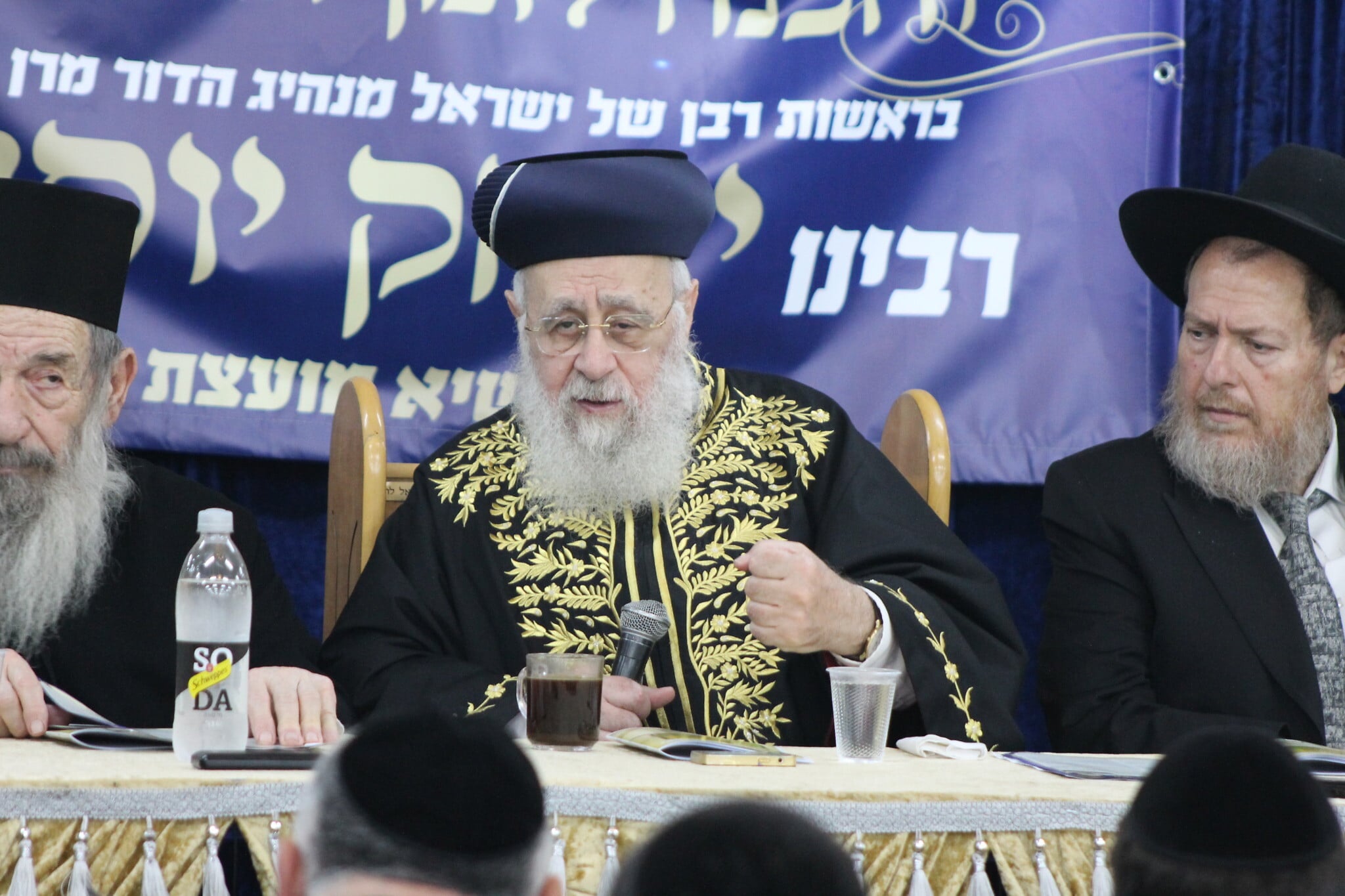
Former chief Sephardic rabbi and current Shas party spiritual leader Yitzhak Yosef addresses a gathering in Bnei Brak, August 21, 2025. (Sam Sokol/The Times of Israel)
In an apparent bid to spin the damage caused by the spillover of the party’s internal conflicts into the public domain, Yosef was one of several rabbis who subsequently issued letters in support of Deri, writing that he was devoted to “rescuing Israel’s yeshiva students” and that statements attributed to him criticizing the chairman “were never made and have no basis.”
He also publicly insisted that it is “a sacred duty to act and do everything possible to enshrine in law the status of Torah scholars” and that the best way to do so would be through the mediation of a panel of yeshiva deans appointed by the Council of Torah Sages — a group which convened to consider aspects of Knesset Foreign Affairs and Defense Committee chairman Boaz Bismuth’s as-yet unpublished proposal on Wednesday evening.
A law protecting yeshiva students even as it drafts those not learning “will receive the Council’s support,” the Haredi Kikar Hashabbat news site quoted a senior party official as saying. “We’ve always made it clear: our role is to protect those who study the holy Torah.”
For the past year, the Haredi leadership has pushed to pass a law keeping its constituency out of the Israel Defense Forces, after the High Court ruled that decades-long blanket exemptions from army duty traditionally afforded to full-time Haredi yeshiva students were illegal.
Some 80,000 ultra-Orthodox men aged between 18 and 24 are currently believed to be eligible for military service, but have not enlisted. The IDF said it urgently needs 12,000 recruits due to the strain on standing and reserve forces caused by the war against Hamas in Gaza and other military challenges.
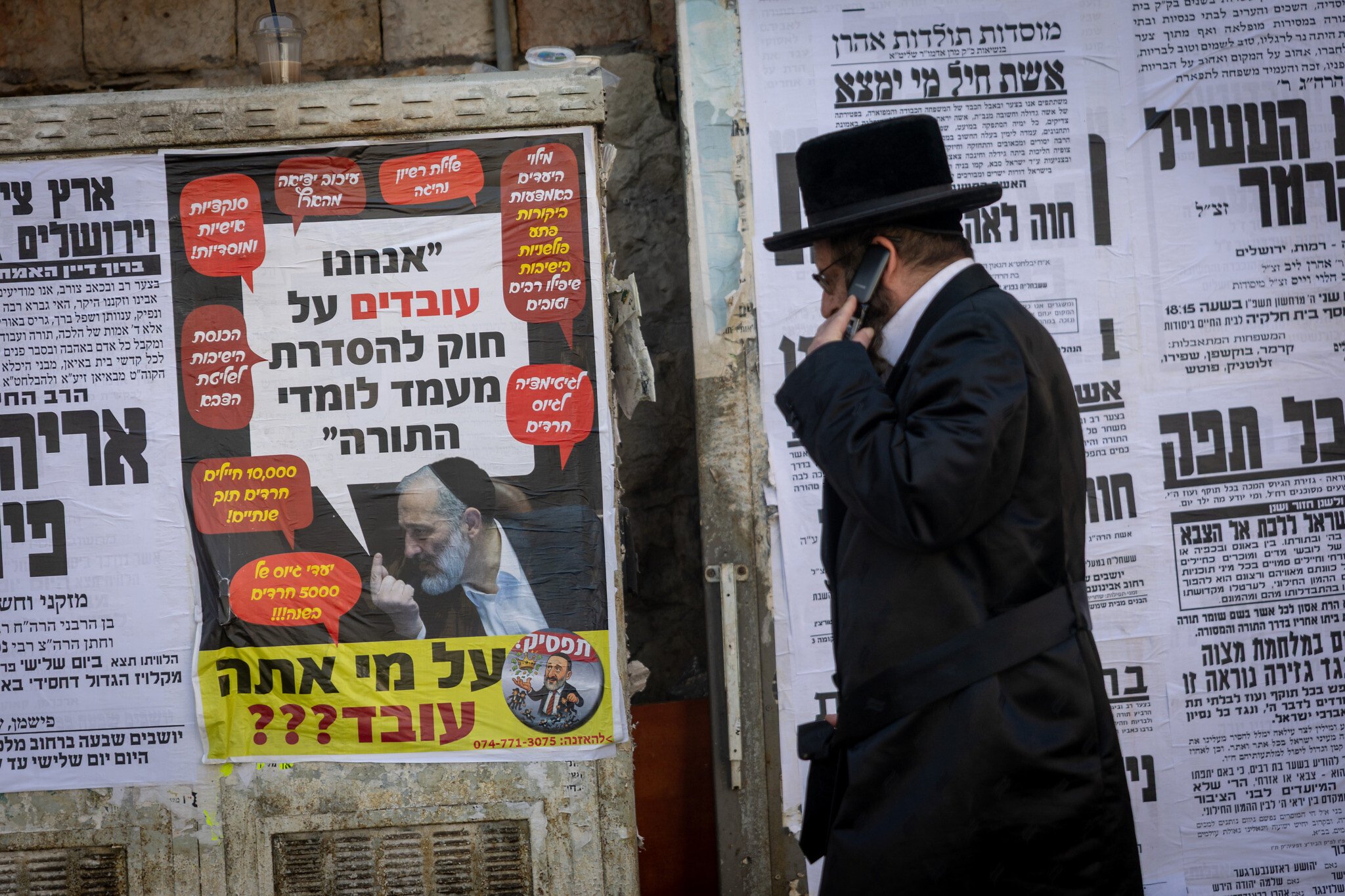
A poster showing Shas leader Aryeh Deri saying “We are working on a law to regulate the status of Torah students,” with the text underneath reading, “Who are you fooling?” in an ultra-Orthodox neighborhood of Jerusalem on October 28, 2025. (Chaim Goldberg/FLASH90)
Netanyahu hopes that the passage of Bismuth’s bill, which reportedly features reduced penalties for draft evasion and has been derided by critics as an “evasion law,” will be enough to bring Shas back to the table.
Bismuth has previously stated that members of the ultra-Orthodox community who study full-time in yeshiva ought to be allowed to continue their studies, while those who do not should be conscripted.
Shas quit in July over increased enforcement against draft dodgers as well as the coalition’s failure to pass legislation regulating the status of tens of thousands of yeshiva students currently eligible for military service. It has since withdrawn from all coalition roles it held in the Knesset, stating that it would return to the government only “when the status of yeshiva students is resolved.”
Speaking with The Times of Israel on Thursday, a rabbi involved in the work of the Council of Torah Sages, insisted that while there were differences of opinion, “there is no feud or conflict.”
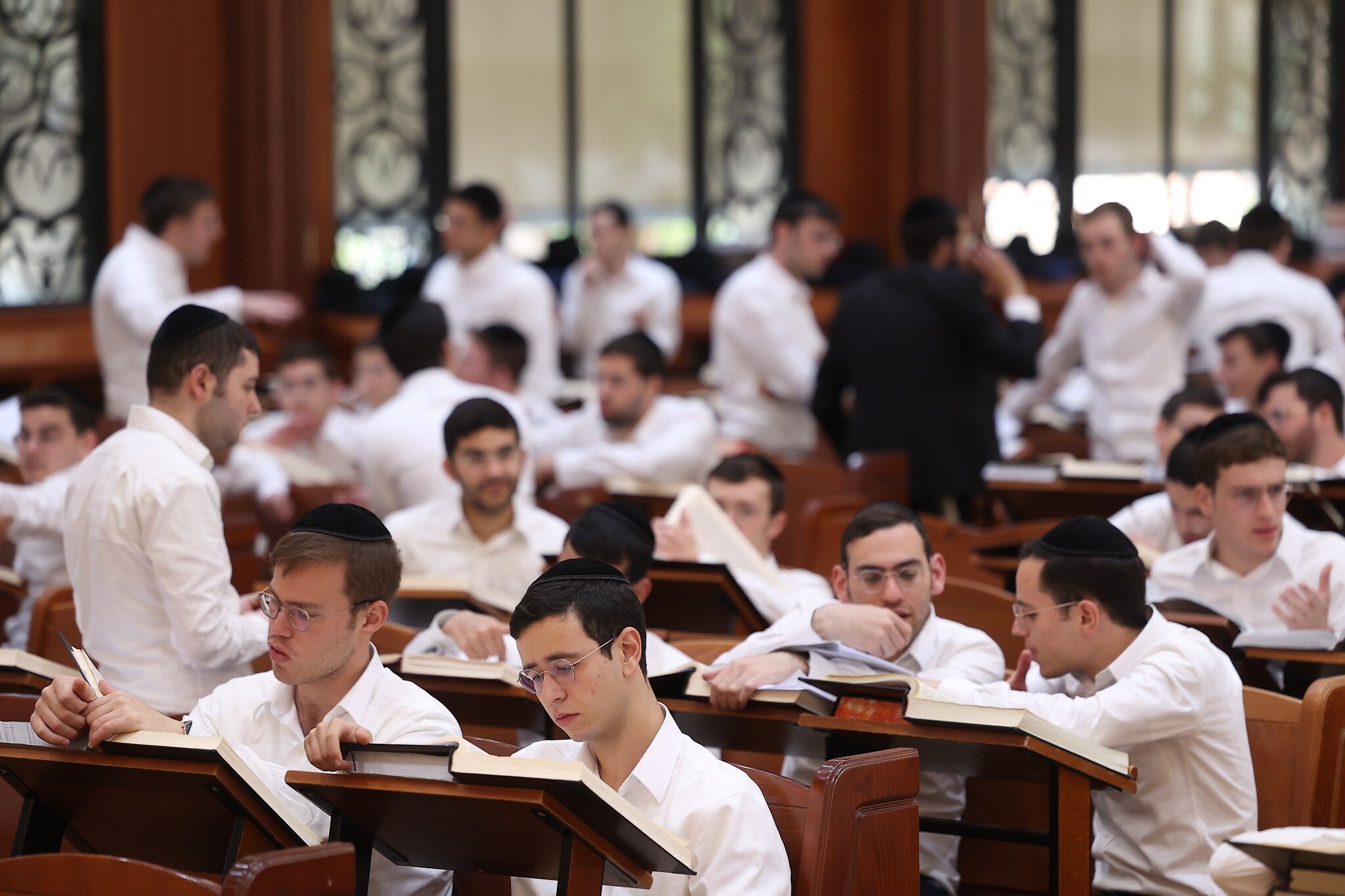
Ultra-Orthodox students study Talmud at the Ateret Shlomo Yeshiva in Rishon Lezion, June 11, 2025. (Shlomi Cohen/Flash90)
“They’ve already moved forward with the law. All that the rabbis wanted was to advance it, to have a law. And now there is one. So no, there are no disagreements about it,” the source continued, adding that the panel of yeshiva deans has been “going through the draft clause by clause” and “there is a general approval.”
“There’s just a volatile situation in general — in our community, there are about 100,000 young men, maybe more, who are technically deserters and can be arrested at any moment. That creates pressure and tension on both the spiritual and political leadership to resolve the issue. There’s this claim that Deri is crawling back into the government and that’s why he’s [supporting] the law. That’s not true. He wants the law to solve a problem for his voters — it’s the hardest problem he’s had with his base. So if rejoining the government is what’s needed to pass the law, then he’ll do it. He’ll do anything to pass the law,” the source added.
A spokesman for Shas did not reply to a request for comment.
Michael Horovitz contributed to this report.