
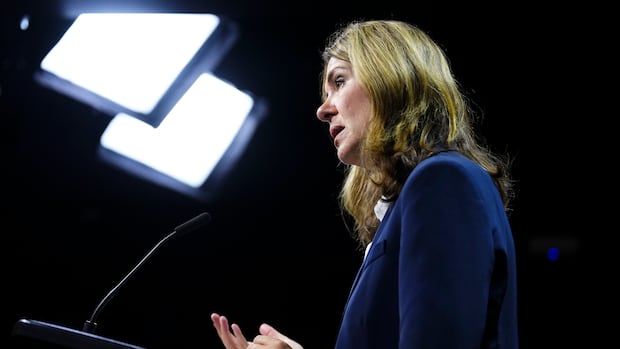
Before the 112th Grey Cup gets underway at Princess Auto Stadium in Winnipeg, Alberta Premier Danielle Smith is expecting a major chapter to unfold in the long-running federal-provincial battle over energy policy.
Those policies have been evolving in Alberta over the past number of months. Smith has spoken of a “grand bargain” and has said she expects an agreement by the CFL’s championship game on Nov. 16.
“I expect the federal government to reach an agreement on this [memorandum of understanding] by Grey Cup so we can move on to the next step and begin attracting private capital back to Canada’s natural resource sector,” Smith wrote in a statement in October.
According to the premier, this would include the federal government removing or rewriting what Alberta calls “bad laws,” as well as an agreement to work toward the “ultimate approval” of a pipeline to the B.C. coast.
The premier also wants to see the Pathways Alliance project come to fruition. The major carbon capture and storage project near Cold Lake would see carbon dioxide emissions trapped from more than 20 oilsands facilities in northern Alberta before being transported 400 kilometres by pipeline to a terminal in the eastern part of the province.
Ottawa, for its part, has signalled that its proposed oil and gas emissions cap, a signature policy under former prime minister Justin Trudeau, could be scrapped.
In exchange, the federal government would look for strong carbon pricing, methane regulations and greater deployment of carbon capture and storage.
At a news conference before tabling the budget Tuesday, Finance Minister François-Philippe Champagne said there were a number of steps still to come.
“And when conditions are met, we won’t need the cap anymore. But the conditions will have to be met,” Champagne said.
So what are those conditions? And how might it affect Alberta’s own industrial carbon tax program?
Alberta’s industrial carbon tax
Alberta was the first jurisdiction in North America to put a price on industrial carbon emissions in 2007. The current version has been in place since 2020, and is referred to as Technology Innovation and Emissions Reduction (TIER).
Liberal MP Corey Hogan, who represents Calgary Confederation and serves as parliamentary secretary to the minister of energy and natural resources, told the Calgary Eyeopener that Alberta’s system is a key piece of the puzzle.
“There is no emissions cap right now. The emissions cap was something that was in draft regulations and what the budget says is we won’t proceed as long as everybody does what they say they’re going to do,” Hogan said.
He said Alberta already has a foundation in place.
“The energy majors have said they’re interested in carbon capture. They’ve said, ‘Yeah, we’ll work on methane’ and they’ve said, ‘Yes, we’ve got an industrial carbon price,’” Hogan said. “So as long as we can get to common understandings of what all of those mean, there’s not really a need for an emissions cap.”
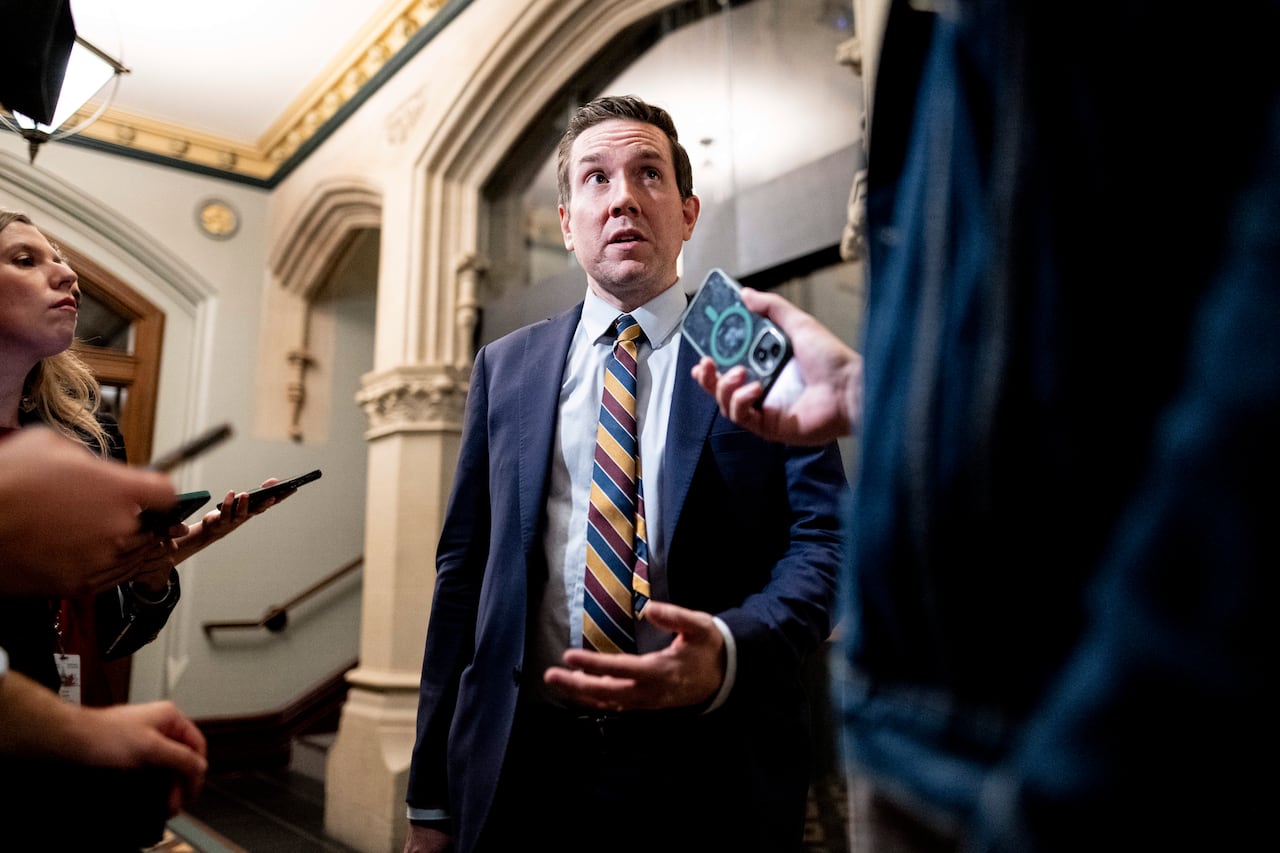 Liberal MP Corey Hogan is pictured in a file photo on Parliament Hill in Ottawa on Oct. 8, 2025. (Spencer Colby/The Canadian Press)
Hogan noted that under the federal carbon pricing framework, provinces can design their own systems, but they must meet minimum federal standards.
“What we’re saying is, you’ve got to hit those federal standards. And if you work with us on this, then absolutely there’s no need for that emissions cap,” Hogan said.
The frozen price
Here’s where some uncertainty comes into the picture.
In September, the Alberta government announced it would maintain its freeze on the industrial carbon price at $95 per tonne through 2026.
That price isn’t in alignment with the federal government’s backstop price, targeted to rise to $110 per tonne next year, and to $170 by 2030.
Smith told reporters in October that the $95 per tonne carbon price was “open for discussion.”
The government also introduced changes to allow companies to avoid paying provincial fees for emissions if they invested directly in emissions-reduction projects.
Kendall Dilling, the president of the Pathways Alliance, said in a statement at the time that those changes would encourage investment in emissions reduction technology.
Environmental groups were less convinced.
“These changes add up to two things: less long-term certainty for businesses and investors, and more harmful emissions going into our atmosphere, contributing to global emissions fuelling more wildfires, droughts and extreme weather endangering Albertan communities,” Dale Beugin, executive vice-president at the Canadian Climate Institute, told The Canadian Press in September.
Road ahead unclear
Heather Exner-Pirot, director of energy, natural resources and environment at the Macdonald-Laurier Institute in Ottawa, told Alberta at Noon there appears to be room for collaboration on the carbon price.
“It seems at least hopeful that there’s good faith being offered to do those negotiations,” she said.
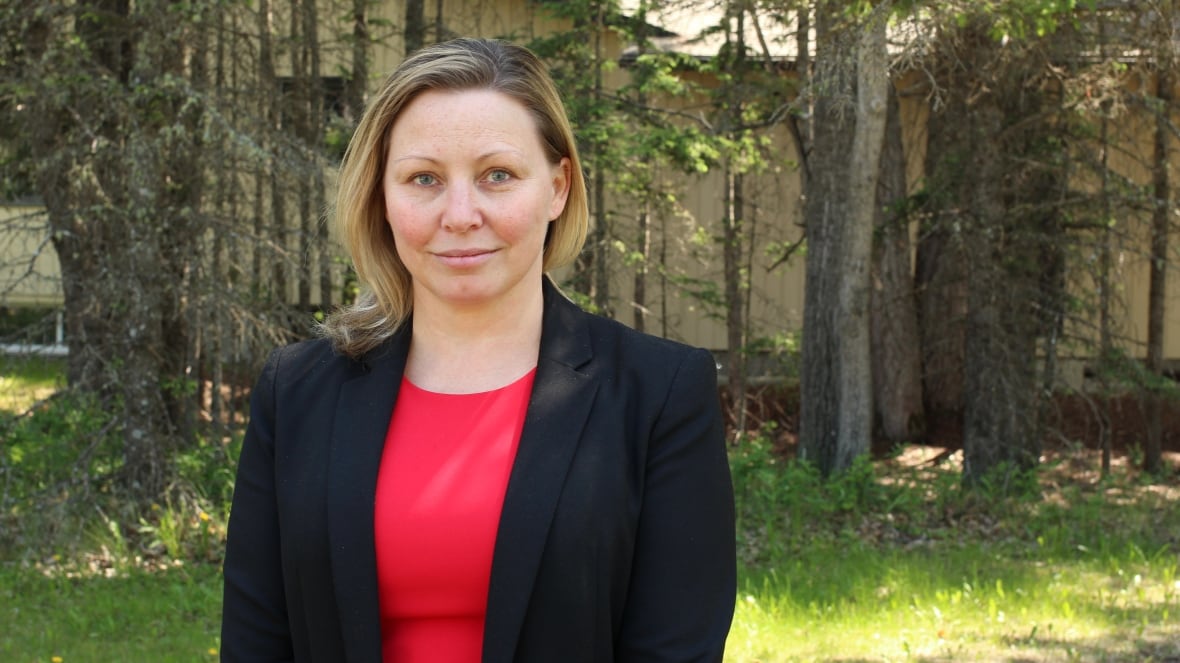 Heather Exner-Pirot, director of energy, natural resources and environment at the Macdonald-Laurier Institute, says the budget could pave the way for a compromise between the federal and Alberta governments. (Paula Duhatschek/CBC)
But what might that collaboration look like?
The Pembina Institute, a Calgary-based environmental think-tank, has said that the “grand bargain” will be unachievable without strong industrial carbon pricing and a stable TIER market.
“There’s going to have to be some pretty significant changes in order to get that industrial carbon pricing back to the place where it’s doing what it was intended to do, and to make the oil and gas emissions cap redundant,” said Chris Severson-Baker, the institute’s executive director, in an interview.
Andrew Leach, who teaches economics and law at the University of Alberta, reiterated that the federal government’s position is that no emissions cap be imposed if it wouldn’t make a big difference to emissions.
He added that, in his view, Alberta’s system has advantages over the federal one.
“I just don’t think they’re going to want to have that fight. Alberta’s system, for one, is way better on electricity, as far as I’m concerned,” Leach said.
“I think you’d have a hard time fighting that $95 Alberta system, versus a $110 federal system, and winning. It would seem like sort of a petty fight.”
He added that any action taken by Ottawa would likely first involve Saskatchewan. That province dropped its industrial carbon price completely earlier this year, and Ottawa has yet to respond.
 Andrew Leach, an energy and environmental economist and a professor at the University of Alberta, noted that Saskatchewan currently has no carbon pricing, making the case less straightforward to enforce anything against Alberta. (Submitted by Andrew Leach)
Still, it doesn’t mean Ottawa’s stance amounts to a concession.
Smith’s goal of expanding oilsands output will make emissions limits harder to avoid, Leach said.
“Premier Smith says she wants to fill three or four new pipelines and double oilsands production, et cetera,” he said. “That’s going to be pretty hard to do and meet those emissions levels that were contemplated with the emissions cap.”
In a statement, a spokesperson for Dominic LeBlanc, Canada’s intergovernmental affairs minister, said the federal government was “having continuous, productive engagements with the government of Alberta and industry on making Canada a clean and conventional energy superpower, and building major projects that power our economy.”
The Pathways Alliance declined to comment, citing that the matter is between two governments.