
After much excitement around the ceasefire in Gaza last month, plus no small measure of pomp and circumstance, US President Donald Trump’s 20-point peace plan has lost much of its momentum.
A string of senior US officials making the pilgrimage to Kiryat Gat — a phrase no journalist ever thought they would write — injected some energy into the process, but even the ongoing visits can’t hide the fact that Trump’s vision is encountering friction at every turn.
Still, the process is crawling forward, much of it the result of Trump’s stubborn determination.
Hamas has stretched out the handover process of slain hostages across the four weeks since the ceasefire went into effect, but now, only 6 of the 28 bodies the terror group held on October 10 remain in Gaza.
With phase one still incomplete, no talks have been held on phase two of the deal.
Get The Times of Israel’s Daily Edition
by email and never miss our top stories
By signing up, you agree to the terms
Yet the Trump administration is making sure things are moving in the right direction. A draft United Nations Security Council resolution has been circulating, aiming to create a mandate for peacekeeping forces that would make potential contributing states feel comfortable with the mission.
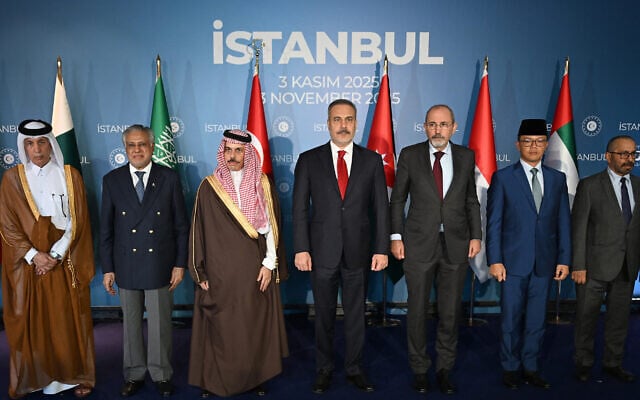
(From left) Officials from Qatar, Pakistan, Saudi Arabia, Turkey, Jordan, Indonesia and the United Arab Emirates pose for a photo during a meeting to discuss the US-backed Gaza peace plan in Istanbul on November 3, 2025. (Ozan KOSE / AFP)
There are also attempts by Arab mediators, especially Egypt, to cobble together an interim administration to run Gaza until a permanent solution is found.
Amid the slow jostling of the parties as the truce shambles toward the second phase, both Israel and Hamas are trying to ensure that Gaza doesn’t become another Lebanon — but for very different reasons.
Hamas’s fear – IDF freedom of action
The only document Hamas has signed — the October 9 ceasefire-hostage release agreement ratified in Sharm El-Sheikh — says “the war will immediately end.”
“All military operations, including aerial and artillery bombardment and targeting operations, will be suspended,” it reads.
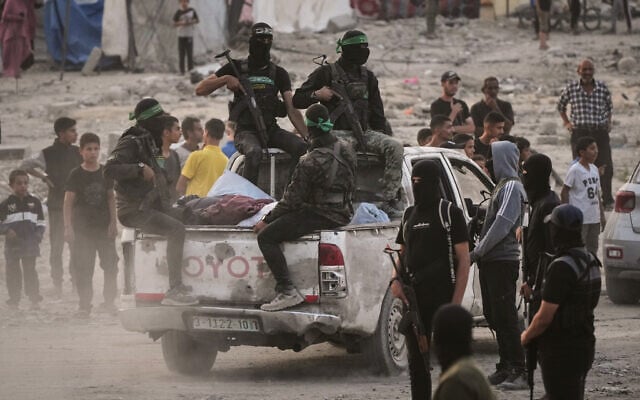
Hamas operatives search for the bodies of Israeli hostages in the Shejaiya neighborhood of Gaza City, November 5, 2025. (AP Photo/Jehad Alshrafi)
That clause is the reason Hamas accepted the deal, even at the price of releasing all 20 of the living hostages in its hands. It was facing a resolute IDF push into Gaza City, with no prospect of the international community or Israeli protestors stopping it without a comprehensive deal.
That ceasefire has largely held, giving the terror group room to reassert its dominance in the 47% of Gaza under its control. Its fighters have put their uniforms back on and are out patrolling the streets, rifles on full display. Operatives have carried out executions of rivals and alleged collaborators in broad daylight.
Even with that space to breathe and regroup, there are signs of potential danger for Hamas. Twice, Hamas terrorists have managed to kill Israeli forces in Rafah. In response to last week’s attack, Israel carried out airstrikes across the Strip, killing dozens of terrorists, including commanders in Hamas and other terror groups. Gaza health authorities reported more than 100 dead in the strikes.
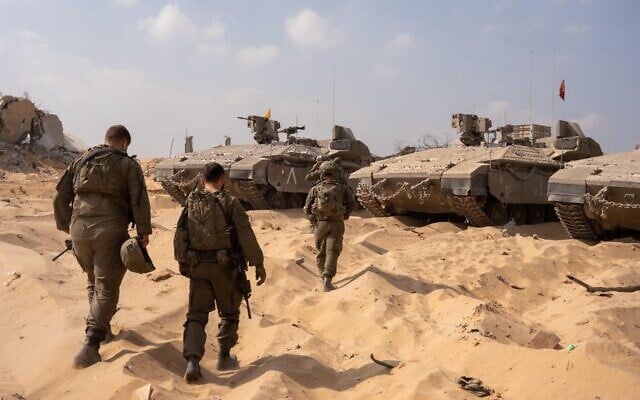
Troops of the Nahal Brigade operate in southern Gaza’s Rafah, in a handout photo issued on November 1, 2025. (Israel Defense Forces)
That is exactly what Hamas wants to avoid — Israel enjoying the freedom to decide when and where to strike, whereas any minor Hamas attack invites a massive IDF response.
That reality, which would be quite comfortable for Israel, is what abides in Lebanon.
Hezbollah was pounded into approving a humiliating ceasefire officially signed by Lebanon in November of last year, which set in motion the mechanism for its own disarmament.
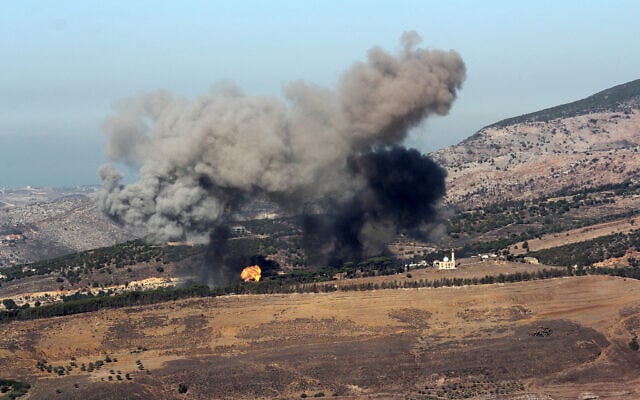
Smoke rises following an Israeli airstrike on the outskirts of the southern Lebanese village of Ej Jarmaq on October 30, 2025. (Rabih DAHER / AFP)
A “side letter” of guarantees from the US reportedly affirmed and detailed Israel’s right to defend itself against renewed threats.
Israel has made enthusiastic use of that right. Since the ceasefire, the IDF says it has killed over 330 Hezbollah operatives in strikes, hit hundreds of Hezbollah sites, and conducted over 1,000 raids and other small operations in southern Lebanon in response to violations by the terror group.
Those strikes have targeted important commanders in the field. The IDF carried out two deadly attacks on Hezbollah figures on Monday, one of them killing Muhammad Ali Hadid, who the IDF said was a commander in Hezbollah’s elite Radwan Force. Israel took out another Radwan fighter on Wednesday.
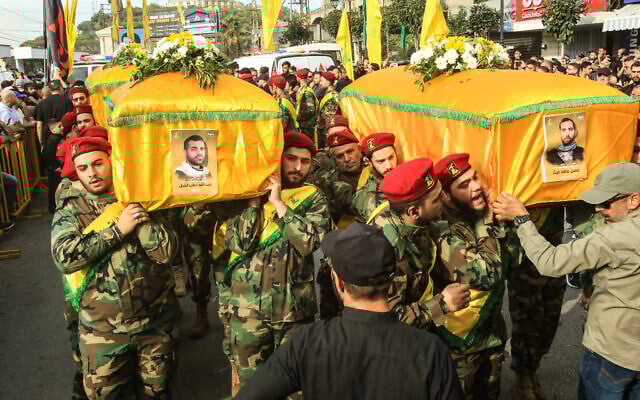
Hezbollah members carry the coffins of comrades killed in recent Israeli attacks during their funeral in the southern city of Nabatieh on November 2, 2025. (MAHMOUD ZAYYAT / AFP)
As Israel steps up its strikes on Hezbollah, with no response from the once-fearsome Shiite force, Hamas has a clear vision of what the ceasefire can morph into if it doesn’t find a way to drastically limit Israel’s ability to target its commanders and its weapons.
Israel’s concern – Hamas as kingmaker
It remains unclear how Gaza will be run in the coming years, and Israeli leaders and diplomats are working overtime to ensure that two of its war aims are met.
Per Trump’s vision, Hamas is meant to disarm and step away from any governance of the Strip.
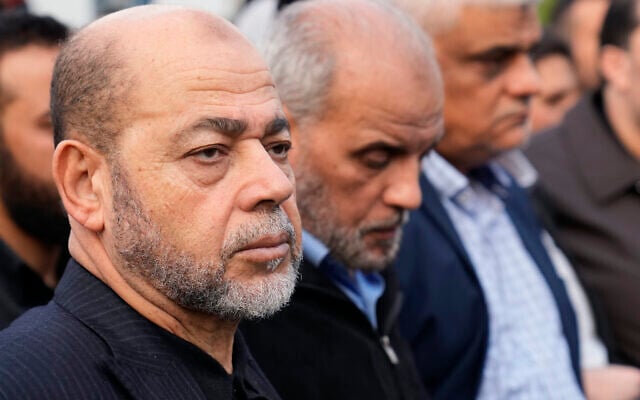
Hamas politburo member Moussa Abu Marzouk, front, attends the funeral of Saleh Arouri, in Beirut, Lebanon, January 4, 2024. (AP Photo/Hussein Malla)
But the terror group is doing everything it can to avoid giving up its weapons. Senior Hamas officials have made clear in interviews that they don’t intend to comply.
Maintaining its arms will enable Hamas to prevent Israel from achieving the latter aim of keeping Hamas away from governance.
Hamas seems to have concluded that it can’t formally rule Gaza for the foreseeable future. But it has already started playing kingmaker. On Tuesday, top Hamas leader Moussa Abu Marzouk said that the terror group and the Palestinian Authority came to an agreement on the makeup of the temporary committee that will manage the Gaza Strip on behalf of the PA.
And it intends to remain the strongest force in Gaza for years, with no compunction about killing fellow Gazans. So long as it retains its arms, Hamas can meet any attempt to install an administration that would threaten it and its weapons with intimidation, and if necessary, assassinations.
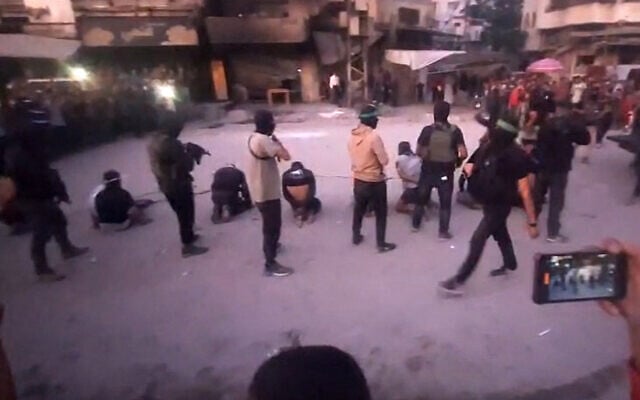
This image grab from a handout video released by the Hamas-run al-Aqsa TV’s Telegram channel on October 13, 2025, shows Hamas gunmen executing blindfolded, bound and kneeling men as a crowd surrounds them in a street in Gaza City. (Al-Aqsa TV / AFP)
This would mirror Hezbollah’s hold over Lebanon until it was defeated by Israel in 2024. As the most powerful player in a weak Lebanese state, the Iran-backed terror group monitored government institutions, universities, airports, banks and private companies. It had operatives at border crossings and ports, and installed allies and party members into key ministries to guarantee budgets and divert funds into its own coffers.
“Hezbollah’s use of weapons to intimidate its opponents paved the way for it to entrench – by force – its special status within the Lebanese state and thus increase its political influence,” according to Chatham House’s Lina Khatib.
The arrangement provided convenient cover for Hezbollah. Israel was limited in its military options in Lebanon, since the Lebanese state had international legitimacy and Israel’s allies wanted to see it strengthened. Yet that state was controlled by Hezbollah, which was able to build its military arsenal to threaten Israel while hiding behind Lebanese institutions, which posed no threat at all to the Shiite force.
As long as Hamas remains armed and organized in Gaza, it will be operating in a Gaza ruled by a technocratic administration that it has some veto power over, and that enjoys the backing of Washington, Cairo, Riyadh, Abu Dhabi, Ankara, and other key players.
The struggle after the war
Though Israel declared victory in Gaza shortly after Trump announced his plan, the outcome of the two-year war against Hamas is far from assured.
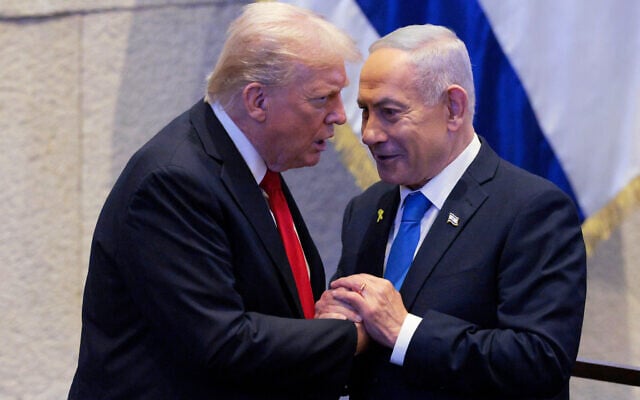
US President Donald Trump talks with Prime Minister Benjamin Netanyahu in the Knesset, October 13, 2025. (Chip Somodevilla/Pool via AP)
The month since the ceasefire went into effect has seen the sides jockeying to create facts on the ground and shift the terms of the truce to meet their own interests. That struggle will continue, sometimes through diplomacy, often through violence, and occasionally by slow-walking implementation of the deal, including the return of hostage bodies.
Israel might want to think it won, but Hamas doesn’t believe it has lost. If the terror group manages to retain its weapons and its control over who runs Gaza, Israel’s ostensible victory will dissipate, and Hamas will have been proven right.