
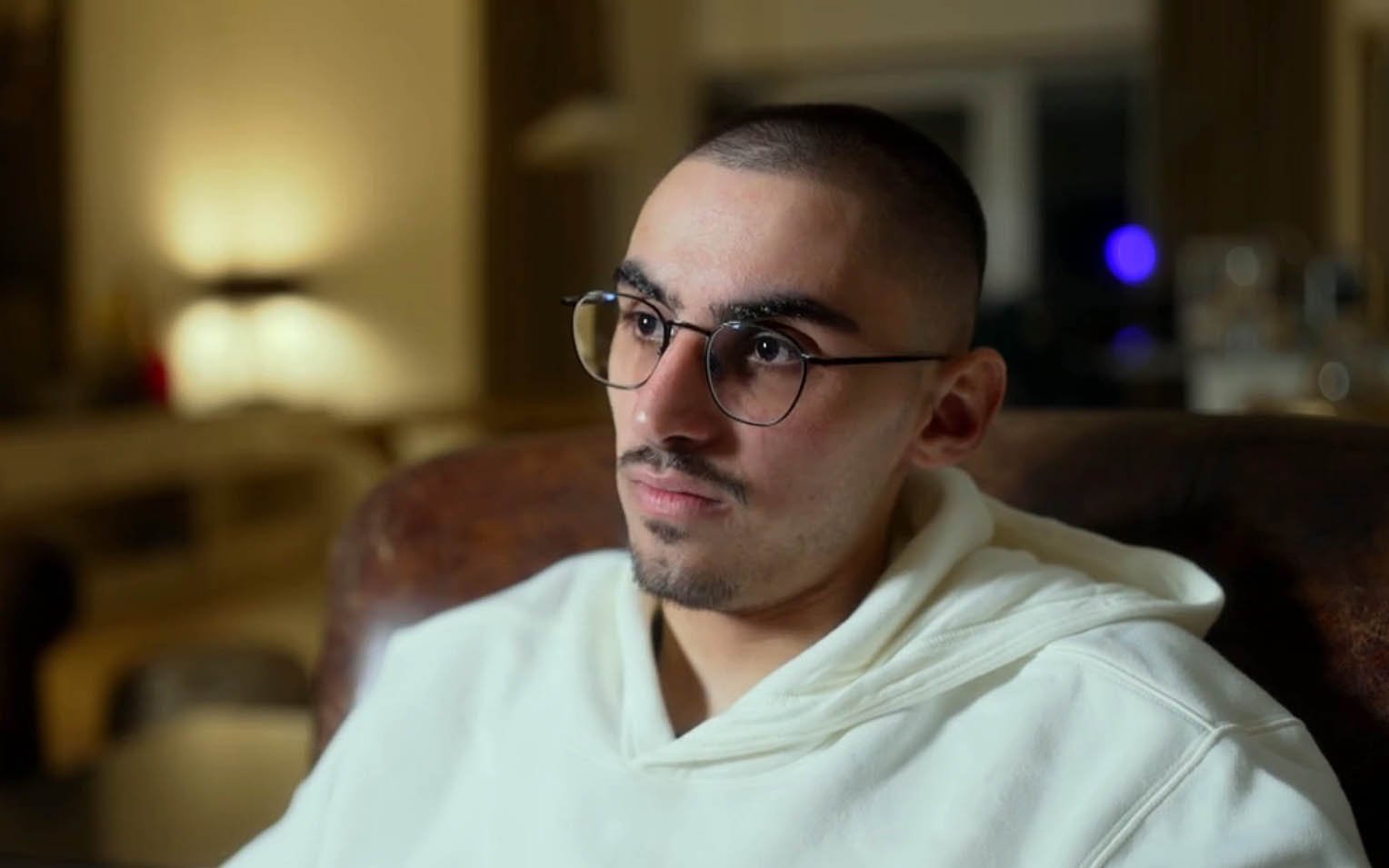
Recently freed hostage Rom Braslavski, who was held by the Palestinian Islamic Jihad terror group in Gaza for 738 days, was so severely beaten by his captors that he begged them to let him starve to death instead, he recounted in his first interview with Israeli television following his release last month.
In the 50-minute interview with Channel 13’s “Hazinor” program, aired on Thursday night, Braslavski opened up about his experiences, starting from the moment of his abduction from the Nova music festival on October 7, 2023, where he had been working as a security guard when swarms of Hamas-led terrorists stormed the music festival near the Gaza border, killing 364 people and taking dozens more hostage.
“It was the first time I’d ever seen a dead body,” he told Channel 13, recounting how he stumbled across the bloodied bodies of two young women, both dressed in festival clothing, as he tried to escape the invading terrorists, to no avail.
“I said to myself, ‘listen, you’re in a movie,’” he recalled thinking upon his capture. “‘If I’m in a movie, with cameras, what would the guy in the movies do?’”
“I started to attack him with my fists, with all my strength, and shoved him with all my strength. I caught him off guard.”
Get The Times of Israel’s Daily Edition
by email and never miss our top stories
By signing up, you agree to the terms
He took the opportunity to bolt from his captor, running wildly, only to realize he was running toward the Gaza border, not away from it, and that he was surrounded on all sides.
When his captor caught up with him, he broke Braslavski’s nose and promptly brought him into Gaza, where he would remain for the next two years.
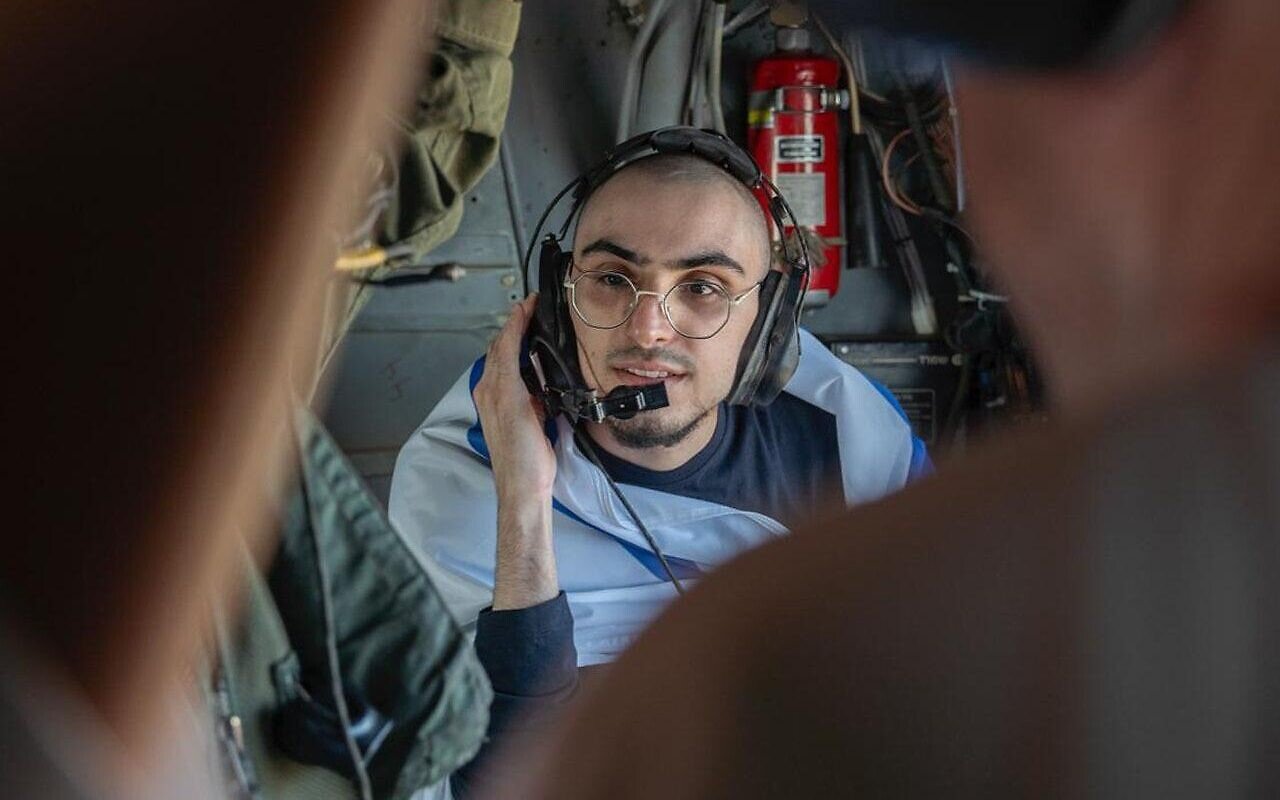
Rom Braslavski on his way back to Israel after two years in captivity in Gaza, October 13, 2025. (Government Press Office)
Braslavski, a Jerusalem resident, spent his first 10 days in captivity tied to a wardrobe in someone’s bedroom, before he decided to take matters into his own hands.
Having been taught once by a friend how to escape restraints, Braslavski said he would work his way out of them whenever his captors weren’t around, and would search the house for anything that could help him.
This continued for 11 days before he decided to embark on a “suicide mission.”
“I said to myself, ‘I’m going to make macaroni.’”
But without gas for the stovetop, there was no easy way to boil the pasta, leading Braslavski to resort to taking several books and a pile of clothes belonging to his captor’s children and setting them on fire.
The smoke leaking out of the house as he cooked his macaroni atop a haphazard bonfire attracted the attention of nearby Gazans, who quickly realized that the source was an unguarded Israeli hostage cooking himself dinner.
“They started banging on the door,” he recounted. “Then they started banging on the windows. The windows were plastic. I’m looking around and I’m thinking, ‘Fuck, they caught me.’”
He dived under the bed, covering himself in a blanket.
“They came in. They pulled me from under the bed, and they beat me,” he said, adding that he couldn’t walk properly for two weeks after they rained “death blows” down on him.
But before the angry mob could kill him, his captor returned and shooed them away, only to tie Braslavski up once more and leave the house again.
Braslavski freed himself and ate his pasta.
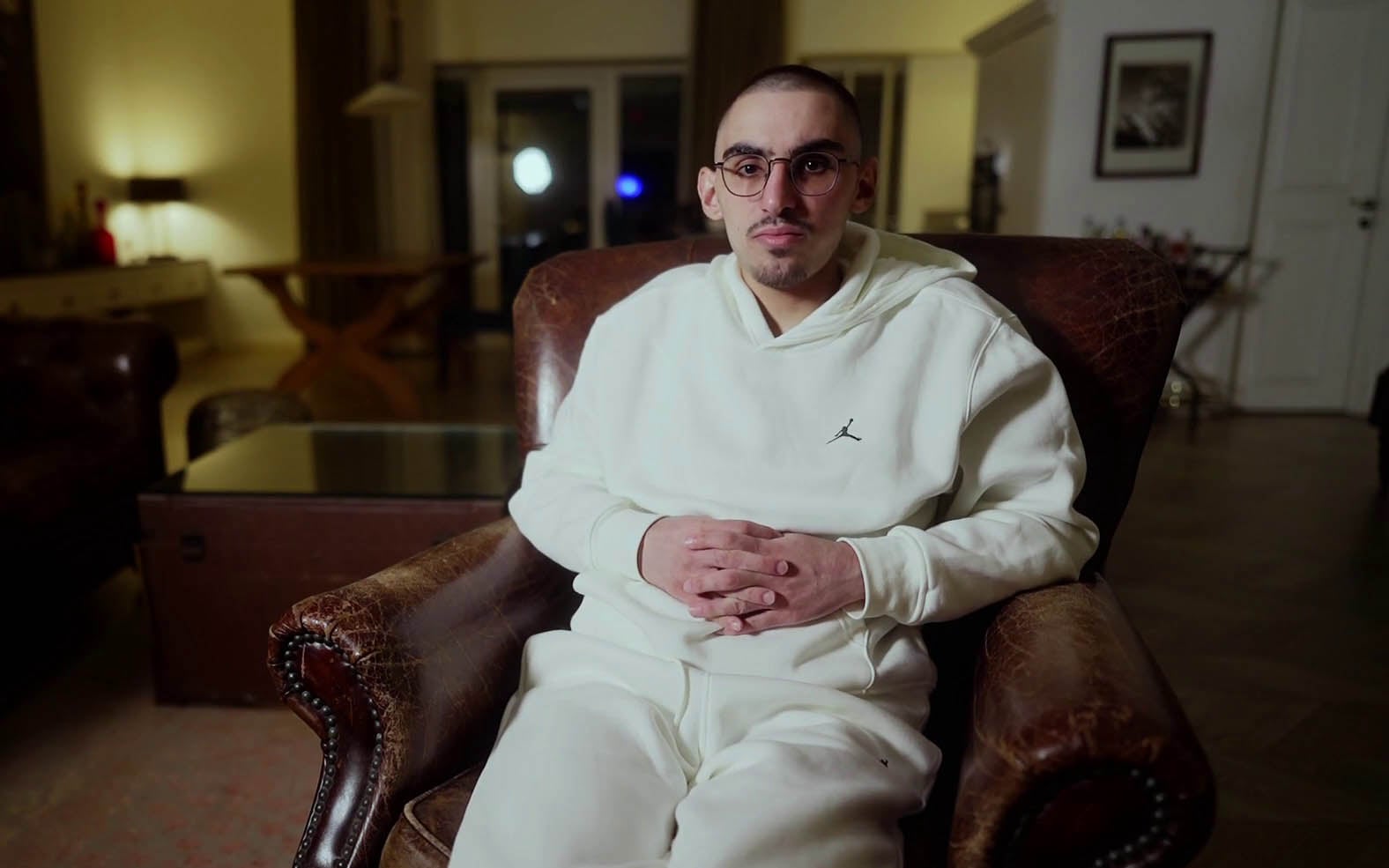
Ex-hostage Rom Braslavski speaks to Channel 13’s “Hazinor” program in an undated interview broadcast on November 6, 2025. (Screenshot, Channel 13)
The then-19-year-old spent most of his time in Islamic Jihad captivity almost entirely alone, excepting a brief 48 hours spent with fellow hostage Sasha Troufanov in Rafah, southern Gaza, in May 2024.
“That was the biggest gift that I could have received,” he said. “I sat with Sasha, at first we were afraid to speak, but we spoke quietly.”
“We spoke for hours, without stopping. From the morning until the night… I felt content.”
But on May 6, 2024, the IDF entered Rafah, and they were separated once again. Rom wouldn’t see another hostage until the night before his release, 17 months later.
A turn for the worse
Braslavski’s time in captivity was divided into two distinct chapters. In March 2025, after the collapse of the second ceasefire deal, his already dire conditions took a turn for the worse when he refused his captor’s demands to convert to Islam.
“I was born a Jew and I’ll die a Jew,” Braslavski recalled telling the Islamic Jihad guard.
The guard didn’t take the refusal well, and days later, appeared with a note he claimed had been handed down from his senior commanders who, he said, had instructed him to blindfold Braslavski.
“He told me with a smile that they would take it off in two or three days.”
But the blindfold wasn’t removed, and his captor began to impose more and more limitations on him, restricting his bathroom use to three times a day — at 9 a.m., 4 p.m., and 9 p.m.; reducing his water rations from one liter a day to half a liter; reducing his already meager food rations; and adding another blindfold on top of the first one when Braslavski admitted that some light could still filter through the material.
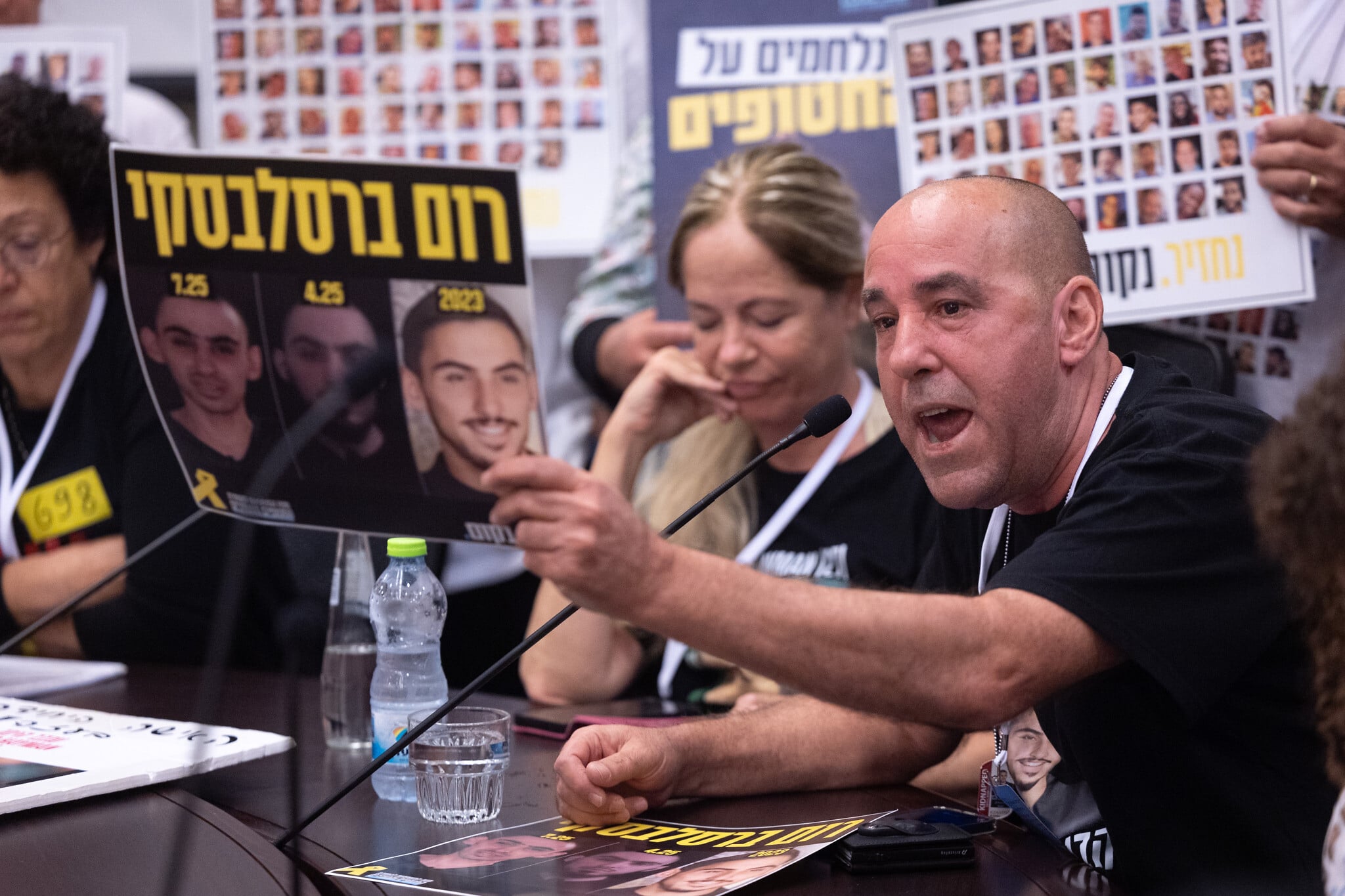
Ofir Braslavski, the father of hostage Rom Braslavski, who was held by Palestinian Islamic Jihad in Gaza, speaks at a Foreign Affairs and Defense Committee meeting at the Knesset in Jerusalem, September 3, 2025. (Yonatan Sindel/Flash90)
Several days later, his captor announced that after blocking Braslavski’s sight, he would now remove another sense: his hearing.
“It exhausts you mentally. I was already tired, without food. I didn’t even have a pita a day. All day I needed to relieve myself, I was holding in my urine all day, I couldn’t see, and now I couldn’t hear well, either.״
“After three weeks blindfolded, without using the bathroom, hungry, with stones in my ears, in my brain, a man comes to me, and says: ‘”Abu Salem (his captors’ name for him), here’s another note.”
Asked what the note said, the operative replied: “Tie up Abu Salem and torture him.”
“And he’s half smiling,” Braslavski said.
That evening, it began. A group of operatives entered his room, tied him up, and began to punch him. Then, after a while, they brought out a metal whip.
The scene repeated itself in the early hours of the morning, with the men once again bursting in and dragging Braslavski up for a beating.
“Never in my life had I been beaten like this. They put me up against the wall, one would hold my head and the second would just punch me. I tried to lose consciousness and fall down, but they didn’t let me lose consciousness for a single second.”
“After they punched me, they started whipping me,” he said, recalling the searing pain that accompanied each crack of the whip and the wounds which he said he still bears the marks of.
The scene would repeat itself several times a day, he said. Often, the terror operatives would enter the room accompanied by celebratory music playing on handheld radios.
It was to these tunes that they would brutally abuse Braslavski.
“I entered into a loop, which I doubted I would come out of alive,” he said.
The metal whip, he said, became warped and dented from the strength of the blows.
“They would tell me to lie down — one of them would grab my legs and sit on them, and the other would whip my ankles, 40 times in a row.”
“My entire leg was swollen, red and blue, and they would order me to stand up. It continued day after day, hour after hour.”
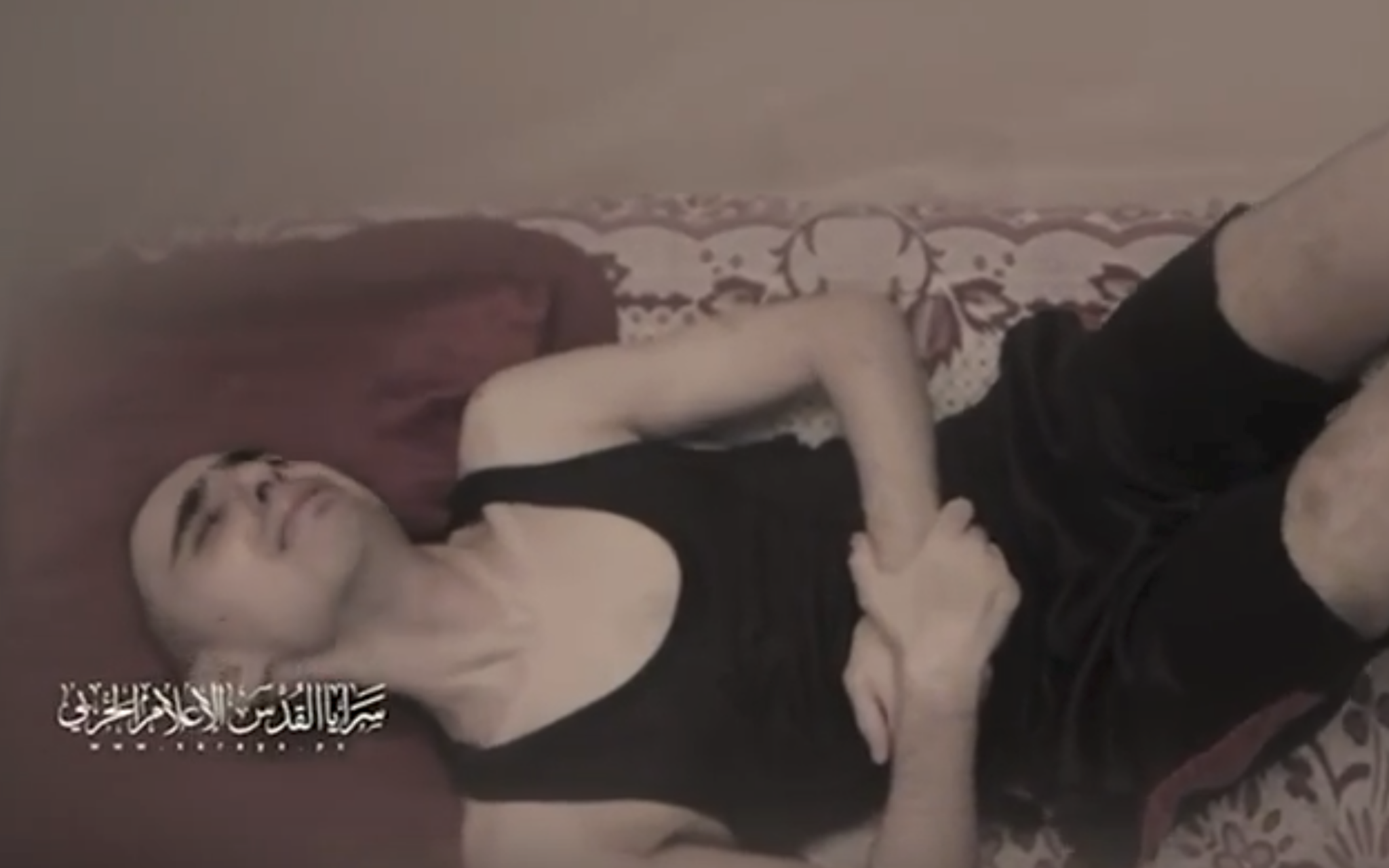
Hostage Rom Braslavski, in a still from a propaganda video released by Palestinian Islamic Jihad, July 31, 2025. (Screenshot)
It was during this period, in August 2025, that Palestinian Islamic Jihad filmed and released a video of Braslavski crying in pain. His family did not give approval for the video to be published in the Israeli press, approving only still images, in which he could be seen lying on the ground, thin and pale.
“I know how many beatings he is taking. I know because Rom doesn’t cry. If he cries, it is because they are abusing him. Look at him. Thin, limp, crying. All his bones are out,” his mother, Tami, said at the time.
“I wasn’t crying from hunger. I was crying from physical pain,” he said, adding that he could not bring himself to watch the video that his captors forced him to record.
“I said to them: ‘That falafel ball that you give me every day, take it away. Let me die by starvation, just leave me alone,’” he recalled. “‘Just stop beating me.’”
It was this period, he said, which broke him.
Unlike other returning hostages, who have testified that they were treated worse in retaliation for Israel’s far-right National Security Minister Itamar Ben Gvir publicly boasting about the harsh treatment of Palestinian prisoners in Israeli jails, Braslavski said this had little effect on his own captors.
“They tortured me for one reason: Because I am a Jew,” he told Channel 13. “That was why I went through what I did. Not Ben Gvir, not [Prime Minister Benjamin] Netanyahu, not anything else. They beat me up because I’m Jewish. That’s it.”
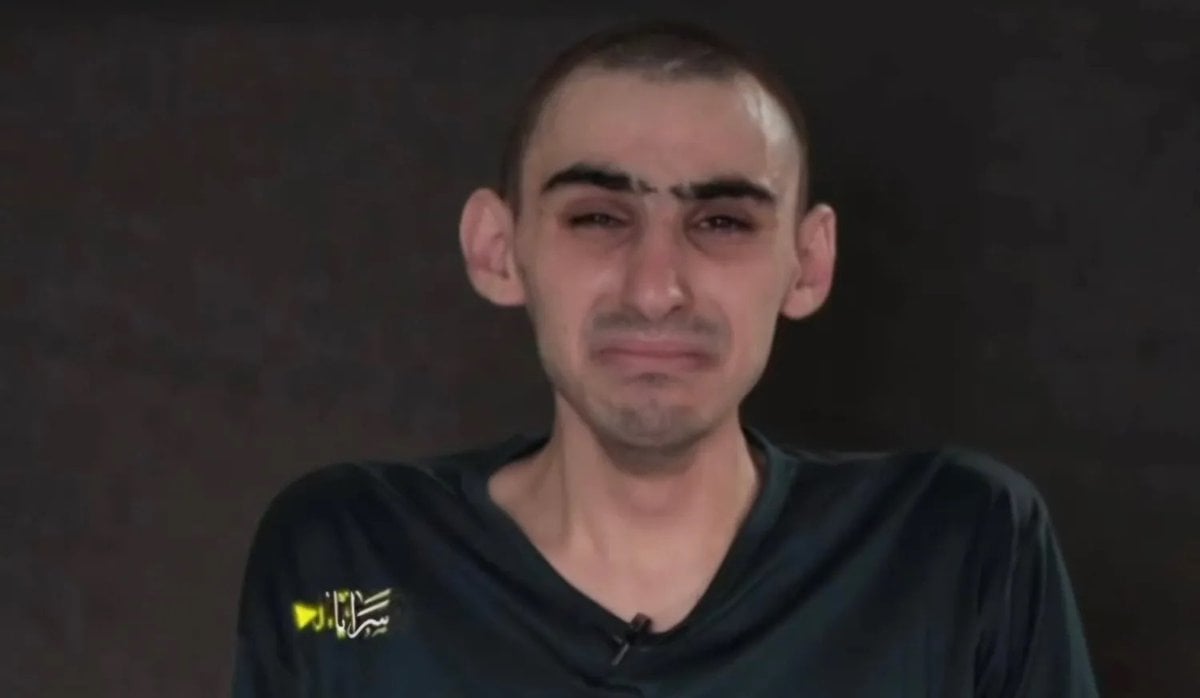
Rom Braslavski, in a still from a propaganda video published by Islamic Jihad on July 31, 2025 and cleared for publication by his mother on August 1, 2025.
Following the filming of the video, things got worse still, and Braslavski endured sexual abuse, with his captors stripping him naked and tying him up for additional beatings.
He discussed this experience in a snippet of the interview released by Channel 13 ahead of the main broadcast.
“It was sexual violence — and its main purpose was to humiliate me. The goal was to crush my dignity. And that’s exactly what [they] did,” he said in the clip.
“It’s hard for me to talk about that part specifically. I don’t like to talk about it. It’s hard. It was the most horrific thing,” Braslavski added. “It’s something even the Nazis didn’t do. During Hitler’s time, they wouldn’t have done things like this.”
Braslavski’s testimony appears to make him the first male former hostage to report being sexually assaulted in captivity, after a number of freed female captives recounted such attacks.
Life after release
Braslavski was released from captivity on October 13, along with the other 19 living hostages, as part of the US-brokered agreement to end the war in Gaza.
His path since then has not been simple, and he spoke frankly to Channel 13 about his difficulty readjusting to life outside of captivity.
“Mentally, I am not prepared to leave the hospital,” he said. “It’s a sort of bubble there — everyone is protecting me, asking about me, worrying about me. I have my bed there. I can sit there. I’m not interested in leaving.”
“I’m terrified that I will go insane, that I’ll lose it,” he said, in response to a query about his fear of leaving the hospital.
“I’m very detached,” he said honestly. “Even when I go out and I do the bare minimum, I do it without any willingness. Without any strength or energy. My brain is turned off, my soul is turned off, my body is turned off.”
But, he said, he’s determined to recover, even though he knows the path will be long and difficult.
“When I see the other hostages at concerts, shouting and strong, I’m not jealous of them that they’re happy and content, because that moment will also come for me, when I’ll manage to get up and recover.
“I will also be happy and content like them.”