
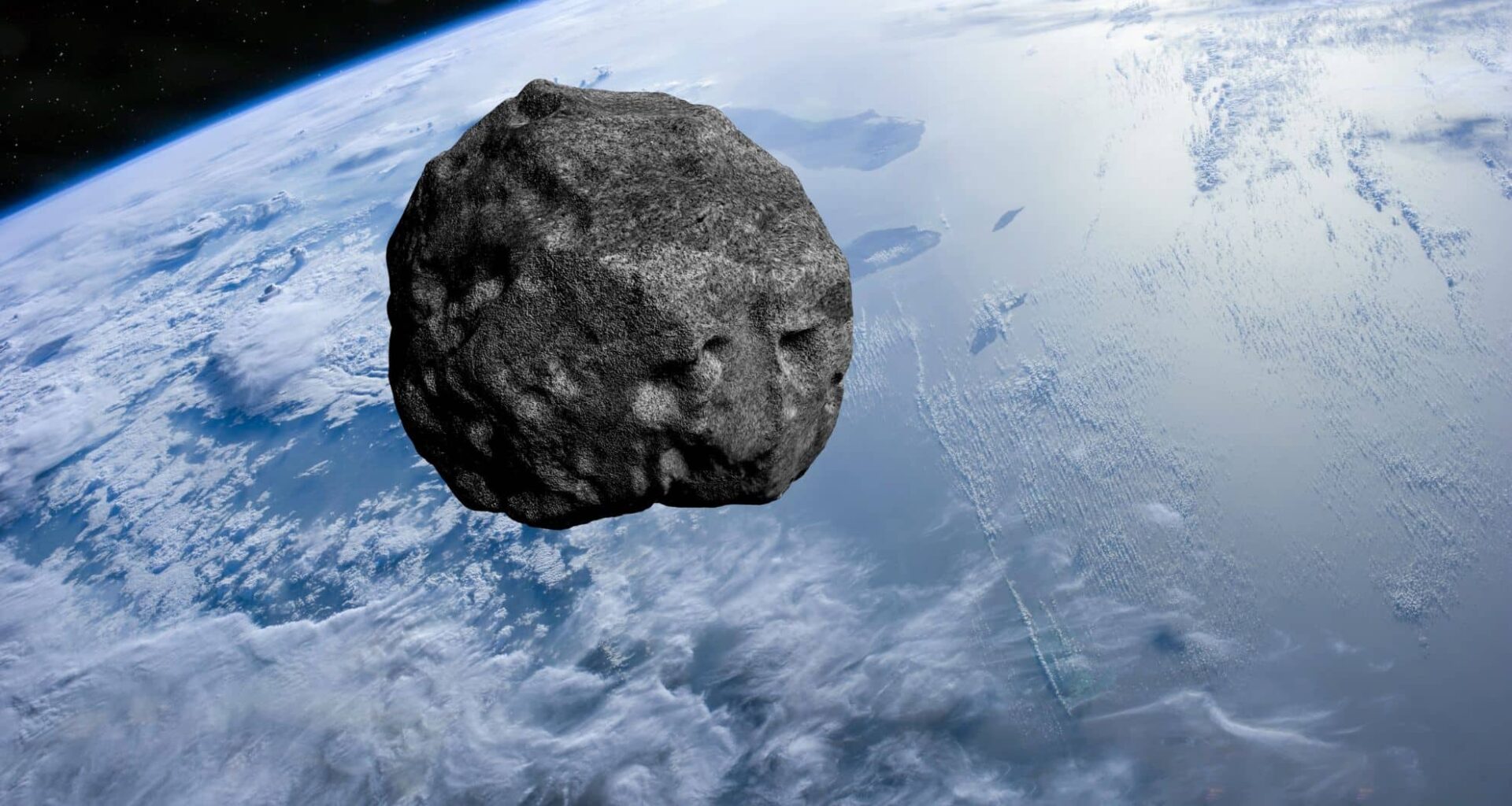
The crew, Commander Chen Dong, Wang Jie, and Chen Zhongrui, was set to return to Earth on November 5 after spending six months in orbit. Their planned landing at the Dongfeng site in Inner Mongolia was called off at the last minute, following concerns that the return module may have been hit by an object too small to track, but powerful enough to pose a threat during reentry.
Launched on April 24, Shenzhou-20 is the 35th flight of China’s manned space program. The mission has been part of the country’s long-term plan for permanent human presence in orbit aboard Tiangong, described by Chinese authorities as the “crown jewel” of its growing space ambitions. Just days before the incident, the outgoing crew welcomed their replacements, Shenzhou-21, who successfully docked with the station, raising its population to six for a brief handover period. The event marked a smooth transition, until the sudden delay shifted attention to a growing concern in low-Earth orbit.
Rise in Space Debris Risks and Untrackable Fragments
The Shenzhou-20 postponement has drawn renewed attention to the mounting threat posed by space debris, especially small particles that escape tracking systems. According to the European Space Agency (ESA), Earth’s orbit is now cluttered with more than 128 million pieces of debris smaller than one centimeter, and nearly 900,000 between one and ten centimeters. Though tiny, these fragments travel at such high velocities that even a one-millimeter object can hit with the force of a bowling ball hurled at highway speeds.
Christophe Bonnal of the International Academy of Astronautics underscored the problem, explaining that while larger objects can be cataloged and avoided, smaller pieces remain invisible and potentially deadly. “You don’t see them, and they are deadly,” he said, as reported by The New York Times. The increased deployment of satellite constellations, such as SpaceX’s Starlink and China’s Qianfan and Guowang, has only intensified these risks.
In 2023, a piece of debris damaged one of Tiangong’s solar panels, leading to a series of spacewalks to install external shielding, according to Chinese state media. That event prompted officials to take a more proactive approach to protecting the station, a strategy that seems vindicated by this latest suspected strike.
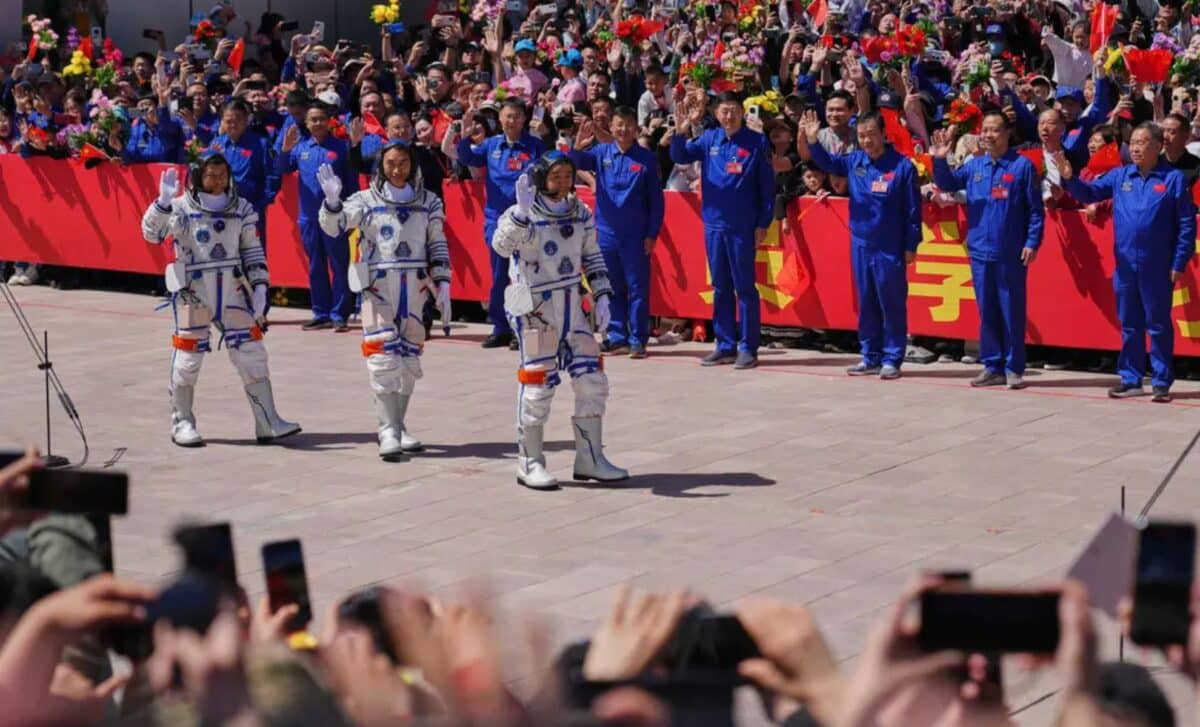 Chinese astronauts for the Shenzhou-20 mission ©Andy Wong/Associated Press
Immediate Response From Chinese Authorities
Following the impact alert, the CMSA promptly halted the return operation and launched a full inspection of the Shenzhou-20 vehicle. The agency emphasized that its priority is the health and safety of the astronauts and the complete success of the mission. As of now, no revised date for the return has been released.
According to Xinhua, drills had already been conducted at the Dongfeng landing site in anticipation of the crew’s arrival, including air search and rescue simulations, communications tests, and medical response planning. Despite this readiness, the mission controllers made the call to wait.
Richard de Grijs, executive director at the International Space Science Institute–Beijing, noted that today’s spaceflight protocols are designed to handle precisely these kinds of uncertainties. He stated that even the suspicion of a debris strike is enough to “wait, inspect, and ensure safety before returning,” particularly when any potential damage may not be visible from the outside.
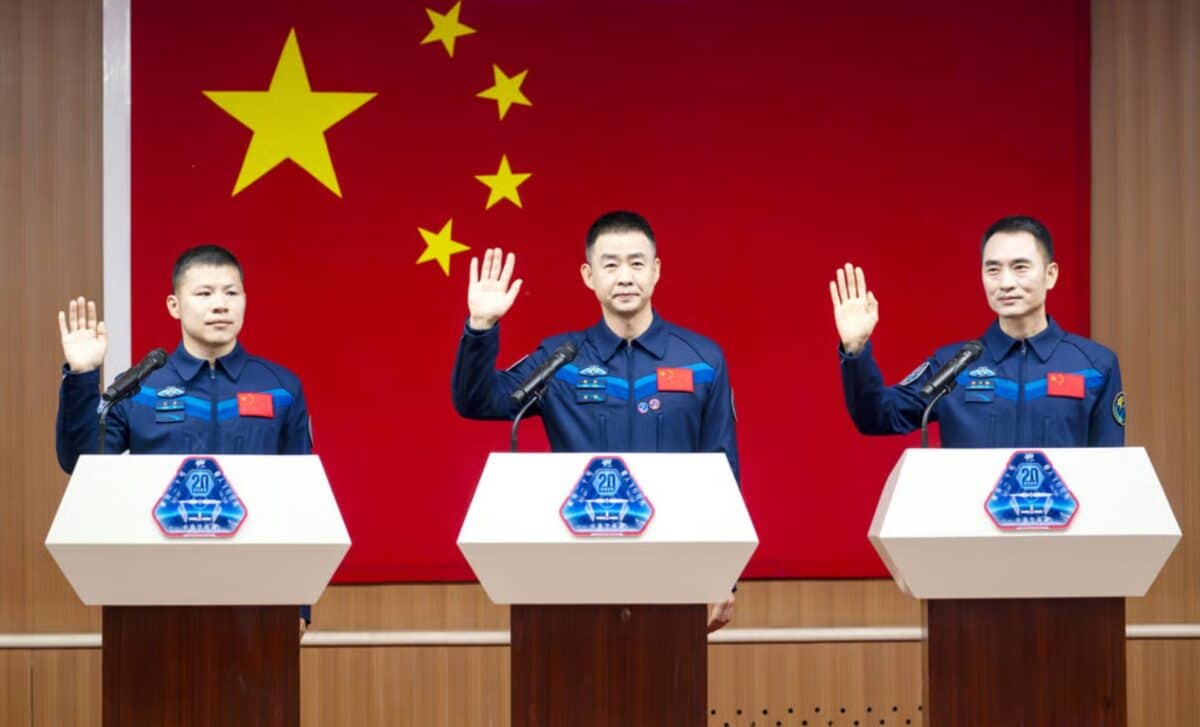 Chinese astronauts Wang Jie, Chen Dong, and Chen Zhongrui are seen in this photo taken in April, shortly before the launch of the Shenzhou-20 mission. ©Getty Images
Extended Mission Time and Possible Implications
While the delay creates logistical challenges, the Shenzhou-20 crew remains in a secure environment aboard the Tiangong station. Human spaceflight programs are built with contingency plans, allowing landing schedules to be adjusted for a range of issues, including weather, technical checks, or, in this case, orbital hazards.
China has an emergency system in place that includes backup spacecraft ready for deployment. In extreme cases, a Long March rocket carrying an alternate return capsule can be launched from the Jiuquan Satellite Launch Center in the Gobi Desert.
The astronauts are expected to continue their experiments and station maintenance duties during the extended stay. While prolonged exposure to microgravity raises concerns over bone density, radiation, and psychological strain, it also gives Chinese scientists more insight into long-duration missions. As reported by Space.com, the crew recently celebrated a minor milestone in space lifestyle with a culinary first: enjoying barbecued chicken wings cooked in a newly tested onboard oven.