
Normal text sizeLarger text sizeVery large text size
It became the most famous lunch in Australia. In July 2023, in the sleepy town of Leongatha, just over 100 kilometres south-east of Melbourne, Erin Patterson made beef Wellington for her estranged husband Simon Patterson’s elderly parents, Don and Gail Patterson, and his aunt and uncle, Heather and Ian Wilkinson. Simon Patterson declined her invitation to lunch. Less than a week later, three of her guests were dead and the fourth was in a coma. All had been poisoned with death cap mushrooms.
In April this year, Erin Patterson was tried for murder and attempted murder. The trial took place in Morwell, 60 kilometres from Leongatha, and lasted more than two months. It not only riveted the country but became an international sensation. Journalists, writers, podcasters and TV crews swarmed the Latrobe Valley Law Courts, two hours from Melbourne.
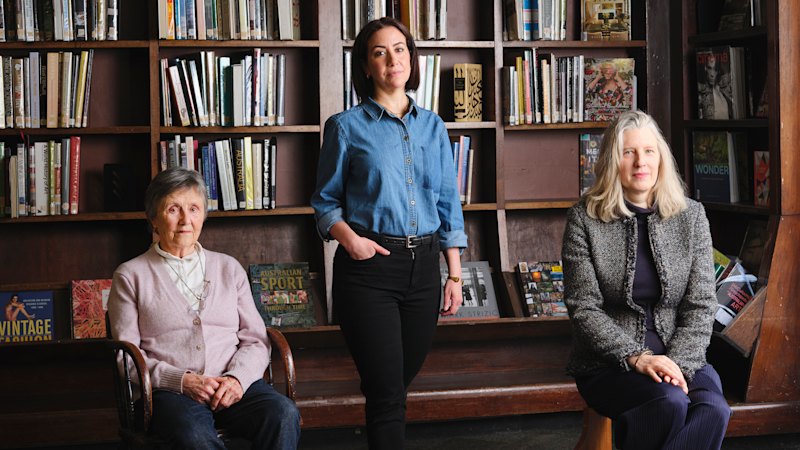
Three friends, respected writers Helen Garner, Chloe Hooper and Sarah Krasnostein, were surprised to find their idle interest in this case firming into real journalistic curiosity. The trial had already started when they decided to drive to Morwell together and record their conversations. Months later, they had scores of hours on tape, the raw material for a book.
The Mushroom Tapes tells the story of what they saw and thought and said to each other as the trial of Erin Patterson moved inexorably to its conclusion. Here, the writers reveal the conversation they shared on the first day that Patterson took a seat in the witness box.

Erin Patterson, photographed in April ahead of her trial for murder and attempted murder. When Helen Garner heard her speak, she says she felt impressed: “She struck me as an educated woman … somebody who was composed.”Credit: AAP
Monday, June 2, 2025
When prosecutor Nanette Rogers closed the Crown case, Patterson’s barrister, Colin Mandy stood up. “Your Honour, the defence will call Erin Patterson.”
Helen: Nobody knew it was going to happen. When it was announced that she would take the stand, there was a loud gasp. People cried out. At last, at last! The judge called a break of 15 minutes so everyone could get their shit together. I saw a spot on the bench just inside the door of the courtroom, where you can hear but you can’t see anything. I lowered my arse onto it, and the woman next to me said, “Oh no, my sister’s going to sit there.” So I pushed further in and found the very last spot and grabbed it. I couldn’t see the jury, except for one old man at the end of the back row. But I thought, I’m not moving again. And I’m glad I didn’t, because the tipstaff was really throwing his weight around.
There was a kind of tension in the room, and I was over on one side, so I didn’t see her being brought out of the dock. But all of a sudden, boom, there she was, just sitting there in the witness box. Everybody was straining at their own leash not to turn and stare. The drawing of her that they run in the newspaper is brutal. It makes her look villainous. Actually, she looks small. She was sitting there quietly, she was self-possessed, while everyone else in the room was breathless. We’d been hanging out for her to step into the limelight.
Sarah and Chloe watched Erin on a big screen in a Melbourne Supreme Court media room. Now we’re on the phone together.
Sarah: What was it like?
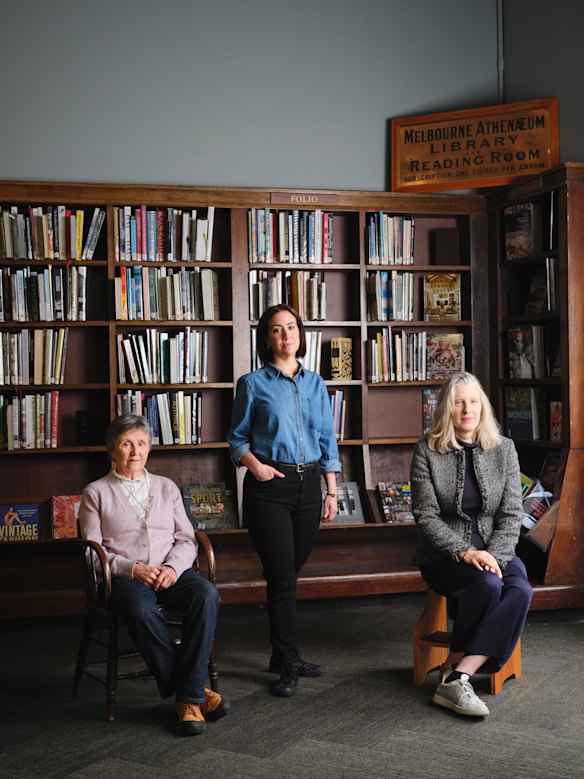
The Mushroom Tapes: Conversations on a Triple Murder Trial authors, Helen Garner, Sarah Krasnostein and Chloe Hooper.Credit: Peter Tarasiuk
Helen: At first I felt impressed by her. She struck me as an educated woman, well and calmly spoken, somebody who was composed. She seemed a very familiar type of person, and she was dealt with very delicately by her counsel. I bet his junior, a young woman with an obviously first-rate mind, had a lot to do with that. He was asking her things like, “How did you feel about yourself around the time leading up to the lunch?” How did you feel about yourself? That doesn’t sound like a man’s question to me. Erin answered slowly and thoughtfully. To me, she’s mysterious, even though, on one level, she is recognisable. I could imagine talking with her, having an interesting conversation. She seemed like a person of seriousness and intelligence, and yet, at the same time, she was depicting her marriage and her life in a way that was so familiar I sort of couldn’t get near it. It’s hard to describe this. I think a lot of people in the room were having very complex feelings. When we came out, we were all exhausted. The tension of being there and listening to her speak was almost unbearable. It’s just that everyone longs to know what’s inside her head.
Sarah: Did you find yourself at any point getting angry?
Helen: No, not at all. No. This was the time that I felt the most for her. I want to say something else about the way she told her life story. It was a standard modern story of a marriage that wasn’t very good. There was a lot of restlessness and unhappiness in it, in her, and she gave an account of it that was almost generic. I thought, god, just about everyone I know could tell that story. I could tell that story. She sighed a lot. She sighed the sort of sighs that you give when someone asks you a question you’ve already answered, and you’re thinking, “Do I really have to go through this again? Can I really drag this out of myself once more?”
Loading
She had a special way of talking. She spoke with a conversational tone and volume, as if she was talking to us and it was going to be a conversation. She wasn’t grandly stating things, and she wasn’t milking it for drama. She spoke quite bluntly about herself – not moral things or ethical things – physical things, you know, her unhappiness at having put on a lot of weight and how she decided she was going to have gastric-band surgery. And she had these little head movements that went with what she was saying. When she was serious, she would nod and then shake her head. Now that I’m talking about it, I’m starting to think that it was a very, very skilful performance. And yet I never felt that she was laying it on. It was a mysterious day and rather upsetting.
Chloe: We could see you in the courtroom with all the family sitting behind you.
Helen: She spoke lovingly about her mother-in-law. With her first baby, she had a very traumatic and difficult birth, a great suffering for her and for the baby. At this point Erin and Simon were living in Western Australia. Don and Gail came to stay with them to help with the baby. Mr Mandy asked her, “And how did you feel about having them there in the house?” She said, “I was really glad they were there. Gail was very patient and gentle with me. She taught me how to interpret his cries.” I thought that was a beautiful expression – to interpret his cries. Gail had earned her trust.
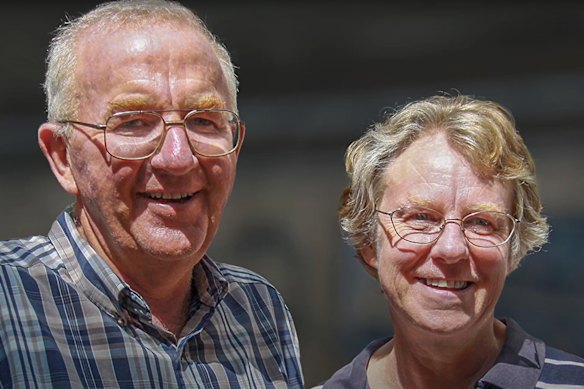
Don and Gail Patterson. As Sarah Krasnostein notes, Erin’s parents-in-law became a source of emotional support given she was estranged from her own parents.
Chloe: But not knowing how to interpret other people’s needs or pain – that’s striking, isn’t it?
Helen: When she said that, I glanced up at the jury. The only one of them I could see was breathing fast, the lines on his face seemed to get deeper. I thought, he’s either about to have a heart attack, poor fellow, or he’s almost crying listening to her.
The marriage went pear-shaped pretty early on. They’d been living in Perth but, when the baby was only a few months old, they went on a huge trip, taking the baby, around Australia in a Nissan Patrol. She said twice, “We came down through the guts” of the country. I got the impression that she enjoyed travelling, but that she got sick of it after a while and wanted to stop. She said, “I wanted to have babies, but he wanted to keep travelling.”
Simon had previously testified that Erin had left him and the baby in Townsville and flown home. Simon drove, with their son, the 4000 kilometres back to Perth. This was their first separation. Erin lived with the baby in a small cottage while Simon lived in a caravan nearby. They had some sessions of marriage counselling, and reunited. Erin said the biggest issue in their marriage was poor communication.

Erin’s estranged husband, Simon Patterson.Credit: AAPIMAGE
Sarah: Her story is a legal instrument. It’s impression management; its purpose is to sway the jury. So it’s highly selective. It’s a perfectly serviceable tale about “our early life”. But then you start looking at it, and it’s full of holes. This upwelling of emotion around the love she felt for her mother-in-law, as if she couldn’t have killed her, when everything else that we’re learning seems to show the love that she once felt for them is the reason she killed them. She has this hypersensitivity about not belonging, not being included. She can’t stay in one place for any sustained period of time, not in any job or study or relationship. She can’t persist in any one thing despite having every resource, intellectual and financial, at her disposal. And so, yeah, I was very suspicious of that. She does this thing where every so often she’ll pause and her eyes will flare. There’s just too much of the whites around her eyes. And this jutting forward of her head. It’s like this wall of energy with these flared eyes. It’s unsettling. Watching her so closely today, on that huge screen in the Supreme Court media room, I noticed that the first time she responded – when Mandy asked her age – with “50″, her eyes flared and Mandy faltered slightly. There’s some force sheeting off her. There is something there that I did not expect after sitting in the same room as her all these weeks.
Chloe: Her love story is also a horror story. It was moving, being catapulted back to a part of her life that was sweet: Erin described becoming friends with Simon and his group of friends and going camping with them most weekends, and them slowly getting to know each other. She was trying to convert him to atheism, and then one weekend Simon took her to his uncle’s church. And hanging in the church there was a banner that read, “Faith, Hope and Love”. Ian was giving a sermon on love, quoting St John. “God is love and he who abides in love abides in God and God abides in him.” And then Erin was offered communion. She claims the service had a profound impact on her: “I had what at best can be described as, like a spiritual experience. I’d been approaching religion as an intellectual exercise up until that point. Does that make sense? Is it rational? But I had what I would call a religious experience there and it quite overwhelmed me.”
Presumably Don and Gail, her future parents-in-law, were present that day, along with Ian and Heather. Erin’s spiritual experience is a key moment in the love story. But then, there’s the horror story, especially if you’re a family member now watching the woman who came into your church and allegedly poisoned it.

Ian Wilkinson. “You can’t help feeling very warmly towards Ian,” Helen Garner says.Credit: Jason South
Sarah: It’s devastating. Every point in the story has that duality.
Chloe: Something’s always underneath.
Sarah: For me, the most difficult thing today was when she was talking about the house that they had built, and she said, “I saw it as my final house.” The “final house” – where the children would grow up and where they could come back and stay however long they want and bring their children. And then she said, “And I would grow old there, or so I thought.” Now it’s a crime scene.
Chloe: People talk about a “forever home”, but this was the “final house” for her parents-in-law, who were having the kind of life she supposedly pictured for herself.
Sarah: We talked in our earliest conversations about what it actually means to “abide”. What adaptations and sacrifices you have to make in order to abide for the long haul in any situation or relationship. Erin was estranged from her parents, so Don and Gail became even more important for the practical and emotional support they gave. Love betrayed is often the motive for extreme rage.
I almost find it more incriminating the more she talks about this well of deep feeling she had for them, because this rage about rejection hovers at the edges.
Helen: I felt awful when it was over today. I was sad. I thought it was an archetypal modern story of marriage not being something that people are up to anymore. I thought, she’s sat down with her counsel and shaped this story. But then I felt that familiar sadness of when you’re f—ing something up in a really big way.
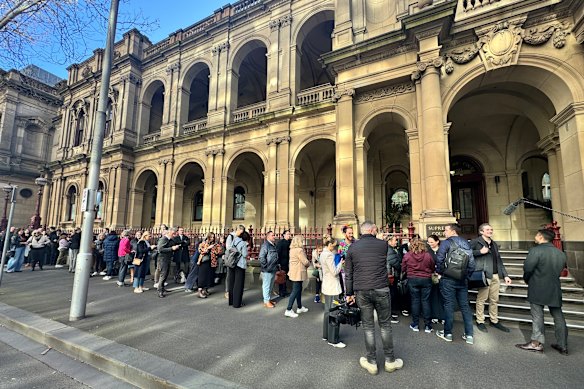
Reporters and interested onlookers queue outside the Supreme Court of Victoria for her sentencing.Credit: Wayne Taylor
Sarah: Well, I think this accounts for why people are so gripped by this. It’s a very recognisable, unexplosive-until-the-end narrative of the domestic and the everyday. It made me think of how she had described her childhood so darkly and what it might have meant to her to step into that little church and find herself welcomed. That in itself could’ve felt like a spiritual experience.
Chloe: It must have been heightened: love and at the same time, God. Those two feelings of heat commingling. Although, interestingly, Sarah and I noted that Erin didn’t take an oath on the Bible. She made an affirmation today. Hearing her story about being in the church, I thought, she is a Krasnostein character, like someone in Sarah’s book The Believer.
‘I can see … these glimpses – the funny person, the clever person, the friend, the wife … but I don’t trust most of what she is saying.’
Sarah Krasnostein
Sarah: Oh, that’s interesting. Yeah, in that book I was really interested in the too-perfect stories people tell themselves when they can’t face the gap between the world as it is and the world as they desperately wish it would be. There’s a chance that her spiritual experience was just another easy lie. But maybe it wasn’t: she sounds like she was ravenous. Family-hungry. Acceptance-hungry.
But it’s not hanging together. I wonder if we’re going to get a sense of the core, the true self, in Erin. I can see, as Helen said, these glimpses – the funny person, the clever person, the friend, the wife, the mother, the daughter-in-law, the child – but I don’t trust most of what she is saying. I’m more and more unnerved. There’s something quietly horrifying about not knowing who’s speaking out from inside.
Helen: I suspect that she had a powerful flash of feeling at that moment that really moved her and probably shocked her, and that she felt good, filled with a sort of gladness and hope. But we don’t know, and she’s never said anything – not that we’ve heard her talk for more than 20 minutes – about any other experiences that would solidify into something that could support her in her life.
Chloe: Wait. She does have something else that gave her support and that was the true-crime circle, where she also felt a sense of community. It seems when she no longer felt seen by the Baptist family, she then leant on this other group.
Sarah: As she sensed – or projected – the Pattersons withdrawing, which we know she resented, perhaps she migrated towards the people online.
Chloe: From “God is love” she looked at what people do when full of hate. In the time before her meeting Simon Patterson, Erin’s life was complex. In June 2004, she pleaded guilty to five charges relating to a car crash in Glen Waverley. At almost three times the legal alcohol limit, she had been driving an unregistered car at 95km/h in a 60-kilometre zone. She didn’t stop after the crash. She was convicted, fined $1000 and her licence was cancelled for two-and-a-half years.
Chloe: Whatever had happened in her young adulthood, as Helen’s said, entering this family might have felt like the solution to shame.
Helen: Like cleaning up your act.
Sarah: “I’m worthy of being loved. I’m worthy of being one of these people.”
Chloe: ”A curtain will come down and there’ll be a second act now. All that sin is now in the past.”
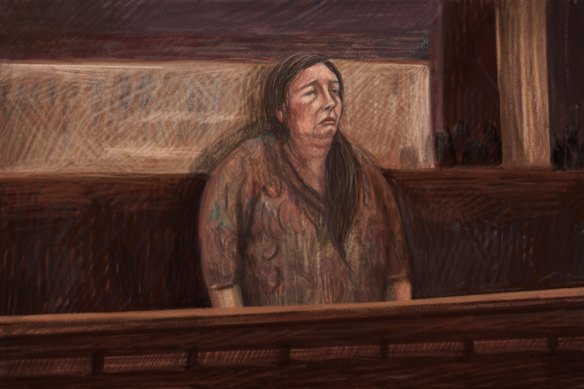
A sketch of Erin Patterson in court during her trial.Credit: AAPIMAGE
Sarah: But a true sentence hits the ear in a particular way. Eventually I started listening with the thought that, if I had known her before all this happened, would I have trusted her? To the degree that I can answer that, I don’t think I would. There’s something there, and I don’t know what it is. It could be extraordinary pain and trauma, or it could be mental disturbance, or it could be moral culpability – the evil that had a choice. But there’s something there that doesn’t hang together with the self that’s being presented to the jury, and it’s jarring.
Helen: I know people who, while they’re talking, make me think, I don’t believe a word of this. Not factually – something deeper is off. Everybody’s got to create a persona, of course. No one can walk around in the world with their soul bared. It’s got to be shielded and veiled in some way, just so you can stand the stress of being alive. But the false self is something more impermeable. A false self is like a glass that’s pretending to be crystal. You tap it with a spoon, it rings dully or it doesn’t ring. It looks good and you drink out of it and you could wash it but, somehow, when you hit it, it doesn’t make a proper ring.
‘I started listening with the thought that, if I had known her before all this happened, would I have trusted her?’
Sarah Krasnostein
Sarah: I was thinking about how Ian and the family are in court each day – and how legal justice sits with divine justice. I was in Wonnangatta, up in the mountains, a few weeks ago, and there was a little cemetery that dates back to the 1860s. One headstone was for a three-year-old, and it just says, “Thy Will Be Done”. And now I’m looking at Ian Wilkinson thinking, Do you consider yourself saved for a purpose? It would be hard in his shoes to think otherwise. And if you’ve devoted your life to that belief – thy will be done – what do you do with that?
Helen: You can’t help feeling very warmly towards Ian Wilkinson and his family. A lot of this stuff has been news to them. It’s horrible, and it gets more and more distressing as the weeks go on. They’re sitting there, bearing witness to the working-out of what happened to his wife and their mother, and trying to understand it.
When I first heard the pastor giving evidence, I thought of that line from the Bible that Tolstoy uses as the epigraph to Anna Karenina: “Vengeance is Mine, I will repay, saith the Lord.” I think it’s saying, “You don’t have to take vengeance. I will deal with that. It’ll all stack up in the end, and I’ll see to it.” It’s God speaking.
Chloe: Erin decided to do the vengeance part herself. But the people who’ll feel her punishment most acutely are her kids. They’re the people who …
Helen: … it will all land on in the long run. All along I’ve been thinking that she probably is guilty, not that she probably would be found guilty. Today was the first time I thought I wouldn’t be surprised if this jury took mercy on her. I don’t know if that feeling will last. But I felt for her today in a much deeper way than I had before. The gap between her and me shrank down really small. I just came away distressed and bewildered, bewildered like I have been ever since I first heard this story.
This is an edited extract from The Mushroom Tapes: Conversations on a Triple Murder Trial (Text Publishing), by Helen Garner, Chloe Hooper and Sarah Krasnostein, out Tuesday.
To read more from Good Weekend magazine, visit our page at The Sydney Morning Herald,The Age and Brisbane Times.