
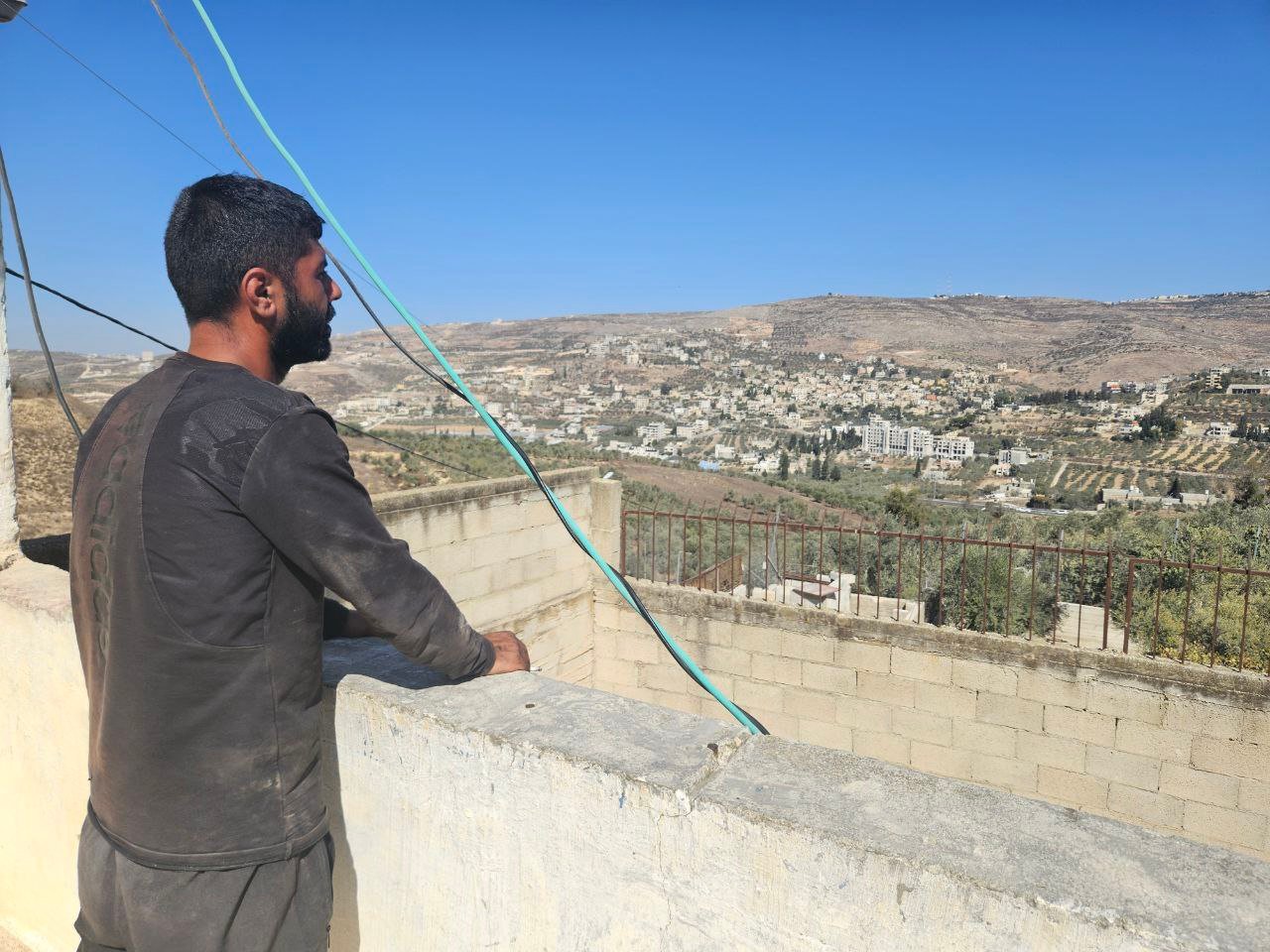
Bashar Eid’s home sits at the northern edge of Burin, a village near Nablus in the West Bank. Right outside his door are hundreds of trees whose gnarled branches bear small green fruit treasured for their oil: olives.
Each year, as the weather begins to cool, Eid and thousands of other Palestinians across the West Bank embark on a weeks-long mission to collect their olives, venturing to the outskirts of their villages to harvest a crop that is a lifeblood for many of them.
But for Eid, each step he takes into his 20-dunam (five-acre) grove is one step closer to the illegal Israeli outpost of Givat Ronen, and one step closer to the danger of settler violence.
Until the outpost was built on a hilltop overlooking his grove about a decade ago, Eid said, he could reach and harvest his olive trees without interference.
Last year, Eid told The Times of Israel he had been unable to harvest the olives around his home since the outbreak of the war against Hamas in Gaza. Settlers, he charged, had even set some of his trees on fire. Any attempt he made to enter his olive grove invited potentially deadly gunfire.
Get The Times of Israel’s Daily Edition
by email and never miss our top stories
By signing up, you agree to the terms
“Since the war, they’ve been armed,” he said of settlers from the outpost. “Now they shoot when we try to reach the olives,” he told The Times of Israel in an interview at his home in Burin.
This year, he hoped that the help of dozens of Israeli and foreign volunteers from Solidarity of Nations, also known as Achvat Amim, and Rabbis for Human Rights would afford him the needed protection to harvest the olives. But the effort failed.
It wasn’t settlers who stymied his plans this time though, but Israel Defense Forces soldiers, who presented him and the 30 or so volunteers accompanying him with an order declaring the area a “closed military zone,” barring entry.
Across the West Bank, Palestinians say they are being increasingly barred from entering their lands to harvest olives due to military restrictions. According to critics, the closures are often issued without warning or explanation, and in some cases may be coordinated with settlers. Though often justified in order to prevent clashes between pickers and settlers, the closures have only added new hardships to the lives of Palestinians, while attacks by Israeli extremists have allegedly continued unabated, activists and locals charge.
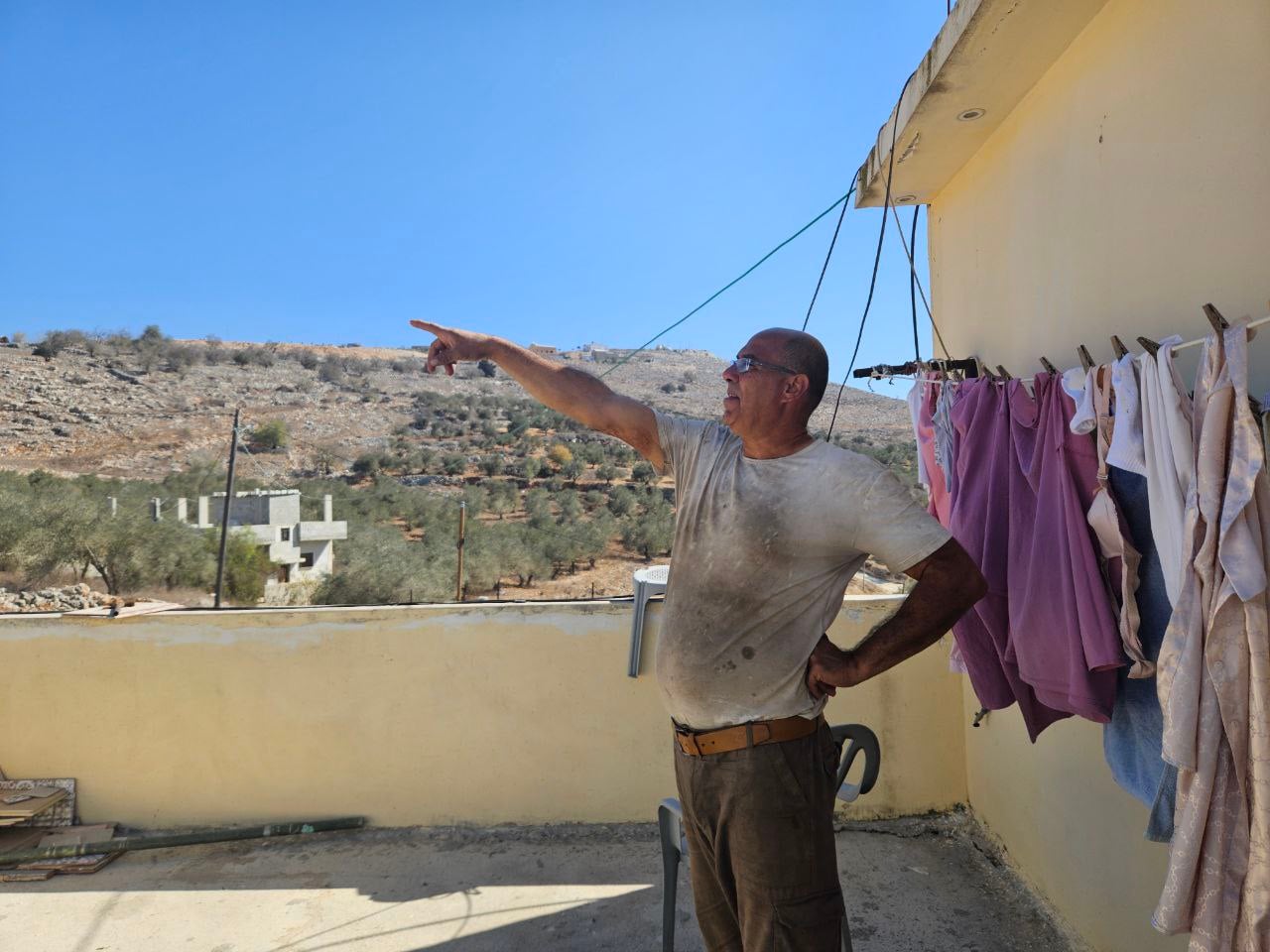
Bashar Eid on the roof of his home in the village of Burin near Nablus in the West Bank on October 30, 2025 (Nurit Yohanan/Times of Israel).
“This year, there are areas literally adjacent to Palestinians’ homes,” said Qamar Mashraki-Asaad, an attorney with the legal aid organization Haqel-In Defense of Human Rights, which provides assistance to Palestinian farmers. “These are places that were never closed off before.”
A statement from the military said it is cognizant of the importance of the olive harvest season for the West Bank and was working so it could take place safely. It indicated that closed military zone orders were issued to protect the harvests when disruptions took place, though Palestinians and activists alleged that the army was unresponsive to reports of settlers harassing olive pickers.
The allegations of settler involvement in the process of issuing the orders could not be independently confirmed, and groups representing settlers do not generally comment on the issue. The army did not directly address questions about whether widescale coordination was taking place.
And the idea that the use of closed military zones is being expanded is difficult to verify due to the lack of transparency from the army around their issuance. The military does not generally publicize its ad hoc orders or publish maps of closed areas, opening the measure up to arbitrary deployment and abuse, according to Yesh Din, an Israeli legal organization that aids West Bank Palestinians.
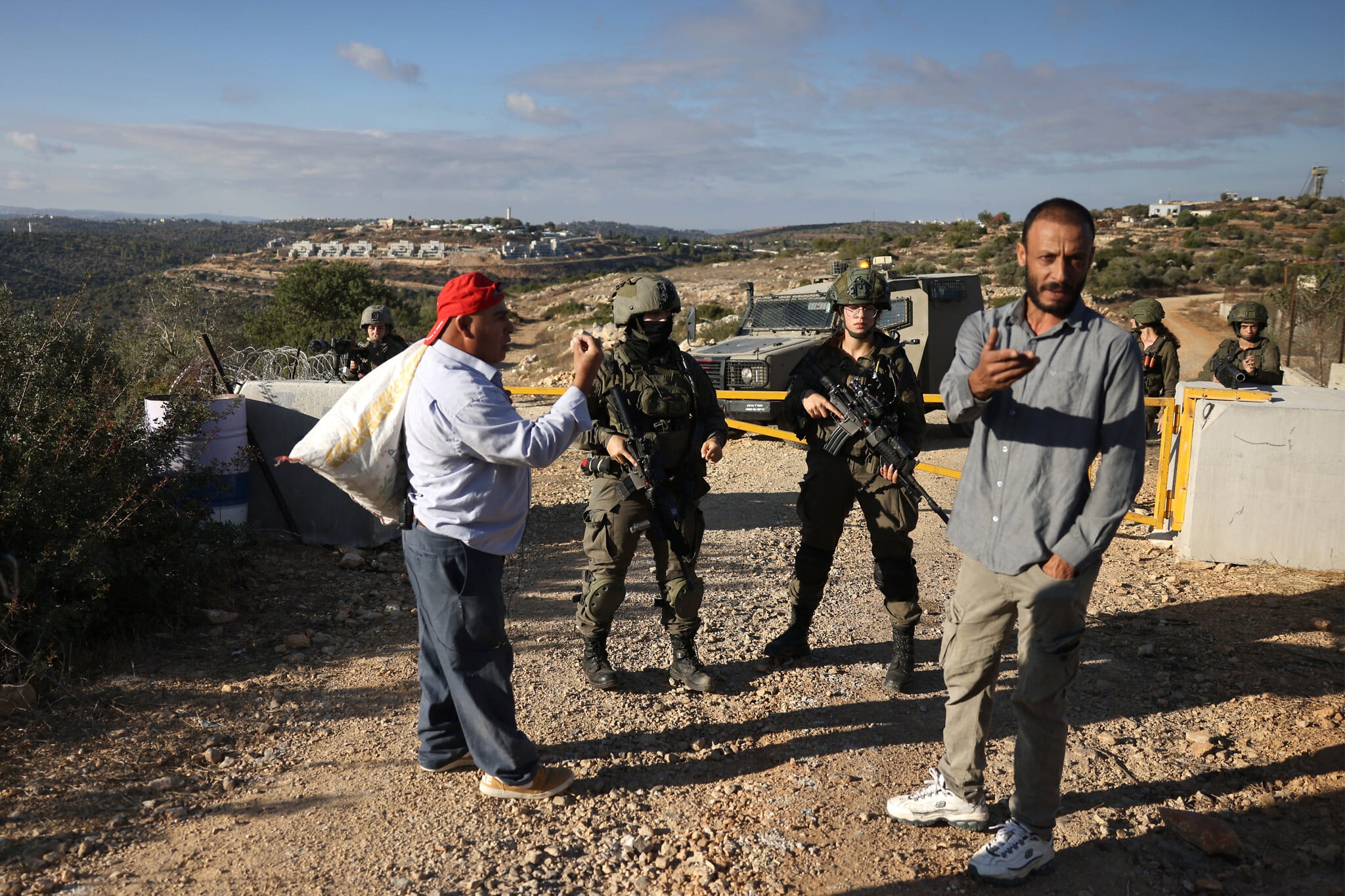
Israeli security forces block Palestinians from reaching their land to harvest olives, in the village of Kobar, near Ramallah, in the West Bank on October 18, 2025. (HAZEM BADER / AFP)
The authority to issue an order declaring an area a closed military zone lies with the IDF Central Command, the commander of the West Bank Division and deputy, and brigade commanders. When imposed, the order effectively bans all civilians — Palestinians, Israelis and foreigners — from entering.
Typically, closed military zone orders are issued for open areas near settlements to prevent encounters between Palestinians and Israelis.
During the olive harvest season, the potential for such encounters, which can often spark violent confrontations, typically increases as Palestinians attempt to work groves of trees outside of their towns and villages, sometimes in areas close to settlements and sometimes in areas settlers seek to exercise control over.
Palestinians with groves near settlements generally coordinate their visits with Israel’s Civil Administration. In areas far from recognized settlements, though, such as Eid’s land near Givat Ronen, no coordination is needed.
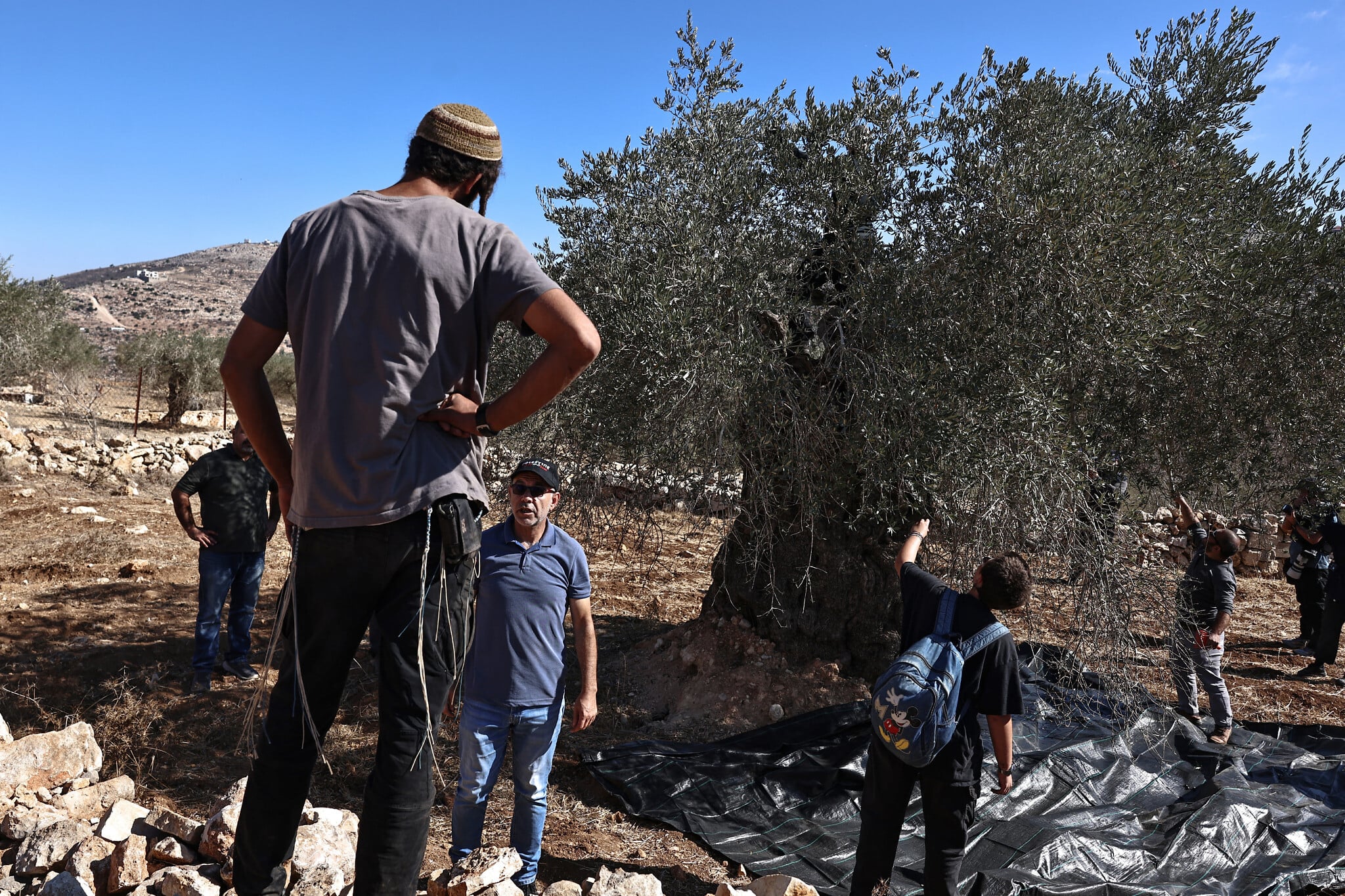
An Israeli settler argues with a Palestinian farmer during an olive harvest near the Palestinian village of Silwad in the West Bank, on October 29, 2025. (Zain JAAFAR / AFP)
So when he and the activists showed up at the grove on October 29, they were caught off-guard by the military’s insistence that the area was inaccessible.
According to Eid, the land is privately owned by him, as proven by ownership documents in his possession. It lies in Area B, classified under the Oslo Accords as under Palestinian civil control and Israeli security control.
“How can it become a closed military zone in two minutes? Where is the law?” Eid asked angrily when recalling the incident.
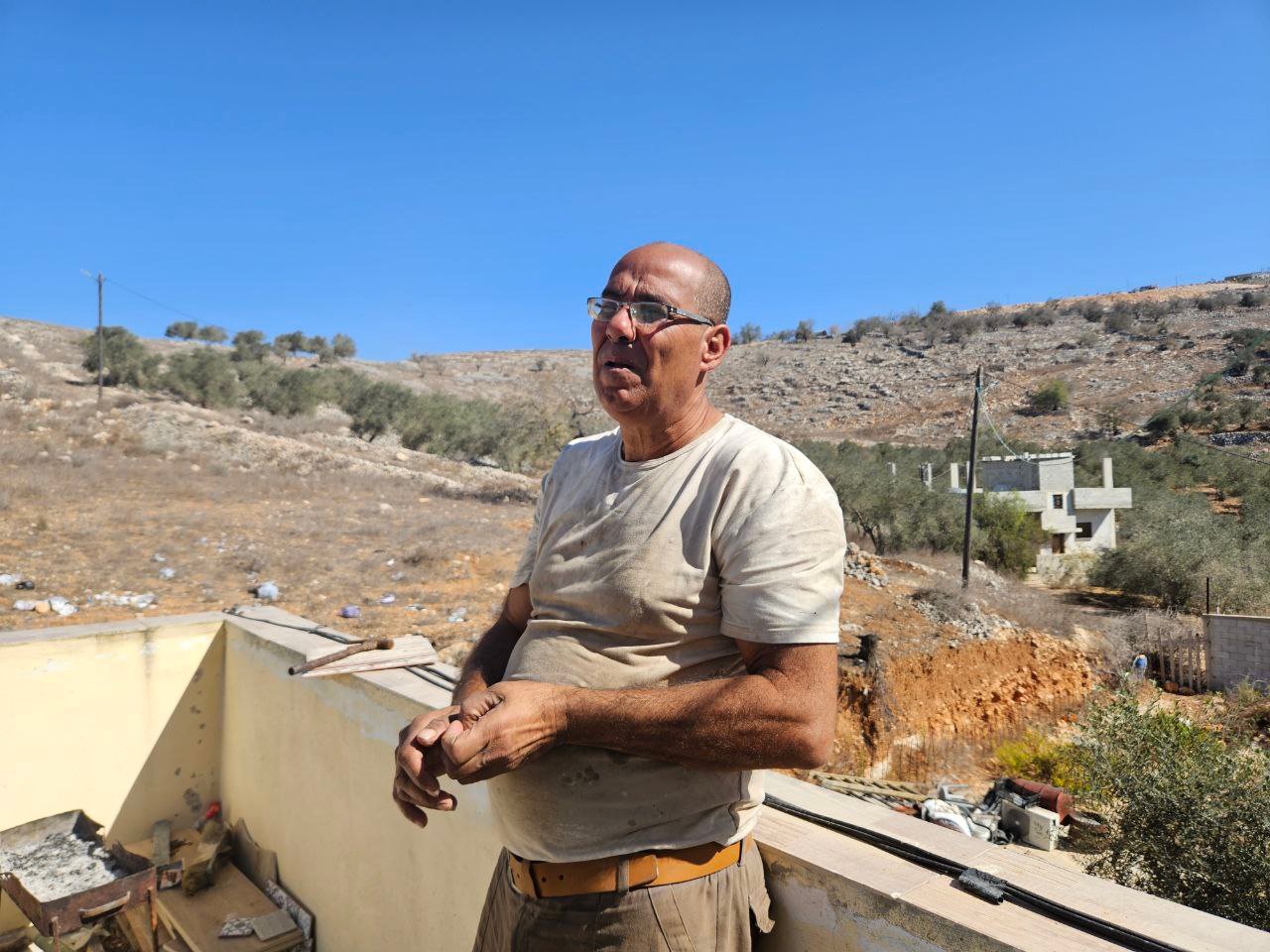
Bashar Eid on the roof of his home in the village of Burin near Nablus in the West Bank on October 30, 2025 (Nurit Yohanan/Times of Israel).
According to Becca Strober, a spokesperson for Solidarity of Nations, the activists accompanying Eid were initially told at an IDF checkpoint as they tried to reach Burin that the direction they were traveling in would take them to a closed military zone. According to Strober, activists then tried to reach the site via a different route, not realizing that the grove itself was under a closed military zone, but when they arrived they were intercepted by the IDF and detained.
“We went to pick the olives, the army knew we were coming and blocked them,” Eid said. “They took the bus keys, detained everyone.”
According to Rabbis for Human Rights, all 30 activists were detained, though most were let go and told to leave the area. The rest were taken to a police station in Ariel and arrested.
Police said that 10 people were arrested — six Israelis and four foreign nationals — and confirmed confiscating a minibus they used to reach the site.
“Officers from the Ariel police station in the Samaria district, together with IDF soldiers and personnel from the Population and Immigration Authority, operated in the village of Burin in Samaria after identifying organized activity by Israeli and foreign activists who arrived at the site, endangering public safety and creating friction in the area,” police said.

Israeli soldiers approach as Palestinian farmers and foreign volunteers try to harvest olives near the West Bank village of Turmus Ayya on October 28, 2025. (Zain JAAFAR / AFP)
The six Israeli activists and two of the foreigners holding consular visas were barred from the West Bank for 15 days, police said. The other two foreign nationals, both Americans, were deported and barred from entering Israel for 10 years. Police said they had violated the terms of their tourist visas.
In response to The Times of Israel’s query, the IDF referred to the police statement and did not address why forces took part in the activists’ deportation or why a closed military zone order was issued in the area.
Hard pressed
The case is far from isolated. Human rights activists say they have received dozens of complaints this olive harvest season about new army orders declaring “closed military zones” — often not near Israeli settlements, but right outside Palestinian homes — preventing landowners from picking olives from their own trees.
In past years, areas near the villages of Susya and Shaab al-Batum in the South Hebron Hills had been declared off limits to Israelis due to repeated settler trespassing and attacks against local Palestinians. Yet this year, residents from both villages said they were the ones prevented from harvesting their olives, Mashraki-Asaad said.
She charged that Palestinians had been detained simply for entering their own land, often without any notice that a temporary order had been issued.
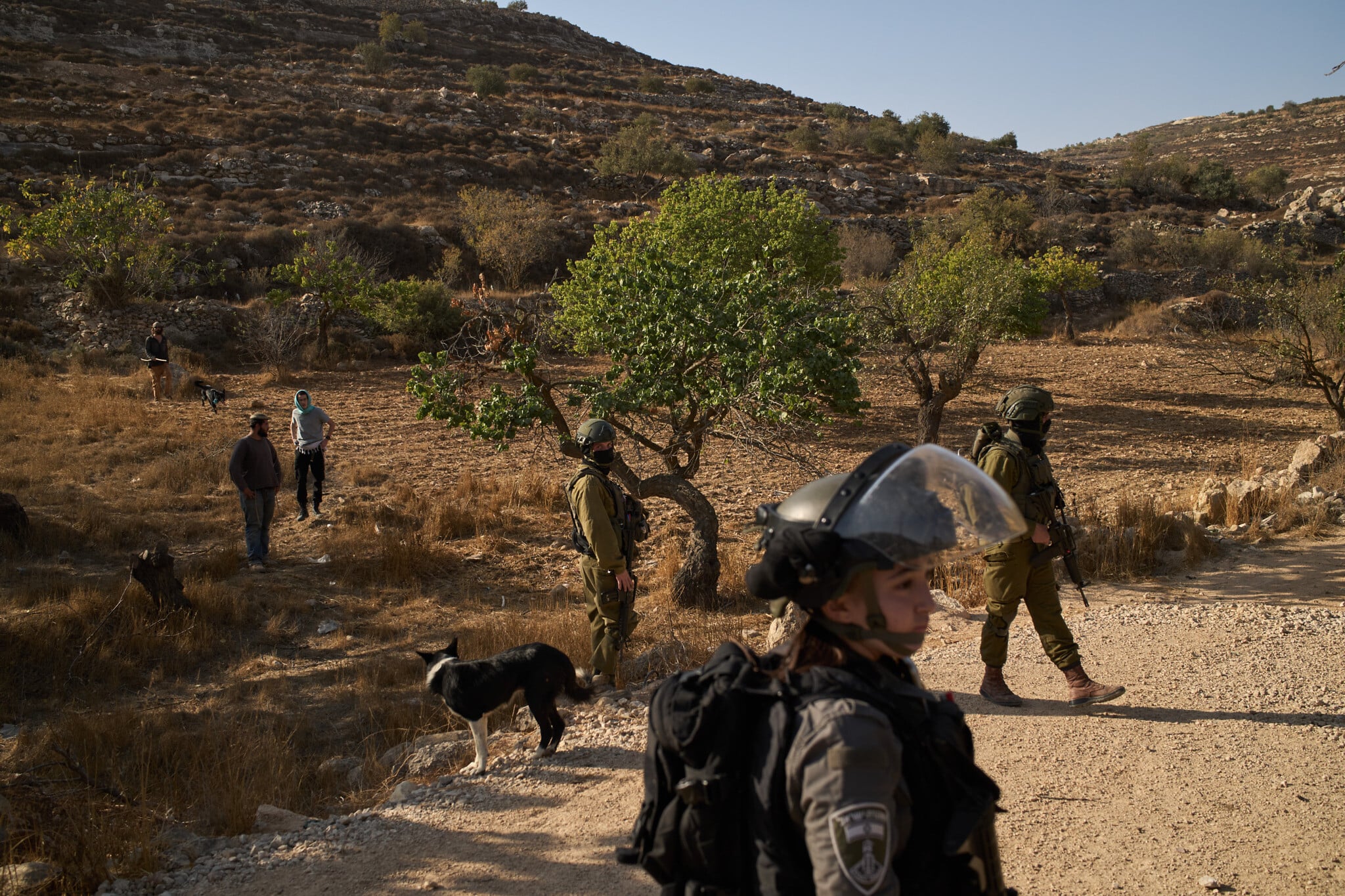
Soldiers and settlers stand in an area where Palestinians are blocked from harvesting olives in the West Bank village of Sa’ir, near Hebron, Thursday, Oct. 23, 2025. (AP/Leo Correa)
“Systematically, to deter people from going to their land, they’re detained, handcuffed, blindfolded with cloths, kept for three hours at the nearest army post, and then dumped – released,” she said.
Roni Pelli, an attorney from Yesh Din, said her organization had been seeing the same pattern in recent weeks: Palestinians being blocked from accessing their lands under newly issued “closed military zone” orders — including in areas not near any Israeli settlements.
In many cases, she said, soldiers don’t even show an actual written order.
“They only show a document if there are Israeli or foreign activists present who insist on seeing it,” she said. “When only Palestinians are there, they’re just expelled without any order shown.”
Pelli added that she has yet to receive any response from the army’s legal authorities: “I contacted the IDF’s West Bank legal adviser about these expulsions from Area B. None of my messages or inquiries have received any reply.”
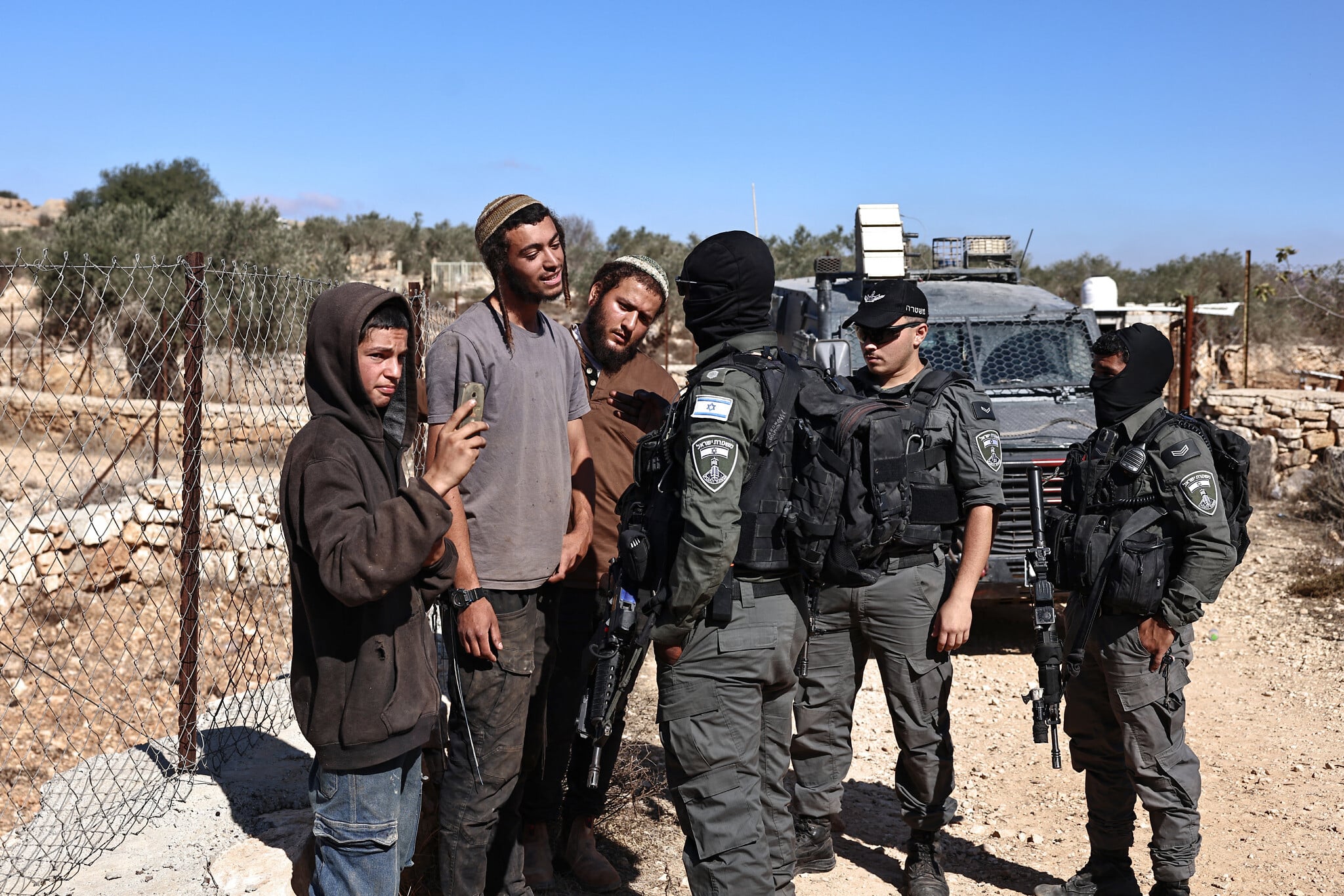
Israeli border guards argue with Israeli settlers attempting to disrupt the olive harvest at a grove near the Palestinian village of Silwad, northeast of Ramallah in the West Bank, on October 29, 2025. (Zain JAAFAR / AFP)
In response to The Times of Israel’s question regarding claims of increased use of “closed military zone” orders, the IDF said it recognizes the importance of the olive harvest season in maintaining the fabric of daily life in the area and is working to ensure that it can take place safely and smoothly for all residents.
“Most olive-harvest areas in Judea and Samaria do not require coordination with security forces, and Palestinian civilians are permitted to harvest without prior coordination,” a statement from the army read. “In cases where disruptions to the harvest occurred, forces were instructed to take the necessary measures to ensure its continuation without interference — including, among other steps, the issuance of a closed military zone order.”
Forbidden fruit
Bashar Eid’s nephew, Musaab Toufan, lives on the opposite end of Burin, isolated from the rest of the village by Route 60 — a major artery for Israeli and Palestinian traffic — but just a few hundred meters from the hardline Israeli settlement of Yitzhar.
Toufan’s family say they have lived in the house, built on land they own nestled among groves of olive trees, since 1975 — several years before Yitzhar was founded.
The home’s location has exposed the family to years of harassment, which they say has intensified recently. When visitors come, Toufan tells them to park in the village center and then drives over to pick them up rather than risk them parking near his house.
“If you drive here in your car, they’ll smash it,” he warned. Toufan described how in recent months, settlers have occasionally blocked the access road to his house with metal and stones. About once a week, they menace him by coming right up to his door and banging loudly.
“It’s psychological warfare, constant harassment,” he said. When he drives home he calls his wife to open the gate for his car before he arrives so as not to have to wait outside and risk being attacked.
“I have two kids, 4 and 5 years old. I don’t let them walk outside. I take them to kindergarten by car and bring them back by car,” he said.
“The settlers say this house is theirs — they want to take it,” he added, pointing from his second floor toward olive trees that grow just beyond his walled-in yard.
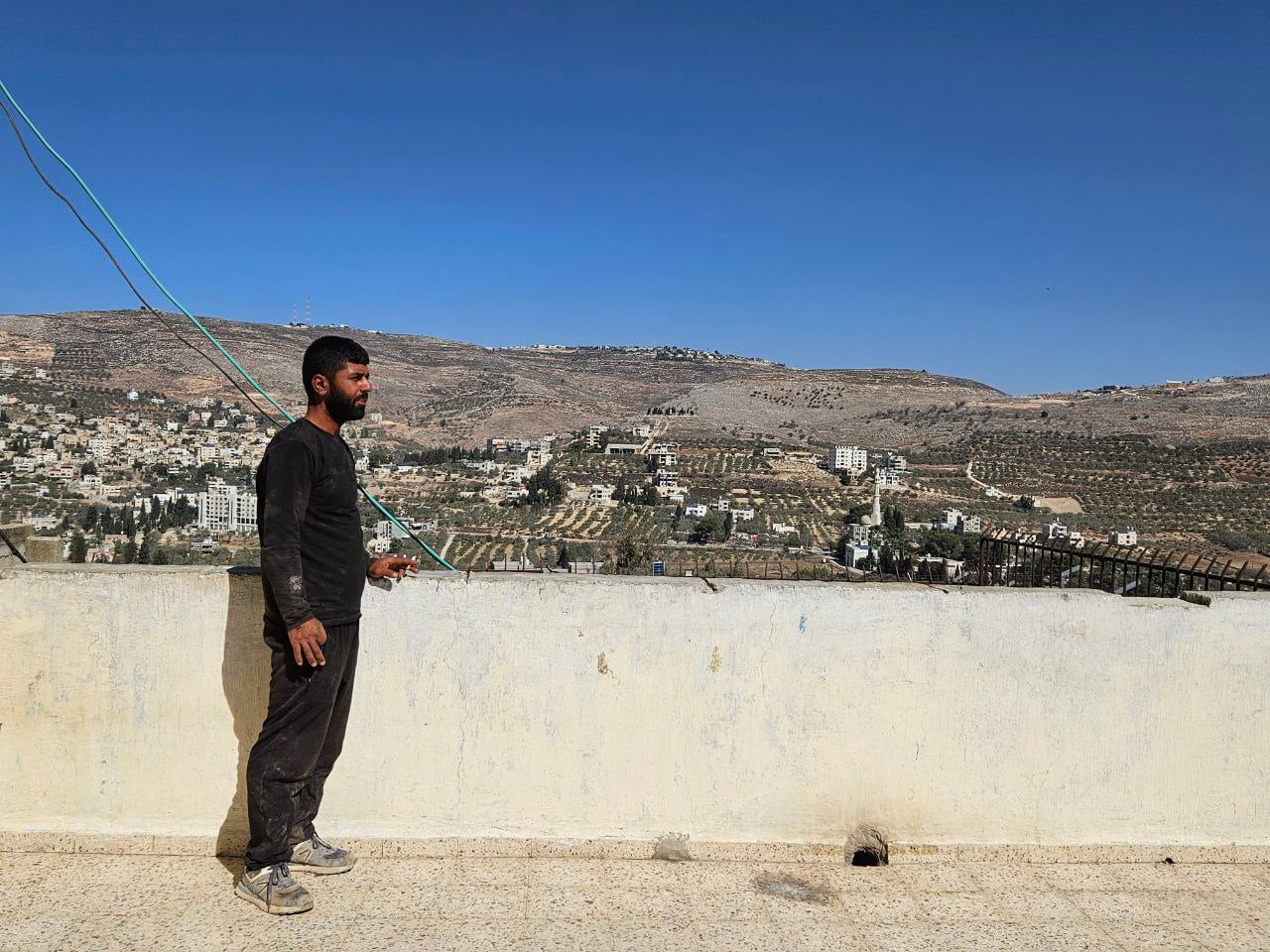
Musaab Toufan at his home on the outskirts of the village of Burin near Nablus in the West Bank, October 30, 2025. (Nurit Yohanan/Times of Israel).
Toufan alleged that the security coordinator in Yitzhar had forbidden him from harvesting this year, a change from the year before when a different person had filled the role.
“The settlers said it, not the army. The army doesn’t come here,” he said.
An attempt to confirm the story with a settlement spokesperson went unanswered, but a security official told The Times of Israel that Toufan’s harvest is expected to go ahead in the future in coordination with the IDF.
The IDF Spokesperson’s Unit said that Toufan’s harvest was “halted on a specific day after disturbances occurred in the area.”
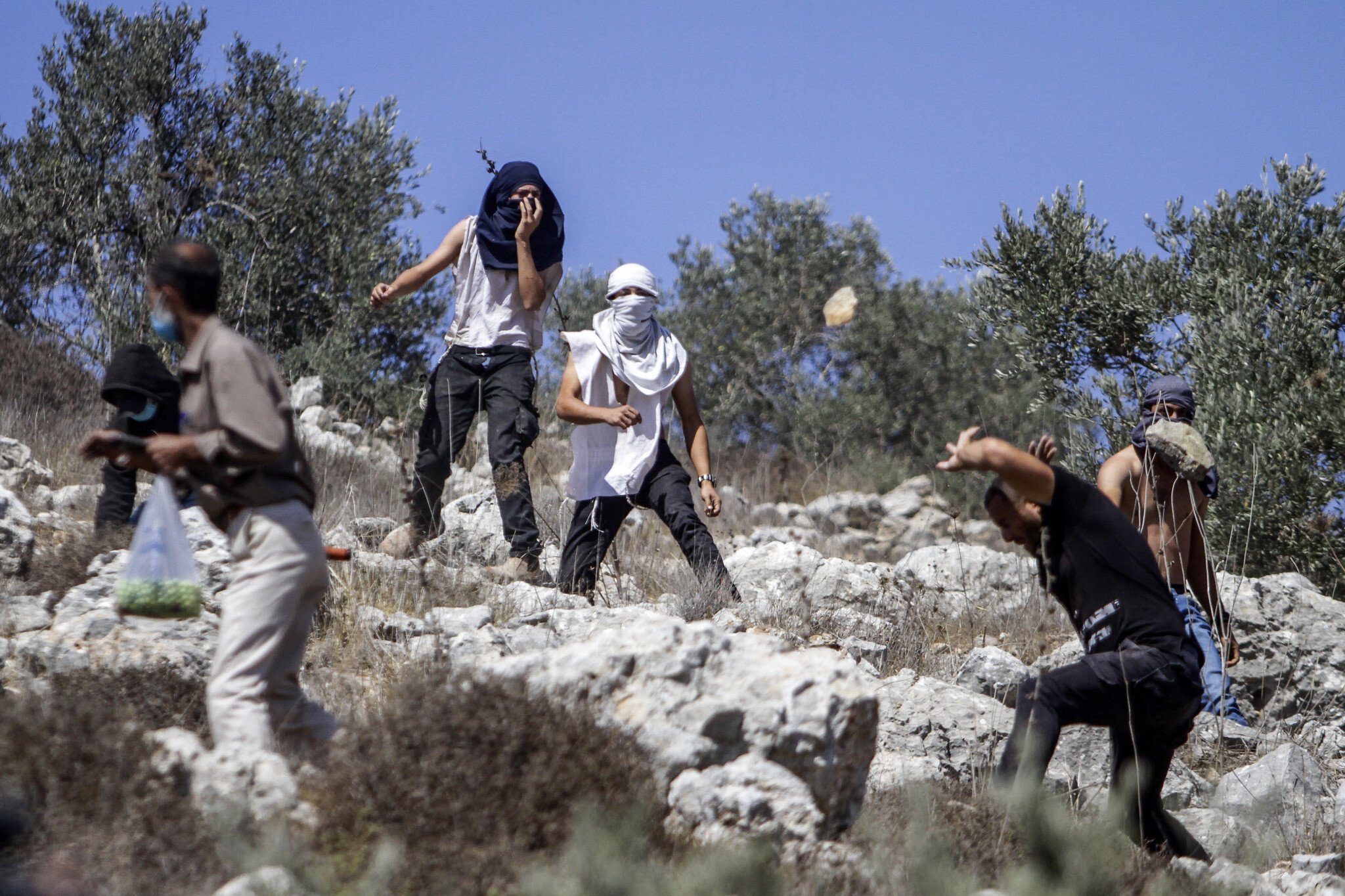
Illustrative: Israeli settlers hurl stones at Palestinians near the Israeli settlement of Yitzhar in the West Bank on October 7, 2020. (Nasser Ishtayeh/Flash90/File)
According to both Pelli and Mashraki-Asaad, coordination on the closed military zones is taking place between settlers and the military in blocking the olive harvests.
“In many areas, they simply don’t allow the harvest to take place at all — soldiers and settlers alike,” Pelli said. “And there’s barely any difference between them; they call each other over.”
The army declined to address the charge when questioned by The Times of Israel. The Samaria Regional Council, the Israeli municipal body for settlements in much of the northern West Bank, did not respond to a request for comment.
A statement sent out by the regional council and other official bodies on October 22, however, hinted that some coordination may be taking place.
According to the statement, on October 16, residents of an unspecific Israeli farming outpost near Burin asked the regional council to intervene after Palestinians and foreign activists were seen entering a closed military zone, spurring the council to request enforcement of the order from the military and various government authorities, including Justice Minister Yariv Levin.
The statement, which claimed that activists “identified” with the banned Union of Agricultural Work Committees organization had staged an “illegal demonstration” in the closed zone, did not specify how the settlers knew that the closed military zone order had been imposed.
Lea Tsemel, a long time hard-left activist lawyer who provided legal counsel to the activists, said the activists had been taking part in the olive harvest and were detained for violating the closed military zone order, but unlike the settlers, had been entirely unaware that the order had been issued.
“The settlers work hand in hand with the army,” Mashriki-Asaad said. “If the army really wanted to stop soldiers from taking part in this or to prevent recurring attacks, it would punish them. But what we’ve seen over the past two weeks since the harvest began — it’s total chaos.”
Toufan said that the army had not stopped settlers from uprooting his olive trees or preventing him from collecting the fruit from roughly 200 remaining trees. In recent days, settlers were filmed picking olives from the trees growing just outside his home.
“When did the army come? Last week — when they saw settlers picking olives and thought they were Arabs,” he said. “They came, realized their mistake, and left. They did nothing.”
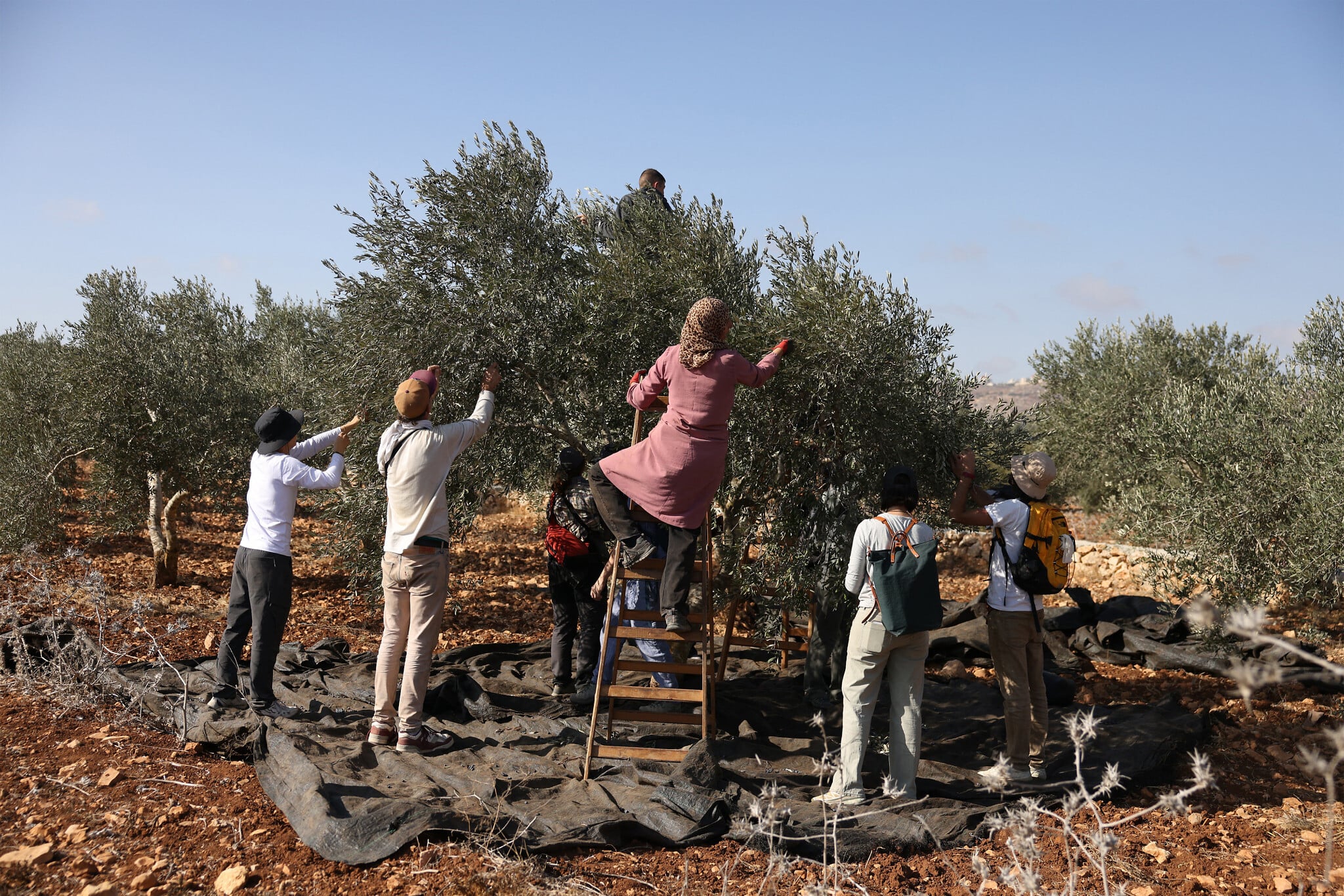
Palestinians harverst olives near the West Bank village of Turmos Ayya near Ramallah on October 19, 2025. (HAZEM BADER / AFP)
Mashraki-Asaad said she has encountered the same phenomenon — theft of olives — in other parts of the West Bank.
“This year we’re seeing more ‘harvesting’ by settlers — theft,” she said. “People are stealing olives from yards and trees that others have already picked. If no one stops them, they just keep doing it.”
On October 31, soldiers themselves were filmed taking olives off trees in an area near the village of Sinjil, north of Ramallah. The land lies in Area C, but close to Palestinian homes and under Palestinian ownership.
Earlier, the same soldiers had been documented expelling Palestinians who were harvesting there, claiming the area had been declared a “closed military zone.” The IDF said soldiers had declared the area closed after receiving reports of Israelis and Palestinians throwing stones at each other.
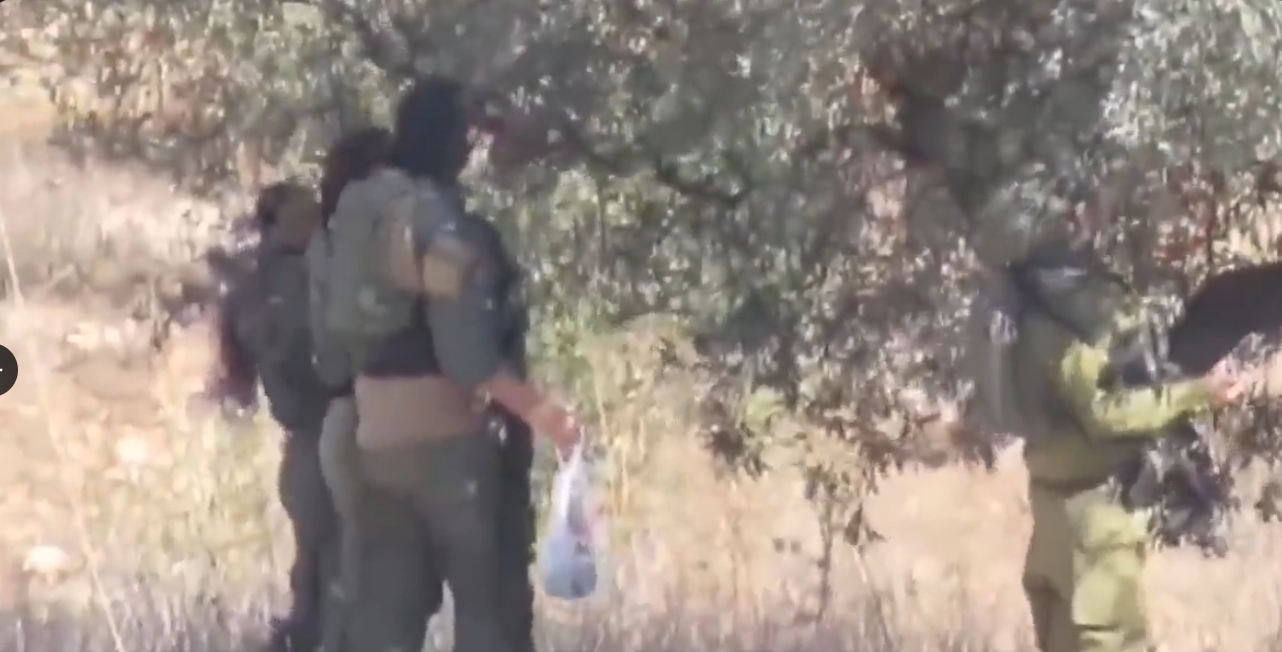
Soldiers harvesting olives from trees owned by Palestinians on the outskirts of the village of Sinjil near Ramallah in the West Bank, October 31, 2025. (Screenshot: X, used in accordance with Clause 27a of the Copyright Law).
Sinjil resident A’id Jafari said the trouble started when settlers showed up to film the Palestinians harvesting the olives.
“I came on Friday morning to help other farmers from the village harvest. There was nothing, no problem,” he told The Times of Israel by phone. “Then settlers arrived and started filming everyone. A military officer came, and I told him — if you want us to leave, you need to show us [an order]. After an hour and a half, they finally showed us a closed military zone order. Later, we saw the soldiers themselves harvesting the olives.”
The IDF said the soldiers seen taking the olives would be disciplined.
“Upon receiving the report, IDF, Border Police, and Israel Police forces arrived at the scene and acted to disperse all those involved. For this purpose, a closed military zone order was imposed in the area,” the army said. “The conduct of the forces does not align with the values of the IDF. The incident will be investigated and handled through disciplinary measures.”
Violence persists
Ostensibly designed to avoid friction between settlers and Palestinians, the closed military zones have done nothing to keep extremists from harassing or attacking Palestinians, with several serious incidents of settler violence reported in the first weeks of the olive harvest season, which lasts from mid-October to late November.
On October 19, Jewish extremist attacked olive pickers in the central West Bank near the village of Turmus Ayya, injuring two Palestinians and a foreign activist. In a video from the scene, one of the attackers is seen striking a resident of the nearby village of al-Mughayyir with a club. She was hospitalized for about a week with a head injury.
On October 25, dozens of settlers were filmed assaulting the village of Mikhmas and the adjacent Bedouin encampment. Three Palestinians and Bedouins were injured, as well as two Israeli volunteers — all struck with stones and clubs, according to their accounts.
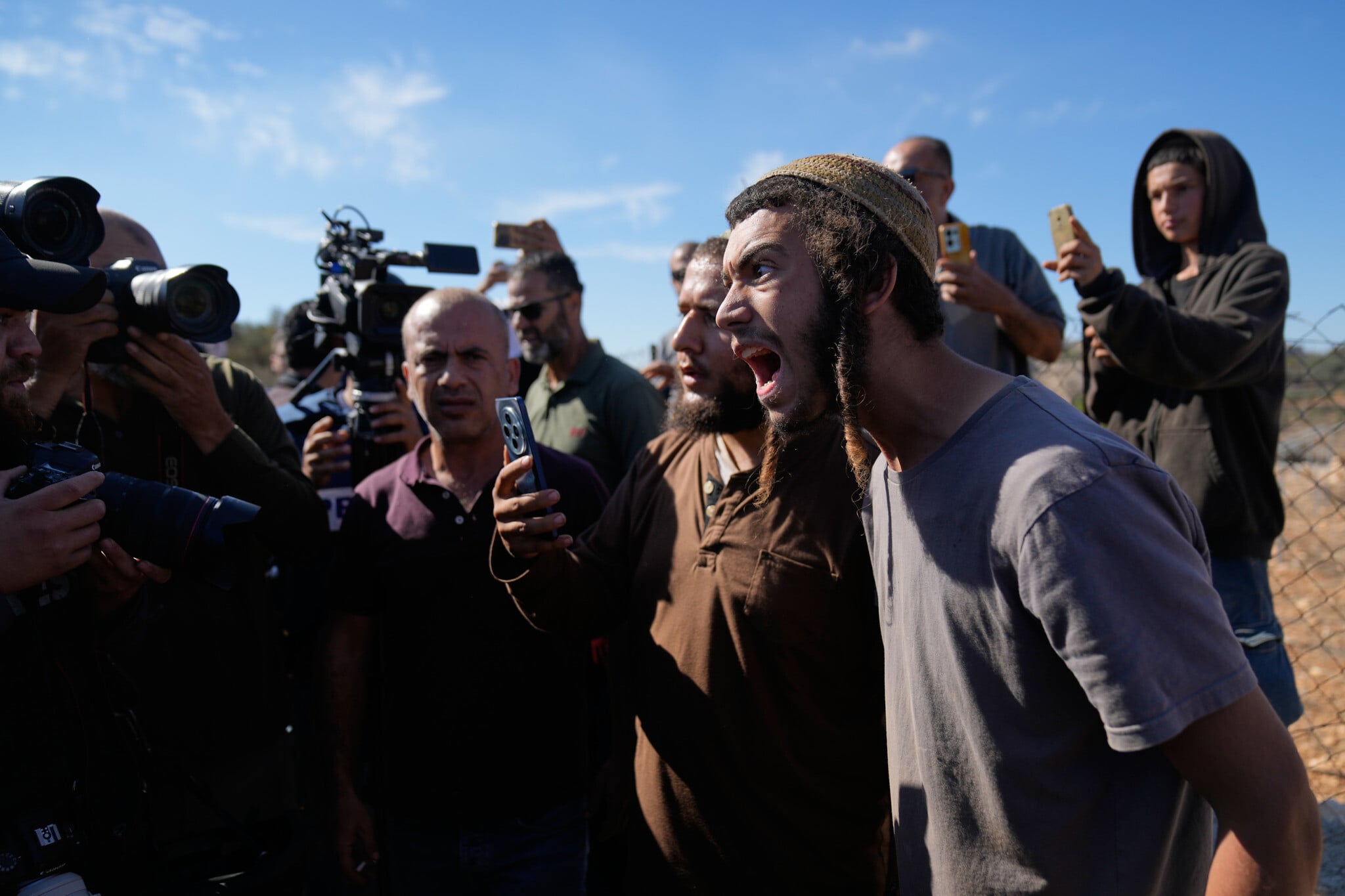
An Israeli settler yells during a confrontation with activists and Palestinians harvesting olives near the West Bank town of Silwad, Wednesday, Oct. 29, 2025. (AP/Nasser Nasser)
In an unusual move, police announced that an Israeli suspect had been arrested in connection with the Mikhmas assault, though a gag order was imposed on the investigation.
Pelli said that when attacks occur, there is no longer any official channel to call for help so that IDF forces will intervene. In the past, she said, it was possible to contact the Civil Administration war rooms directly, but that mechanism stopped working after the outbreak of the Gaza war.
“When the war began, one day in November 2023, I called one of the coordination rooms,” she recalled. “They told me, ‘We’re not allowed to talk to civilians,’ and hung up. Since then, they don’t speak to us anymore. It’s clear they still talk to settlers — but we’re not given anyone else to reach out to.”
Proof that IDF forces still respond to settlers’ calls can be found in the army’s own statements, which frequently note that troops were dispatched to a given area following reports from Israeli civilians.
For Palestinians and the Israeli or foreign activists who try to help them, Pelli said, there has been no authority to report violence to for nearly two years. Pelli filed a petition to the High Court of Justice on October 31, but the state has not yet responded.
Police did not respond to a question regarding efforts against violent incidents targeted Palestinians during the olive harvest. It noted that procedures were in place to facilitate Palestinians harvesting in areas near settlements under Israeli civilian control, including requiring that Palestinians receive permits to do so.
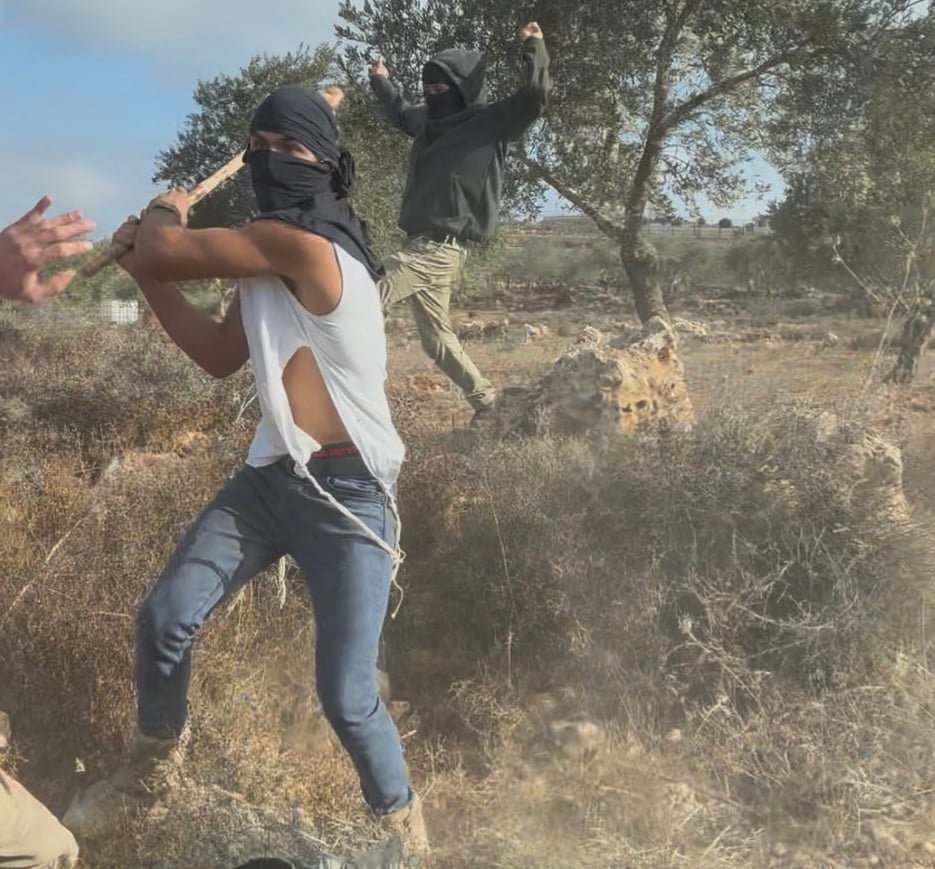
A Jewish extremist assaults Palestinian olive pickers and civil rights activists close to the West Bank town of Turmus Ayya, October 19, 2025. (Courtesy Jasper Nathaniel)
“Since 1967 and until today, it has been decided to allow Palestinian landowners to access their olive groves, while adhering to authorized lists and fixed timeframes throughout the year, after their ownership of the land has been verified by professional bodies within the Civil Administration,” a spokesperson said.
Mashraki-Asaad said the military’s alleged clampdown could be traced to pro-settlement hardliners now occupying top positions in Prime Minister Benjamin Netanyahu’s government, who have stepped up efforts to limit Palestinian activity since Hamas’s October 7, 2023, attack that launched the Gaza war.
She pointed to a November 2023 letter from Finance Minister Bezalel Smotrich, demanding that Netanyahu and then-defense minister Yoav Gallant halt the Palestinian olive harvest in the West Bank.
“Security buffer zones must be created around settlements and roads, preventing Arabs from entering them,” Smotrich wrote at the time, as Israel sought to tighten security following the Hamas attack on southern Israel.
“Listen, if Smotrich once said, ‘No one should enter,’ then of course there’s an order from above,” Mashraki-Asaad alleged.
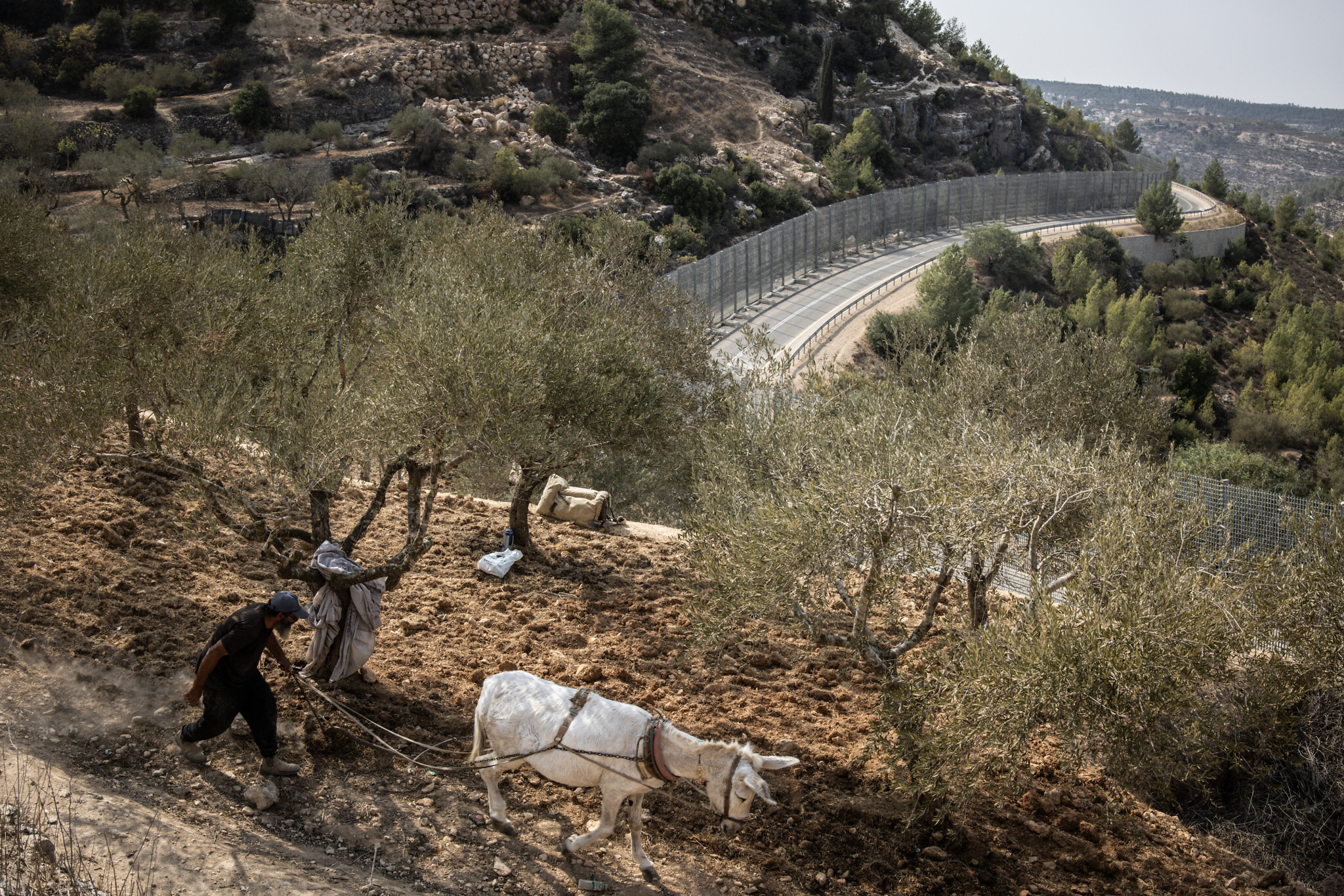
A Palestinian man plows a small field in an olive grove in the West Bank on November 4, 2025. (John Wessels / AFP)
The following year, in 2024, National Security Minister Itamar Ben Gvir also called on Netanyahu to deny Palestinians the ability to harvest olives, claiming the agricultural activity was being used “as cover for attacks on Jewish communities.”
No official policy changes were announced in response, but Mashraki-Asaad said the state of the harvest showed that a creeping crackdown was still taking place, and would likely not end with olives.
“It’s all kinds of farming, not just olives,” she said. “Plowing season is next, and it happens every season.”
Jeremy Sharon contributed to this report.