
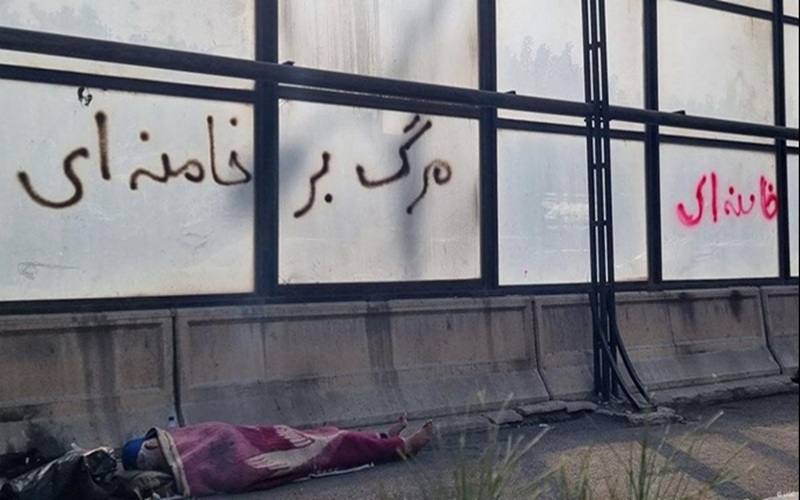
On July 23, Gholam-Hossein Mohseni-Eje’i, the head of Iran’s judiciary, appeared on state television to boast about “the arrest of thousands” and openly hinted at the possibility of executing some of them. His televised appearance, far from a routine statement, was a calculated move to deliver a message on behalf of the regime’s Supreme Leader Ali Khamenei: the regime sees no path forward except through brute force.
Eje’i’s remarks signal the regime’s shift toward maximum repression in the aftermath of the recent 12-day war with Israel. Far from proposing reform or reconciliation, Eje’i’s rhetoric suggests a return to the darkest chapters of Iran’s past — evoking memories of the mass executions of political prisoners in the summer of 1988. By framing the detainees as scapegoats for the regime’s military and political failures, the judiciary chief is laying the groundwork for a broader crackdown.
This raises an unsettling question: why is Eje’i, at a time when some regime-aligned media have been calling for a revision of the country’s governance model, resorting to threats and calls for bloodshed?
Since the ceasefire, the regime has paradoxically intensified its belligerence. It has issued fresh threats against the United States and Israel, despite having just suffered serious strategic and symbolic defeats. This posturing is not merely for external audiences — it is an internal signal that Khamenei and his loyalists are preparing for a new phase of domestic suppression.
Behind this aggressive rhetoric lies the regime’s growing fear of a popular uprising. Soaring prices, worsening water and electricity shortages, and mounting dissatisfaction with the Supreme Leader’s authority have brought Iran to a breaking point. Khamenei’s political base is fraying, and new internal divisions have surfaced — even within the highest echelons of the Islamic Republic.
On the same day as Eje’i’s statement, the reformist-leaning Saham News Telegram channel quoted former political prisoner and reformist-branded figure Mostafa Tajzadeh, who described the regime as “inefficient, corrupt, and discriminatory.” He warned that Khamenei has no option but to either resign or submit to the will of the people. Such blunt language, targeting the Supreme Leader directly, would have been unthinkable just a few years ago. It is a clear sign of how the war has emboldened dissent and deepened rifts within the regime.
In this volatile environment, why is the regime doubling down on violence through its three branches of power — the judiciary, the parliament, and the presidency — along with its propaganda machine?
The answer lies in Khamenei’s longstanding belief that “war is a blessing.” For him, war and crisis offer a pretext for tightening control and eliminating dissent under the cover of national security. It’s a strategy aimed not only at deterring popular revolt but at preserving the regime itself — regardless of the cost to Iranian society.
But while Khamenei clings to this logic of fear and coercion, the reality on the ground tells a different story. The regime’s internal structure is crumbling, and the public’s patience has worn thin. For a vast segment of Iranian society, the dream of ending the mullahs’ 46-year rule no longer feels distant — it feels urgent and attainable.
What may be a desperate calculation by Khamenei to escape the aftermath of the war could, in fact, accelerate the collapse he fears most. The days of unchallenged repression are over; the people are watching, organizing, and preparing for change.