

Listen to this article
Estimated 4 minutes
The audio version of this article is generated by text-to-speech, a technology based on artificial intelligence.
The head of the BBC and the British broadcaster’s top news executive both resigned Sunday after criticism of the way the organization edited a speech by U.S. President Donald Trump.
The BBC said that director-general Tim Davie and head of news Deborah Turness both announced their resignations on Sunday.
Britain’s public broadcaster has been criticized for editing a speech Trump made on Jan. 6, 2021, before protesters attacked the Capitol in Washington.
Critics said that the way the speech was edited for a BBC documentary was misleading and cut out a section where Trump said that he wanted supporters to demonstrate peacefully.
In a letter to staff, Davie said quitting the job after five years “is entirely my decision.” He said that he was “working through exact timings with the Board to allow for an orderly transition to a successor over the coming months.”
Turness said that the controversy about the Trump documentary “has reached a stage where it is causing damage to the BBC — an institution that I love. As the CEO of BBC News and Current Affairs, the buck stops with me.”
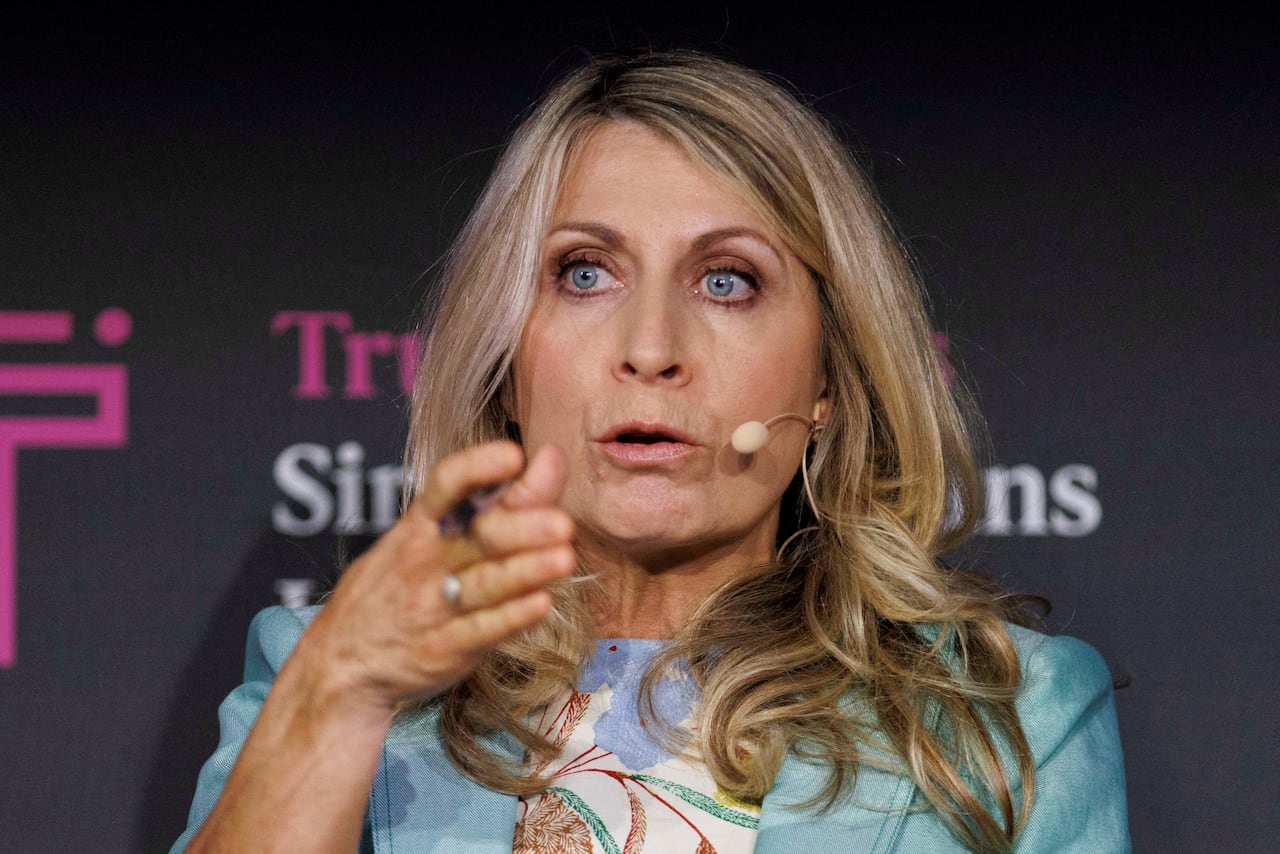 BBC head of news Deborah Turness announced her resignation Sunday. (Belinda Jiao/Reuters)
“While mistakes have been made, I want to be absolutely clear recent allegations that BBC News is institutionally biased are wrong,” she said in a note to staff.
Trump posted a link to a Daily Telegraph story about the speech-editing on his Truth Social network, thanking the newspaper “for exposing these Corrupt ‘Journalists.’ These are very dishonest people who tried to step on the scales of a Presidential Election.” He called that “a terrible thing for Democracy!”
White House press secretary Karoline Leavitt reacted on X, posting a screen grab of an article headlined “Trump goes to war with ‘fake news’ BBC” beside another about Davie’s resignation, with the words “shot” and “chaser.”
BBC facing criticism from all sides
Pressure on the broadcaster’s top executives has been growing since the right-leaning Telegraph newspaper published parts of a dossier complied by Michael Prescott, who had been hired to advise the BBC on standards and guidelines.
As well as the Trump edit, it criticized the BBC’s coverage of transgender issues and raised concerns of anti-Israel bias in the BBC’s Arabic service.
The BBC faces greater scrutiny than other broadcasters — and criticism from its commercial rivals — because of its status as a national institution funded through an annual licence fee of 174.50 pounds ($322.09 Cdn) paid by all households with a television.
The BBC airs vast reams of entertainment and sports programming across multiple television and radio stations and online platforms — but it’s the BBC’s news output that is most often under scrutiny.
It also is bound by the terms of its charter to be impartial in its output, and critics are quick to point out when they think it has failed. It’s frequently a political football, with conservatives seeing a leftist slant in its news output and some liberals accusing it of having a conservative bias.
It has also been criticized from all angles over its coverage of the Israel-Hamas war in Gaza. In February, the BBC removed a documentary about Gaza from its streaming service after it emerged that the child narrator was the son of an official in the Hamas-led government.
Kemi Badenoch, leader of the opposition Conservative Party, said that the BBC was full of “institutional bias,” and “the new leadership must now deliver genuine reform of the culture of the BBC, top to bottom.”
Lisa Nandy, the minister in charge of media in Britain’s centre-left Labour government, thanked Davie for his work and said that the government would help the BBC secure “its role at the heart of national life for decades to come.”
“Now more than ever, the need for trusted news and high quality programming is essential to our democratic and cultural life, and our place in the world,” Nandy said.