
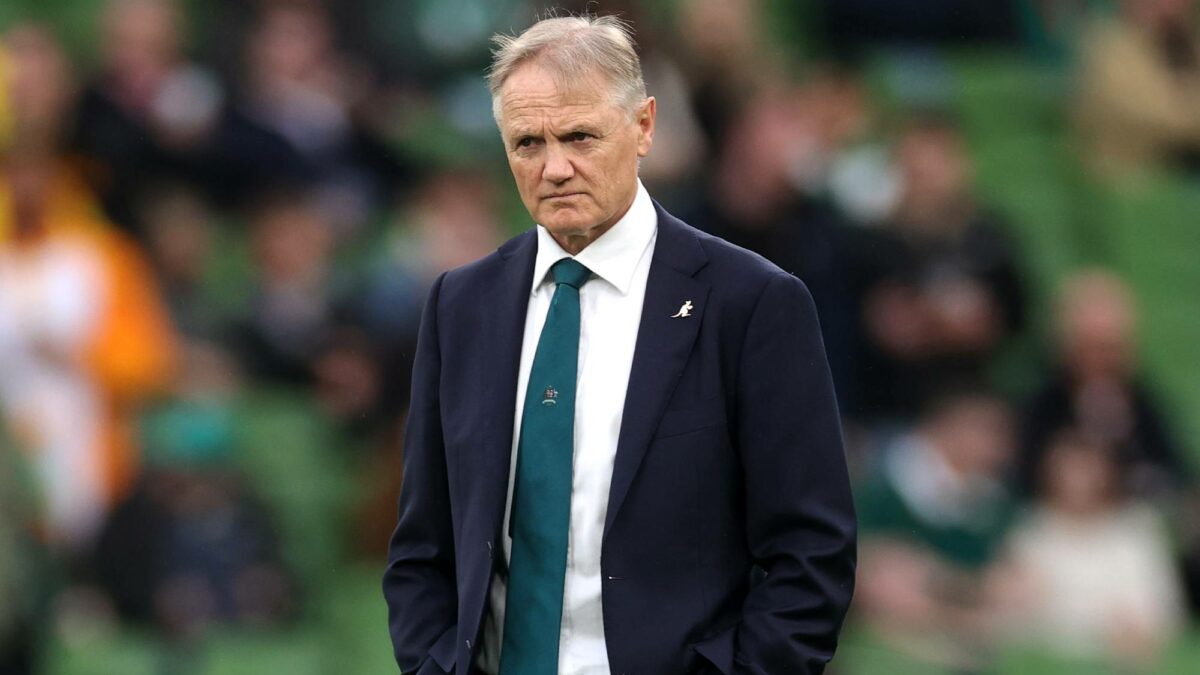
Unlike three years ago, the Wallabies’ defeat to Italy wasn’t a shock. It was entirely predictable.
After four defeats in their past five Tests, the Wallabies were always ripe for the picking – and so it proved, with Italy exploiting their opponents on the ground and in the air, and taking advantage of a side missing Len Ikitau.
Throw in a new flyhalf (playing his first rugby match in 17 months, and returning from a minor quad injury) and more new combinations, and Italy were always going to be in the hunt.
They also made the most of having Andrew Brace as the referee, the whistle-happy Irishman with a tendency to reward early pressure on the ball, who blew Eddie Jones’ Wallabies off the park more than two years ago against Fiji in Saint-Etienne.
The Wallabies might have taken their chances in August, but Joe Schmidt’s side has been on a steep decline since – and the coaching, game-plan and selection process is as much to do with it as anything else, including the so-called “fatigue factor”.
Yes, the coaches don’t kick the balls out on the full (four times) and throw forward passes (twice), but they’re also the ones who pick the sides, devise the game plans and hide playmakers, who regularly drop box kicks, in the backfield.
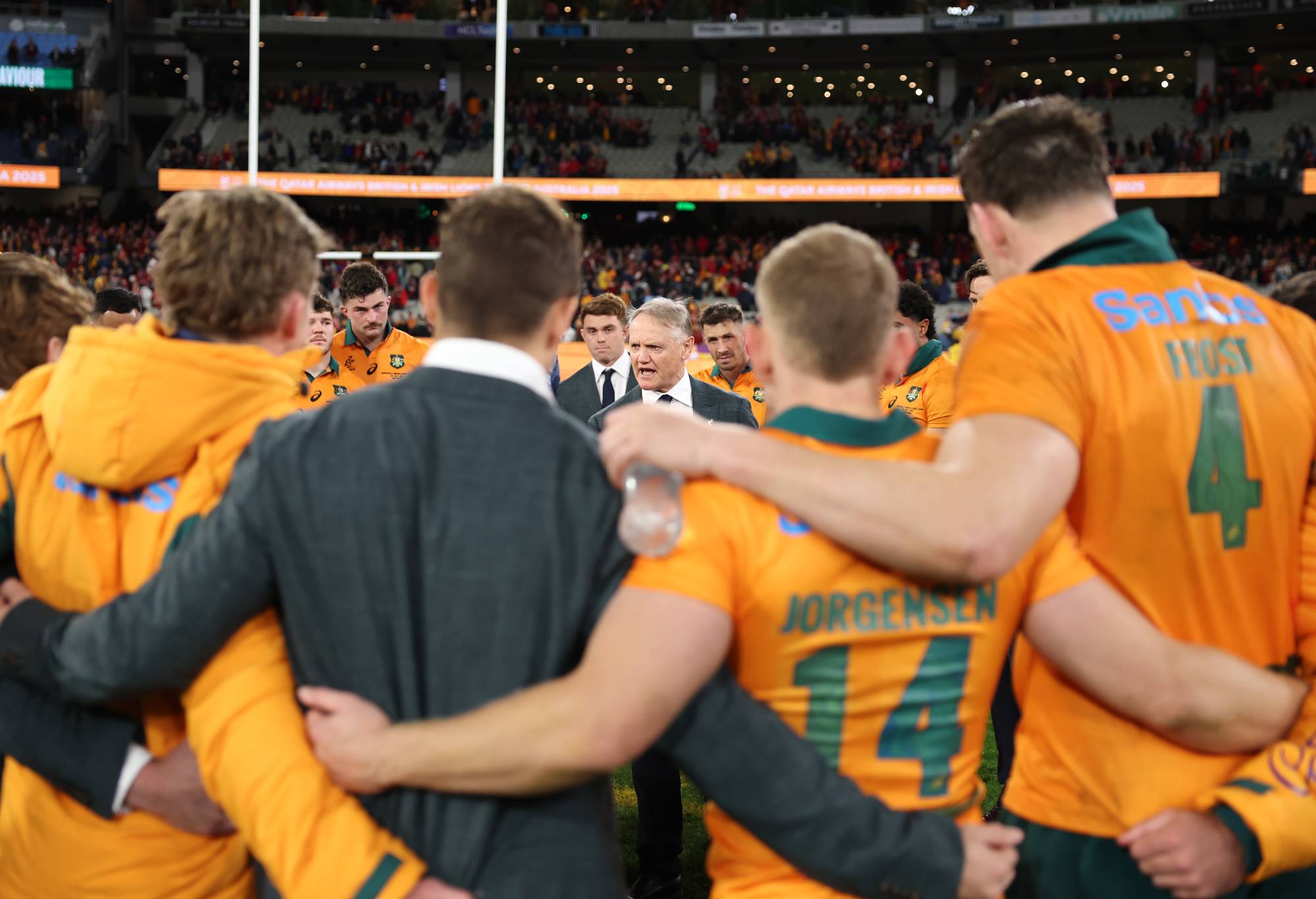
Joe Schmidt has a 42 per cent win record since taking over the Wallabies in 2024. (Photo by Cameron Spencer/Getty Images)
Currently, it looks like Schmidt has the Wallabies trying to play like Ireland a decade ago.
The issue is the Wallabies don’t have game managers like Conor Murray or Johnny Sexton, nor a commander like Rob Kearney at the back.
Even their breakdown work, which showed signs of improvement, has tailed right off – and nor has it ever been a strength of the Wallabies for a long time either.
Schmidt is also the one who kept half his bench with tracksuits on until the final ten minutes against Italy despite also complaining about fatigue and weariness in recent weeks.
After being outcoached by Steve Borthwick last week, especially with the timing of his replacements, Schmidt once again left it late to make changes.
Indeed, Jake Gordon, who has morphed into a box-kicking halfback, has played all but 15 minutes in the past three Tests, having played the entire game against Japan, before only being replaced in the 77th minute against Italy.
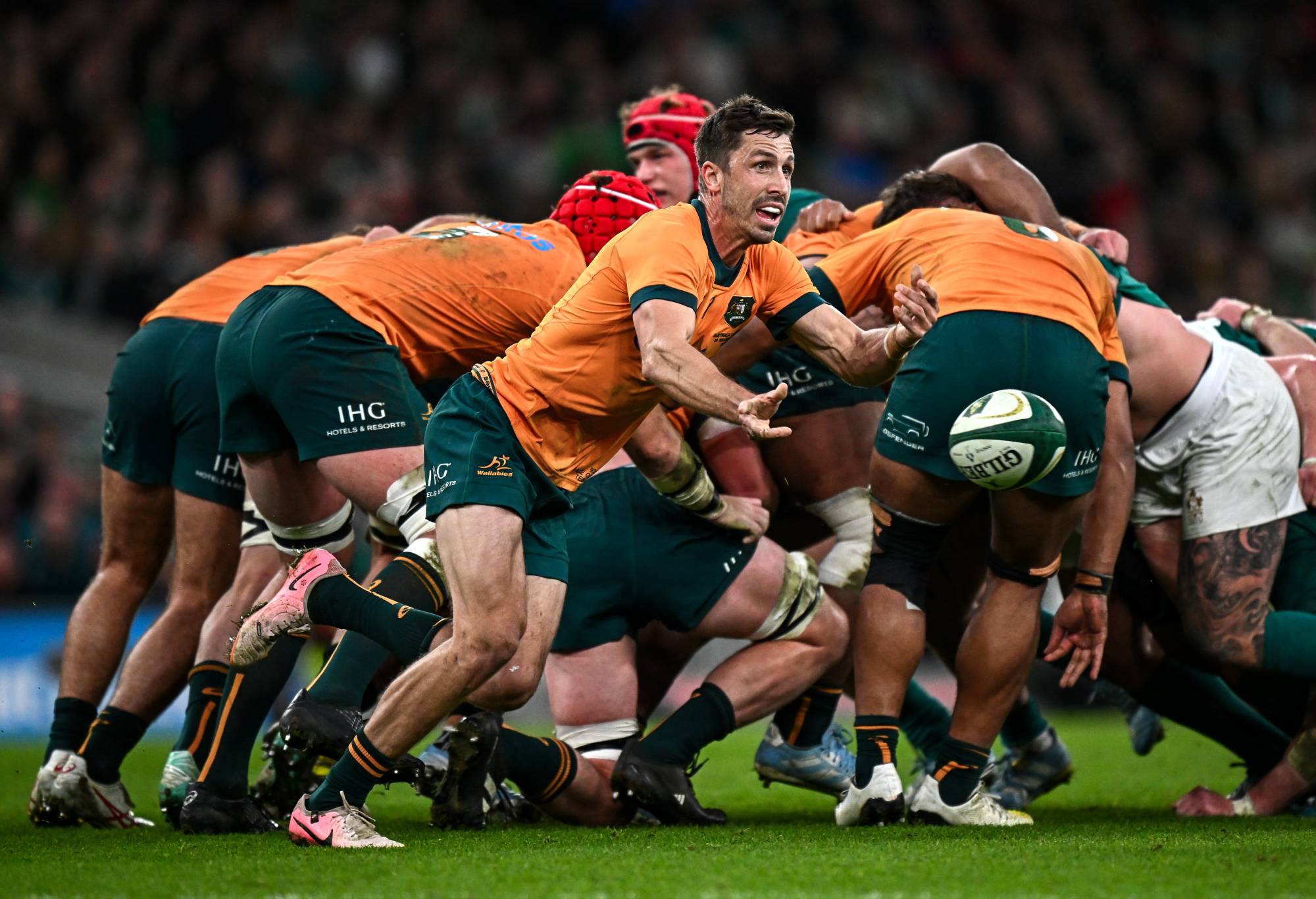
Joe Schmidt has relied heavily on Jake Gordon. (Photo By Seb Daly/Sportsfile via Getty Images)
It’s left the highly competent Ryan Lonergan, who is approaching one Super Rugby games and won knockout matches, biting his nails on the sidelines.
Ditto, Pete Samu, who came on late in the Test despite it being bleeding obvious that Harry Wilson, who played most of the Test against Japan after two early injuries and is one of the few players in need of a break, was struggling, especially with his discipline, and pace and accuracy at the breakdown.
Schmidt now has two Tests to salvage the Wallabies’ campaign.
And another two defeats won’t just see the Wallabies finish with five wins from 15 Tests (33.33%) in 2025, it will harm his legacy too.
TIME FOR A BREAK
He’s led the Wallabies proudly over the past 15 months, but Schmidt would be doing Wilson a favour if he left him out of this weekend’s penultimate Test against Ireland.
The knockabout captain won’t want to sit one out, but after being one of the Wallabies’ most used players in 2025, the season is starting to catch up with Wilson.
Indeed, the back-rower’s discipline and sluggishness at the breakdown has become an issue.
Borthwick’s tactics ahead of the English Test might have tested the grounds of sportsmanship, but the leaked footage did expose Wilson’s work around the breakdown.
He has also been the Wallabies’ most penalised player over the past month.
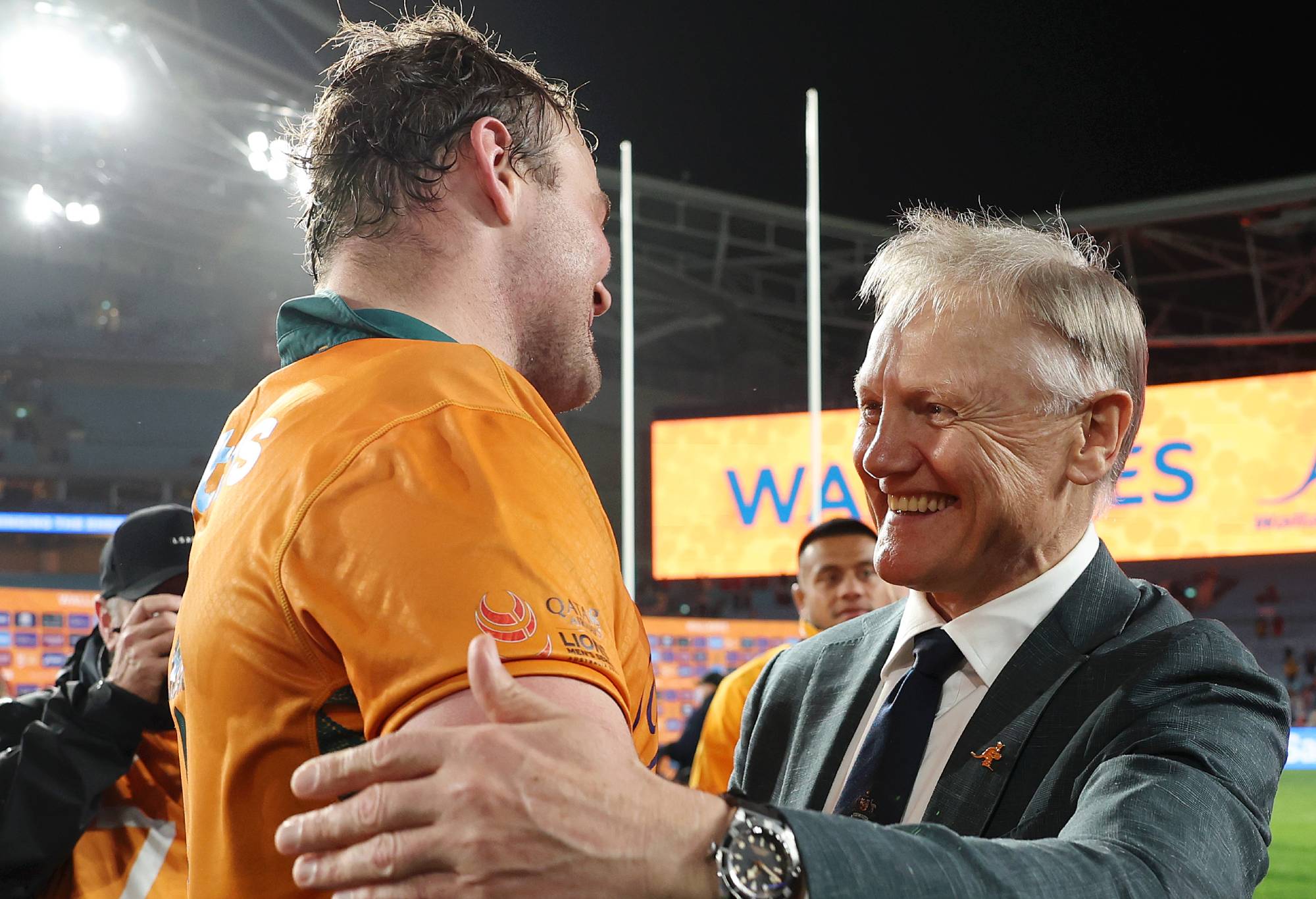
Harry Wilson has struggled in recent Tests. (Photo by Matt King/Getty Images)
That continued against Italy, where he was pinged around the breakdown and at the maul, where he was penalised on four occasions.
It led to Brace warning Wilson to keep his discipline ahead of Joseph-Aukso Suaalii’s high shot, which saw him shown a yellow card.
GORDON’S RETURN A WELCOMED RETURN
There were few positives to come out of the Udine defeat, but Gordon’s performance was one of them.
The 24-year-old’s Test was flawed, but in 80 minutes he showed more than anyone else this year, including James O’Connor, in the role.
His linebreak in the 15th minute told it all.
The playmaker easily broke the line and then delivered a stunning left-to-right pass that was the pass of the entire weekend.
But he also carried tough, running once into the teeth of the defence, while he also kicked off both feet and nearly peeled off one fine 50-22 from his left-foot.
Of course, Gordon was beaten in the air a couple of times, didn’t kick for goal and kicked out on the full once, but for a young man playing his first rugby match in 17 months in a brand new system, it was a hugely encouraging performance.
Throw in the fact that when Gordon was forced off because of a quad issue, the Wallabies led 19-12.
ANOTHER AERIAL ASSAULT LOOMS FOR WALLABIES
Back in late July, the second Lions Test turned in favour of Andy Farrell’s men when Lynagh failed to deal with a Jamison Gibson-Park box kick.
Since then, the Wallabies’ struggles under the high ball have only been highlighted even more.
That was certainly the case at Twickenham when England scored twice from box kicks.
While Italy didn’t score directly from a kick in Udine, they continued to expose the Wallabies in the area and the pressure told.
So it won’t take a rocket scientist to recognise that Farrell and his No.9 will target the Wallabies in the area.
Ireland is by no means the well-drilled outfit they were under Schmidt and, indeed, Farrell a couple of years ago, but they will head into the Test against the Wallabies as firm favourites.
And after bouncing back from defeat against the All Blacks with a comfortable win over Japan at home, they will be looking to rediscover their confidence ahead of their looming clash against the Springboks.
RASSIE MASTERCLASS HAS BOKS ON CLOUD NINE
After controversially losing Lood de Jager before half-time, the Springboks’ 32-17 win over France in Paris was one of Rassie Erasmus’ finest victories in charge of the back-to-back world champions.
The half-time break was welcomed and allowed the Springboks to reset, but to defuse France’s threats and then turn defence into attack was one of the finest halves this year.
Erasmus made the tough call to replace his captain Siya Kolisi, who was playing his 100th Test, to shore up his lineout by injecting Ruan Nortje.
Then the Springboks decided against taking shots at goal to target the corner and maul the French to death.
The decision – and the precision – worked a treat.
And the victory not only reasserted the Springboks’ World Cup favouritism, but it was the type of performance that will give them confidence that they can win from anywhere and anytime.