
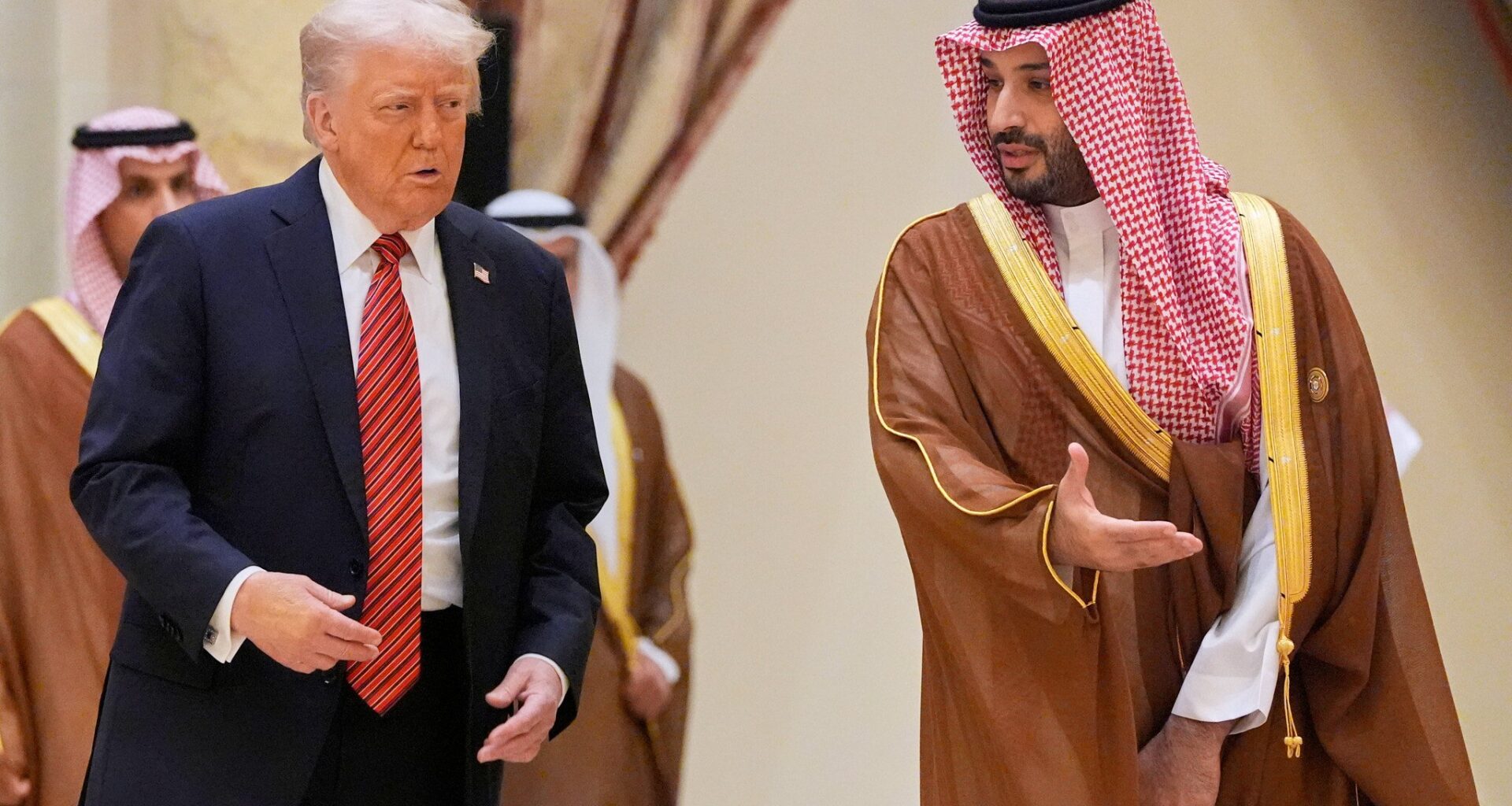
US President Donald Trump has been talking up the prospects of Saudi Arabia agreeing to normalize ties with Israel, but it is unlikely to happen when Saudi Crown Prince Mohammed bin Salman visits the White House next week.
The establishment of diplomatic relations between Israel and Saudi Arabia after decades of enmity could shake up the political and security landscape in the Middle East, potentially strengthening US influence in the region.
Trump said last month he hoped Saudi Arabia would “very soon” join other Muslim countries that signed the 2020 Abraham Accords normalizing ties with Israel.
But Riyadh has signaled to Washington through diplomatic channels that its position has not changed: it will sign up only if there is agreement on a roadmap to Palestinian statehood, two Gulf sources told Reuters.
The intention is to avoid diplomatic missteps and ensure alignment of the Saudi and US positions before any public statements are made, they said. One said the aim was to avoid any confusion at or after the White House talks on November 18.
Get The Times of Israel’s Daily Edition
by email and never miss our top stories
By signing up, you agree to the terms
The Crown Prince, widely known as MBS, “is not likely to entertain any possible formalizing of ties in the near future without at least a credible pathway to a Palestinian state,” said Jonathan Panikoff, former deputy US national intelligence officer on the Middle East.
MBS is likely to try to use his influence with Trump to seek “more explicit and vocal buy-in for the establishment of a sovereign Palestinian state,” said Panikoff, who is now at the Atlantic Council think tank in Washington.
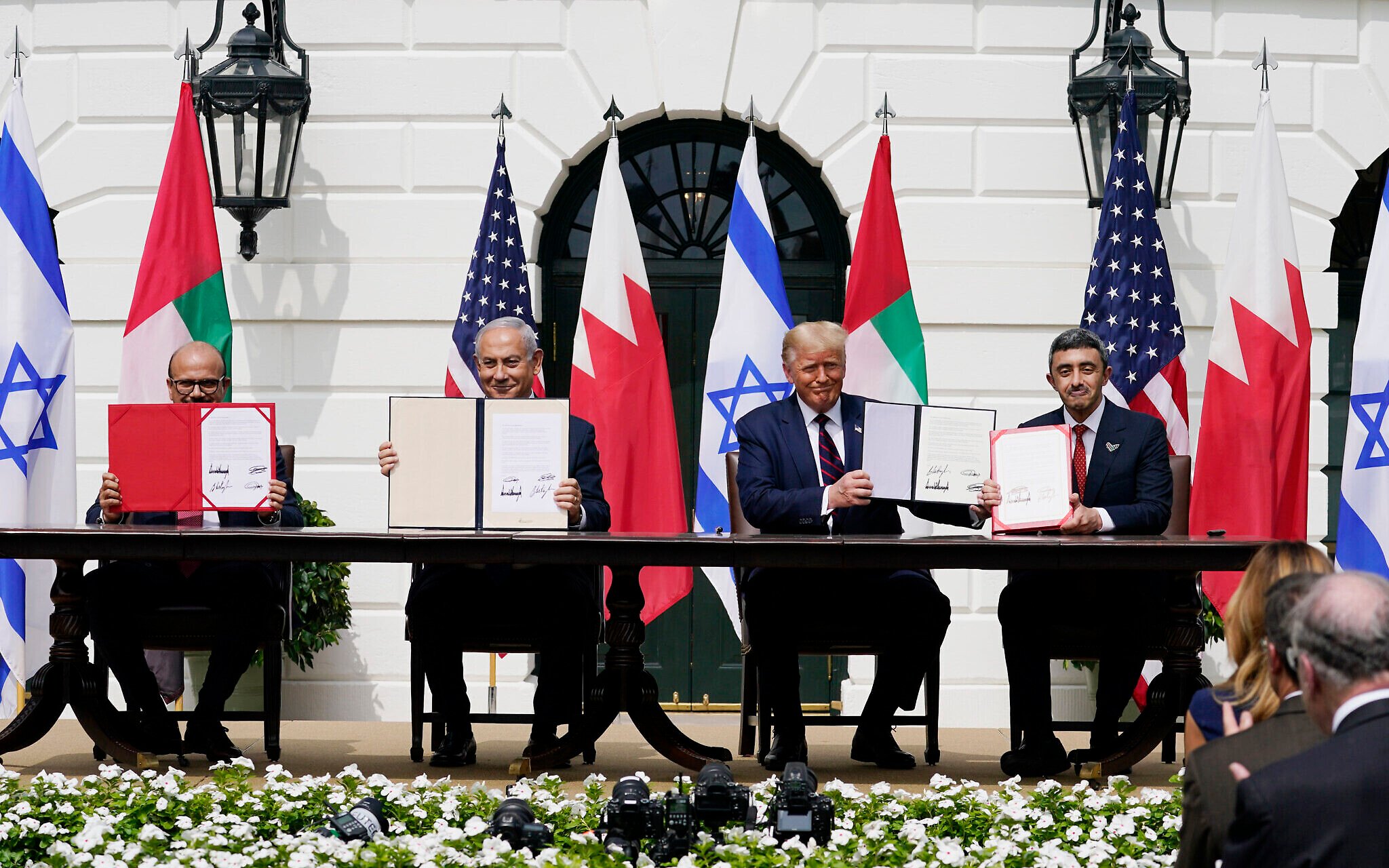
From left, Bahrain Foreign Minister Khalid bin Ahmed Al Khalifa, Prime Minister Benjamin Netanyahu, US President Donald Trump, and United Arab Emirates Foreign Minister Abdullah bin Zayed al-Nahyan, sit during the Abraham Accords signing ceremony on the South Lawn of the White House, in Washington, September 15, 2020. (AP Photo/Alex Brandon)
Trump’s upbeat comments on Abraham Accords
Next week’s visit is the crown prince’s first to Washington since the 2018 killing of Washington Post columnist Jamal Khashoggi, an MBS critic whose murder in the Saudi consulate in Istanbul caused global outrage. MBS denied direct involvement.
The United Arab Emirates, Bahrain and Morocco have already normalized ties with Israel under the Abraham Accords, and Trump has said he expects an expansion of the accords soon.
“We have a lot of people joining now the Abraham Accords, and hopefully we’re going to get Saudi Arabia very soon,” he said on November 5, without offering a timeline.
In a television interview broadcast on October 17, he said, “I hope to see Saudi Arabia go in, and I hope to see others go in. I think when Saudi Arabia goes in, everybody goes in.”
But the agreement signed by the United Arab Emirates, Bahrain and Morocco sidestepped the issue of Palestinian statehood.
The two Gulf sources said Riyadh had signaled to Washington that any move to recognize Israel must be part of a new framework, not just an extension of any deal.
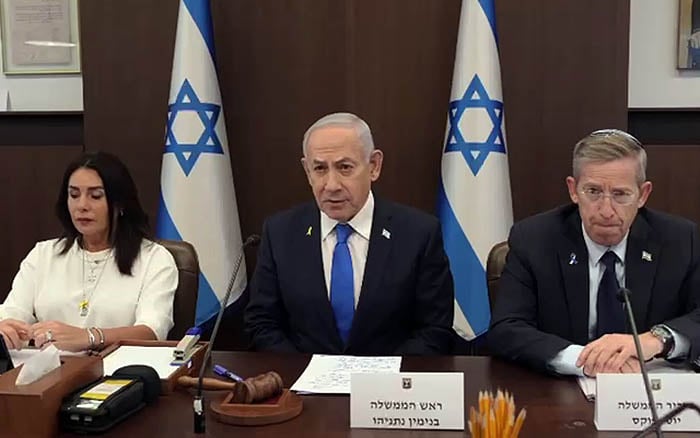
Prime Minister Benjamin Netanyahu (C) leads a cabinet meeting in Jerusalem, November 9, 2025. (Screenshot/GPO)
For Saudi Arabia — the birthplace of Islam and custodian of its two holiest sites, Mecca and Medina — recognizing Israel would be more than just a diplomatic milestone. It is a deeply sensitive national security issue tied to resolving one of the region’s oldest and most intractable conflicts.
Such a step would be hard to take when Arab public mistrust of Israel remains high over the scale of its military offensive during the war against Hamas in Gaza, despite a fragile ceasefire in the conflict that was caused by the terror group’s invasion of southern Israel on October 7, 2023.
Saudi Foreign Ministry official Manal Radwan has called for a clear, time-bound Israeli withdrawal from the Gaza Strip, the deployment of an international protection force, and the empowerment and return of the Palestinian Authority to Gaza.
These steps, she said, are essential to the establishment of a Palestinian state — the prerequisite for regional integration and the implementation of a two-state solution to the Israeli-Palestinian conflict.
While much of the international community backs the PA replacing Hamas as the governing body in Gaza, Israel has maintained an effective veto over the transition, claiming that the Ramallah-based body is irredeemably corrupt and encourages violence against Israel.
With Prime Minister Benjamin Netanyahu staunchly opposed to Palestinian statehood or a role for the PA in governing Gaza, Saudi Arabia sees no immediate prospect of satisfying Trump’s demand that it normalize ties with Israel, the sources told Reuters.
Progress on that front depends on concessions neither Washington nor Israel is currently prepared to make, Saudi officials say.
Trump and crown prince set to seal defense pact
Saudi officials are intent on steering the Trump-MBS meeting toward defense cooperation and investment, wary that the politically charged issue of normalization of ties with Israel could overshadow the agenda.
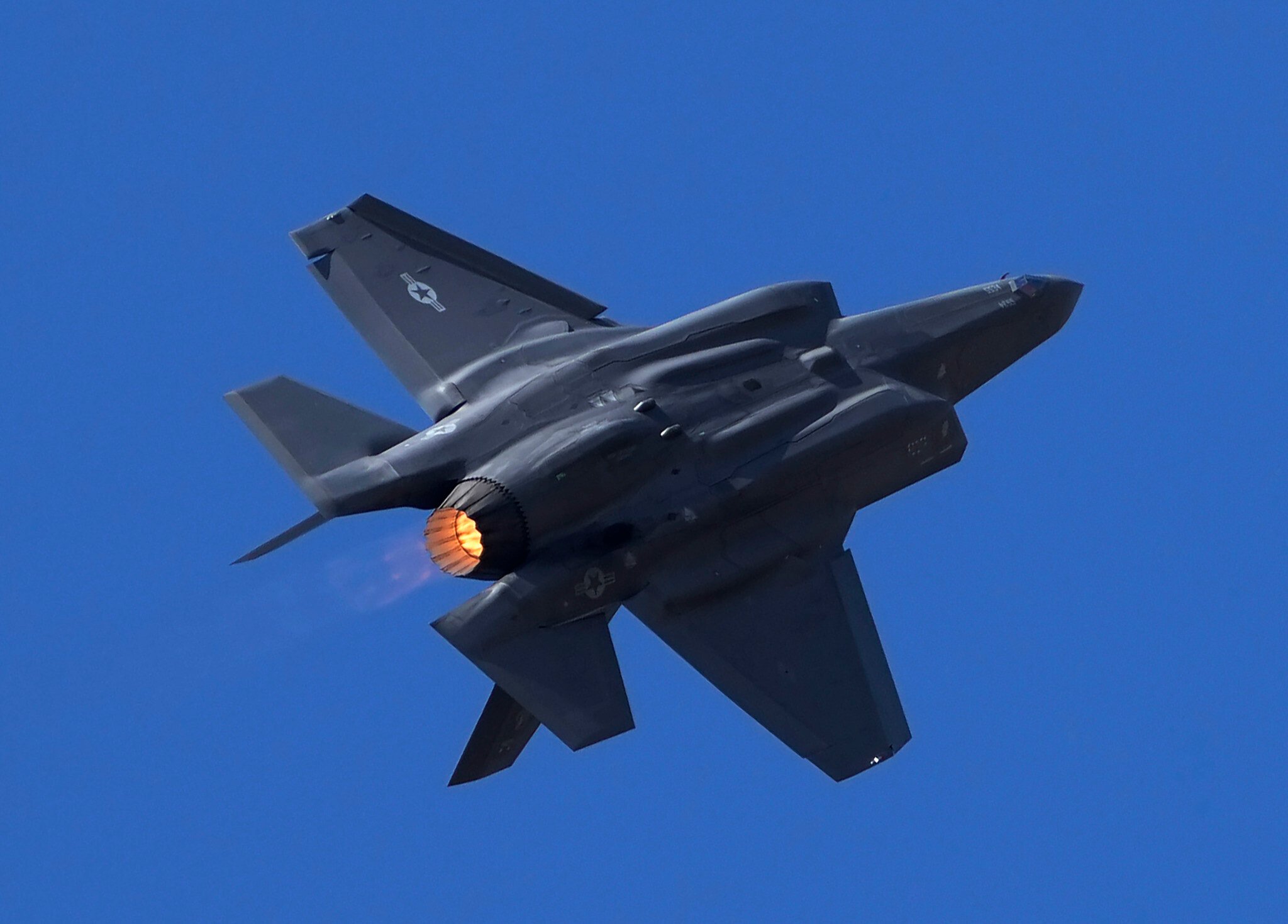
US Air Force fighter aircraft F-35 performs aerobatic maneuvers on the second day of the Aero India 2025, a biennial event, at Yelahanka air base in Bengaluru, India, February 11, 2025. (AP Photo/Aijaz Rahi)
The meeting is expected to seal a pivotal defense pact defining the scope of US military protection for the de facto ruler of the world’s top oil exporter, and to cement America’s military footprint in the Gulf.
The prospective deal has, however, been scaled back.
Two other Gulf sources and three Western diplomats said the defense deal falls short of the full, Congress-ratified treaty Riyadh once sought in exchange for the long-promised normalization of ties with Israel.
The agreement, loosely modeled on an arrangement with Qatar that was established through an executive order in September, expands cooperation to include cutting-edge technology and defense.
Riyadh, according to the two Gulf sources, pushed for provisions to allow future US administrations to elevate the pact to a full treaty — a safeguard to ensure continuity for a non-binding pact, vulnerable to reversal by future presidents.
“It’s not the treaty they want, they might not see it as perfect, but it’s a stepping stone (to a full treaty),” said David Makovsky, a fellow at the Washington Institute, where he directs a project on Arab-Israeli relations.
The linkage between the defense pact, normalization with Israel, and Palestinian statehood has produced a complex negotiating equation, pushing Riyadh and Washington to settle for a limited defense deal in the absence of progress on the other two tracks, the Gulf sources and Western diplomats said.
That compromise, they say, could eventually evolve into a full treaty if normalization advances.
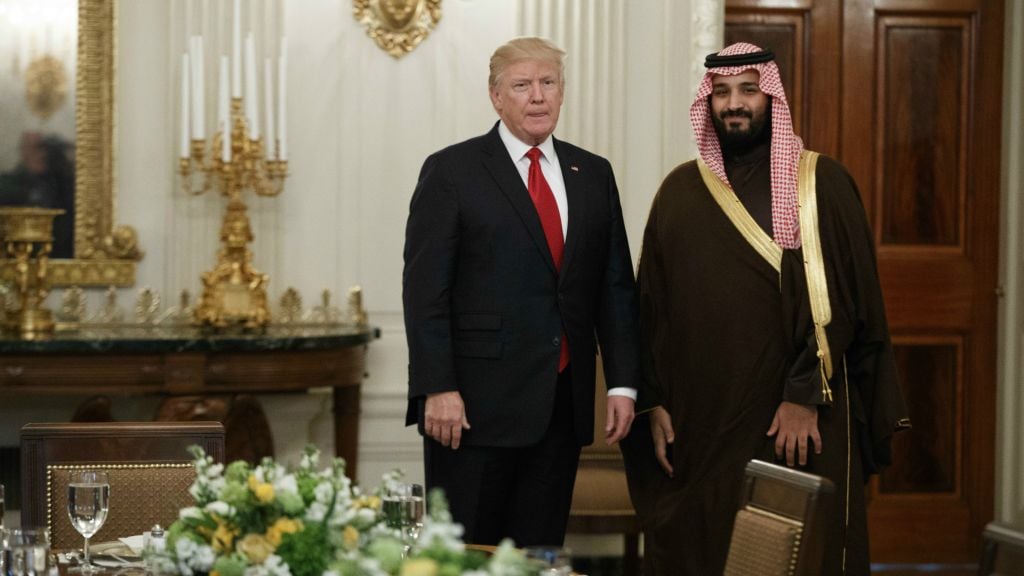
In this Tuesday, March 14, 2017 photo, US President Donald Trump stands with Saudi Defense Minister and Deputy Crown Prince Mohammed bin Salman before lunch in the State Dining Room of the White House in Washington. (AP Photo/Evan Vucci)
“The Saudi-American negotiations have undergone a fundamental shift in environment and context following the developments in Gaza since October 7,” said Abdulaziz Sager, head of the Saudi-based Gulf Research Institute think tank.
He said the direct linkage between normalization of ties with Israel and Palestinian statehood remained, but Riyadh now wanted Saudi national security requirements addressed separately.
“The Saudi position is clear: meeting the Kingdom’s national security demands will help shape its broader stance on regional issues, including the resolution of the Palestinian-Israeli conflict,” he said.
Threat from Iran receding
A NATO-style defense pact appears a distant prospect, given the shifting regional calculus and the political hurdles in Washington.
Iran, the main threat once driving Riyadh’s pursuit of binding US guarantees, has been strategically weakened over the past year by Israeli strikes on its nuclear and military infrastructure.
Tehran’s proxies — the Hezbollah terror group in Lebanon, Hamas in Gaza and the Houthi rebels in Yemen — have also suffered heavy blows.
With pressure from Iran easing, the appetite for a treaty requiring two-thirds congressional approval has diminished, especially in the absence of normalization with Israel.
The two Gulf sources said such a pact would likely come with conditions, including curbs on Saudi Arabia’s expanding economic and technology ties with China, complicating Riyadh’s drive to balance strategic autonomy with US security guarantees.
The current deal would expand joint military exercises, deepen cooperation between US and Saudi defense firms, and include safeguards to limit Riyadh’s military-industrial ties with China, the sources said.
It would also fast-track advanced US weapons sales to the kingdom, bypassing the delays and political hurdles that have stalled previous deals.