
Most of the Israel Defense Force’s top-tier investigations into its failures on and ahead of Hamas’s October 7, 2023, terror onslaught are inadequate, with some considered to be unacceptable, a panel of former senior military officers has determined.
Meanwhile, IDF Chief of Staff Lt. Gen. Eyal Zamir said on Monday that while the military was fully responsible for the failures on October 7, to reach full conclusions, an “external” commission of inquiry must be established, something that the government has resisted forming for over two years. Zamir notably avoided calling for a state commission of inquiry, which the government opposes, despite surveys consistently showing an overwhelming majority of the public supports it.
Zamir also said that he would make “personal decisions” regarding senior officers based on the findings of the external panel of experts, including potential dismissal from the military.
The findings of the panel of experts were presented on Monday to the IDF’s top brass, a day after Defense Minister Israel Katz was also shown the conclusions. Reporters were also shown the findings on Monday.
The IDF’s October 7 investigations were led by former chief of staff Herzi Halevi. In one of his first decisions upon entering the role in March, Zamir appointed the external panel to further examine those probes.
Get The Times of Israel’s Daily Edition
by email and never miss our top stories
By signing up, you agree to the terms
The panel was tasked with evaluating the IDF’s top-level investigations, overseeing implementation of findings, and recommending repeat investigations or additions to probes if necessary.
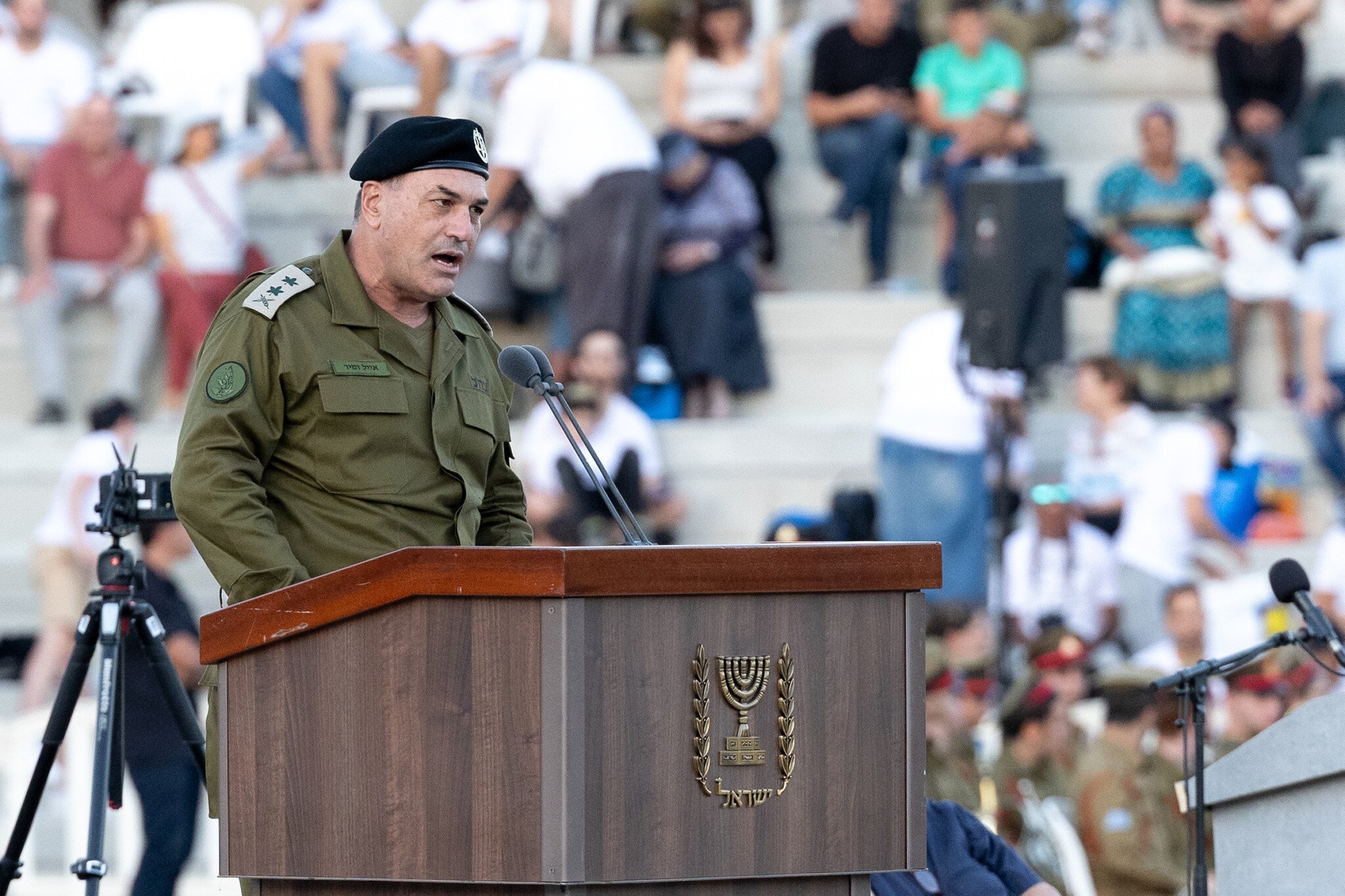
IDF Chief of Staff Eyal Zamir at the graduation of an IDF officers’ course, October 30, 2025. (Noam Revkin Fenton/FLASH90)
Maj. Gen. (res.) Sami Turgeman, a former head of the Southern Command, headed the panel, which included ex-Navy chief Vice Adm. (res.) Eli Sharvit, ex-IAF chief Maj. Gen. (res.) Amikam Norkin, and other retired senior officers.
The IDF’s investigations at the General Staff level, the top command of the military, included four main subjects: the development of the IDF’s perception of Gaza over the past decade; the IDF’s intelligence assessments of Hamas from 2014 until the outbreak of the war; the intelligence and decision-making process on the eve of October 7; and the command and control and orders given during battles between October 7 and 10.
These probes were released for publication by the military in February. In addition, the IDF investigated 41 separate battles and major incidents that took place during the October 7 attack, most of which have since been released for publication.
In total, the panel reviewed 24 General Staff-level investigations, along with one tactical investigation — the attack on the Nova music festival, due to its massive scope and context for the top-tier probes.
Additionally, the team examined all of the investigations together “from a systemic and integrative perspective,” the military said, something that had not been done until now.
The panel led by Turgeman did not, however, examine the relationship and interface between the IDF and the political echelon, nor between the military and other security bodies such as the Shin Bet and Israel Police.
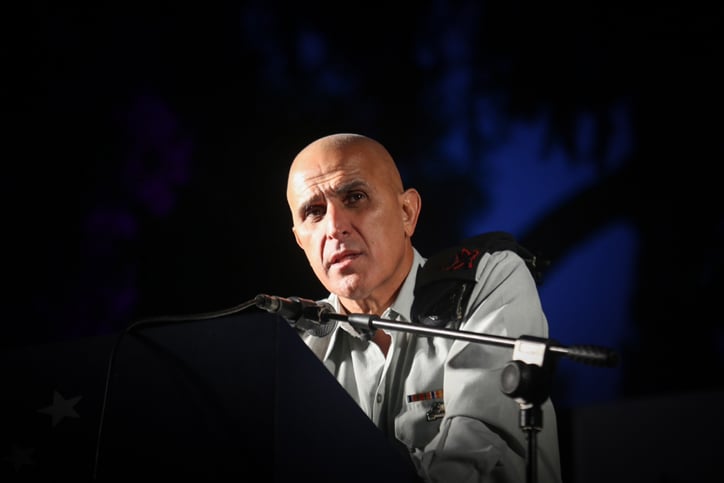
Maj. Gen. Sami Turgeman speaks at an event for Israeli reserve soldiers at the Interdisciplinary Center in Herzliya on May 8, 2016. (Flash90)
In addition to all the information in the investigations, the IDF had called on any commander, in the standing army or reserves, who thought they had information that was not included in the original probes to come forth. In total, some 80 such commanders came forth, and the team also interviewed another 70 individuals who held positions relevant to the events on October 7 — including former generals and chiefs of staff.
Of the 24 top-tier investigations, Turgeman’s team found 10 to be “green,” meaning they were “professional, comprehensive, and enable learning and progress.” The findings of these investigations are set to be implemented in the IDF.
Nine of the General Staff-level probes, along with the Nova festival investigation, were classified as “orange,” meaning that they “provide a solid factual foundation, but do not identify the points of failure or the necessary changes.” These investigations require various additions before their findings can be implemented in the military.
And the last five were classified as “red,” meaning “unsatisfactory.”
These investigations — which included the IDF’s strategy vis-à-vis Gaza, the operational planning in the General Staff, the decision-making process on the night between October 6 and 7, and the actions of both the Operations Division and the Israeli Navy on the morning of October 7 — will be reinvestigated or undergo major additions before their findings can be used by the military.
For example, the Gaza strategy and Operations Division investigations were listed as “red” because the commanders who led those probes were not suited for the job, according to Turgeman’s team.
In the case of the Operations Division, the officer who led the probe was relatively junior. In the case of the Gaza strategy probe, the commander lacked the relevant experience. Therefore, the panel found those probes to be unprofessional and missing key information.
The Operations Division’s investigation was also listed as “red” because it began at 6:29 a.m. on October 7, 2023 — when Hamas’s attack started — and did not evaluate any prior processes in the unit. Former Operations Division commander Maj. Gen. (res.) Yitzhak Turgeman was appointed to investigate what occurred in the unit ahead of October 7.
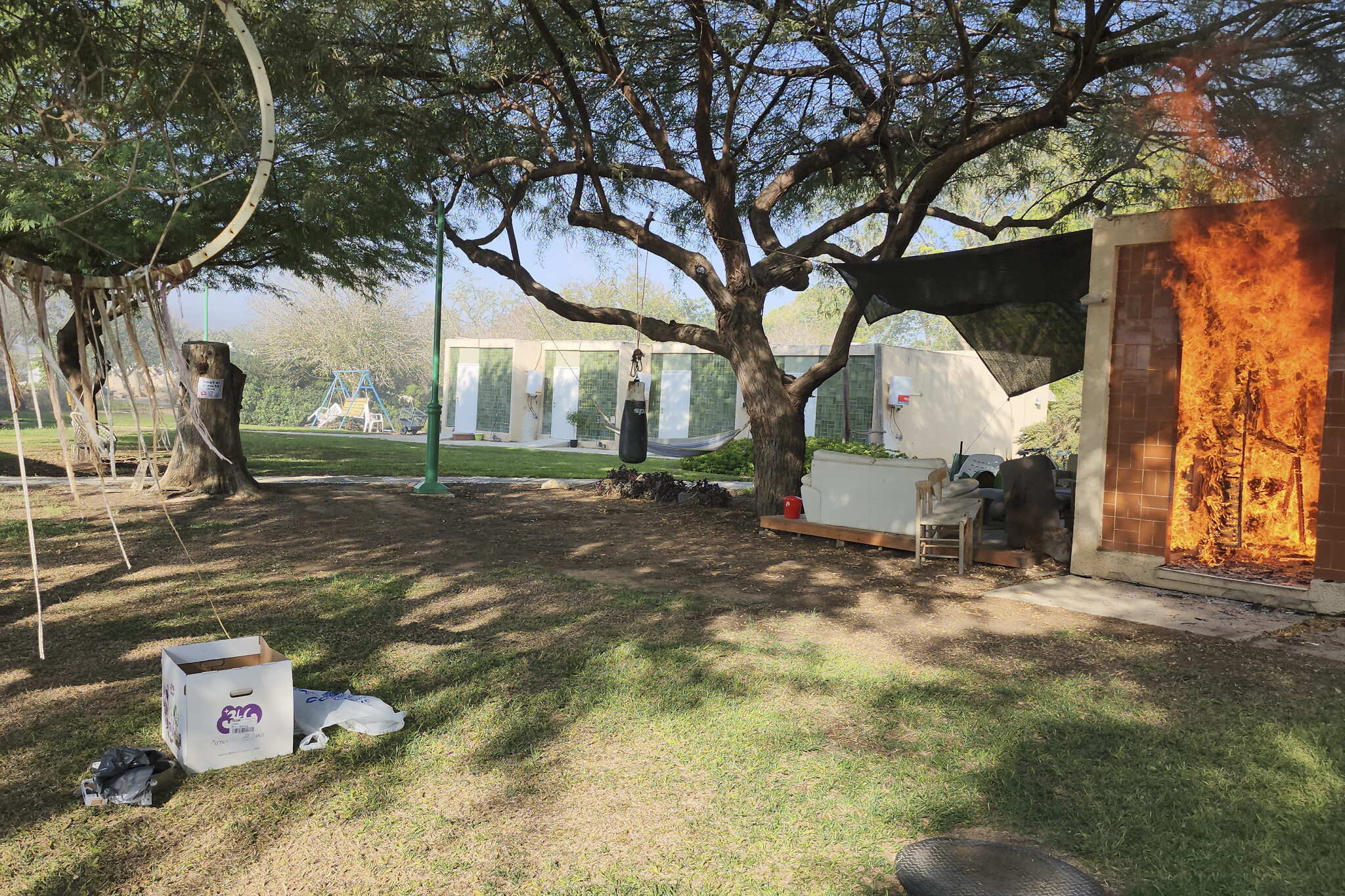
A house is on fire in Kibbutz Nir Oz during an attack by Palestinian terrorists from the Gaza Strip on October 7, 2023. (AP/Hassan Eslaiah)
The probe into the decision-making process on the night between October 6 and 7 was also not considered up to the standards of a military probe. However, in contrast, the probe that looked into the intelligence on the eve of October 7 was listed as “green.”
While the Navy’s investigation provided an accurate and detailed account of what happened on the morning of October 7, it was listed as “red” because it had no conclusions that could be implemented, Turgeman’s team found.
Similarly, the operational planning in the General Staff investigation also had no conclusions that could be implemented in the military, according to the panel.
For each investigation that the panel reviewed, it prepared a “detailed professional assessment of its quality and attached concrete recommendations,” the military said.
The military said that Turgeman’s team found that all of the commanders involved in the investigations “acted with integrity and honesty, with the intention of conducting a truthful investigation,” and that there was no malice in the inadequate or unsatisfactory probes.
In addition, the panel found that several topics were not investigated at all by the military as part of the probes, which it recommended should be.
Chief among them was the IDF’s handling of intelligence reports received since 2018, which outlined Hamas’s intent to launch a wide-scale attack against Israel, known as “Jericho’s Walls.”
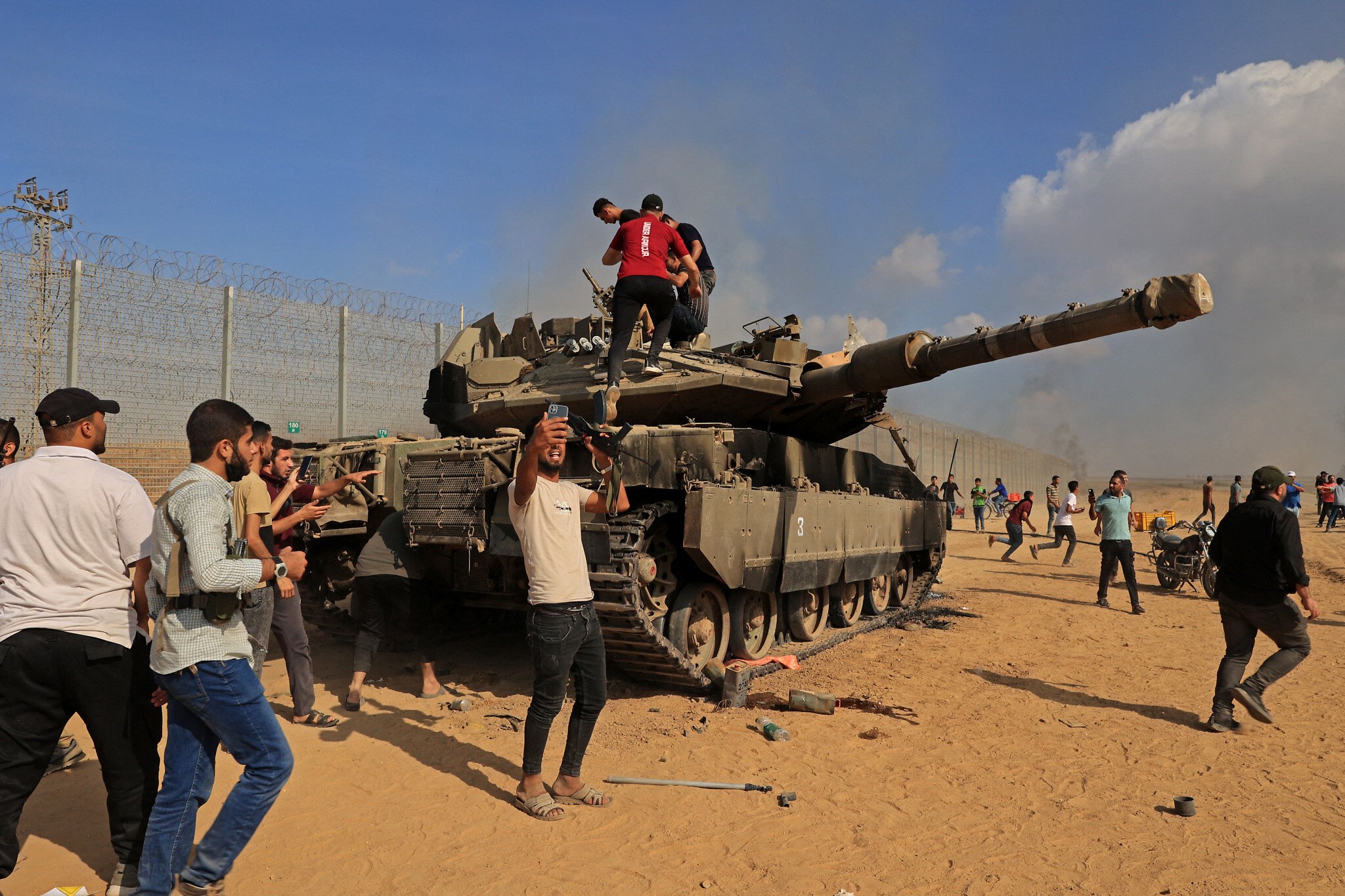
Palestinian terrorists take control of an Israeli tank after crossing the border fence with Israel from Khan Younis in the southern Gaza Strip on October 7, 2023. (Said Khatib / AFP)
The military had, over the years, dismissed Hamas’s plans as unrealistic and unfeasible, all while the terror group continued its preparations for October 7. None of the top-level investigations dug deeper into the issue.
Additionally, Turgeman’s team recommended that the Coordinator of Government Activities in the Territories (COGAT) — a Defense Ministry body that is headed by a military general and responsible for liaison with the Palestinians — also conduct a formal investigation, which it has not until now.
The panel noted other topics that had not been investigated included the IDF’s cooperation with the police and Shin Bet, the readiness of the Ground Forces, and the military’s preparedness for a multifront surprise war before October 7.
After hundreds of hours of work, Turgeman’s team wrote up a 140-page document, which defined the following as the main causes for the military’s failures on October 7:
A gap between the military’s strategic and operational concepts of the Gaza Strip and Hamas, and the reality;
An intelligence failure to understand the reality, to understand the threat, and to convey the information;
A lack of attention to the “Jericho Wall” plan;
Organizational and operational cultures characterized by flawed norms that became entrenched over the years;
A fundamental and ongoing gap, at all command levels and among professional bodies, between the reference scenario and the operational response;
And flawed decision-making and use of force processes on the night between October 6 and 7.
The team also determined that the surprise the military faced on October 7 “did not emerge from an absence of information, but, on the contrary, on the night of October 7, a variety of intelligence had accumulated which, had it been professionally analyzed, could and should have led to a warning of a significant action.”
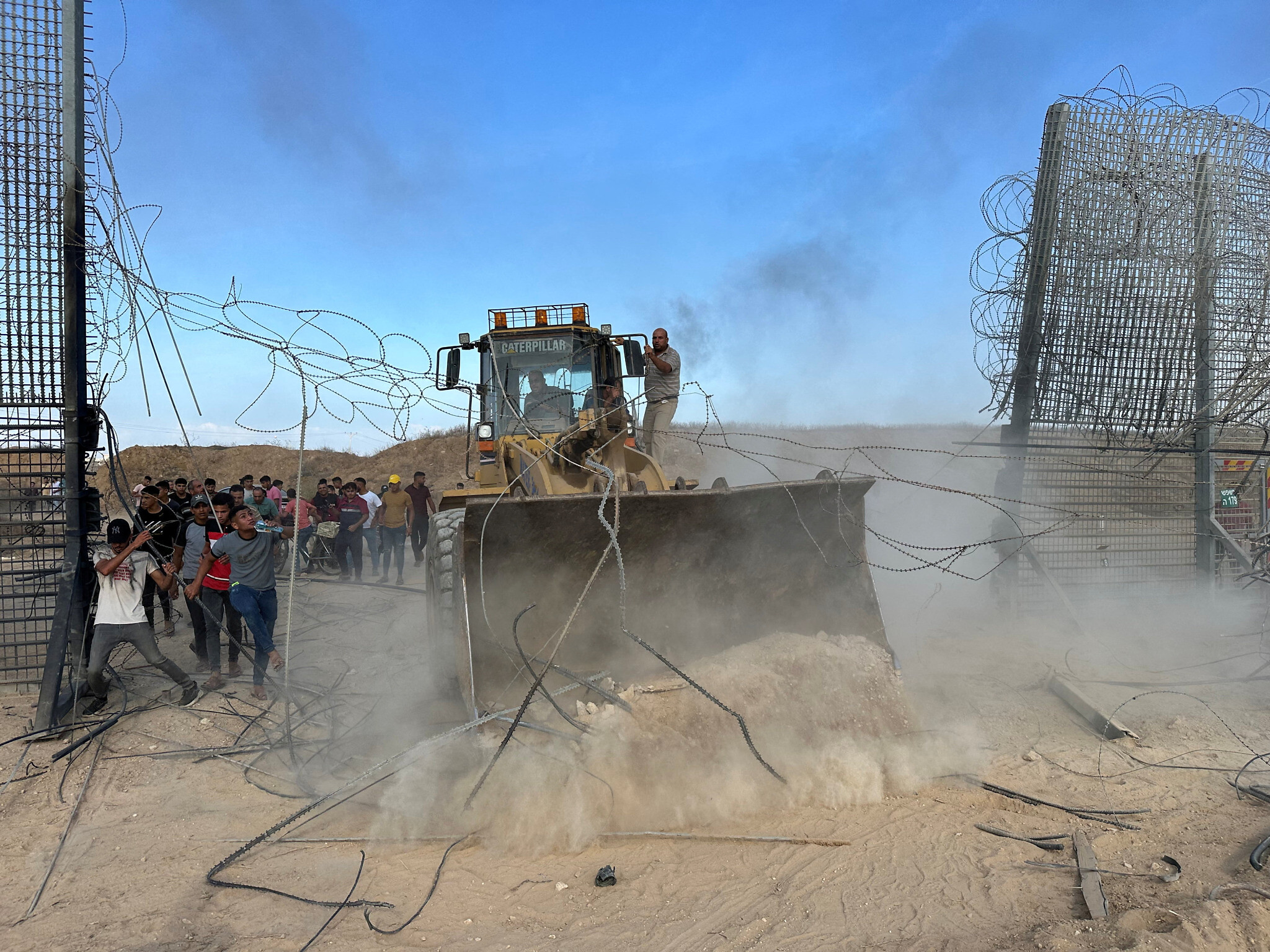
Palestinians break into the Israeli side of the Israel-Gaza border fence during a Hamas-led invasion and slaughter in southern Israel, October 7, 2023. (Reuters/Mohammed Fayq Abu Mostafa)
Turgeman’s team noted that during 2023, senior military officials warned political officials, including Prime Minister Benjamin Netanyahu, that Israel’s enemies were perceiving “internal weakness” in Israeli society over the government’s planned judicial overhaul. While the IDF’s probes have determined this was not the reason for Hamas launching its attack — which it had planned to launch years prior — the military did not adjust its level of alert or deployments in light of the warnings.
“Most of the factors explaining the failure, as formulated by the team, span several years and multiple systems, which, in the team’s view, indicates a longstanding systemic and organizational failure,” the military said.
With the publication of the team’s findings, Zamir said that he supported an external commission of inquiry into the failures of October 7.
“The expert team’s report presented today is a significant step toward a comprehensive understanding, one required of us as a society and as a system,” Zamir said in remarks released by the IDF.
“However, to ensure that such failures never happen again, a broader understanding is needed, one that includes inter-organizational and inter-level interfaces that have not yet been examined,” he said.
“For this purpose, a wide and comprehensive systemic investigation is now required,” Zamir added.
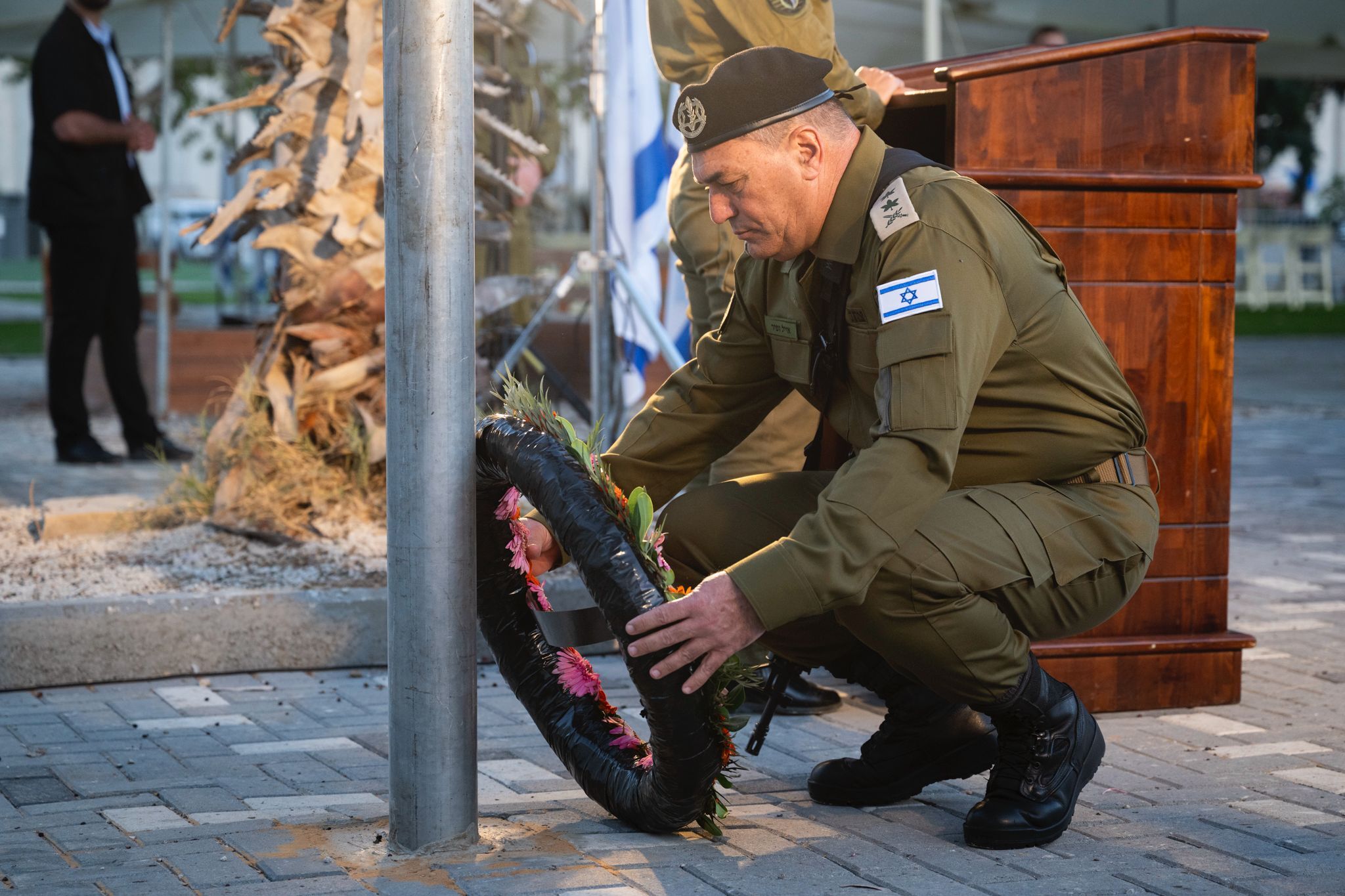
IDF Chief of Staff Lt. Gen. Eyal Zamir lays a wreath during a ceremony at the Nahal Oz base, marking the Hebrew anniversary of the October 7 onslaught, October 16, 2025. (Israel Defense Forces)
Despite polls consistently showing a substantial majority of Israelis want a state commission of inquiry to be established, Netanyahu and his coalition have rejected attempts to establish one. They say a commission should only be set up after the war is concluded, and reject a state commission appointed by the Supreme Court chief, claiming it would be biased against them.
Zamir is also set to rule on “personal decisions” regarding officers involved in the failures, potentially including the current chief of the Intelligence Directorate, Maj. Gen. Shlomi Binder, who on October 7 headed the Operations Division. Binder’s appointment to the intel chief role was considered controversial and was met with protests from some lawmakers and the families of some fallen soldiers.
The panel of experts was not given a mandate to recommend personal decisions against officers; however, Turgeman told Zamir in a recent meeting that “an event of this magnitude cannot pass without personal conclusions.”
However, Zamir has yet to decide on the matter.