
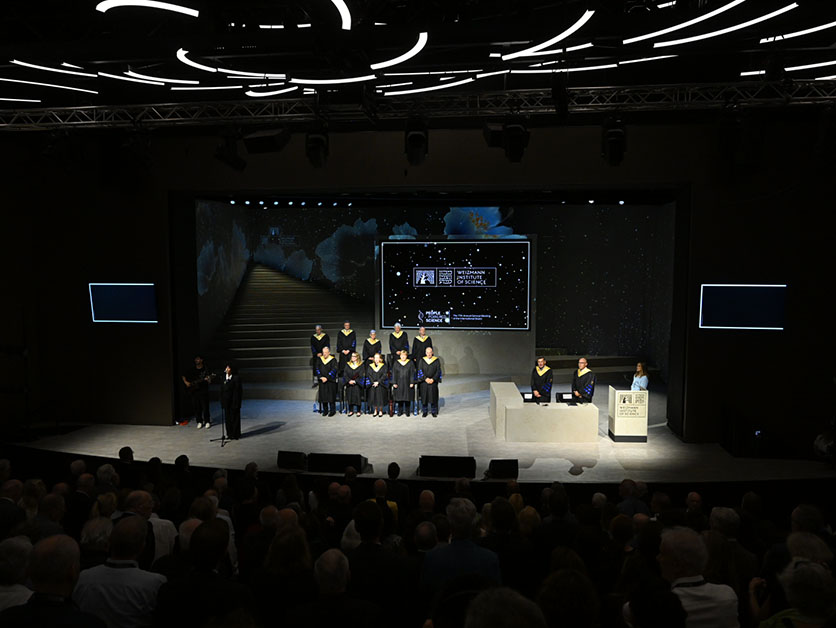
“The last two years have been among the most difficult in Israel’s history, and the last several months – the most challenging moment in the history of the Weizmann Institute. Now, we are at a turning point – to what we believe is a better, brighter and promising future.” With these words, Weizmann Institute President Prof. Alon Chen began his address this evening (Monday) to the recipients of the Institute’s 2025 honorary Doctor of Philosophy (honoris causa) degrees. “It is precisely at such moments that we seek light and optimism,” he said. “This evening, we are doing just that, by celebrating seven outstanding individuals whose achievements are truly unique, and who stand as models for others.”
The ceremony for the conferment of the degrees – the Weizmann Institute of Science’s highest honor – marked the culmination of the Institute’s 77th Annual General Meeting of the International Board, which opened yesterday (Sunday) on the Rehovot campus under the title People-Powered Science. In a year when a targeted attack on the Institute and on science took a heavy toll, the meeting was dedicated to our most precious resource: the talented scientists who drive discovery forward and embody the Institute’s spirit of innovation and resilience. At an event devoted entirely to the human dimension of science, the conferment of honors upon seven leaders from diverse fields – ranging from politics and statesmanship to evolutionary genomics – took on special significance.
The recipients of the Weizmann Institute of Science’s PhD honoris causa for 2025 are:
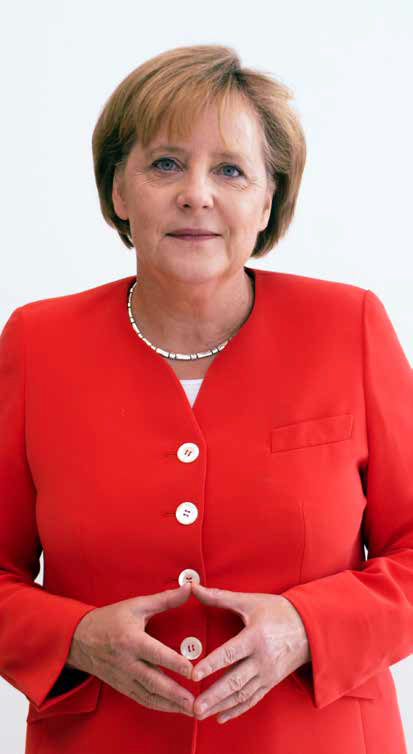
Former Federal Chancellor Dr. Angela Merkel has played a defining role in shaping modern Europe and the global political landscape with a blend of scientific precision, pragmatic leadership, and moral conviction. A trained physicist and internationally respected stateswoman, she has brought analytical depth and strategic vision to public service, guiding Germany through pivotal historical moments and reinforcing its role as a regional and global beacon of stability, progress, and international collaboration.
Born in Hamburg and raised in the former German Democratic Republic, Dr. Merkel studied physics at the University of Leipzig, earning a doctorate in quantum chemistry from the Central Institute for Physical Chemistry of the Academy of Sciences in East Berlin. She worked as a research scientist until the reunification of Germany, when she entered public service.
Elected to the Bundestag in 1990, she held key ministerial roles before becoming the leader of the Christian Democratic Union party in 2000. In 2005, she became the first woman elected Germany’s Chancellor, a position she held for 16 years, making her one of the longest-serving political leaders in modern European history.
Throughout her tenure, Dr. Merkel navigated Germany through economic crises, shaped the European Union’s response to global challenges, reinforced multilateral alliances, and strengthened the EU’s cohesion. A pragmatic leader and strong advocate for transatlantic ties, she played a key role in economic stabilization during the Eurozone crisis and championed forward-looking policies to address climate change, emerging as a central figure in high-stakes international negotiations.
Dr. Merkel is a steadfast supporter of Israel and a powerful advocate for Holocaust education and remembrance. Under her leadership, Germany significantly deepened its bilateral relations with Israel, expanding military aid and partnerships in defense, technology, and scientific research. In 2008, she became the first German Chancellor to address the Knesset, declaring her commitment to Israel’s security and the fight against antisemitism.
Her leadership reflects a belief in science not only as a tool for innovation but as a vehicle for peace, progress, and global solidarity. Dr. Merkel’s contributions have been recognized worldwide, including with the 2014 Israeli Presidential Medal of Distinction – the country’s highest civilian honor. She is also the recipient of the Charlemagne Prize, the Nansen Refugee Award, the Grand Cross of the French Legion of Honor, the United States Presidential Medal of Freedom, and over 20 honorary doctorates from universities worldwide. In 2022, she was awarded the Félix Houphouët-Boigny Peace Prize by UNESCO in recognition of her humanitarian leadership.
Across science, governance, and humanitarian values, Dr. Merkel has helped lay the groundwork for a more resilient and enlightened world. Her legacy continues to inspire others to build on that foundation through philanthropic support that shapes the future of science and society.
The honorary degree is awarded to Dr. Merkel in recognition of her unparalleled contributions to global diplomacy and international partnerships; her principled statesmanship, defined by vigorous commitment to democracy and accountability, and political leadership in Germany and the European Union; and her solidarity and friendship with Israel, determined efforts to combat antisemitism, and pivotal role in deepening the bonds between Germany and the Jewish people.
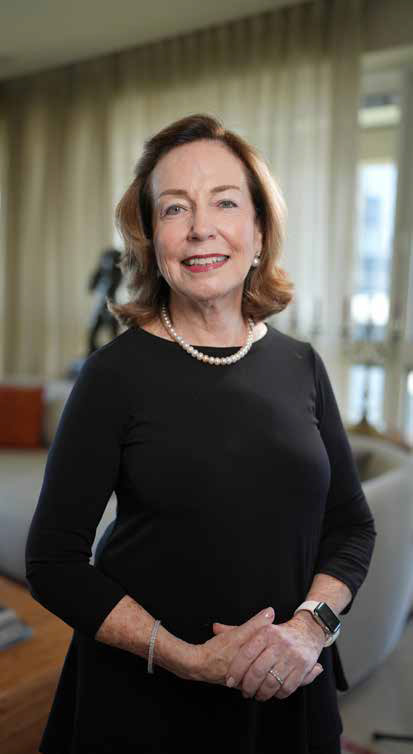
Ilana Ronat-Mantoux has demonstrated a profound and enduring commitment to advancing Israeli science, forming a meaningful partnership with the Weizmann Institute of Science and its researchers alongside her husband, Pascal Mantoux, a 2015 PhD honoris causa recipient.
A graduate of The Hebrew University of Jerusalem with a background in political science, sociology, and healthcare, Mrs. Ronat-Mantoux has dedicated her career to both academic and social causes. Early on, she was a teacher at the Hebrew Gymnasium of Jerusalem and a research assistant at the Hebrew University.
Her commitment deepened through public service, first as a special assistant to the Head of the Rehabilitation Wing at the Ministry of Defense, which deals with wounded service members in Israel, and later as Head of Human Resources Planning in the Cardiology Center at the Tel Aviv Sourasky Medical Center (Ichilov). Over 15 years, she was instrumental in shaping the department’s organizational framework, fostering a more effective, human-centered medical environment. During this time, she also developed a keen interest in personalized medicine, stem cell technology, and cancer research.
Together with her husband, Mrs. Ronat-Mantoux’s longstanding philanthropic endeavors focus on science, medicine, and culture in Israel and France. The couple established a cancer outpatient clinic at the Sourasky Medical Center, a chest intensive care unit, the Hemato-Oncological Center, the Department of Bone Marrow Transplant and the Interventional Electrophysiological Unit.
In addition to her philanthropic efforts in healthcare, Mrs. Ronat-Mantoux is also a member of the Board of The Israeli Opera, supporting the advancement of culture and the arts.
At the Weizmann Institute of Science, Ilana and Pascal Mantoux’s impact is far-reaching, spanning multiple major research initiatives. Their support enables pioneering research that is propelling breakthroughs across various fields, including bioinformatics, stem cells, and artificial intelligence. Their vision also helped forge a vital bridge between Weizmann Institute scientists and clinical experts at the Sheba Medical Center, translating fundamental discoveries into medical applications and facilitating international scientific collaborations.
In recognition of her visionary leadership and deep engagement, Ilana Ronat-Mantoux was elected as a Life Member of the Institute’s International Board in 2022. Ilana and Pascal remain steadfast supporters of the Institute through the Israeli Friends Association and continue to shape the future of science and health on a national level.
The honorary degree is awarded to Mrs. Ronat-Mantoux in recognition of her deep devotion to public health, reflected both in her professional pursuits and philanthropic dedication to advancing innovative scientific and clinical collaborations, including in personalized medicine and bioinformatics; her instrumental work at the crossroads of science and healthcare and in propelling artificial intelligence research; and her visionary support of the Weizmann Institute of Science.
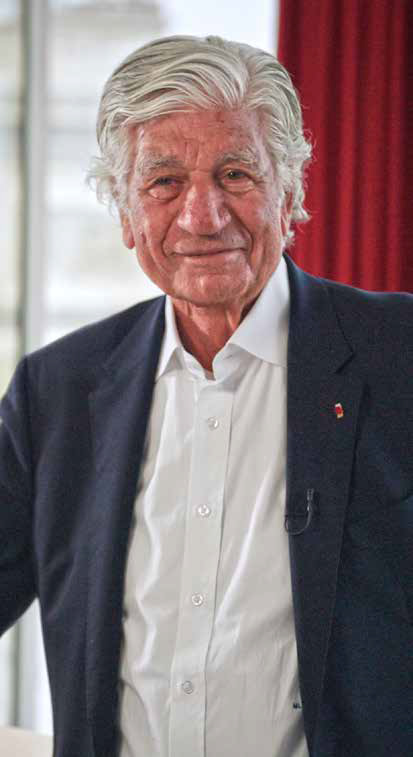
Maurice Lévy is a visionary business leader and a committed humanitarian who has dedicated his life not only to transforming the global communications landscape but also to shaping a better, more connected future through philanthropy, advocacy of science and education, and international collaboration.
Born in 1942 in Morocco, Mr. Lévy earned a degree in computer science from New Jersey City University. He joined Publicis Groupe as Director of IT in 1971, bringing technological expertise to an industry on the cusp of the digital revolution. In 1984, he became Chairman of Publicis Conseil, the Group’s founding agency, and in 1987, he was appointed CEO, a role he held for three decades. Since 2017, he has served as Chairman of the Group’s Supervisory Board.
During his tenure, Mr. Lévy oversaw the reshaping of Publicis into one of the world’s foremost communications groups. He spearheaded the group’s expansion into the digital sphere, leading the 2006 acquisition of Digitas and later securing key deals with Google, Microsoft, and other major players. His vision of a digitally integrated, human-centered approach to advertising redefined the role of technology in this industry and shaped it on a global scale.
Beyond business, Mr. Lévy has dedicated himself to philanthropy and civil society. In 2005, he co-founded the Paris Brain Institute (ICM) at the Santé Sorbonne University, supporting scientific advancements in neurology. He served as Chairman of the International Board of Governors of the Peres Center for Peace and Innovation, and in 2021, joined the Advisory Board of the Genesis Prize Foundation. His leadership extends to several global organizations, including the World Economic Forum Foundation Board, the International Advisory Board of the Council on Foreign Relations, and the European Economic Community’s (EEC’s) “Comité des Sages” on digitalizing European cultural heritage.
As President of the Pasteur-Weizmann Council and immediate past President of Weizmann France, Mr. Lévy has significantly expanded the Weizmann Institute’s presence in France, fostering deeper engagement and philanthropic support. A Life Member of the Institute’s International Board, his philanthropy has fueled tangible outcomes, funding scientific breakthroughs and nurturing the next generation of researchers and educators.
A lifelong advocate for tolerance and peace, Mr. Lévy has spearheaded awareness efforts to combat antisemitism in France, collaborating with the International League Against Racism and Anti-Semitism on a nationwide campaign.
His exceptional contributions to communications, philanthropy, and social advocacy have been recognized through numerous distinctions and accolades, including the Anti-Defamation League’s International Leadership Award, the Peres Center’s Peace and Innovation Award, and France’s highest national distinctions: Grand Officer of the National Order of the Legion of Honor and Grand Officer of the National Order of Merit.
The honorary degree is awarded to Mr. Lévy in recognition of his exceptional achievements and transformative leadership in the fields of communications and digital innovation; his devotion to advancing science, education, and international cooperation, alongside resolute public advocacy for tolerance and inspiring efforts to combat antisemitism in France; and his many contributions to the growth and advancement of the Weizmann Institute of Science and Weizmann France through continuous leadership and philanthropy.
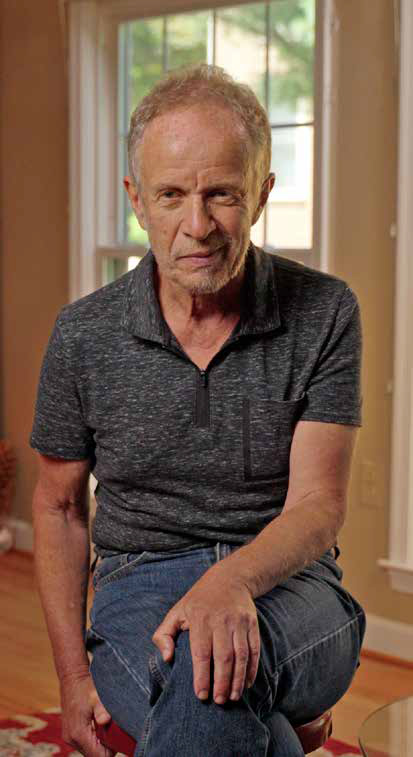
Dr. Eugene V. Koonin is a preeminent figure in evolutionary genomics and bioinformatics, whose groundbreaking research has profoundly shaped our understanding of genome evolution, biological diversity, and horizontal gene transfer. His pioneering theoretical innovations and computational methods have redefined key aspects of evolutionary biology, while his extensive studies on viral evolution and the origins of life continue to influence the field.
Born in Moscow, Dr. Koonin earned his PhD in molecular biology from Moscow State University in 1983. His early work at the USSR Academy of Medical Sciences in virus biochemistry and bacterial genetics laid the foundation for his transition into the field of computational biology. In 1991, he joined the National Center for Biotechnology Information (NCBI) at the US National Institutes of Health (NIH), where he currently serves as a Distinguished Investigator and leads the Evolutionary Genomics Group.
Dr. Koonin’s research spans the frontiers of evolutionary and computational biology. Through comparative genome analysis, he has developed influential methods that improve genome annotation and clarify how complex biological systems emerge and evolve, as well as the fundamental principles governing genome evolution across life forms. His book, The Logic of Chance: The Nature and Origin of Biological Evolution, is widely regarded as a cornerstone text in evolutionary biology.
A scientist of international renown, Dr. Koonin has forged meaningful academic connections worldwide and has significantly contributed to scholarly dialogue and the academic community at the Weizmann Institute of Science. In addition to his academic endeavors, Dr. Koonin has demonstrated a steadfast commitment to Israel, where he holds an adjunct professorship position at the University of Haifa. Following the tragic events of October 7, 2023, he traveled to Israel multiple times, volunteering on a farm as a personal act of solidarity.
Dr. Koonin’s exceptional scientific contributions have earned him widespread recognition. He is an elected member of the US National Academy of Sciences, the National Academy of Medicine, and the American Academy of Arts and Sciences. Among his many distinguished honors are the Benjamin Franklin Award for Open Access in the Life Sciences (2019), the American Society for Microbiology Award for Basic Research (2022), and a fellowship in the International Society for Computational Biology (2023).
Through his pioneering research and principled engagement, Dr. Koonin continues to shape the landscape of evolutionary biology while standing as a model of scientific excellence and human empathy – values that deeply align with the mission of the institutions he supports.
The honorary degree is awarded to Dr. Koonin in recognition of his landmark contributions to evolutionary genomics and bioinformatics, which have redefined the study of genome evolution and have shed new light on the origins of life; his enduring impact on the global scientific community, including at the Weizmann Institute of Science; and his genuine solidarity with Israel in times of crisis, exemplifying rare scientific vision and moral resolve.
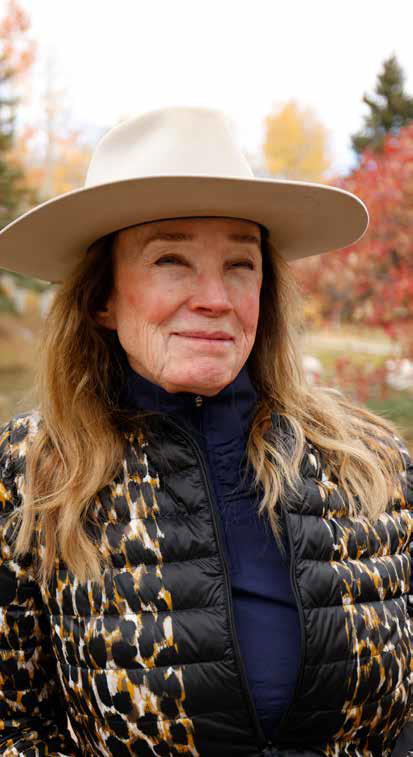
Karen W. Davidson is a community leader and philanthropist working in metropolitan Detroit, Aspen, Colorado, and the State of Israel. She is a Director and Member of the Board of the William Davidson Foundation, a private family foundation established by her late husband, William “Bill” Davidson, to advance for future generations the economic, cultural, and civic vitality of Southeast Michigan, Israel, and the Jewish community. She also serves as Chair of the Foundation’s Executive Committee.
Guided by a deep commitment to making a difference in the lives of individuals, organizations, and communities, Mrs. Davidson carries forward Mr. Davidson’s legacy of visionary philanthropy. She champions investments that empower trusted leaders and institutions, such as the Davidson Institute of Science Education at the Weizmann Institute of Science, established through Mr. Davidson’s support in 1999. The William Davidson Foundation has continued this support as the Davidson Institute has evolved into a vibrant center for expanding science literacy across Israel, inspiring curiosity, broadening access, and preparing future generations of science leaders.
As a dedicated philanthropist and longtime supporter of the State of Israel, Mrs. Davidson is deeply committed to ensuring Israel’s security, prosperity, and vibrancy as a Jewish homeland for future generations. Since October 7, Mrs. Davidson has contributed to several prominent organizations and initiatives that are making a positive, lasting impact on Israeli society, including the UJA Day After Fund, the IDF’s Oketz K9 Unit Foundation, the Israeli Guide Dog Center, and Mosaic United. Recognizing the importance of education in building a strong future, Mrs. Davidson also invests in the Youth Renewal Fund and the Darca Schools Network, which provide innovative education throughout some of Israel’s most underserved communities.
In addition to her work at the Foundation, Mrs. Davidson serves as a board member of several renowned philanthropic organizations, including the William Davidson Institute at the Ross School of Business at the University of Michigan, Startup Nation Central, and Momentum Unlimited. She is a Life Member of the Weizmann Institute’s International Board and a Board member of the American Committee for the Weizmann Institute of Science. Mrs. Davidson also serves on the University of Michigan’s President’s Advisory Group and is a supporter of both the Sarah Wetsman Davidson Tower at Hadassah Hospital and the Israel Antiquities Authority.
Mrs. Davidson is a graduate of the University of Michigan and has an honorary degree from the William Davidson Graduate School of Jewish Education at the Jewish Theological Seminary. Mrs. Davidson is the widow of William “Bill” Davidson, former President and CEO of Guardian Industries and former owner of the Detroit Pistons. Mrs. Davidson has three children and two stepchildren, and is a proud grandmother of ten grandchildren.
The honorary degree is awarded to Mrs. Davidson in recognition of her unwavering dedication to nurturing excellence and expanding opportunity across science, health, and the arts; her deep commitment to upholding Jewish life and ensuring Israel’s security and prosperity for future generations; and her inspired leadership of the William Davidson Foundation and its steadfast support of the Davidson Institute of Science Education.
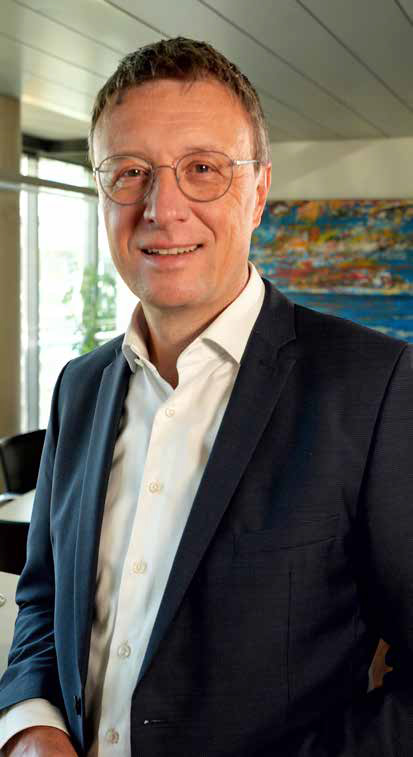
Prof. Patrick Cramer is a pioneering structural and molecular biologist whose work has revolutionized our understanding of gene transcription – the process by which cells generate RNA from DNA, a fundamental step in gene expression across all life forms.
Born in 1969 in Stuttgart, Germany, Prof. Cramer studied chemistry at the universities of Stuttgart and Heidelberg, completing his doctorate at the University of Heidelberg in 1998 with work conducted at the European Molecular Biology Laboratory (EMBL) in Grenoble. After a postdoctoral fellowship at Stanford University (1999-2001), he became a tenure-track professor of biochemistry at the Ludwig Maximilian University of Munich (LMU), later serving as director of its Gene Center and Dean of the School of Chemistry and Pharmacy (2007-2009). In 2014, he was appointed Director at the Max Planck Institute for Biophysical Chemistry, which later became the Max Planck Institute for Multidisciplinary Sciences. In June 2023, he became President of the Max Planck Society.
Prof. Cramer’s research has provided unprecedented insight at the level of individual atoms into the molecular machinery of transcription, revealing the mechanism underlying each step. This includes the structure and function of RNA polymerase II of higher organisms – the enzyme that transcribes protein-coding genes. His discoveries have also elucidated how transcription is regulated in the context of chromatin and the mediator complex. Combining structural with kinetic studies, his lab was the first to create a molecular “movie” of transcription in real time, a landmark achievement that has redefined the field.
During the COVID-19 pandemic, Prof. Cramer applied his expertise to pressing medical research. His team was among the first to map the three-dimensional structure of the coronavirus polymerase, revealing how certain antiviral drugs inhibit the pathogen’s replication.
In addition to his research achievements, Prof. Cramer has been a powerful advocate for international scientific collaboration. As President of the Max Planck Society and former Chair of the Council of EMBL, he has helped shape European research policy while fostering global scientific partnerships. His leadership is distinguished not only by excellence but also by principle: Amid growing global hostility toward Israeli academia, Prof. Cramer led a high-profile delegation to Israel, reaffirming the Max Planck Society’s commitment to Israeli-German scientific collaboration, especially with partners like the Weizmann Institute of Science.
Prof. Cramer has received numerous honors, including the Shaw Prize in Life Sciences and Medicine (2023), the Louis-Jeantet Prize for Medicine (2021), and the Gottfried Wilhelm Leibniz Prize (2006). He is a member of the German National Academy of Sciences Leopoldina, the European Molecular Biology Organization, the Royal Society, and the US National Academy of Sciences.
The honorary degree is awarded to Prof. Cramer in recognition of his groundbreaking contributions to our understanding of gene transcription and the molecular machinery that drives it; his trailblazing leadership in global science, defined by unwavering resolve to advancing international scientific collaboration; and his profound personal and professional impact on generations of students and scholars worldwide.
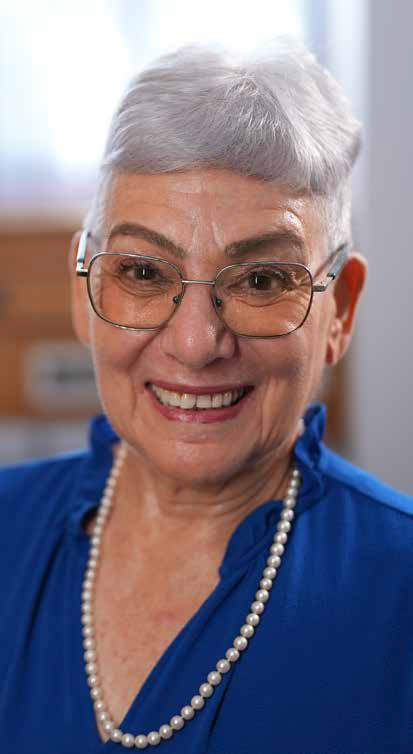
Dita (Yehudit) Bronicki is an Israeli entrepreneur and philanthropist, widely recognized as a trailblazer in clean, renewable energy and a passionate advocate for education, innovation, and co-existence whose leadership continues to shape Israeli society – and beyond.
Born and raised in Israel, Mrs. Bronicki earned a degree in French culture and political science from The Hebrew University of Jerusalem in 1965. That same year, she and her husband, Yehuda Bronicki, co-founded Ormat Turbines, Ltd. (now Ormat Technologies). The company pioneered innovations in electricity generation, becoming a global leader in geothermal energy technology, which soon gained widespread recognition as a viable alternative energy source.
For five decades, Mrs. Bronicki was instrumental in Ormat’s growth, serving as the group’s CEO for over 20 years until her retirement in 2014. She held leadership roles in Ormat’s subsidiaries and affiliated startups, including Orbotech, Orgenics, and Orad. Her visionary approach positioned Israel at the forefront of the renewable energy sector, inspiring a new generation of entrepreneurs and contributing to the country’s rise as the Startup Nation. From 1994 to 2001, she also served on the Bank of Israel’s Advisory Council.
Following her retirement, Mrs. Bronicki dedicated herself to advancing vocational and technological education in Israel. She assumed leadership roles in several organizations, including the ORT-Ormat High School in Yavne and Insights in Education. She also serves on the Executive Board of the Davidson Institute of Science Education, the Schwartz Reisman Science Education Center, and other institutions. Alongside these efforts, she plays an active role in shaping national economic growth strategies as a member of the government-appointed employment initiatives committee for 2030.
Mrs. Bronicki and her husband are avid supporters of scientific research, education, and science literacy as drivers of a more equitable society. At the Weizmann Institute, they have supported major research initiatives, including Prof. Nachum Ulanovsky’s study of spatial orientation and navigation and Prof. Oren Tal’s research on electronic transport, material properties, and energy conversion at the atomic scale. Mrs. Bronicki also serves as a trustee of the Hebrew University of Jerusalem and the Tel Aviv-Yaffo Academic College, and sits on the board of the Hebrew University’s technology transfer company. Both Dita and Yehuda Bronicki are longtime members of the Weizmann Institute’s Israeli Friends Association.
Dita Bronicki has received numerous honors for her achievements and contributions to industry, education, and research. In 2018, she and her husband were awarded the Israel Prize for Industry. Her other accolades include the 2017 Yakir Award from the Kinneret Academic College, the 1996 Geothermal Pioneers Award from the Geothermal Resources Council, honorary doctorates from the Technion, the Holon Institute of Technology, and IDC Herzliya (Reichman University), and the 1978 Industry Award.
The honorary degree is awarded to Mrs. Bronicki in recognition of her visionary leadership in transforming emerging renewable energy technologies into viable sources of power, positioning Israel at the forefront of global sustainable innovation; her philanthropic investment in science education, social inclusion, equitable economic opportunity, and coexistence; and her dedication to the advancement of research and learning, most notably through her support of pioneering initiatives at the Weizmann Institute of Science and the Davidson Institute of Science Education.