
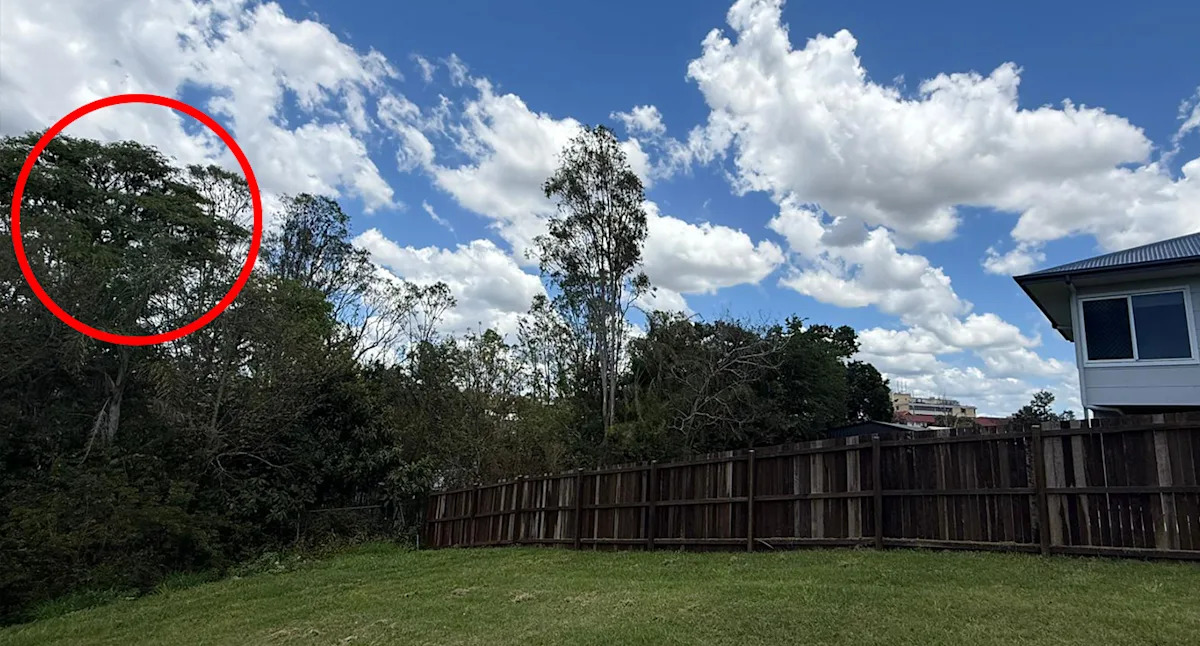
Life in a small Australian community has become so unbearable that the local council is considering buying back residents’ homes. It’s one of two options being debated in Queensland’s Greater Sunshine Coast, in response to complaints about a bustling flying fox colony.
“Their lives are dramatically impacted. To the point they can’t go outside, they can’t hang their clothes outside because the flying foxes defecate on them, the noise is horrendous at night and in the morning,” Mayor Glen Hartwig told Gympie Regional Council in October.
Speaking with Yahoo News Australia on Monday, he said many of the residents in Commissioner’s Gully are elderly, and when they first moved there, it was a “wonderful place”.
“The excrement the bats leave makes it impossible for them to open their windows and doors. They can’t have their friends and family come over, so they feel very much isolated. And the constant noise is having a significant impact on their mental health,” he said.
Gympie Regional Council will ask the state and federal governments to fund the purchase of 20 properties, in a plan likened to retreats when climate change causes rivers to flood, or ocean frontages to erode.
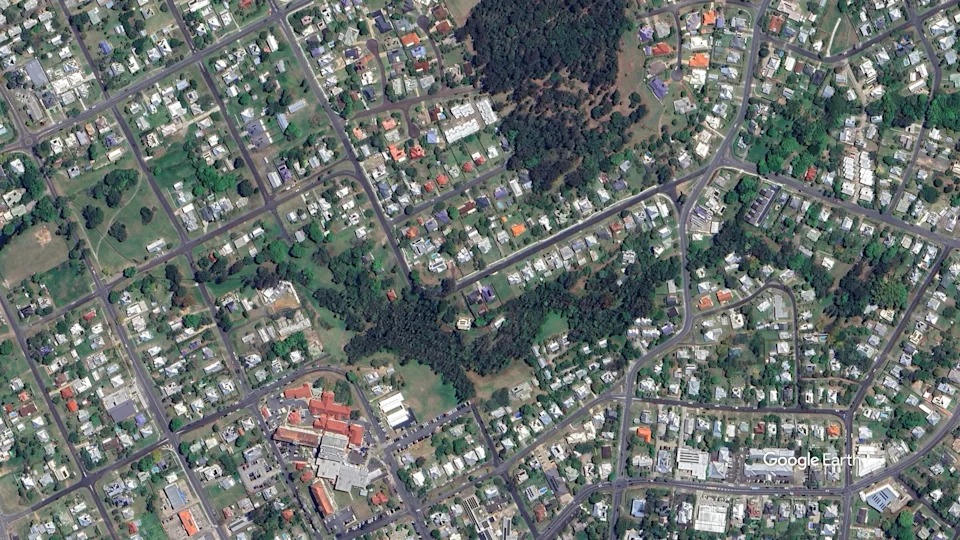
The flying foxes are surviving in a small strip of remnant bushland in Commissioners Gully. Source: Google Earth
Council proposes alternative solution to flying fox problem
Controversially, it’s placing another option on the table — asking for special permission to disperse the colony. Mayor Hartwig has also questioned whether the species should continue to be listed as threatened, telling council multiple cities have an “inundation” of flying foxes.
“The option is to allow a relaxation on the legislation, so the interest of the human beings that were there first can have higher consideration than the bats themselves. That would require a change in legislation,” he later told Yahoo News.
This approach has alarmed wildlife advocacy group Bats Queensland. Its president Rhiannon Traish-Walker told Yahoo News many Australians incorrectly assume the species is in overall good health because they roost in large numbers.
“If they were predators, you’d say that’s a huge population. But they’re lower in the food chain, so there are meant to be a lot more of them,” she said.
“Before white settlement, there were 70 per cent more flying foxes. So when you think about a healthy population, they should be everywhere. They should be more common than flies.”
Fears dispersal of bats will make problem much worse
Grey-headed flying foxes are listed as vulnerable to extinction, and their decline has had an impact on the health of the nation’s forests. Flying foxes as a genus are Australia’s only long-range pollinators, and their presence is critical to the dispersal of seeds.
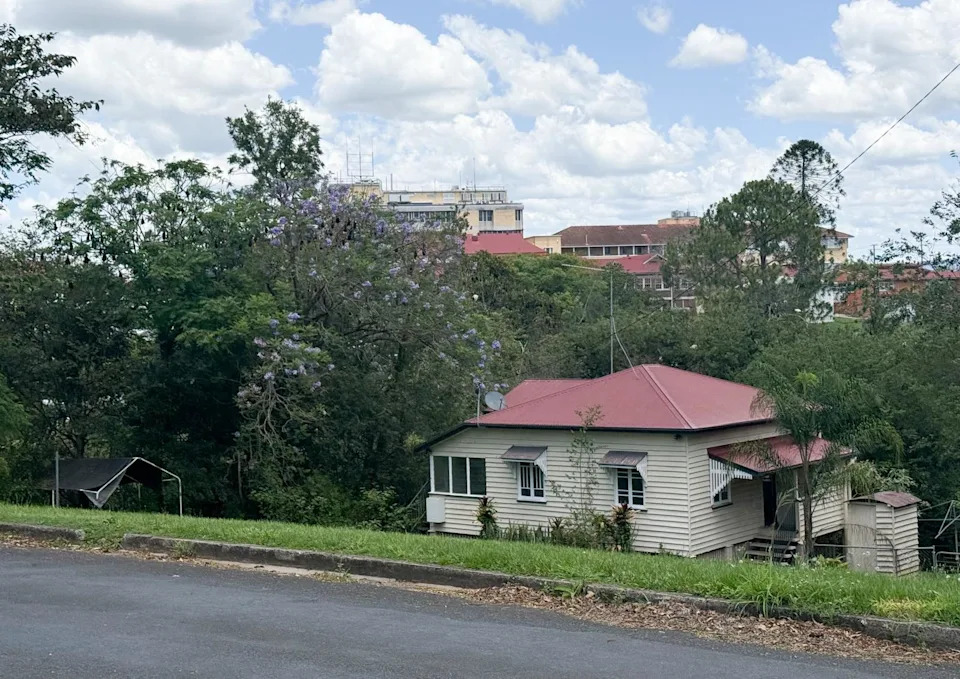
Flying foxes can be seen roosting in a tree, close to a home in Commissioners Gully. Source: Supplied
Critics of dispersal say it can kill large numbers of bats, particularly youngsters, and it ultimately does not work.
“It’s really ineffective because flying foxes are a nomadic species. Sometimes it seems like they move in groups, but they actually move as individuals,” Traish-Walker said, noting some have been known to travel between Melbourne and Cairns.
“If you disperse the flying foxes that are currently there, thousands of others will potentially appear after that dispersal has happened.”
Her concerns are shared by some locals in neighbouring areas, one of whom spoke to Yahoo on the condition that they not be named.
“They’re just going to create a bigger problem. They’ll move the problem around, and probably separate them, so we have five colonies in Gympie instead of one,” they said.
“There should be a compromise made where they try and cut some of the vegetation back, and nudge the bats back, but not disperse them.”
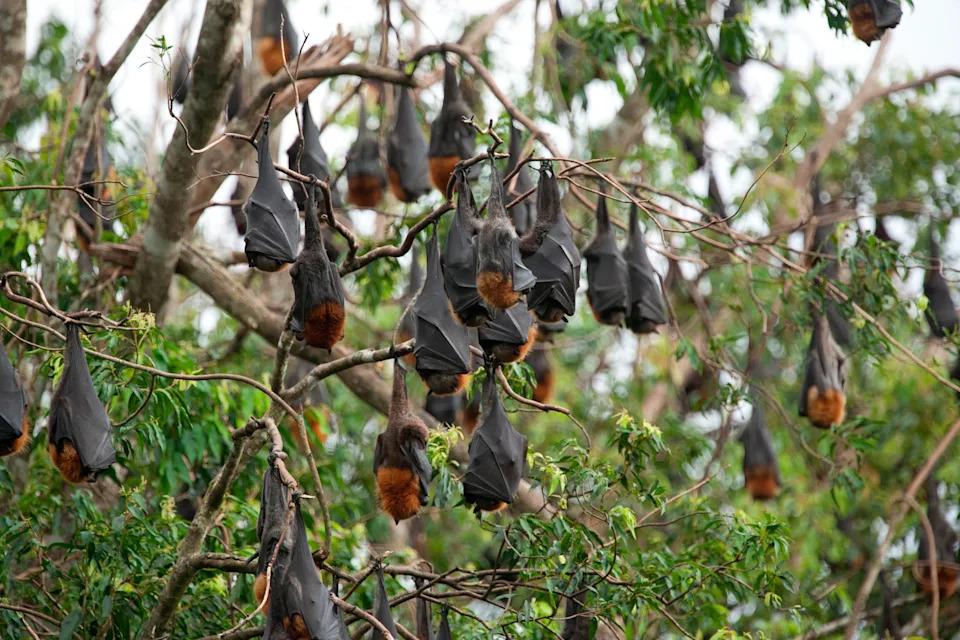
Flying foxes roost in large numbers, as this image near Murwillumbah, NSW, illustrates. However, numbers have declined 70 to 95 per cent since European settlement. Source: Getty
Flying foxes face uncertain future in Australia
Only 50 per cent of the nation’s forests remain intact since colonisation, reducing the range of flying foxes and contributing to mass starvation events. Climate change is worsening the impact of bushfires and threatening more habitat.
In 2014, more than 45,000 flying foxes are believed to have died on just one hot day in South East Queensland, while during the 2019/2020 Black Summer bushfires, over 70,000 died across multiple states.
Adding to the conflict between humans and flying foxes in this increasingly hot world, is that both prefer the areas that are most temperate and pleasant to live in.
“I feel sorry for the individuals who bought in the suburb and didn’t know they’d historically lived there. But it’s also not the flying foxes’ fault,” Traish-Walker said.
Love Australia’s weird and wonderful environment? 🐊🦘😳 Get our new newsletter showcasing the week’s best stories.
