
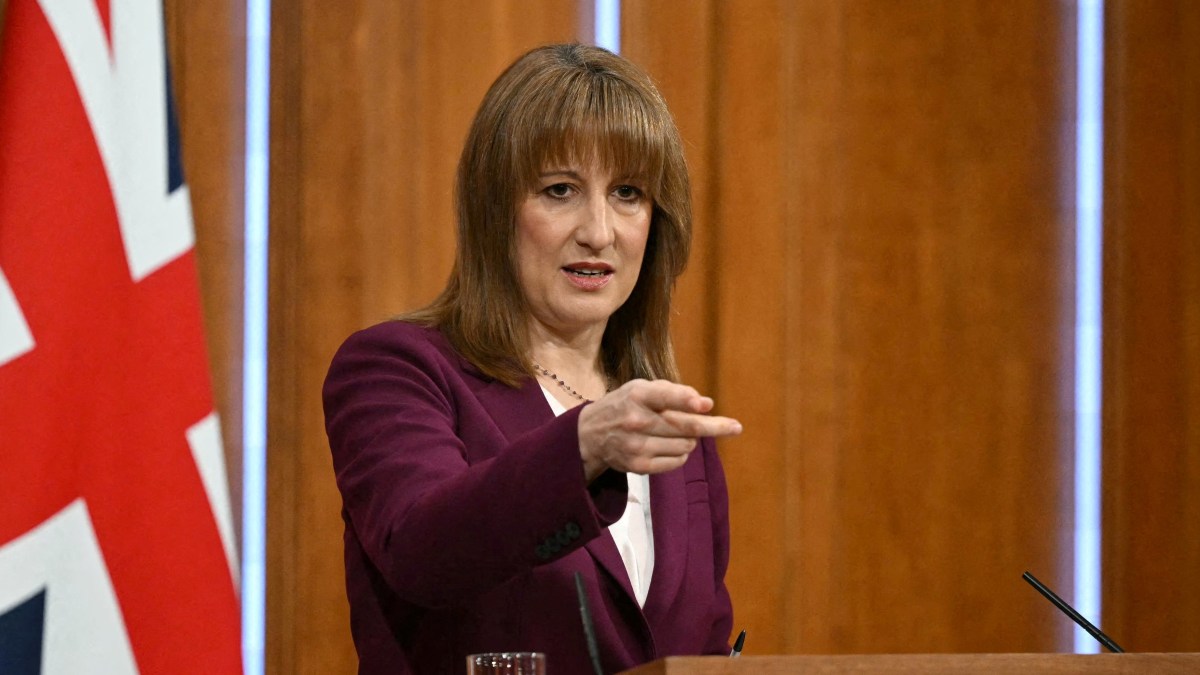
Rachel Reeves has suggested that she is prepared to break Labour’s manifesto by raising income tax but signalled that she would scrap the two-child benefit cap.
The chancellor said that she would, “of course”, like to stick to the pledge not to increase income tax, national insurance or VAT, but doing so would require cuts to spending that would damage productivity.
Her comments are the clearest indication yet that she will break the manifesto pledge. The Times disclosed last week that she had included a rise in income tax in the “major measures” she submitted to the Office for Budget Responsibility, the official forecaster, before the budget on November 26.
Reeves is expected to offset a 2p rise in income tax with a 2p cut in national insurance in an attempt to shift the burden of the tax rises on to other groups, such as pensioners and landlords. The move is expected to raise at least £6 billion as she seeks to fill a £30 billion hole in the public finances.
However, in a bid to reassure Labour MPs she signalled that she would scrap the two-child benefit cap. She had been expected to take a more limited approach because of constraints on the public finances. “I don’t think a child should be penalised through being in a bigger family for no fault of their own,” she said.
The chancellor said the public finances had been significantly worse than expected when Labour took office and that there had been a marked downgrade in economic forecasts.
She told BBC Radio 5 Live: “When we put together the manifesto it had in it our spending commitments and then the tax changes that would be needed to pay for those. We started with the envelope we inherited. The truth is, what we inherited is significantly worse.
“Last year I had to address the black hole in the public finances. This year we have the new challenge of the Office for Budget Responsibility downgrading the growth forecasts.
“I will set out the choices in the budget. It would of course be possible to stick with the manifesto commitments. But that would require things like deep cuts to capital spending.
“The reason why our productivity and our growth has been so poor these last few years is because governments have always taken the easy option to cut investment in rail and road projects, in energy projects, in digital infrastructure. As a result, we’ve never managed to get our productivity back to where it was before the financial crisis.”
Reeves’s plans to increase income tax have been criticised by cabinet ministers. However, scrapping the two-child cap on benefits, a move that could cost more than £3 billion but lift 350,000 children out of poverty, would be popular with backbenchers.
The Treasury is concerned that plans to use gambling levies to fund the cost of the policy will not be enough. However, Reeves indicated that she would find the money.
• Raise flight tax and we may move planes abroad, says easyJet boss
“I don’t think we can lose sight of the costs to our economy in allowing child poverty to go unchecked,” she said. “In the end, a child should not be penalised because their parents don’t have very much money.
“In many cases you might have a mum and dad who were both in work, but perhaps one of them has developed a chronic illness or one of them has passed away.
“There are plenty of reasons why people make decisions to have three, four children, but then find themselves in difficult times. But also you have things like adoption, or foster caring — lots and lots of different reasons why families change shape and size over time.”
Lucy Powell, the deputy leader of the Labour party, and Bridget Phillipson, the education secretary, have both called for the cap to be scrapped outright. Gordon Brown, a former Labour prime minister, has campaigned to axe the cap.