
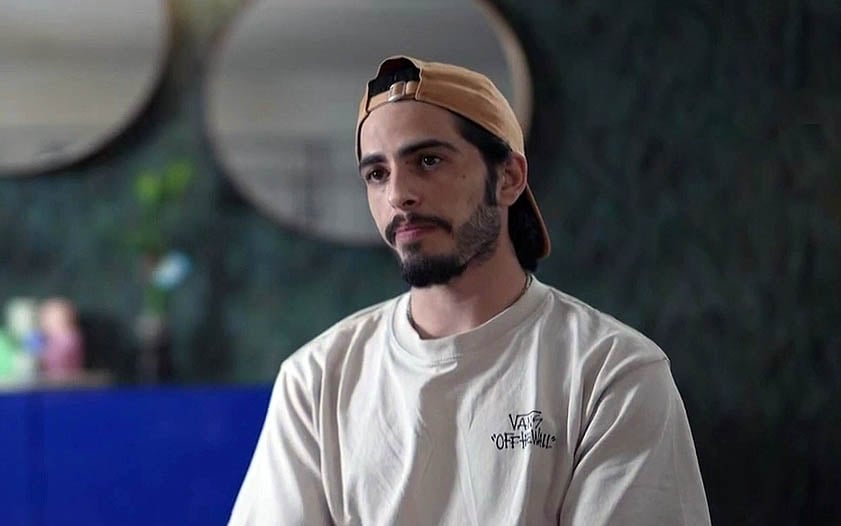
In his first interview after being freed last month from two years of captivity, released hostage Matan Zangauker recounted fighting back against his Hamas captors and spoke about the moment he lost all hope of going free.
Speaking to Channel 12 news in an interview aired on Monday, Zangauker said his captors would play mind games, showing up each night with what he now knows to be false reports about the fighting waging against the IDF in Gaza: “He’d tell us, ‘We took out 20 of your tanks, we killed soldiers, we murdered soldiers.”
When he cast doubt on their claims, Zangauker said, he was beaten, but he still felt he had to stand up for his country in the only way he could.
Zangauker said he also on occasion pushed back against his captors physically, including once stepping in when his fellow hostage was being beaten, “and I received his beating instead.”
Zangauker was kidnapped from his home in Kibbutz Nir Oz, as was his girlfriend, Ilana Gritzewsky, who was freed in November 2023.
Get The Times of Israel’s Daily Edition
by email and never miss our top stories
By signing up, you agree to the terms
His mother, Einav Zangauker, became one of the most recognizable faces of the battle to bring the hostages home, appearing at daily protests and employing harsh invective against the government.
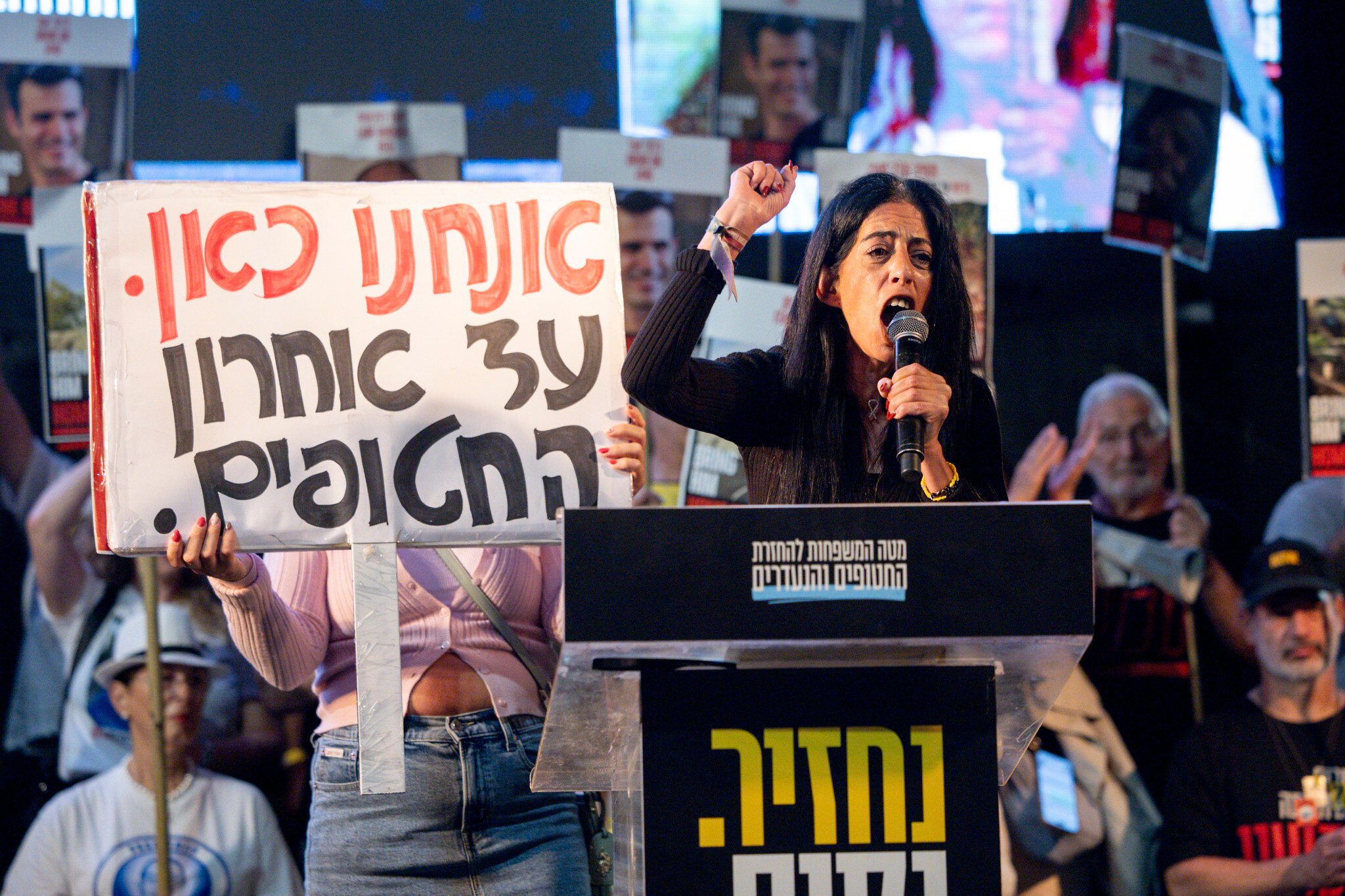
Einav Zangauker, mother of released hostage Matan Zangauker, speaks at a protest at Hostages Square in Tel Aviv calling for the release of captives’ bodies held by Hamas, October 18, 2025. (Chaim Goldberg/Flash90)
He was finally released on October 13, 2025, along with the other 19 remaining living hostages as part of a shaky ceasefire deal that has largely halted the two years of war against Hamas in Gaza.
During the interview, Zangauker recalled the moment that his captors realized that he was the son of Einav, whose face appeared almost nightly on Israeli TV news.
“The ‘sheikh’ of the tunnel arrived, their commander, and he said to me, ‘You’re Zangauker, right?’” he recounted.
When he answered yes, the captor replied: “Your mother is protesting, she’s turned the country upside down.” That news, said Zangauker, “really made me happy, it really gave me strength.”
He felt happy about the fact that she was out on the streets, “which is better than sitting at home and being depressed.”
But the first time he saw her on TV, alongside his sister and girlfriend, “I was angry, that I’m here and they’re over there fighting for me. They’re screaming and nobody in the government is helping.”
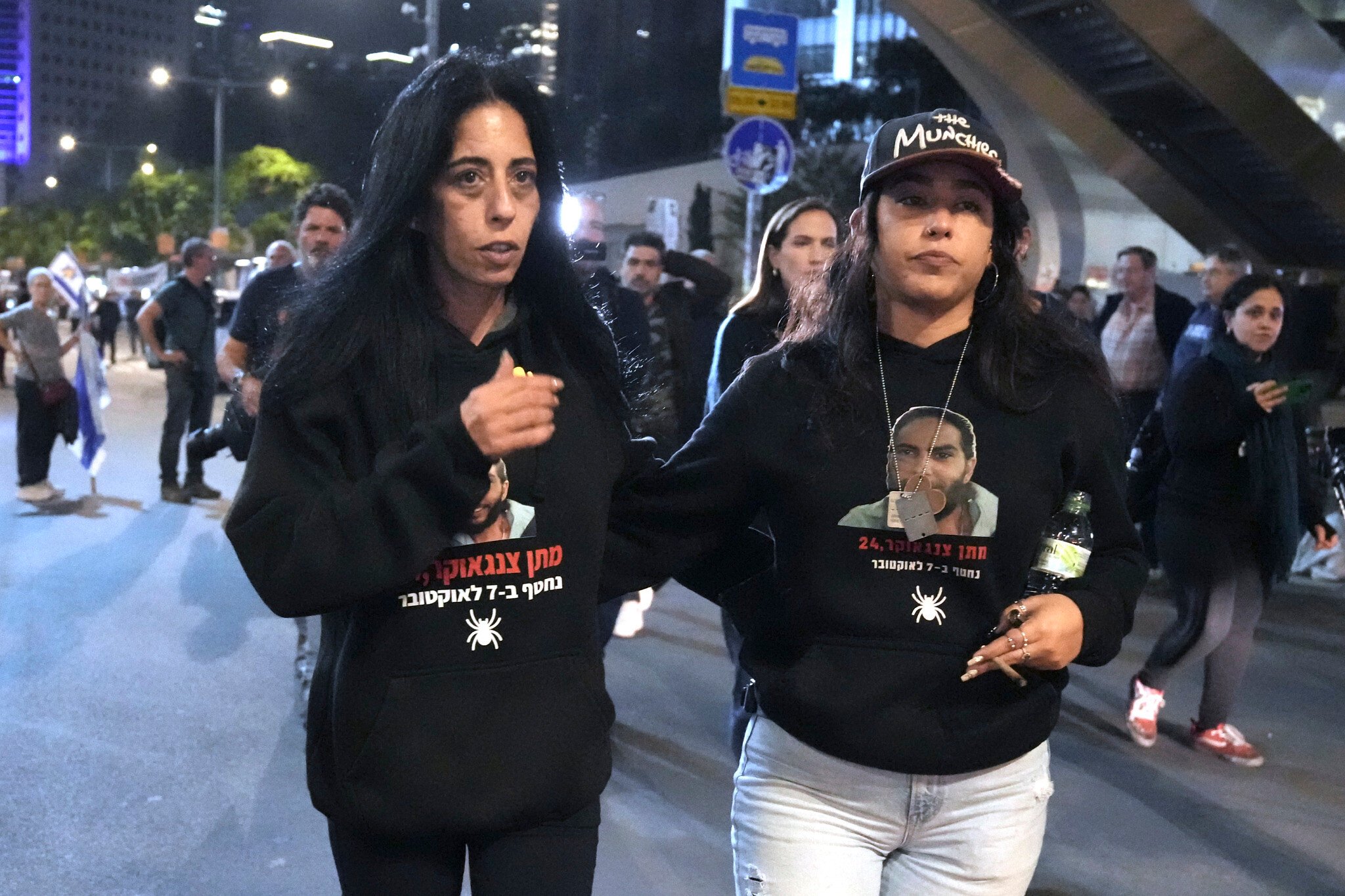
Einav Zangauker, left, mother of Israeli hostage Matan Zangauker, and his partner, Ilana Gritzewsky, protest in Tel Aviv on December 7, 2024. (AP/Mahmoud Illean)
Nevertheless, he said, seeing their public battle gave him strength to survive, as well as a desire to be more amenable to his Hamas captors and stop being the one “who was always fighting with them.”
Zangauker said he felt that his captors treated him a little differently because of his mother’s strong public activism: “A little more ‘small talk’ with me, additions to the food, they were a little bit nicer after my mother entered the picture.”
He also addressed the fake rumors that circulated after his release, fueled by those who opposed his mother’s style of activism: “They said that Hamas gave me money to give to my mother… That I had been partying in Qatar,” he said of lies he came across on social media.
“It’s so stupid,” he said. “To hear that I was in Qatar in a jacuzzi, getting massages and drinking, at a time that I was in Hamas captivity being beaten and cursed, I was abused, psychologically tortured, I went through hell. And people don’t see it that way, and it’s sad.”
Despite the criticism his mother often faced over her anti-government campaign, Zangauker said: “I know that I am here because of my mother, the people of Israel, and our heroic soldiers.”
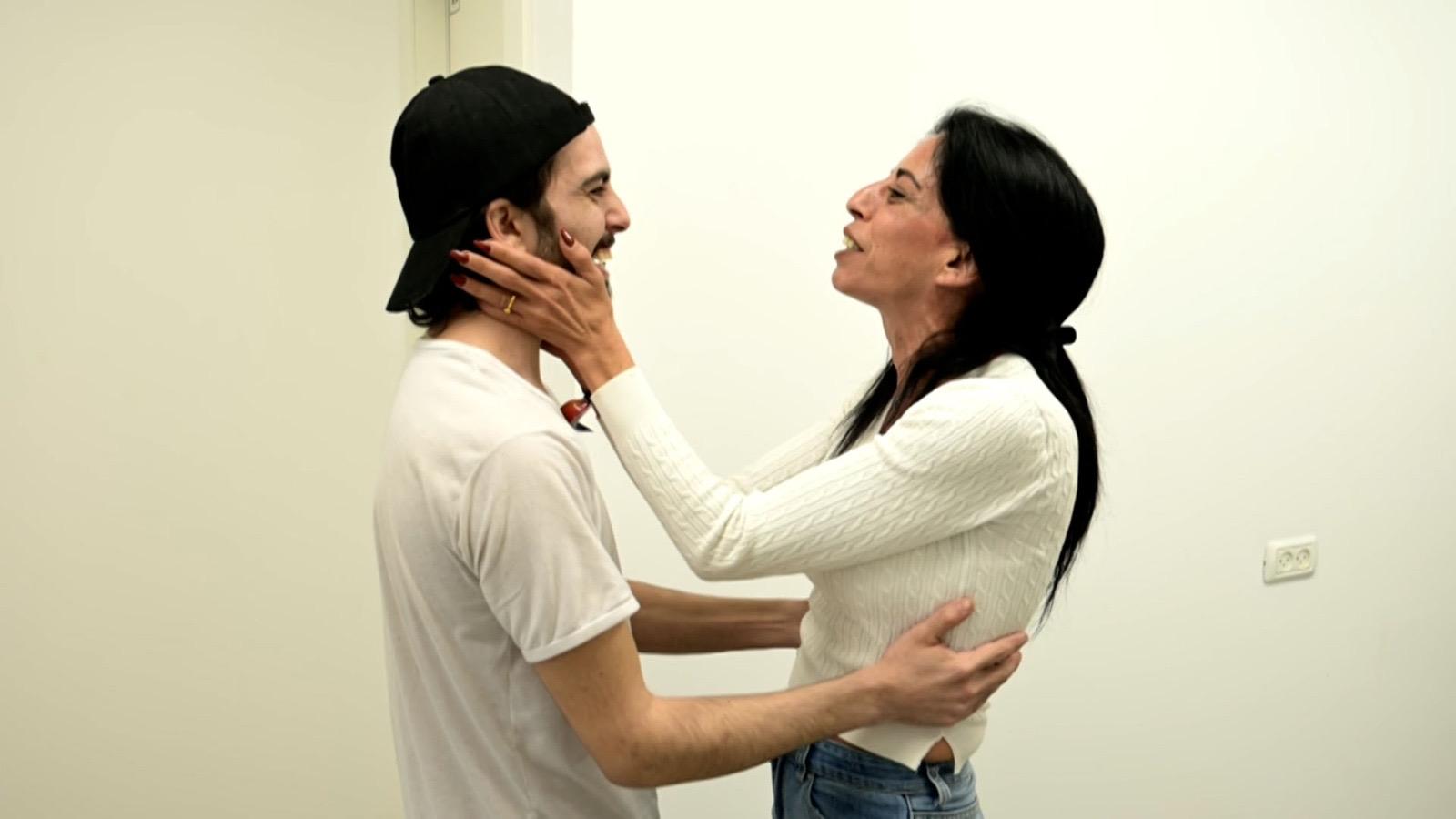
Einav Zangauker is reunited with her son, freed hostage Matan Zangauker, after he was held in Gaza for over two years, in Re’im on October 13, 2025. (Israel Defense Forces)
Zangauker said when he was kidnapped on October 7, he had no idea that his girlfriend, Ilana, had also been taken, and believed that she had succeeded in hiding after they split up. He only realized what had happened when he was allowed to watch TV on the day that she was freed from captivity, on November 30, 2023.
“It was simultaneous sadness and joy,” he said. “Because my girlfriend was kidnapped, and I didn’t know it. But on the other hand she went home, she’s safe now.”
As he was driven into Gaza on a motorcycle on October 7, he recounted, he was greeted by “children, women, old people, lined up with sticks, with rocks, with pipes, and they started to hit me, to beat me.”
The first Israeli he saw in the tunnels that day was a dead IDF soldier, and Zangauker said his kidnappers threatened that he would “end up like him.” Then he joined Yocheved Lifshitz, also from Nir Oz, who was kidnapped on October 7 and freed a few weeks later, while her husband, Oded Lifshitz, was killed in captivity.
Zangauker said he was moved around many times, mostly inside the tunnels, and was held sometimes with other hostages and sometimes alone. As a young man — now 25 — he said his captors treated him as if he was a soldier, despite being a civilian.
“That was true when it came to interrogations, when it came to playing games with food, as well as violence — they’d tie my hands behind my back,” he said. There were days the captors would say there wasn’t any food, and give each of the hostages half a pita, “and then prepare themselves food — the smells of eggplant, tomato, they treated themselves.”
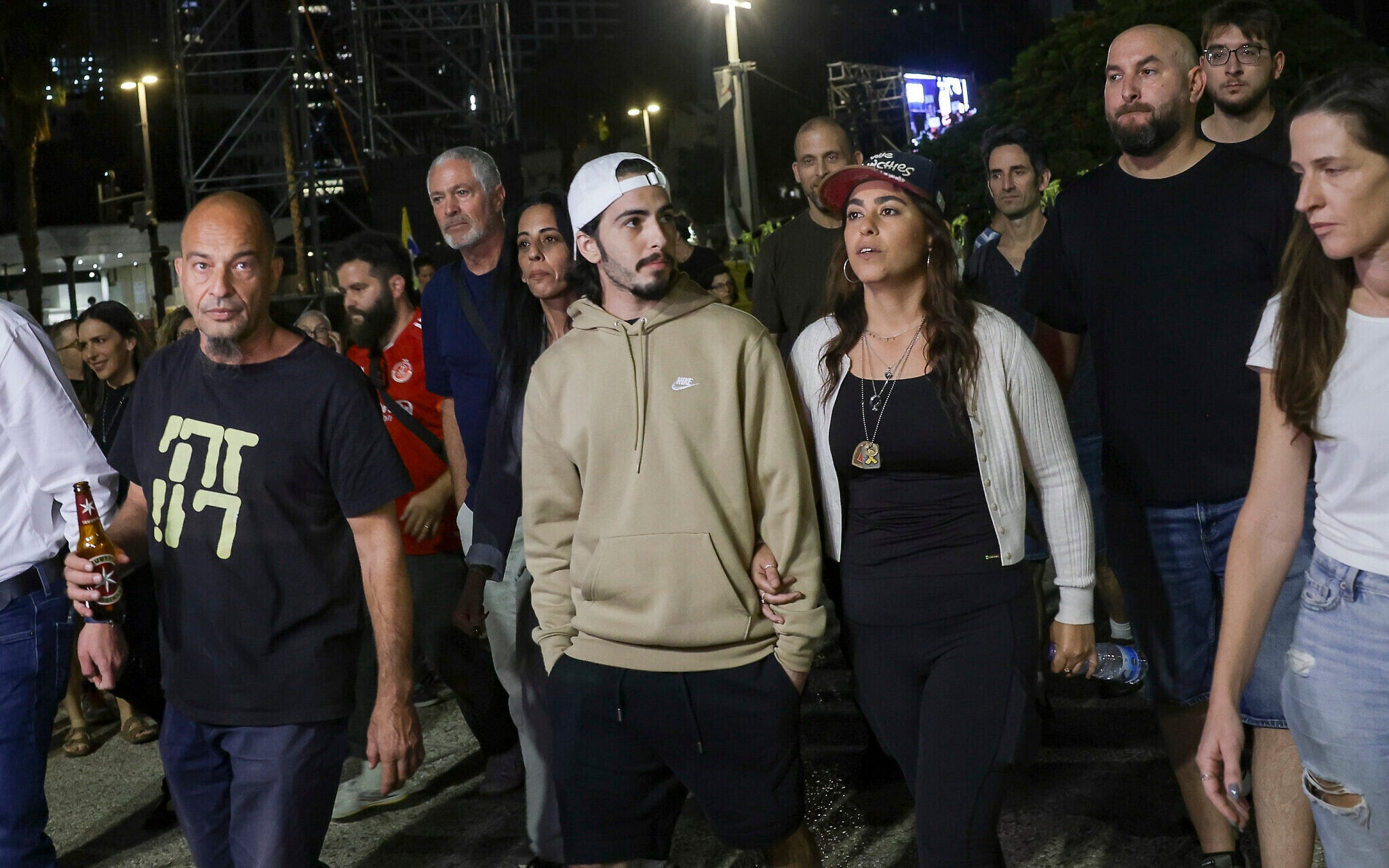
Freed captive Matan Zangauker arrives at a rally being held at Hostage Squares in Tel Aviv on November 1, 2025. (Miriam Alster/Flash90)
His captors told them that the only way he would ever go free was in a ceasefire deal, and that “if the IDF tried to rescue us, they would just shoot us, and we’d all die together.”
At one point, he said, he was moved above ground and his captors disguised him as a Gazan, and he freely mingled in the streets, not far from IDF troops.
He said he was held in schools and hospitals, moving around looking for a place to sleep. While he thought about trying to send a message to Israeli soldiers, “I was afraid of being caught.”
They headed south for Rafah, sleeping in a mosque for a period, before he was brought back underground into the tunnels.
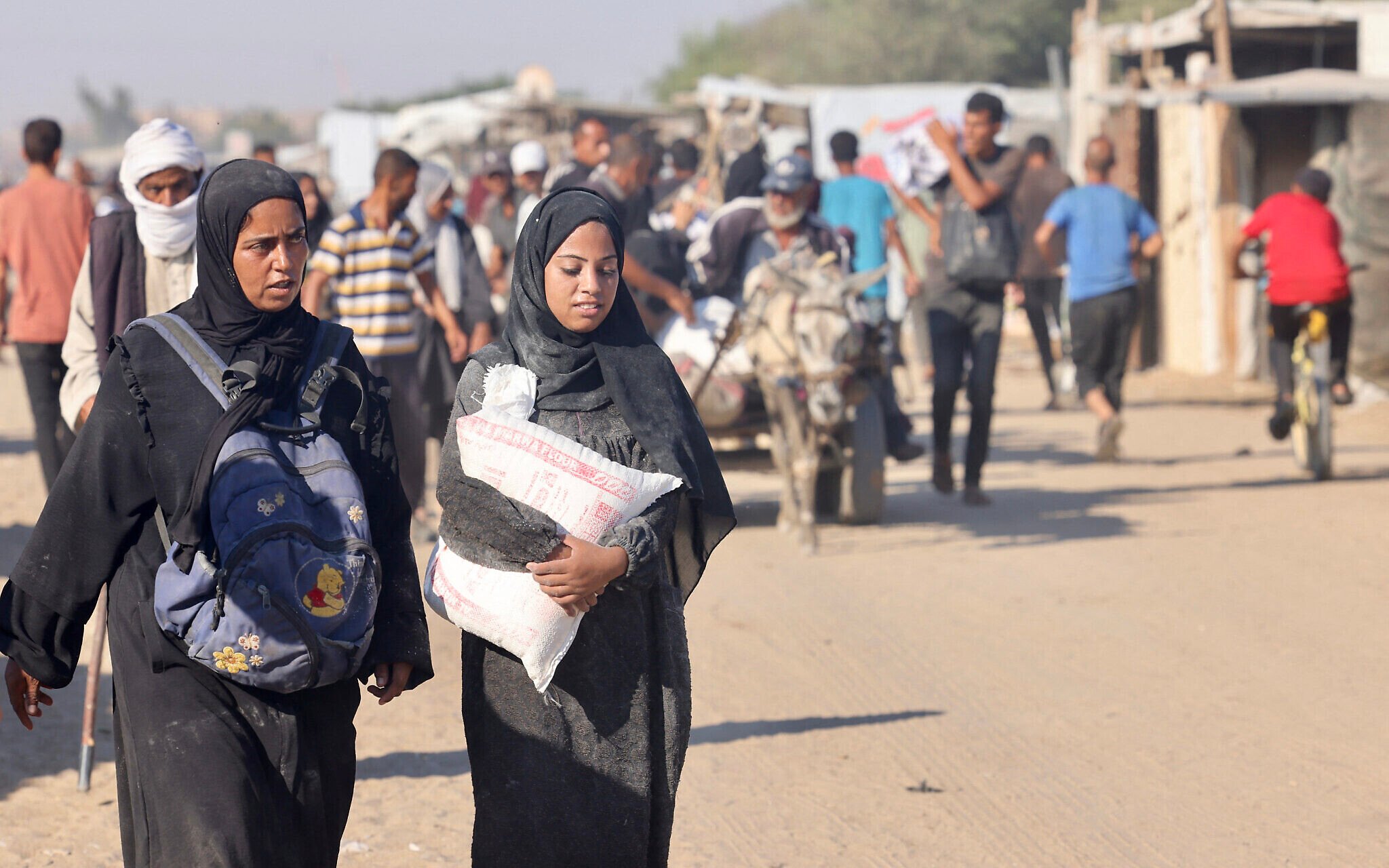
Palestinians walking after receiving humanitarian aid from an aid distribution point in Rafah, the southern Gaza Strip, July 24, 2025. (AFP)
During the second ceasefire and hostage release deal, which began in January 2025, Zangauker said he believed he was going to go free, “and I started thinking about my future, what I would do with my life; it felt like a rebirth.”
When the deal fell apart and he was left in Gaza, “I lost hope. If I had a little spark [of hope] that I would go free, that I’d be released, that I’d return alive to my family, it was lost.”
When he was left alone with his captors after the other hostages he was held with were released, Zangauker said he felt like he was never going to return home alive, “that this was it, that I would die here.” And when they told him he was going home in October 2025, he didn’t believe them.
When he was finally reunited with his family, “it was pure ecstasy, I was in total shock.”
Zangauker said that even a month later, “there are moments that I really can’t comprehend that I’m here… I have to pinch myself and I wake up and return to reality.”