
However, the Palestinian Authority has shown no intention of reform. Rather, Abbas’s latest decree appointing Hussein al-Sheikh as interim president in the event of a vacancy bypasses the Palestinian Basic Law, reinforcing political succession over renewal. The move undermines legitimacy and further erodes public trust—a dynamic it can ill afford amid historically low approval ratings.
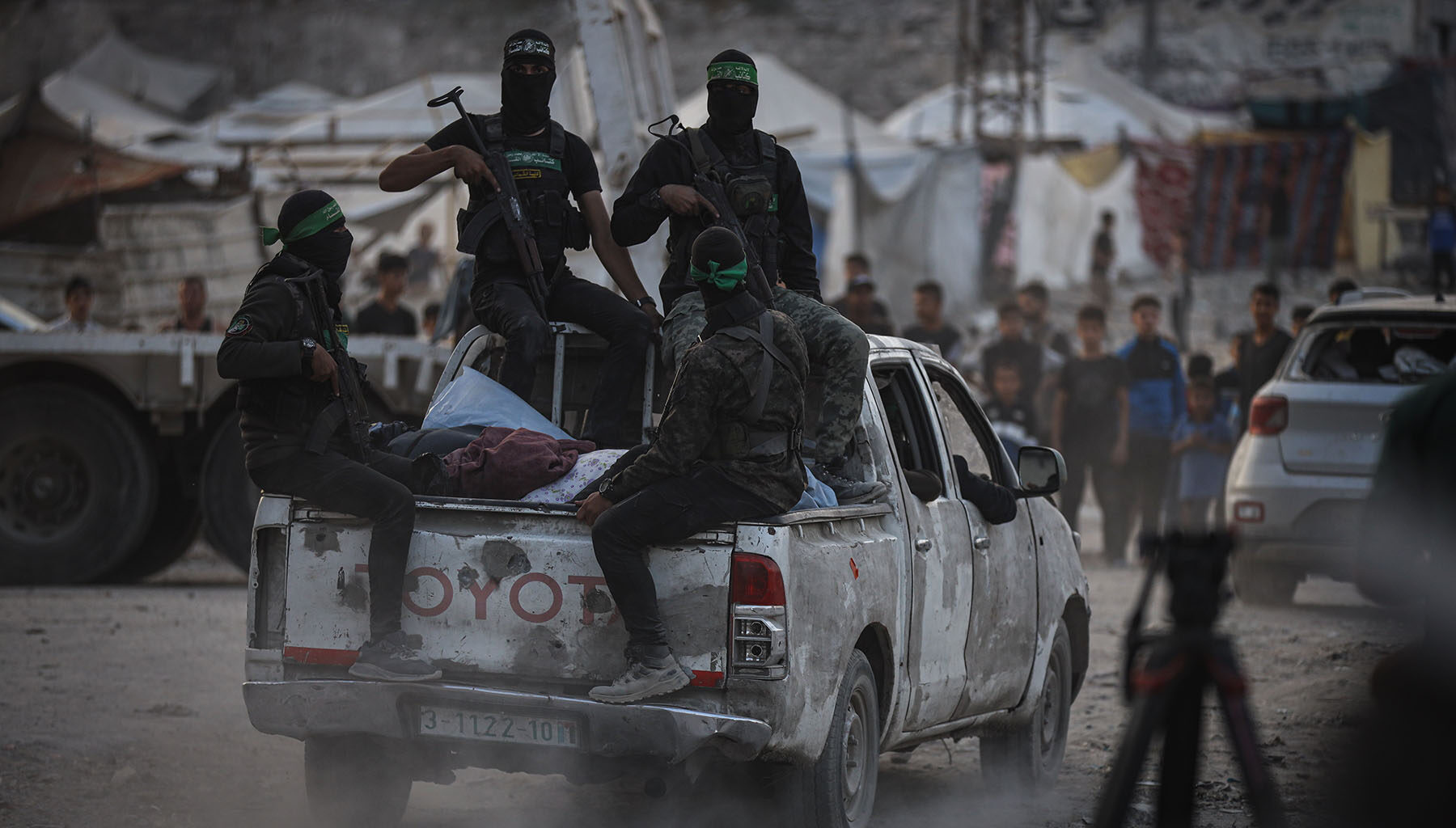
Hamas emerged in 1987 as an Islamic armed movement aimed at resisting Israel. Two decades later, it entered the political arena, winning the 2006 Palestinian legislative elections. Following its 2007 military takeover of the Strip from Fatah and the PA, Hamas solidified control over Gaza, ruling for nearly two decades while holding firmly to its arms.
But after the events of Oct. 7 and the devastating two-year war between Hamas and Israel that followed, the equation changed. Today, Hamas faces no choice but to alter its core ideology and strategy if it wishes to secure a place in the political landscape acceptable to the United States, Israel and the Arab region. Hamas’ greatest challenge lies in its popular base: Abandoning its most sacred principle—armed resistance—could cost the movement its legitimacy, both domestically and regionally. Alternatively, its loyal followers may view that move as a strategic necessity, tactically shifting for political space to survive, rather than a betrayal of faith.
Such a transformation would resemble that of Abu Mohammad al-Jolani, the former leader of Hay’at Tahrir al-Sham (HTS), previously al-Qaeda in Syria, who reinvented himself as Ahmad al-Shara’a—later accepted as Syria’s legitimate president. Once facing a $10 million U.S. bounty, al-Shara’a abandoned jihadist rhetoric, renounced violence, declared alignment with the axis opposing Iran and Hezbollah and adopted his real name as part of a broader rebranding effort. These steps enhanced his legitimacy regionally and internationally.
The U.S. quickly removed him and his government from terrorism lists, lifted sanctions on Syria and recognized his leadership. Trump even personally met with al-Shara’a. Arab states, from the United Arab Emirates and Saudi Arabia to Turkey and Qatar, followed suit, welcoming Syria’s return to the regional fold.
This case illustrates a clear pattern: The only scenario in which Washington and the West are willing to forgive the past is when a former adversary renounces extremism, refrains from confronting Israel and aligns with regional and Western interests. This opportunity now presents itself to Hamas, particularly after meetings held between senior U.S. officials—including presidential hostage envoy Adam Boehler—and Hamas leaders in Doha, marking a notable shift in U.S. pragmatism toward the group that suggests potential openness to engaging Hamas should it follow a similar path.
The idea that Hamas seeks to present itself in a new form is not beyond discussion. Former Hamas political advisor Dr. Ahmed Yousef has stated that the movement is not interested in ruling Gaza indefinitely, believing instead that it may reintroduce itself under a new brand to reenter the political arena. Achieving this transformation would allow Hamas to protect its interests and members, open channels of communication with the West and project an image of moderation while renouncing violence. Whether Hamas can successfully transition remains uncertain, but any attempt at a new identity rejecting violence in its political program would be notable.
Regional powers differ in approach. Saudi Arabia, the UAE, Qatar and Turkey each play pivotal roles in shaping Gaza’s future and deciding who governs it. Their positions regarding a politically transformed Hamas will be decisive. It would be in Qatar and Turkey’s interests for Hamas to disarm and reemerge as purely a political faction, allowing it to remain part of the regional landscape.