
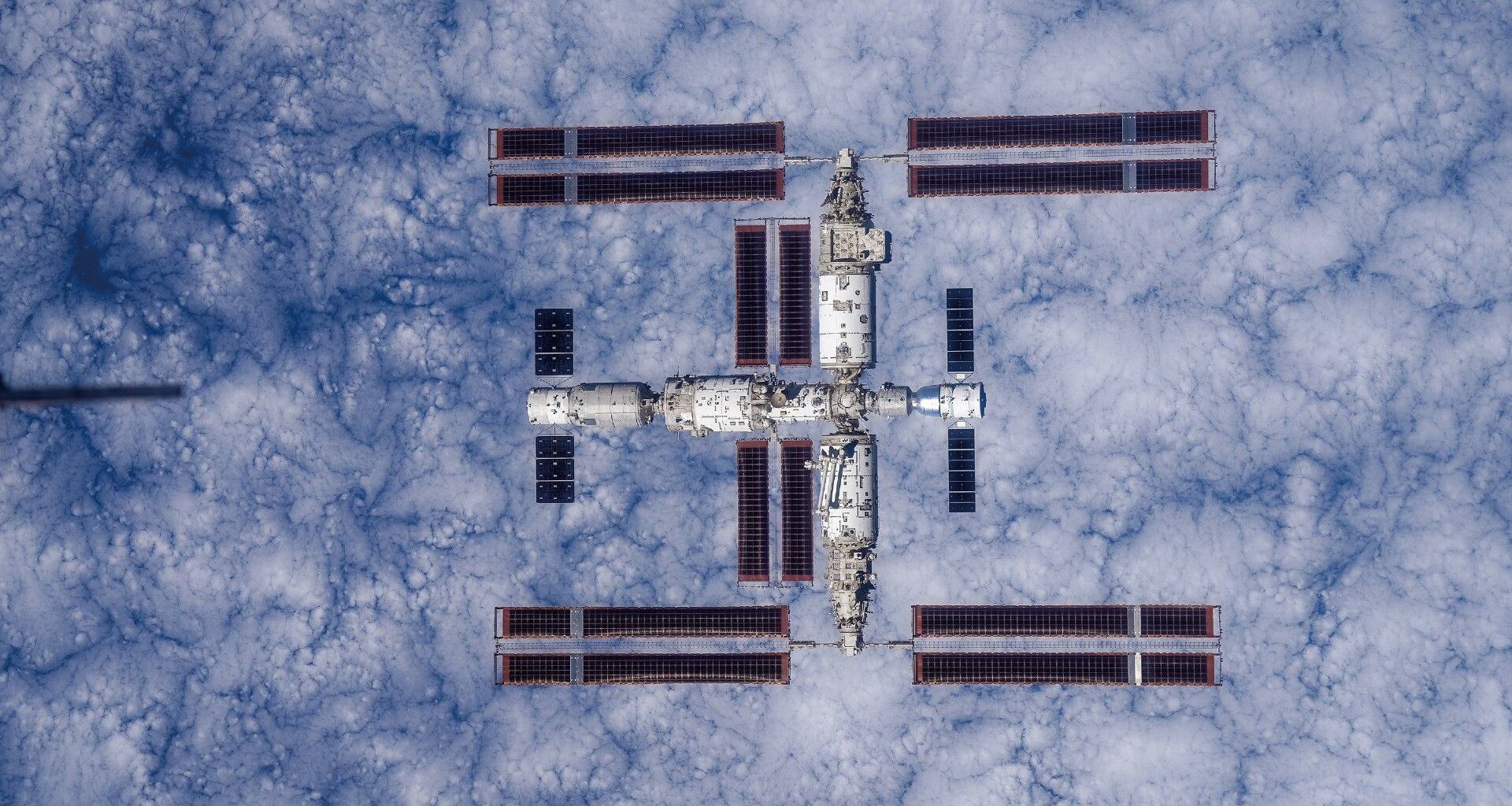
China’s decision to delay the return of its Shenzhou 20 astronauts from the country’s space station due to a possible space debris impact has led to yet another “stranded in space” state of affairs. The situation is also sparking discussion of space rescue planning — or lack of it.
That trio of Chinese astronauts — Chen Dong, Chen Zhongrui and Wang Jie — have been orbiting Earth for more than six months. Prior to the landing delay, the Shenzhou 20 trio had handed over operation of the Tiangong space station to the newly arrived Shenzhou 21 crew. They were due to return back to Earth under parachute on Nov. 5., but the China Manned Space Agency (CMSA) announced the landing wave-off the same day, explaining that the crew’s spacecraft “is suspected of being struck by small space debris and impact analysis and risk assessment [s] are underway.”
You may like
Lack of communications
“I wonder out loud why they would not be more forthcoming about specifics of the event,” responds Darren McKnight, an orbital debris specialist and senior technical fellow of LeoLabs, a group dedicated to space domain awareness.
McKnight observes that the Chinese are not usually forthcoming about anything where they would ‘lose face,’ a very Eastern philosophy. “However, we are all now citizens of the space environment and lack of communication about events such as this hurts everyone,” McKnight told Space.com.
The space debris expert has been trying to tally debris impact events in low Earth orbit for years, especially those that cause mission-degrading or mission-terminating effects. McKnight’s on-going work is a way to map the evolution of the space environmental effects.
“These low-level indicators will be precursors for more significant events, events that many people call the Kessler Syndrome,” said McKnight. He has been working on what he terms the “four waves” of the Kessler Syndrome as a means to anticipate how quickly the environment is evolving.
In regards to China’s Shenzhou spacecraft reentry predicament, “the lack of transparency of these events makes it difficult to model the future,” McKnight said. “By the way, it is not just this case. I know of several mission-degrading events happening with commercial satellites over the last couple of decades,” that deserve to be detailed, McKnight said, events that would also help better assess the space debris-riddled environment.
Wake-up call
Jan Osburg is a senior engineer for the RAND Corporation’s engineering and applied sciences department in Pittsburgh, Pennsylvania. RAND is a global policy think tank. Osburg spoke to Space.com to share his personal take, not as a representative of or spokesperson for RAND.
“I was positively surprised that the Chinese made even the initial public announcement, since they generally have not been all that forthcoming with information about their program,” Osburg said. “But it certainly is a bad situation. Hopefully the astronauts can come safely back to Earth soon.”
You may like
But Osburg said his “big-picture takeaway” is that two separate “stranded in space” incidents within about a year of each other “should be a massive wake-up call that a space rescue capability/organization is needed.”
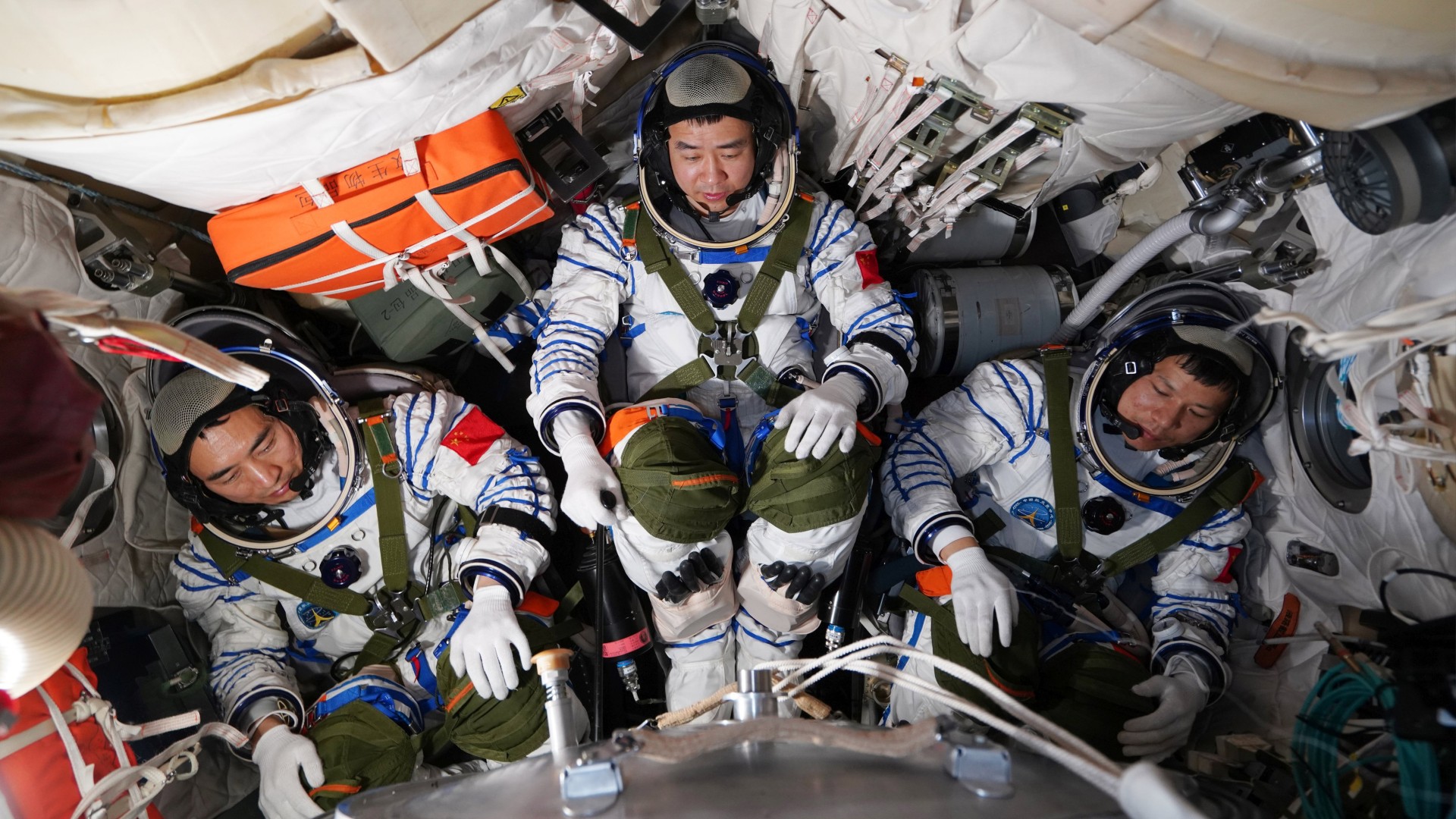
Shenzhou-20 crew is seen in a pre-launch image. (Image credit: China Manned Space Agency)Starliner woes
Last year’s Boeing Starliner mission was flown by NASA astronauts Butch Wilmore and Suni Williams in June 2024 to the International Space Station (ISS) for what was slated to be approximately a 10-day stay.
While Starliner did get to the ISS safely, the craft did experience propulsion-system helium leaks and thruster failures en route. Those problems pushed NASA to extend the Wilmore and Williams stay aboard the ISS. Starliner returned to Earth uncrewed in September 2024.
Williams and Wilmore were reassigned to a long-duration ISS mission, later to return back to Earth in March 2025 in a SpaceX Crew Dragon capsule. But the Boeing Starliner situation and now the China Shenzhou episode were lucky events, said Osburg.
“Both incidents have occurred during missions to a space station, where the station can act as a safe haven until a rescue plan can be put in place,” Osburg pointed out. “But especially on the commercial side there are ‘free-flyer’ missions where docking with a station is typically not an option, and rescue has to happen quickly due to limited on-board supplies in those capsules,” he said.
Osburg said a “big enabler” would be compatible docking systems – or another way to transfer spacefarers from a vessel in distress to another vehicle. So too would be compatible communications systems, as well as established rescue coordination procedures — similar to what has evolved in the maritime world over the last few decades, he said.
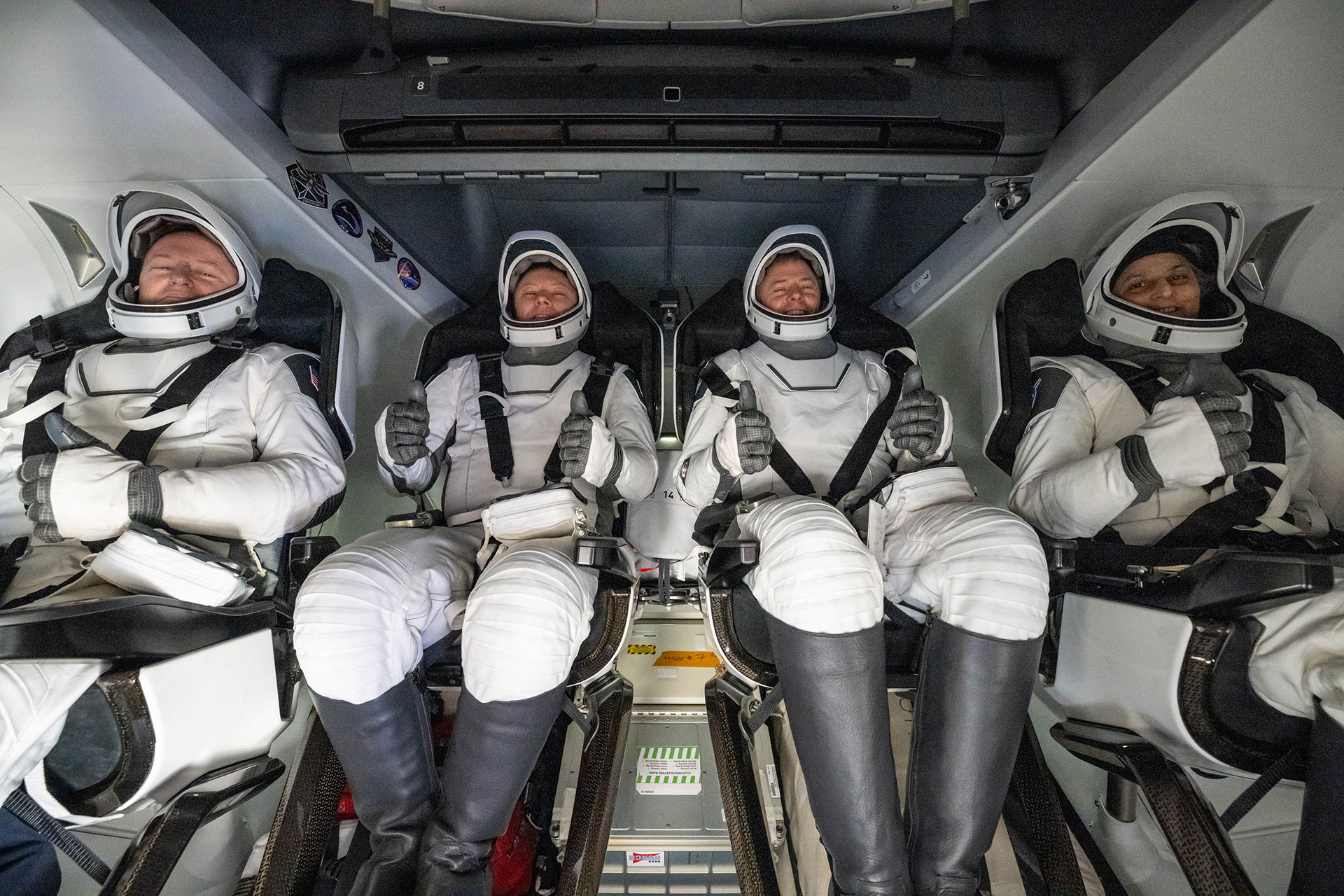
From left to right: Butch Wilmore, Aleksandr Gorbunov, Nick Hague and Suni Williams are seen inside SpaceX’s Crew Dragon Freedom after splashing down in the Gulf of Mexico and being hoisted onto a recovery ship on Tuesday, March 18, 2025. (Image credit: NASA/Keegan Barber)Standing ready
“One of the points I’ve been trying to make,” Osburg continued, “is that creating an initial space rescue capability does not have to be expensive or involve setting up a new government agency or the like. It could be done with a few million dollars per year, which is ‘in the noise’ for human spaceflight costs.”
Those monies could fund a small independent non-profit organization with a handful of people, said Osburg, working on the topic at the strategic level by advocating standardization, performing planning exercises, but also standing ready to provide operational coordination in case of an actual space rescue incident, he said.
“But whatever the way forward, hopefully something is set up soon, before the next incident happens,” Osburg concluded.