

The state comptroller on Tuesday published a scathing report that concluded Israel has for decades operated without an officially approved, binding national security policy — a structural gap the report says contributed to shortcomings in strategy, resource allocation and readiness that were thrown into devastating relief by Hamas’s October 7, 2023, attacks.
The report, the seventh in State Comptroller Matanyahu Englman’s series of investigations into the failures surrounding October 7, found that successive prime ministers and governments failed to formalize a national security doctrine that would direct the political and military echelons.
In the absence of such a framework, the probe further revealed, long-term planning in the Israel Defense Forces and other security agencies has been conducted largely according to those agencies’ respective internal priorities and professional assessments, rather than based on a comprehensive, government-approved strategy.
As a result, key decisions — including those regarding the IDF’s force structure, deployment, buildup programs and preparedness for multifront warfare — were made without reference to a binding national security policy defining overarching strategic and political objectives. The report warned that this pattern of institutional autonomy has fostered a persistent disconnect between the political and military echelons, undermining Israel’s ability to coordinate national efforts and allocate resources in line with a unified security vision.
Englman wrote that although Prime Minister Benjamin Netanyahu “initiated the drafting of a national security concept for Israel in 2017 to 2018,” he “did not complete what he began and did not bring it for approval,” leaving the draft “unenforceable and without binding force.”
Get The Times of Israel’s Daily Edition
by email and never miss our top stories
By signing up, you agree to the terms
The report traced the problem to a long-running political choice not to enshrine a binding, public national security strategy. The National Security Council — created as a government body and later defined by law in 2008 as responsible for examining and proposing updates to the national security policy — “did not fulfill its role,” the audit found, repeatedly failing to submit an updated national security policy to the security cabinet for discussion and decision.

David Ben-Gurion in his home, unknown date. (GPO)
Israel’s early security doctrine, formulated under founding prime minister David Ben-Gurion, rested on informal principles rather than a written policy. It emphasized deterrence through military strength, early warning against surprise attack, active defense, and, when necessary, decisive victory achieved swiftly on enemy territory.
This unwritten framework guided Israel’s security establishment for decades, but its reliance on precedent and implicit understanding — without periodic government review or formal approval — left it vulnerable to misinterpretation and stagnation as strategic realities evolved.
The investigation cataloged repeated attempts to formulate an official national security doctrine over the past three decades — in 1998, 2006, 2017, 2020 and 2021 — but noted that none were formally approved by a government or cabinet decision and therefore they lacked the binding status and resource backing needed to serve as a strategic compass.
Englman argued that a formally approved national security policy would force the political leadership to set clear priorities; allocate significant additional funding for security needs, even at the expense of other needs; and provide the NSC and ministries with a binding framework to translate strategy into multiyear military programs, resource allocations and interagency coordination.
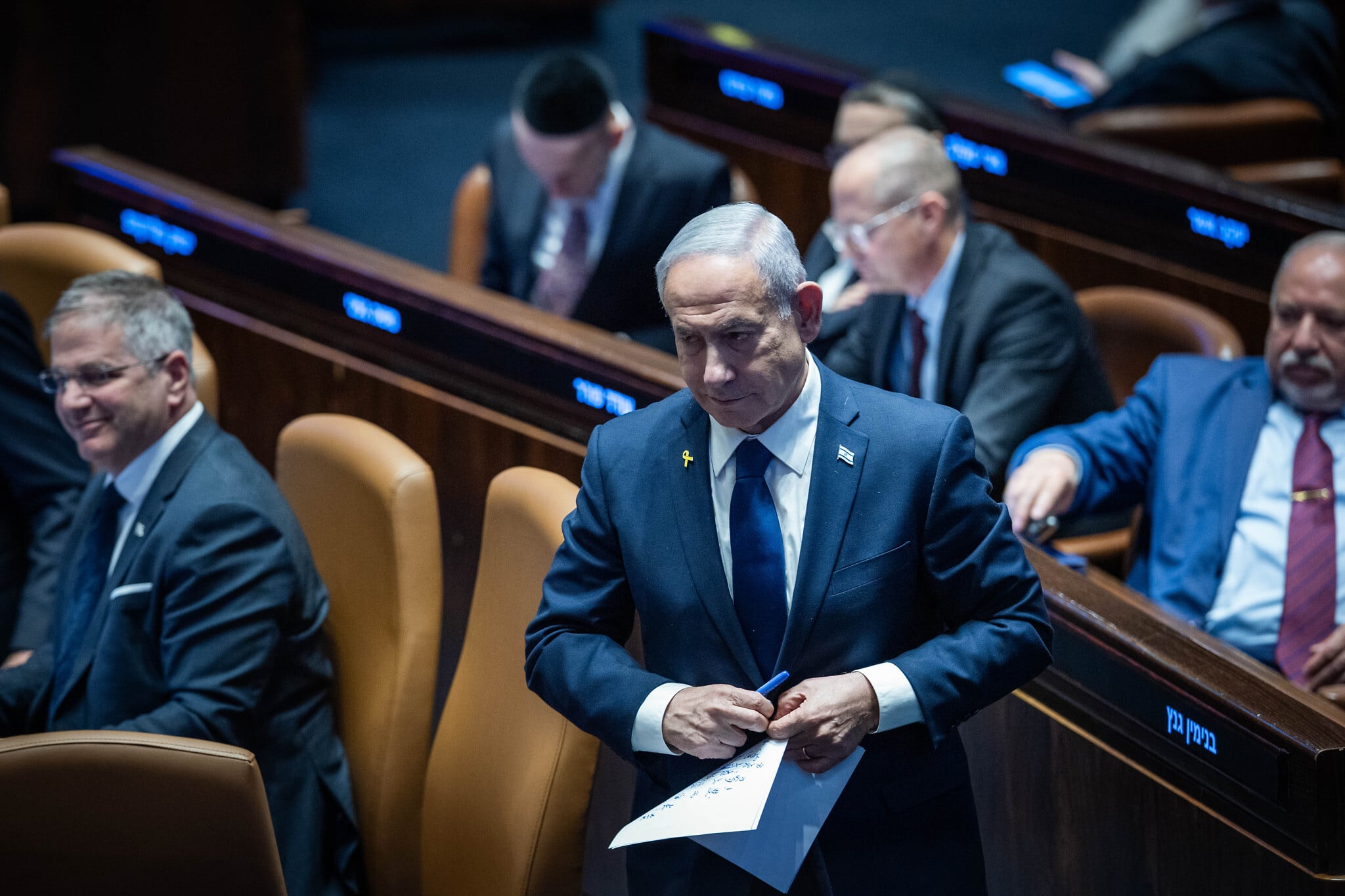
Prime Minister Benjamin Netanyahu during a ’40-signature’ debate at the Knesset in Jerusalem, on November 10, 2025. (Yonatan Sindel/Flash90)
Such a process, the report suggested, would reduce the tendency to rely primarily on past experience, better balance short-term pressures against long-term requirements, and create a common language across the political and security echelons.
After presenting the probe’s findings, the comptroller recommended that the prime minister immediately initiate an organized process, managed by the NSC, to formulate an official, binding national security policy; submit it to the security cabinet for formal decision; publish a redacted version to the public; strengthen the NSC’s capacities and authority so it can carry out the statutory role set out in the 2008 law; and require periodic reviews — recommended every five years or sooner if strategic conditions change.
Englman emphasized that the report is intended to raise institutional and systemic issues rather than assign individual blame, instead calling for a state commission of inquiry into October 7.
“The report does not replace a comprehensive investigation that will point out deficiencies or assign responsibility to any of the bodies or individuals involved in the events of October 7,” he wrote. Its purpose, the comptroller said, is to examine “the connection between the national security doctrine and the events of October 7.”
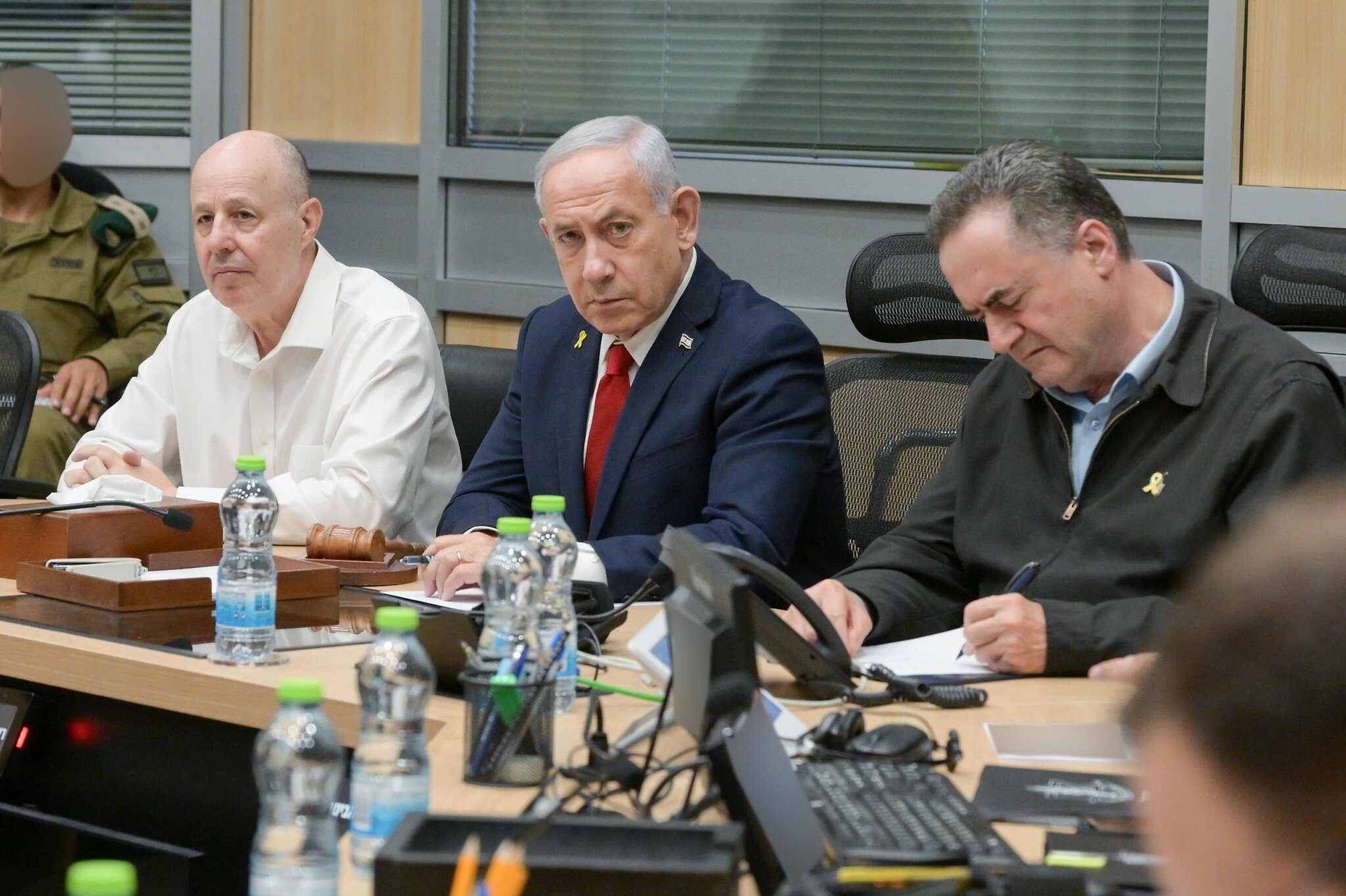
From left, National Security Adviser Tzahi Hanegbi, Prime Minister Benjamin Netanyahu and Defense Minister Israel Katz at the IDF command bunker at the Kirya in Tel Aviv on September 16, 2025 (Maayan Toaf/GPO)
The state comptroller concluded that Israel’s long-running reliance on an unofficial doctrine — rooted in Ben-Gurion-era thinking and informal practice — without a binding, public national security policy has left critical gaps in the political echelon’s ability to set priorities, allocate national resources, and direct and oversee the security establishment with a coherent, long-term strategic outlook.
In June, the Knesset passed a bipartisan bill requiring the NSC to formulate a national security strategy in consultation with relevant ministries and intelligence agencies, and to have the government approve it within 150 days of submission.
The report’s release came weeks after a shake-up at the NSC: In October, Netanyahu removed National Security Adviser Tzachi Hanegbi — who publicly acknowledged responsibility for the “terrible failure of October 7” and urged a full inquiry — after reported disagreements over policies during the war against Hamas in Gaza.
Polls have consistently indicated a clear majority of Israelis support a state commission of inquiry, and Netanyahu himself backed an inquiry of this sort into the conduct of the previous government in 2022, but he has refused to establish such a commission to investigate the failures leading up to October 7.
You appreciate our journalism

You clearly find our careful reporting valuable, in a time when facts are often distorted and news coverage often lacks context.
Your support is essential to continue our work. We want to continue delivering the professional journalism you value, even as the demands on our newsroom have grown dramatically since October 7.
So today, please consider joining our reader support group, The Times of Israel Community. For as little as $6 a month you’ll become our partners while enjoying The Times of Israel AD-FREE, as well as accessing exclusive content available only to Times of Israel Community members.
Thank you,
David Horovitz, Founding Editor of The Times of Israel