
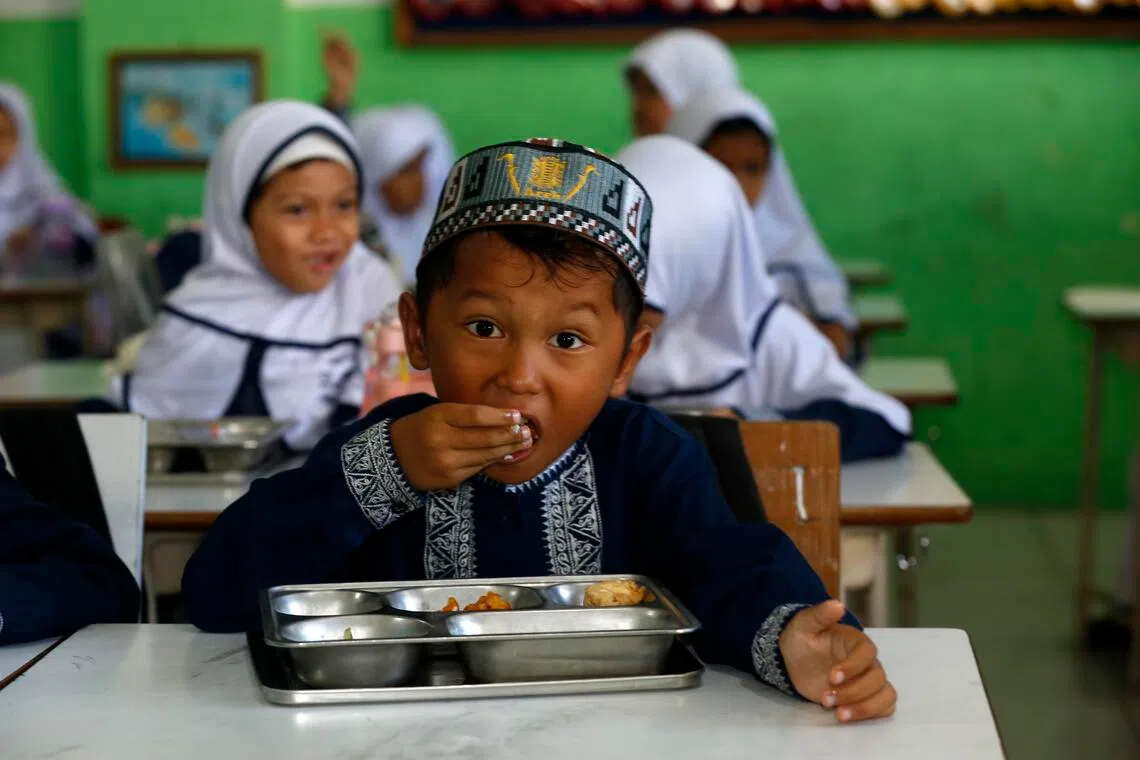
JAKARTA – The Indonesian government’s hallmark programme to provide free meals to combat malnutrition in the country has contributed to nearly half of food poisoning cases in 2025, an official told lawmakers on Nov 12.
Thousands of people have been sick since the much-hyped billion-dollar scheme of President Prabowo Subianto was launched in January, with critics calling for its suspension over hygiene concerns.
Mr Dadan Hindayana, head of the national BGN agency which oversees the programme, told Parliament that more than 11,000 people suffered from food poisoning across Indonesia since the launch, including over 600 who were hospitalised.
Out of 441 recorded incidents of food poisoning, “the free meal programme accounts for 211 incidents, or 48 per cent of these cases”, he said.
Each incident could involve numerous people affected, sometimes in the thousands.
In October, more than 660 pupils from two schools in central Java
experienced diarrhoea, nausea and dizziness
after they ate meals provided by the government.
Mr Dadan said that half of food poisoning cases related to the free meal programme were the result of E. coli contamination.
The government has tightened the supervision of kitchens providing the meals, he added.
The authorities require these kitchens to sterilise food trays and use only filtered water in cooking and washing utensils.
The are currently more than 14,000 kitchens operating across the country under the programme, which according to Mr Dadan fed more than 42 million people until November.
Food insecurity is a persistent issue in Indonesia, where stunting spurred by malnutrition affects more than 20 per cent of children.
The government had previously announced a target of 82.9 million people – about one-third of the country’s population – receiving nutritious meals by the end of 2025.
The programme was funded by widespread budget cuts, which together with anger over deep inequality in the country triggered two waves of nationwide protests earlier in 2025.
Mr Prabowo has defended the flagship programme as a way to tackle child malnutrition, claiming that cases of food poisoning were low compared to the number of meals served.
In October, he said that, while not perfect, the programme was an achievement praised by many countries.
Recipients are mostly children and toddlers, as well as pregnant and breastfeeding women.
The government plans to expand the programme in 2026 to include elderly Indonesians and people with disabilities. AFP
IndonesiaFood hygiene/safetyPoisoning