
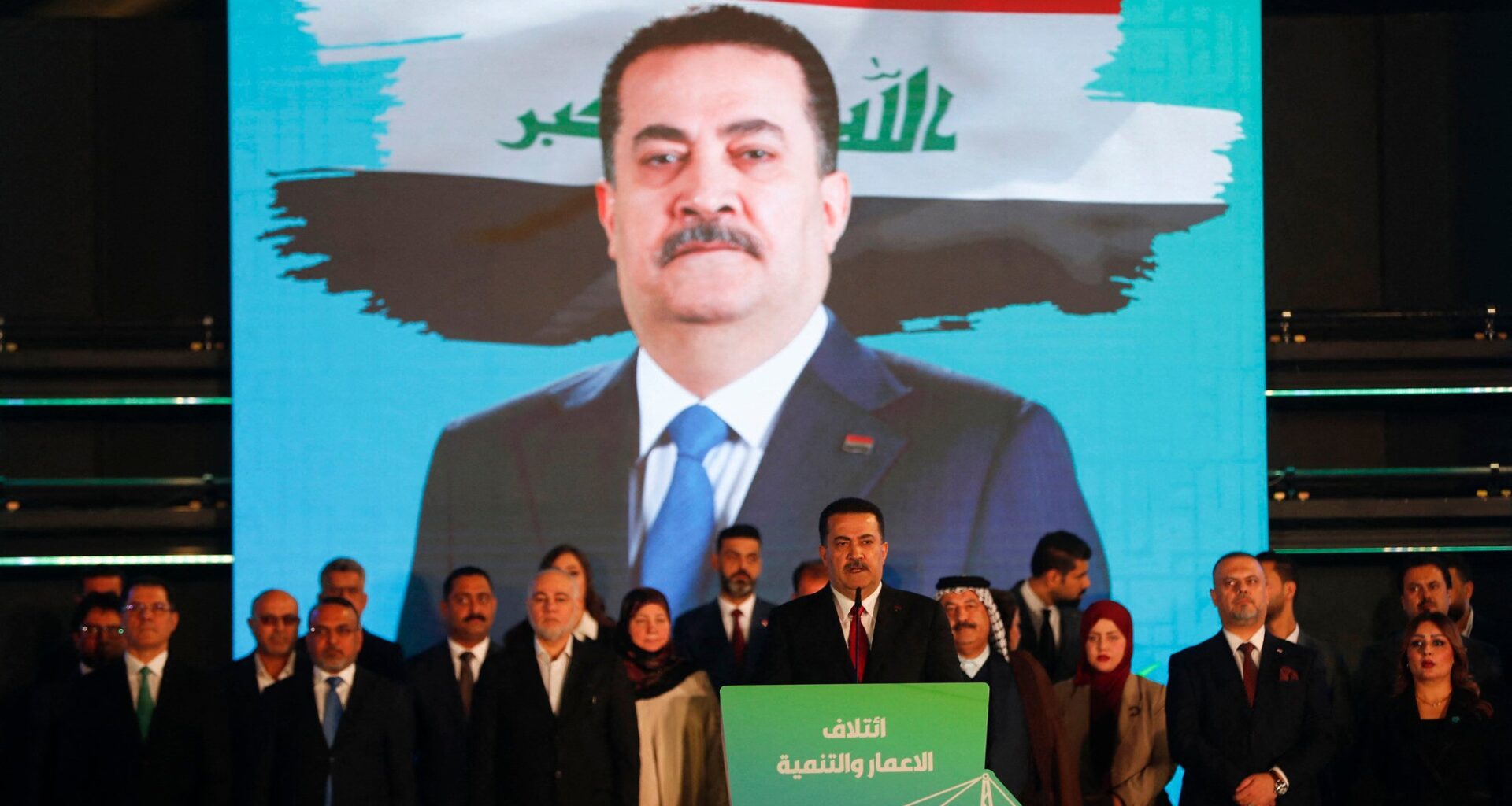
BAGHDAD, Iraq (AFP) — Incumbent Iraqi Prime Minister Mohammed Shia al-Sudani, who is vying for a second term, has scored a big win in general elections, sources close to the premier said on Wednesday.
Iraqis on Tuesday headed to the polls for a general election that came as the country experiences a rare moment of calm in a region roiled by recent conflicts.
The next premier must answer to Iraqis seeking jobs, better infrastructure, and improved education and health systems in a country plagued by corruption and mismanagement.
But he also faces the exacting task of maintaining the delicate balance between Iraq’s allies, Iran and the US, even more so now that the Middle East is undergoing seismic changes, with new alliances forming and old powers weakening.
Iraq’s electoral commission is expected to announce preliminary results later in the evening, but an official close to the premier said that his “Reconstruction and Development list has secured a major victory.”
Get The Times of Israel’s Daily Edition
by email and never miss our top stories
By signing up, you agree to the terms
Another two sources said Sudani’s alliance has “won the largest bloc.”
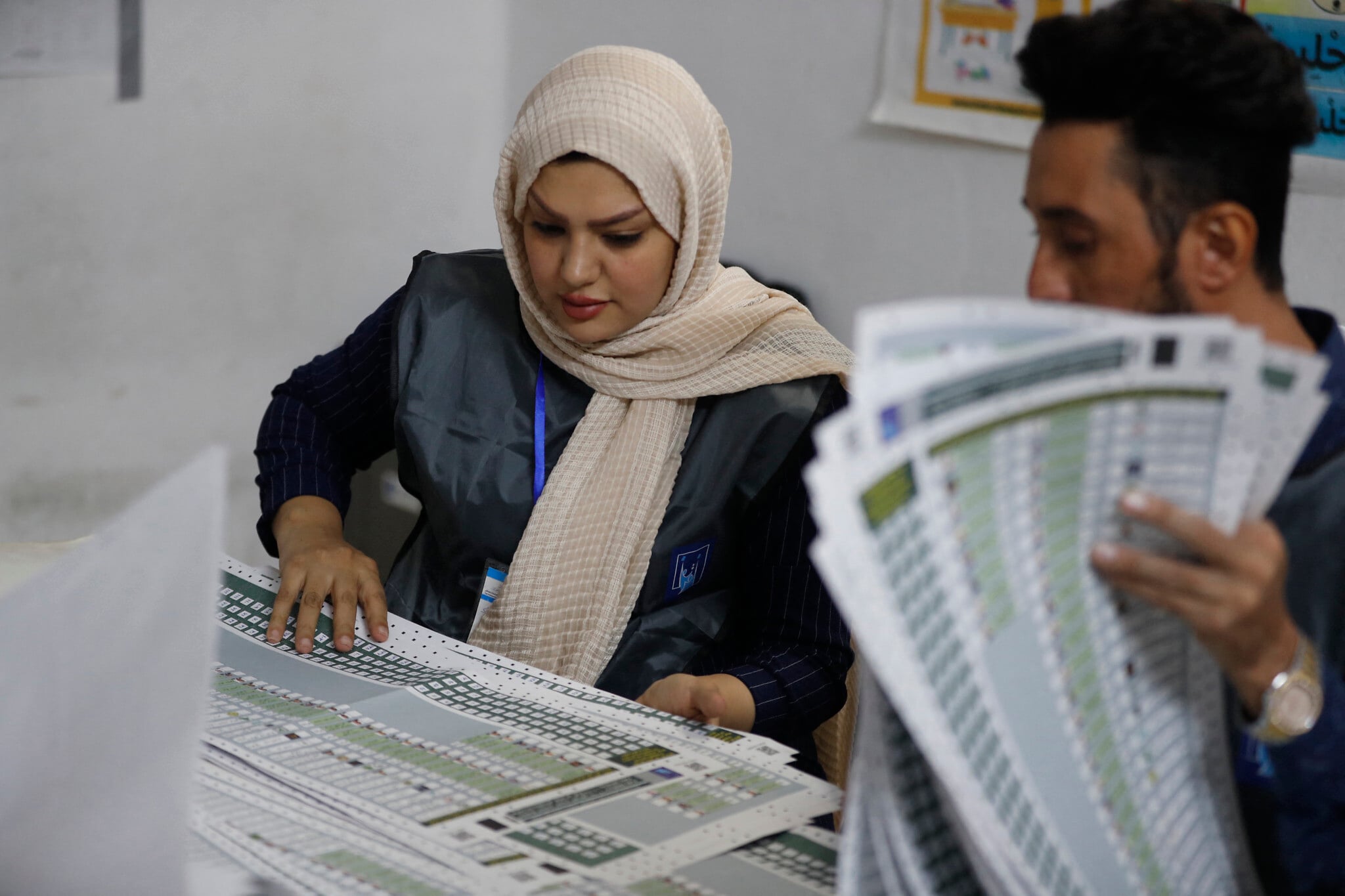
Iraqi polling officials count ballots at a polling station after closing of the polls during the country’s parliamentary election in Al-Muhandiseen district in eastern Baghdad on November 11, 2025. (Photo by AHMAD AL-RUBAYE / AFP)
Sudani has emerged as a major force in Iraqi politics, after he was brought to power three years ago by an alliance of pro-Iran groups.
Once final results are confirmed, lawmakers are set to begin negotiations to nominate the prime minister — an often painstaking task that has at times taken months.
With an outright majority almost impossible to achieve by any single list, the role of prime minister is determined by the coalition that can secure enough post-election allies to form the largest alliance.
In Iraq, the role of prime minister goes to the Shiite majority, the speaker of parliament to a Sunni Muslim, and the largely ceremonial presidency goes to a Kurd.
In previous parliaments, Shiite-majority parties have struck compromise deals to work together and form a government.
Sudani was brought to power in 2022 by the Coordination Framework, an alliance of powerful pro-Iran Shiite parties who formed the largest parliamentary bloc.
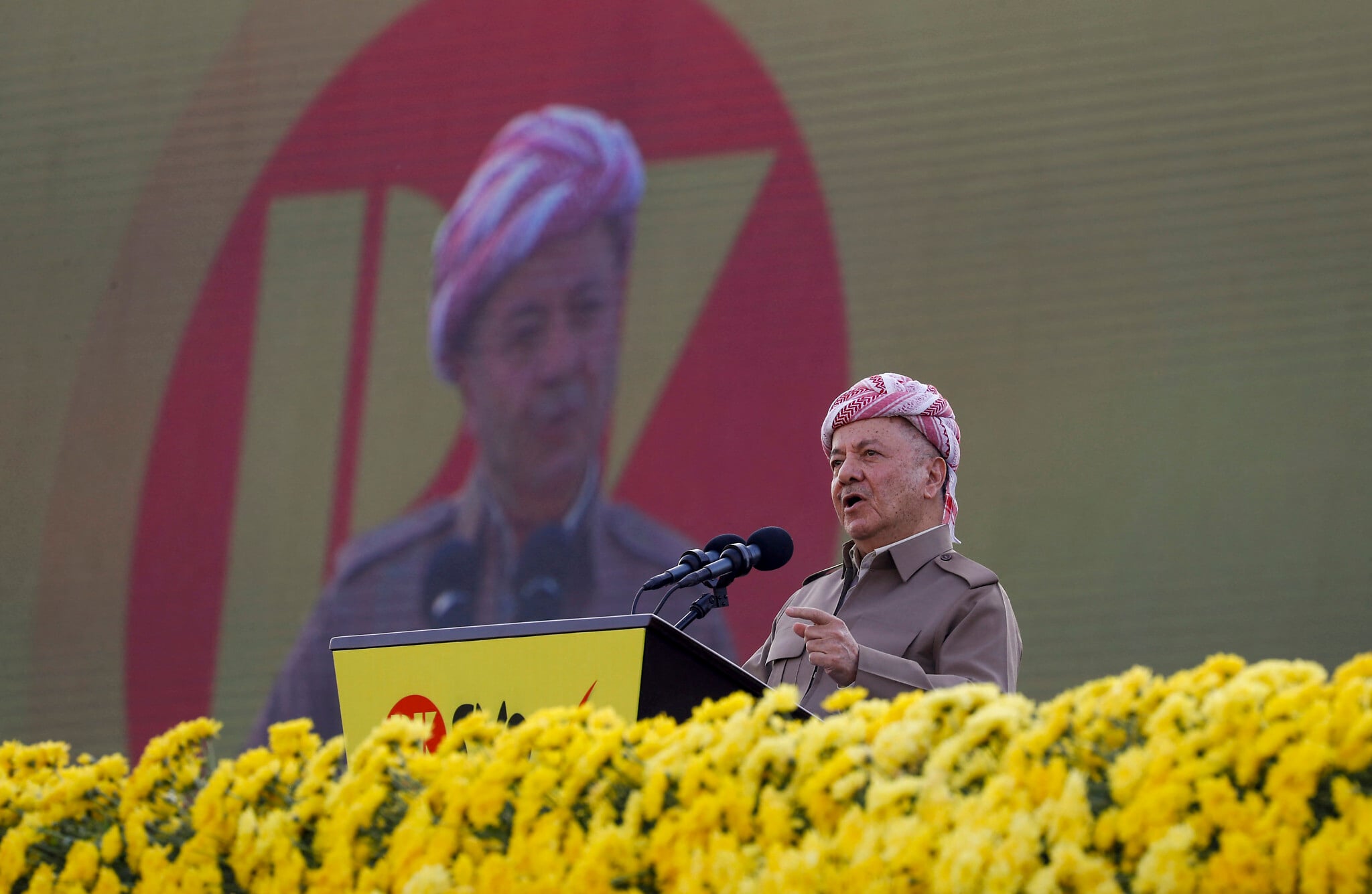
Masoud Barzani, leader of the Kurdistan Democratic Party (KDP), speaks during the party’s electoral campaign rally at Franso Hariri Stadium in Arbil on November 7, 2025 ahead of the country’s parliamentary elections. Iraq will hold parliamentary elections on November 11. (Safin HAMID / AFP)
A senior Iraqi politician told AFP last month that the Coordination Framework is divided over supporting Sudani, with former prime minister Nuri al-Maliki reportedly likely to oppose a second term for the incumbent.
Even as Iraq tries to move past two decades of war since a US-led invasion toppled Saddam Hussein, the country of 46 million suffers from poor infrastructure and public services, mismanagement and corruption.
Many Iraqis who boycotted the elections told AFP the vote wouldn’t bring meaningful change to their daily lives and said that it was a sham that only benefits political elites and regional powers.
Sudani has nonetheless vowed to continue on the path of “reconstruction and development.”
During his three-year tenure, Baghdad has been transformed into a bustling construction hub, with new tunnels and bridges springing up across the city.
He also maintains that his government helped shield Iraq from regional turmoil in the past two years.
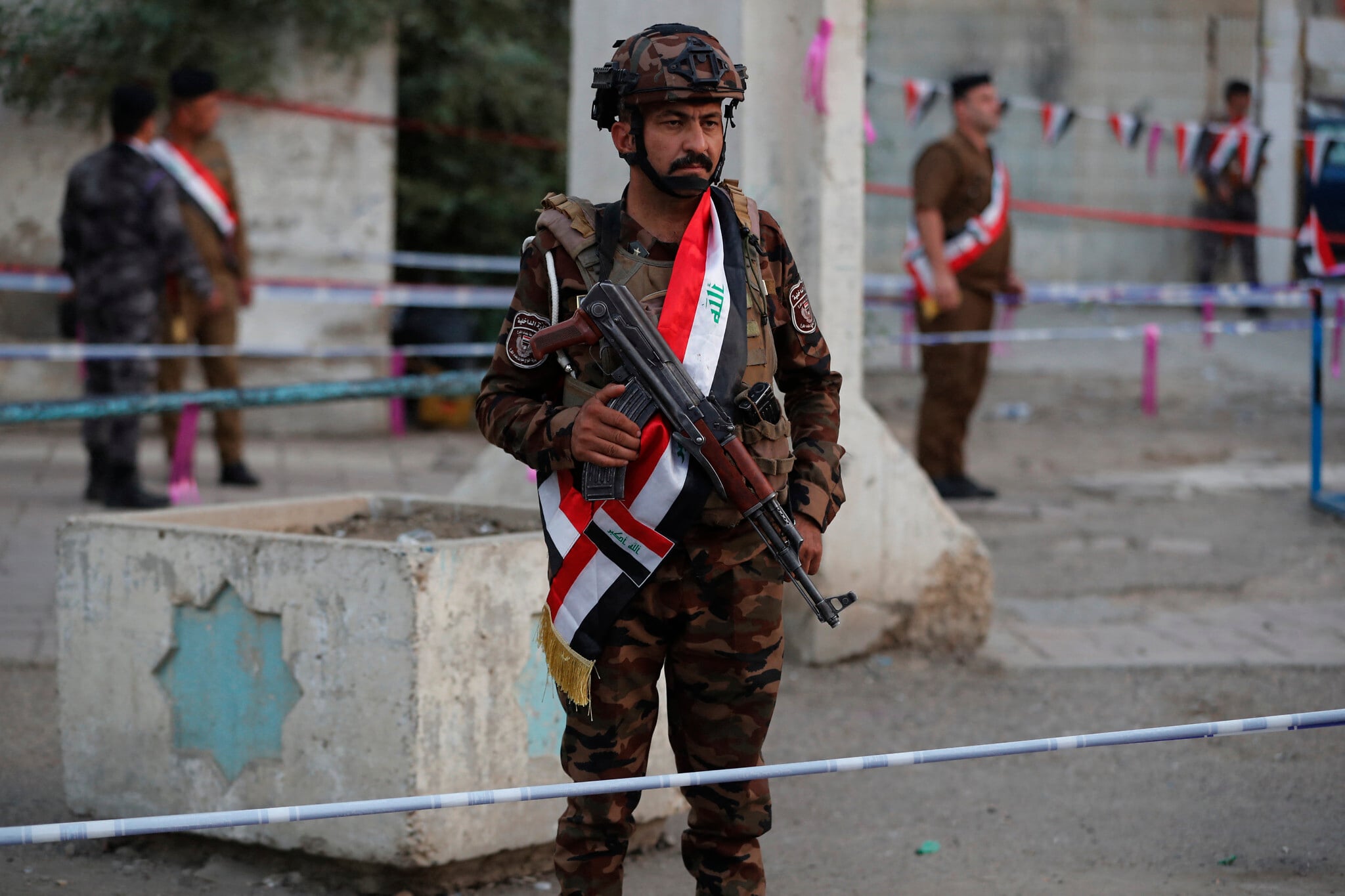
Iraqi security forces guard a polling station in Adhamiya area of Baghdad on November 11, 2025 during Iraq’s parliamentary elections. (AHMAD AL-RUBAYE / AFP)
The next premier will have to maintain the balance between Iran and the US, the long-term foes for whom Iraq has often served as a proxy battleground.
Since the US-led invasion, Iran has held sway in Iraqi politics, not only backing influential politicians but also supporting armed groups there.
The last two years have seen Israel — which was attacked on October 7, 2023, by Iran-backed Hamas, and shortly thereafter by other Iranian proxies in the region — inflict heavy losses on Tehran-backed groups, as well as on Iran itself during a 12-day war in June.
In addition to maintaining its foothold through the groups it backs, Tehran is also seeking to keep the Iraqi market open to products from its crippled economy.
Washington meanwhile hopes to cripple Tehran’s influence, and has long pressured Baghdad to disarm Iran-backed groups.
Times of Israel staff contributed to this report.
Watch DocuNation Season 3: The Heart of Israel
when you join the ToI Community
Support The Times of Israel’s independent journalism and receive access to our documentary series, DocuNation: The Heart of Israel.
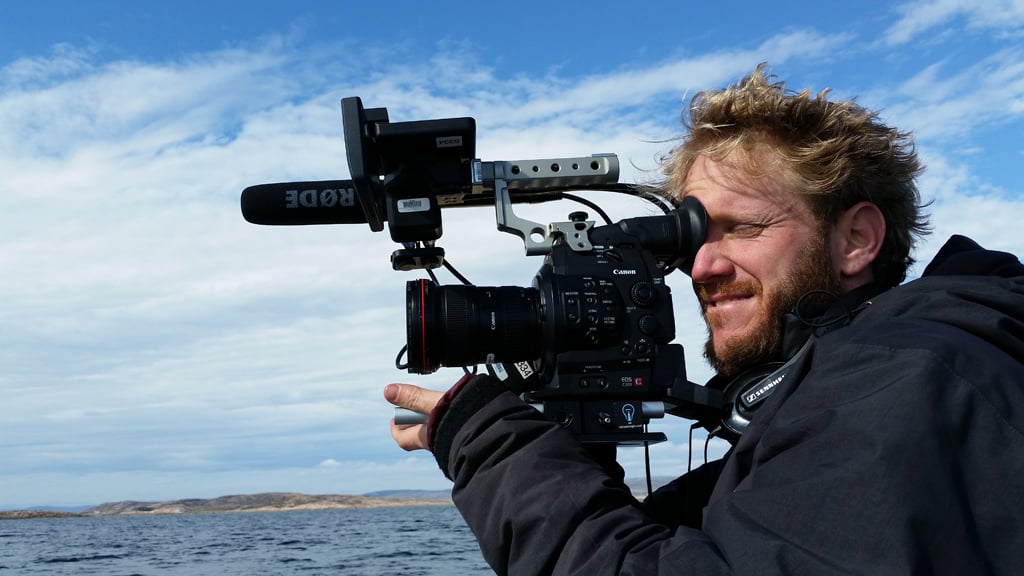
In this season of DocuNation, you can stream seven outstanding Israeli documentaries with English subtitles and then join a live online discussion with the filmmakers. The selected films show Israel beyond the conflict: a place of storytellers and musicians, of dreamers, makers, and communities rooted in meaning and trust.
When you watch DocuNation, you’re also supporting Israeli creators at a time when it’s increasingly difficult for them to share their work globally.
To learn more about DocuNation: The Heart of Israel, click here.
Support ToI and get DocuNation
Support ToI and get DocuNation
Already a member? Sign in to stop seeing this
You appreciate our journalism

You clearly find our careful reporting valuable, in a time when facts are often distorted and news coverage often lacks context.
Your support is essential to continue our work. We want to continue delivering the professional journalism you value, even as the demands on our newsroom have grown dramatically since October 7.
So today, please consider joining our reader support group, The Times of Israel Community. For as little as $6 a month you’ll become our partners while enjoying The Times of Israel AD-FREE, as well as accessing exclusive content available only to Times of Israel Community members.
Thank you,
David Horovitz, Founding Editor of The Times of Israel