
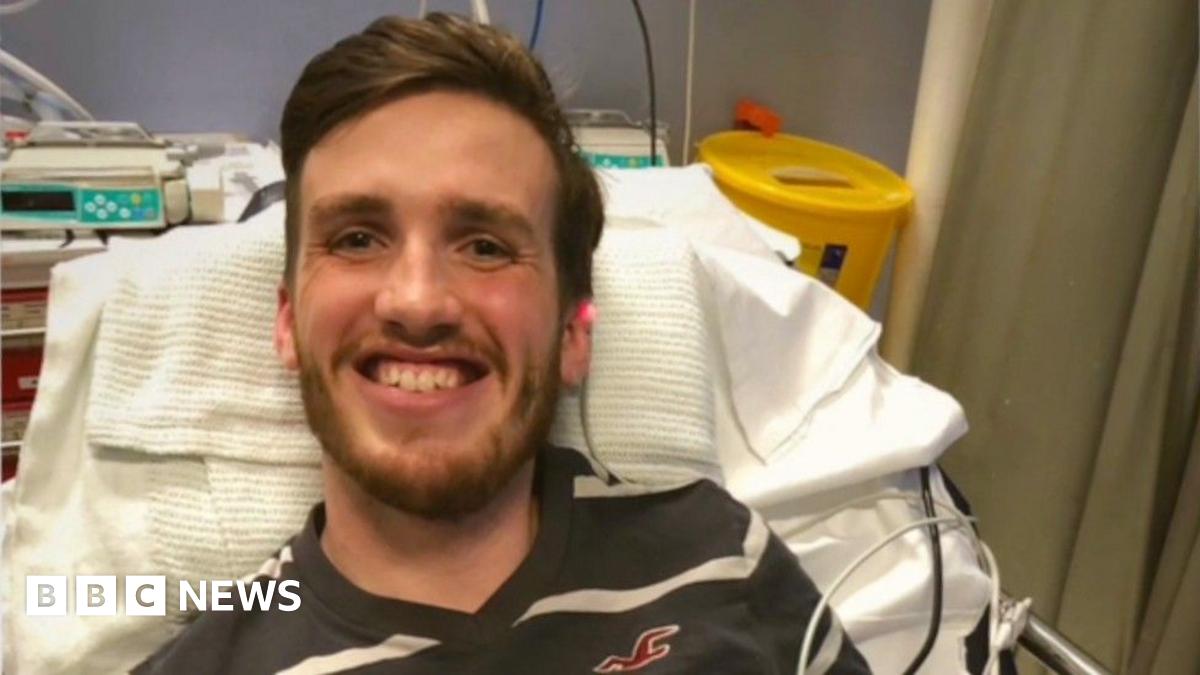
Hospital documents show Greg’s responsible health professional was Prof Stephan Schueler, who until recently was head of the Freeman’s cardiothoracic department. Described by a former colleague as “king of the castle” in the transplant unit, Prof Schueler had a decade-long relationship with the manufacturer of the Medtronic device, public records show.
Greg’s family say he did not declare to them his financial relationship with the heart device’s manufacturer, despite such a disclosure being a requirement of the doctor’s regulator, the General Medical Council (GMC).
In a statement to the BBC, Prof Schueler said that “there was never a financial incentive nor any salary arrangements with Medtronic for me or anybody else in our team to choose one device over the other”. He did not respond to a direct question about what he had told Greg Marshall about his relationship with Medtronic but said that he “always worked within GMC standards for good medical practice” and that consenting patients for a procedure was “carried out by a whole team of specialised colleagues”.
It is common for clinicians to work as consultants for medical manufacturer and pharmaceutical companies. Such arrangements are recognised as being mutually beneficial and can lead to better outcomes for patients, though there are rules around what medics need to declare to patients.
The Freeman said in a statement to the BBC that it offered its “sincere condolences” to Greg’s family and it was investigating his case.
It said that, although it was “aware” of the NHS data in April 2019, it felt its scientific value was not reliable, and pointed out that it was not accepted in any national or international scientific publication. It said there were other publications at that time which indicated “excellent outcomes” for the Medtronic device.
Robbie Burns, a patient representative with NHS Blood and Transplant, obtained many of the documents relating to the hospitals’ continued use of the Medtronic device. He believes there should be an external investigation into how it was allowed to happen.
“It was entirely preventable,” he said.
“If I had been in the position of receiving this [Medtronic] device, and looked back at the data, I would be going, ‘Why on earth did you do this?'”
Prof Schueler said the Medtronic device had several benefits, including being more suitable for children and small adults. He said the decision to continue using the pump was taken after internal discussions had considered all the risk and benefits carefully.
Another doctor, André Simon, the director of heart and lung transplantation and ventricular assist devices at Harefield Hospital, had a similarly long-standing relationship with HeartWare and Medtronic, going back to 2014.
The man who replaced him at the hospital on the edge of west London, Dr John Dunning, told the BBC that Harefield had continued to use the Medtronic device as “it was the preference” of his predecessor.
Dr Simon, who no longer works at the hospital, did not respond to the BBC’s questions. In its statement, the Harefield said it was “aware” of his work for Medtronic and that this had been declared in multiple papers. The hospital added that he was one of a number of senior people “involved” in choosing which devices were used, and that “the continued use of the [Medtronic device] had collective support of clinicians at Harefield” until the manufacturer issued a safety notice in early 2021.
In separate statements to the BBC, both the Freeman and Harefield hospitals said their decisions to continue using the Medtronic device were based on “complex clinical decisions” and stressed that there were “no clear grounds” at the time to believe the Medtronic device was significantly inferior to the Abbott device.
Harefield said it commissioned an external review of its services in 2019 from the then-chair of the NHSBT’s Cardiothoracic Advisory Group, and this made no comment on its selection of devices.