
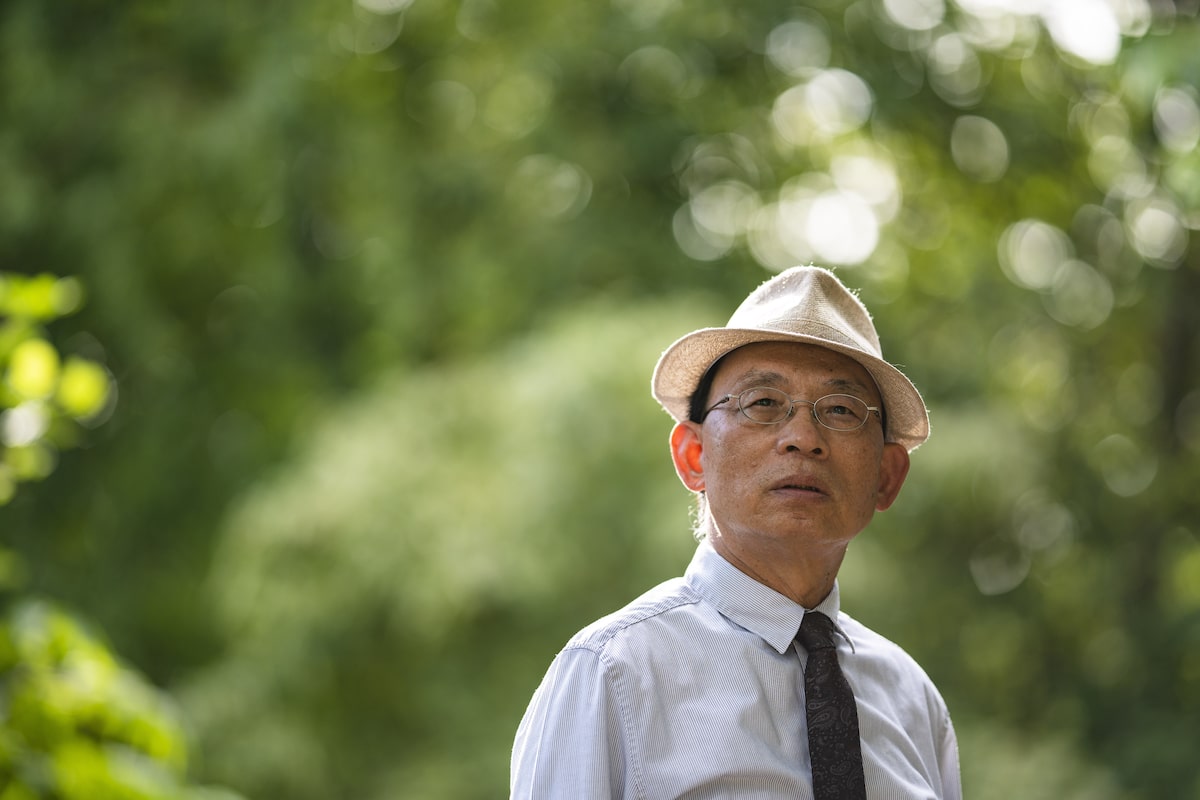
Victor Ho, a critic of Beijing’s crackdown in Hong Kong who is living in Canada, says the arrest warrants for 19 pro-democracy activists show Hong Kong is now a ‘Chinese Communist Party colony.’Jimmy Jeong/The Globe and Mail
Ottawa is condemning Hong Kong’s announcement of arrest warrants and bounties for 19 pro-democracy activists, including several in Canada, as transnational repression that threatens this country’s sovereignty.
One of those targeted in Canada, Victor Ho, on Sunday warned Canadian politicians now urging closer ties with Beijing to be mindful of repression practised by the ruling Chinese Communist Party.
Foreign Affairs Minister Anita Anand and Public Safety Minister Gary Anandasangaree said in a Saturday statement that this marks the third time Beijing-controlled Hong Kong has set bounties for people overseas, adding it “represents a deeply troubling escalation in the use of transnational repression by the People’s Republic of China.”
Canada’s premiers last week called on Prime Minister Mark Carney to broaden and deepen the relationship with China in the face of a five-month trade war with the United States launched by U.S. President Donald Trump.
Mr. Ho, a Canadian citizen who arrived here decades ago, is a trenchant critic of Beijing’s crackdown in Hong Kong, where dissent has been criminalized, protests silenced, opposition figures jailed or exiled, and pro-democracy newspapers shuttered.
“Don’t forget the people still suffering in Hong Kong and in China – especially the Uyghur people, and the Tibetans,” Mr. Ho said.
On Friday, Hong Kong’s national security police announced arrest warrants for 19 activists based overseas, accusing them of subversion under a stringent national security law, marking the largest such tally yet.
They are accused of organizing or participating in the “Hong Kong Parliament,” an effort in 2023 to create a democratic body to represent Hong Kongers around the globe, as China continues to crack down on the region’s political freedoms. Hong Kong authorities allege the parliament-in-exile aimed to subvert state power under the law Beijing imposed on the Asian financial hub in 2020, after months of pro-democracy protests in 2019.
The Friday announcement marks the third time Mr. Ho, a former editor of the B.C. edition of Sing Tao Daily and one of the organizers of the Hong Kong Parliament, has been the subject of an arrest warrant from Hong Kong.
Mr. Ho also testified at the Hogue Commission on foreign interference in Canada, telling the inquiry in 2024 that most Chinese-language media outlets in this country are owned by people in China or Hong Kong who are afraid to challenge Beijing.
Mr. Ho, who has lived in Canada for more than 27 years, said Sunday that the arrest warrants show Hong Kong is now a “Chinese Communist Party colony.” He said these measures are intended to “scare people” living overseas including those who “exercise their freedom of expression, their freedom of speech on Canadian soil.”
Other people living in Canada targeted by the bounties include Keung Ka-Wai, Tony Lam and Elsa Chan Lai-chun.
Ms. Chan, who was active in the pro-democracy movement in Hong Kong, has obtained refugee status in Canada, she said. She said the arrest warrant and bounties do not frighten her.
“I will not be afraid. Instead it makes me more proactive,” she said Sunday.
Mr. Keung – who is seeking asylum in Canada, where he arrived four months ago – was arrested in Hong Kong nine times and jailed twice for a total of one year. He is president of the Hong Kong Democratic Independence Union, which advocates for the region’s independence, and is also a member of the Hong Kong Parliament.
He said the arrest warrant will not deter him: “I have no regrets and I press on for Hong Kong’s democracy and freedom.”
Ottawa denounces Hong Kong arrest warrants targeting pro-democracy activists
In the Sino-British Joint Declaration, a 1984 handover treaty China signed with Britain, Beijing pledged to let Hong Kong retain autonomy over its affairs and Western-style civil liberties for 50 years. Britain turned over Hong Kong to China in 1997.
That changed with the 2020 national security law, which critics say criminalized opposition and dissent.
Mr. Lam, another member of the Hong Kong Parliament seeking asylum in Canada, said the region no longer has any autonomy and that the arrest warrant is simply the police doing Beijing’s bidding.
Ms. Anand and Mr. Anandasangaree said in their statement that Canada will not tolerate Hong Kong targeting Canadians or those living in Canada with “threats, intimidation or coercion.”
David Mulroney, a former Canadian ambassador to China, said Canada’s premiers are mistaken in seeking to rekindle ties with Beijing. Canada and China suffered a major diplomatic rupture in late 2018 after Chinese authorities jailed two Canadians in what has been called “hostage diplomacy,” after Canada arrested a Chinese tech executive in response to a U.S. extradition request.
“Calls for closer ties with China by people as senior and supposedly well informed as the premiers are dangerously irresponsible,” Mr. Mulroney said Sunday. “They appear to believe that we should simply look the other way despite repeated evidence of Beijing harassing courageous people across this country who dare to speak out against repression by China’s Communist Party.”
Ms. Anand and Mr. Anandasangaree said Ottawa’s social-media monitoring has detected evidence that news of the bounties is being artificially amplified by an online network of accounts “that are targeting Chinese-speaking communities.”
With reports from Reuters