
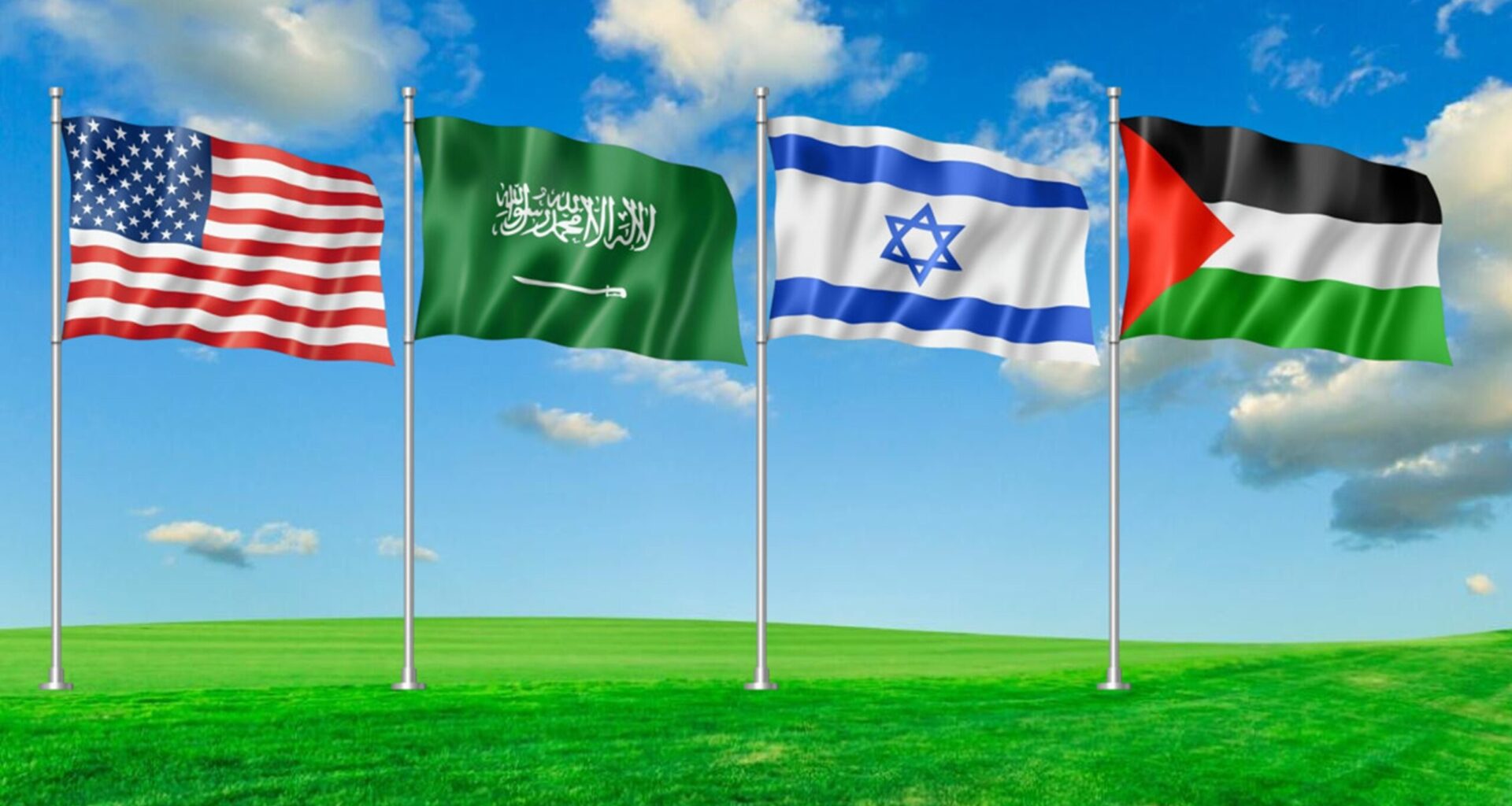
In his opinion essay for The Media Line, Majdi Halabi maps a possible US–Saudi defense pact that would lock in security guarantees by treaty—and, just as crucially, tie any Saudi normalization with Israel to real movement toward a Palestinian state. Halabi reports that Crown Prince Mohammed bin Salman’s expected trip to Washington is meant to clinch a Senate-approved agreement modeled partly on the US–Qatar framework, bundling a mutual defense commitment with expedited arms sales like F-35s, advanced air defenses, and intelligence platforms. Saudi negotiators, he writes, want protections that outlast shifts in Washington and insist that normalization is off the table without irreversible steps toward Palestinian statehood with East Jerusalem as its capital—no symbolic gestures, no optics-only photo ops.
Riyadh also wants the pact to serve Vision 2030: localize defense production to 25%, attract major investment, transfer sensitive technologies, and formalize response mechanisms to outside threats, including those from Iran’s proxies. A recent mutual defense arrangement with Pakistan offers a template for extended deterrence, Halabi notes. Washington, for its part, aims to keep strategic primacy in the Gulf, curb Saudi moves toward China and Russia, and knit Israel into a broader regional security architecture—goals that collide with Riyadh’s conditional stance on the Palestinian issue.
Even with the momentum, Halabi says Saudi leaders doubt the United States’ staying power, given the region’s volatility and the rise of non-state actors. The upshot: if a pact is sealed, it could recast power balances while preserving Saudi strategic autonomy—and make Palestinian self-determination the price of any breakthrough with Israel. For the full contours, source-by-source detail, and what this would mean for the Gulf’s next decade, read Halabi’s complete piece.