
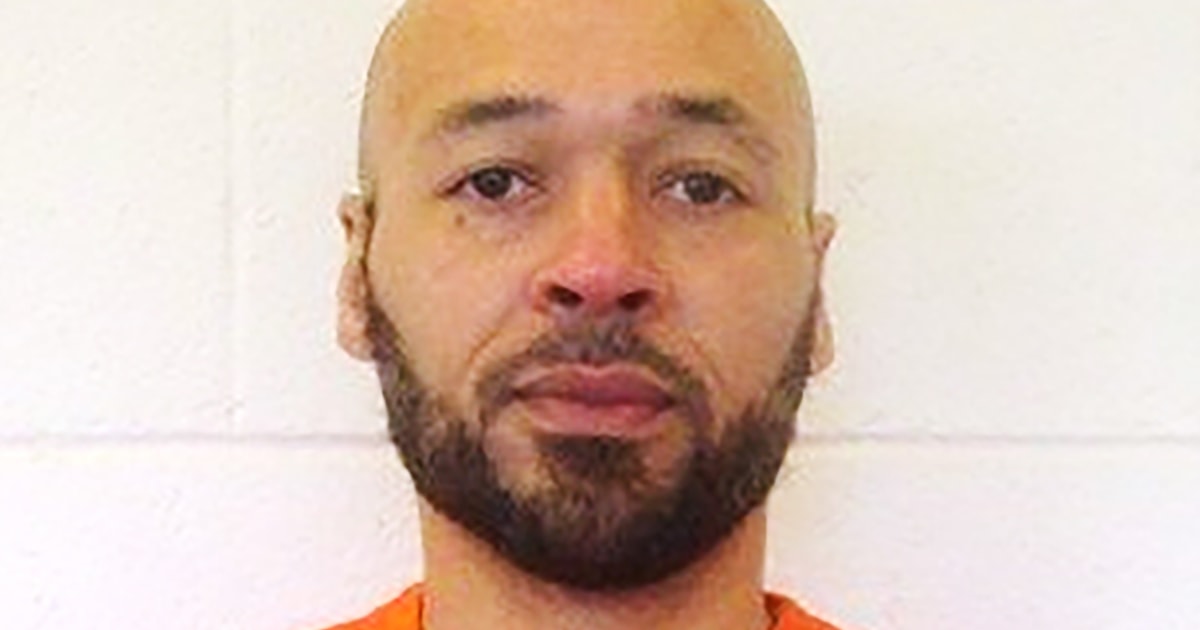
Oklahoma Governor Kevin Stitt on Thursday commuted the death sentence of a man who was set to be executed to life in prison after a state panel recommended his life should be spared.
Tremane Wood, 46, was scheduled to receive a lethal injection at the Oklahoma State Penitentiary in McAlester on Thursday. The Pardon and Parole Board issued an uncommon clemency recommendation last week.
“After a thorough review of the facts and prayerful consideration, I have chosen to accept the Pardon and Parole Board’s recommendation to commute Tremane Wood’s sentence to life without parole,” Stitt said in a statement.
The man, Wood, had denied stabbing a migrant farmworker to death during a 2002 robbery.
“I’m not a monster. I’m not a killer,” Wood told the board via a video link from prison. “I never was, and I never have been.”
Sitt said Thursday that “this action reflects the same punishment his brother received for their murder of an innocent young man and ensures a severe punishment that keeps a violent offender off the streets forever.”
Stitt, who has served two terms and cannot run for reelection in 2026, had granted clemency only once during his nearly seven years as governor prior to Thursday.
Wood was sentenced to die for his role in the stabbing death of Ronnie Wipf, a 19-year-old migrant farmworker from Montana, during a botched robbery attempt at a north Oklahoma City hotel on New Year’s Day 2002.
Wood’s attorneys have not denied that he participated in the robbery but maintain that his brother, Zjaiton Wood, was the one who stabbed Wipf. Zjaiton Wood was sentenced to life without parole and died in prison in 2019 after admitting to several people that he killed Wipf, said Tremane Wood’s attorney, Amanda Bass Castro Alves.
“We are profoundly grateful for the moral courage and leadership Governor Stitt has shown in granting mercy to Tremane,” Bass Castro-Alves said in a statement. “This decision honors the wishes of Mr. Wipf’s family and the surviving victim, and we hope it allows them a measure of peace.”
Wood’s attorneys have also asked the U.S. Supreme Court to stop the execution. They argued, among other things, that trial prosecutors didn’t properly reveal details of a plea agreement with a key witness.
Prosecutors have painted Wood as a dangerous criminal who has continued to participate in gang activity and commit crimes while incarcerated, including buying and selling drugs, using contraband cellphones and ordering attacks on other people in the prison.
“Even within the confines of maximum security prison, Tremane Wood has continued to manipulate, exploit and harm others,” Attorney General Gentner Drummond said.
During his testimony last week, Wood accepted responsibility for his prison misconduct and his participation in the robbery, but reiterated that he was not the one who killed Wipf.
“I regret my role in everything that happened that night,” he said.
Wood’s execution was one of three scheduled this week in the U.S.
In Florida, Bryan Frederick Jennings was scheduled to die by lethal injection Thursday. In South Carolina, Stephen Bryant was scheduled to die by firing squad on Friday.
A total of 41 people have died by court-ordered execution so far this year in the U.S., and at least 18, including Wood, Jennings and Bryant, were scheduled to be put to death during the remainder of 2025 and next year, according to the Death Penalty Information Center.