

Listen to this article
Estimated 2 minutes
The audio version of this article is generated by text-to-speech, a technology based on artificial intelligence.
B.C. General Employees’ Union (BCGEU) members voted overwhelmingly in favour of ratifying a new agreement with the province that will have them receive a three per cent general wage increase per year over the next four years.
In a statement, the union said 79 per cent of its members participated in the vote over the new deal, which was tentatively struck in late October.
About 25,000 members of the BCGEU participated in strike action. The bargaining group represented 34,000 people, with most of those who remained on the job considered essential services.
The BCGEU said 89 per cent of voting members agreed to ratify the deal. It also includes around 1,600 workers with the Professional Employees Association (PEA).
“Every picket shift, every show of solidarity, and every voice raised for respect and fair treatment made this outcome possible,” said the BCGEU.
The ratification officially ends a labour dispute that extended for eight weeks and affected everything from liquor distribution to wildland firefighting.
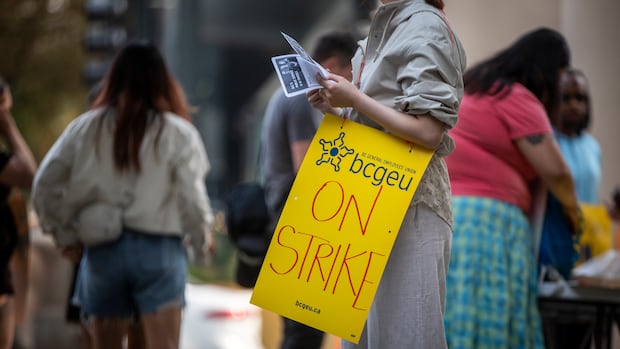
 BCGEU employees are pictured on strike outside of a government-run liquor store in Vancouver on Friday, Oct. 3, 2025. (Ben Nelms/CBC)
There were picket lines at government offices, B.C. Liquor Stores, Liquor Distribution Branch facilities and more, leading to a strained supply of alcohol in stores and restaurants.
A number of government-run programs — from student loans to IVF funding to correctional services — were also impacted by the strike.
The tentative deal came after mediated talks with the province.
The BCGEU’s contract with the province ended on March 31, and workers voted to strike as they sought better wages and working conditions, amid a rising cost of living.
The union’s original demand for a four per cent per year general wage increase came as the provincial government attempts to manage a $11.6 billion deficit.
In addition to the wage increases over the next four years, the union said the agreement also improves working arrangements for telework and remote workers, and includes targeted pay hikes for the lowest-paid public servants.
In a release the province said, “these changes will help improve and maintain stable service delivery throughout the province. “