
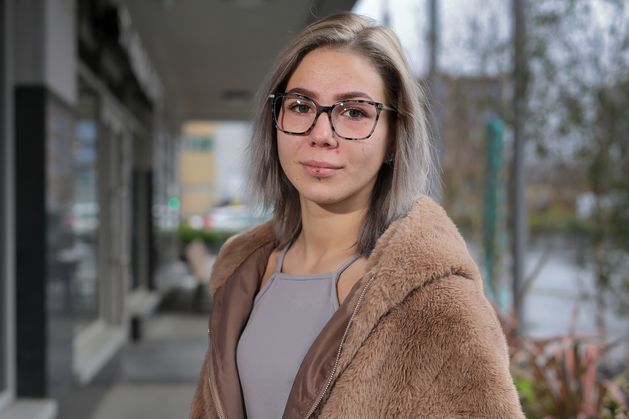
Wiktoria Swierzynska (24) is one of 20 young people in Dublin allotted a house of their own as part of a new scheme
Now aged 24, her family moved to Ireland from Poland when she was six.
But since her teenage years, she has found herself “living in car parks, basements, crashing on sofas and nearly every hostel in Dublin city”.
“I have felt the most unsafe in hostels. I’ve been robbed, my jewellery taken off my body while I was asleep. I’ve been drugged, assaulted, degraded, belittled and bullied in every possible way,” she said.
“I would not repeat that experience if I were paid an arm and a leg, and a kidney, for it – never again.
“I’ve spent six months inside the tents outside the Criminal Courts of Justice, and I ended up getting pneumonia over and over again.
“A key worker saw my condition and helped me. They introduced me to the Supported Housing for Youth (SHY) initiative.”
On October 22, Housing Minister James Browne TD marked one year of the SHY initiative.
SHY is a programme that helps young adults between the ages of 18 and 24 who are experiencing homelessness. The programme is co-ordinated by the ministry with Dublin’s local councils, Clúid Housing, Focus Ireland, Dublin Region Homeless Executive and the HSE.
Participants are allowed to “simulate” a tenancy with a housing licence that allows them to live in a one-bed house or apartment.
They pay rent and their bills for a period to prepare them for long-term accommodation. They also receive access to education, training or employment.
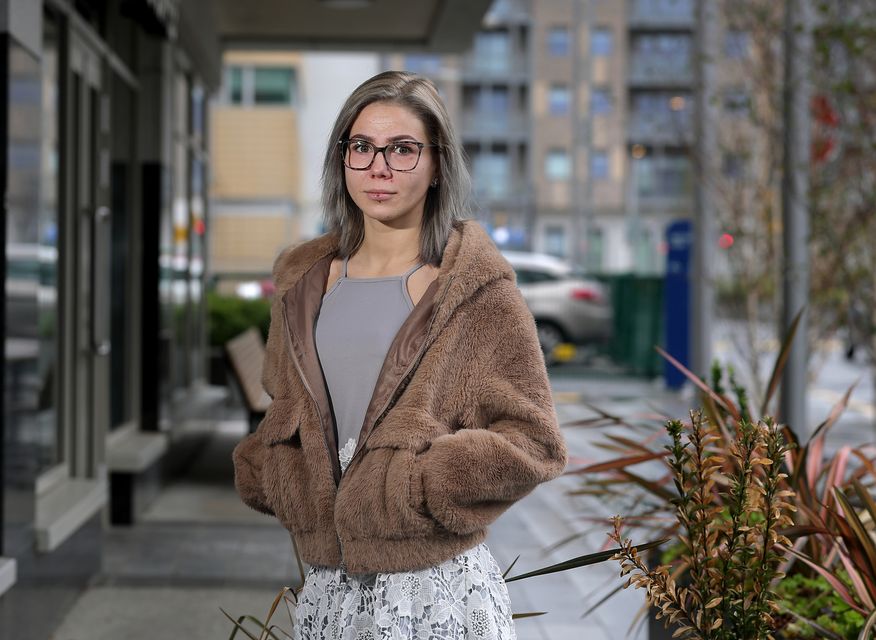
Wiktoria Swierczynska said she was robbed, drugged and assaulted while she was homeless. Photo: Frank McGrath
At the launch, Mr Browne approved further capital funding for the next phase of the programme.
“Addressing homelessness remains a major priority for me and the Government, and the Youth Homelessness Strategy is one part of our wider response,” he said.
“We recognise that young adults are a distinct cohort of individuals who require their own distinct housing solutions.”
More than 20 young people living in emergency accommodation have been identified for the programme by Dublin’s four local authorities.
They have been given eight one-bedroom houses and there are also six two-bedroom homes where some people have opted to live alone or with a roommate. Tenants have been matched with homes close to where they are likely to settle in the long term.
Ms Swierzynska was allotted her one-bedroom house in Cherrywood, south Dublin, in January after she was confirmed as having a place in the SHY programme a year before.
“I live alone. After my experience living in hostels, it was my number one criteria that I am not sharing ever again,” she said.
“I’m a non (drug) user, non-drinker and I’m working full-time: it played a major role in me being able to help myself and being able to make it into the programme.
“The idea of having your own home when you’ve never really known a home is something I’m still getting used to. In the first three months the peace and quiet felt like the biggest danger. I still wake up terrified thinking someone could open my door.
“I’m still terrified that it’s going to be taken from me. I know it’s only a stepping stone, so I’m always thinking, ‘What next?’. I keep hearing that in my head, I’ll always have that bit of hesitation.”
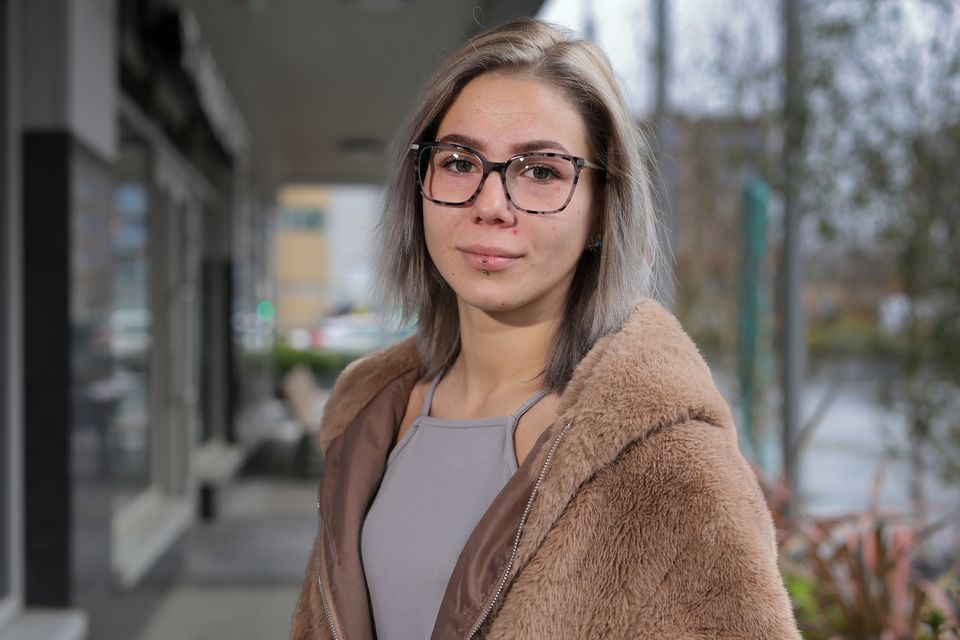
Wiktoria Swierczynska moved to Ireland with her family when she was six. Photo: Frank McGrath
Today’s News in 90 Seconds – Thursday, November 13
Ms Swierzynska hopes more support will be introduced for young people in homelessness.
“When you’re under age and you tell anyone that you’re homeless, you’re instantly looked down upon. They think you are an addict, a thief or a criminal,” she said.
“SHY is the first actual foot in the door that any of us who are willing to do the work has been given. If this hadn’t worked out, I don’t know if I would have stayed in the country – I don’t know what would have happened to me.”
Lisa O’Brien, head of Youth Housing Supports for Focus Ireland, said there had been a 100pc tenancy sustainment rate in the programme over the past year. “Young people who have experienced homelessness also experience a lot of social exclusion, so we’re trying to bridge the gap and provide them with the support they need,” she said.
“This has been designed with their specific needs in mind and we are flexible where we need to be.”
In January, I’ll be living here a year
Ms Swierzynska is currently on a probation period that will last between 12 and 18 months where a few important parts of the initiative, such as paying her rent on time and maintenance, will be observed.
The one-bedroom apartments are modelled after traditional bedsits. Unlike traditional tenancies, the participants were allowed to choose their own furniture for the houses as well.
“In January, I’ll be living here a year,” Ms Swierzynska said.
“Maintenance has been easy because everything is electrical. The only thing I would change is that I wish the kitchen and the bedroom were two separate rooms.
“I don’t need to ask anyone if I can use the bathroom or the dishwasher. I get to keep it clean.”
She added that she hopes other children and young people living in homelessness, as she herself experienced, will be allowed more opportunities in the future.
“When you’re under 25 and you have no family, no kids, no savings, absolutely nothing – you can’t even convince someone to rent you a house with your history,” Ms Swierzynska said.
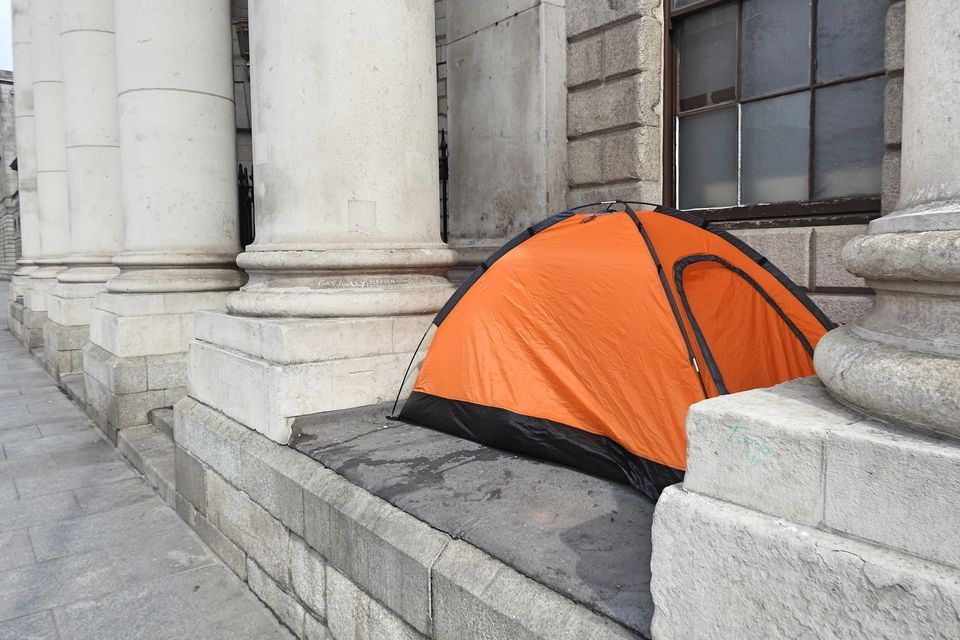
Focus Ireland said young people experience a sense of social exclusion when they have been homeless. Photo: Getty
“I want people to understand what growing up in homelessness looks like. I am not a drug user, so to be shoved into the kind of places I’ve lived in, with no windows and surrounded by heavy crack users, means you are not even given the chance to be sober.”
Ms O’Brien said the success of the programme was due to the involvement of the local authorities and other government bodies.
Dublin City Council has the highest number of SHY homes, with four one-beds and four two-bedroom properties. South Dublin County Council has two two-beds and one one-bed, Dún Laoghaire-Rathdown County Council (DLR) has two one-beds and Fingal County Council has one one-bed.
“Some of the participants are now completing SHY and ready to move to their long-term homes, and the councils have been very helpful in helping us set them up to access housing available to them,” Ms O’Brien said.
SHY is now being externally evaluated until next March to see if it will be extended for longer, until which point the Department of Housing has extended its funding.
“I feel overwhelmed with the possibilities now. Even the idea of a real family was something I’ve only seen in movies, but now I can think of getting married and having a family of my own,” Ms Swierzynska said.
“So much of my childhood was just about survival that I never got to dream about anything for myself. For the first time, I feel like I can allow myself to do so.”
Funded by the Local Democracy Reporting Scheme