
Filter by article type:
In-brief analysis
In-depth analysis
In-brief analysis
Nov 14, 2025
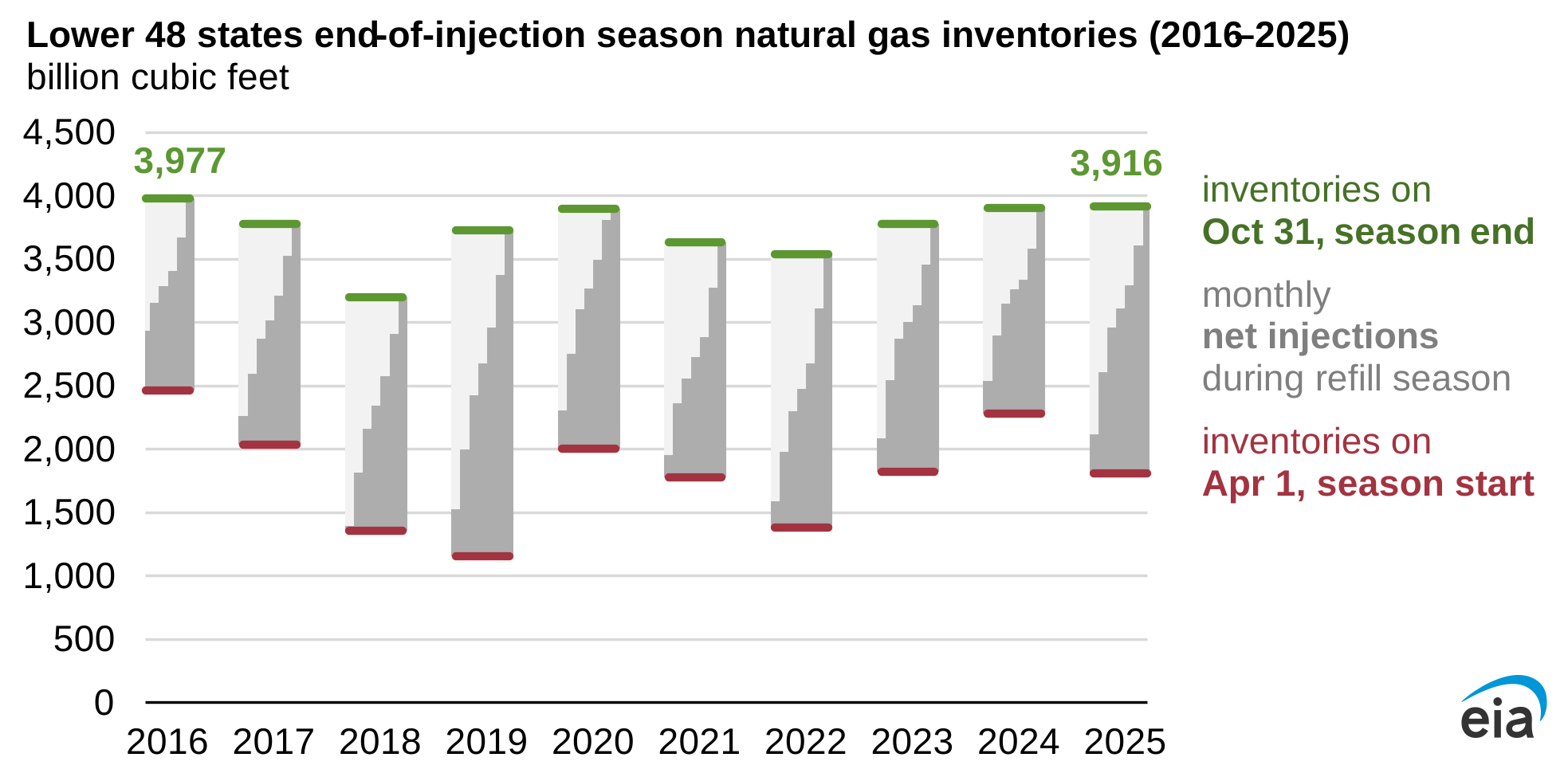
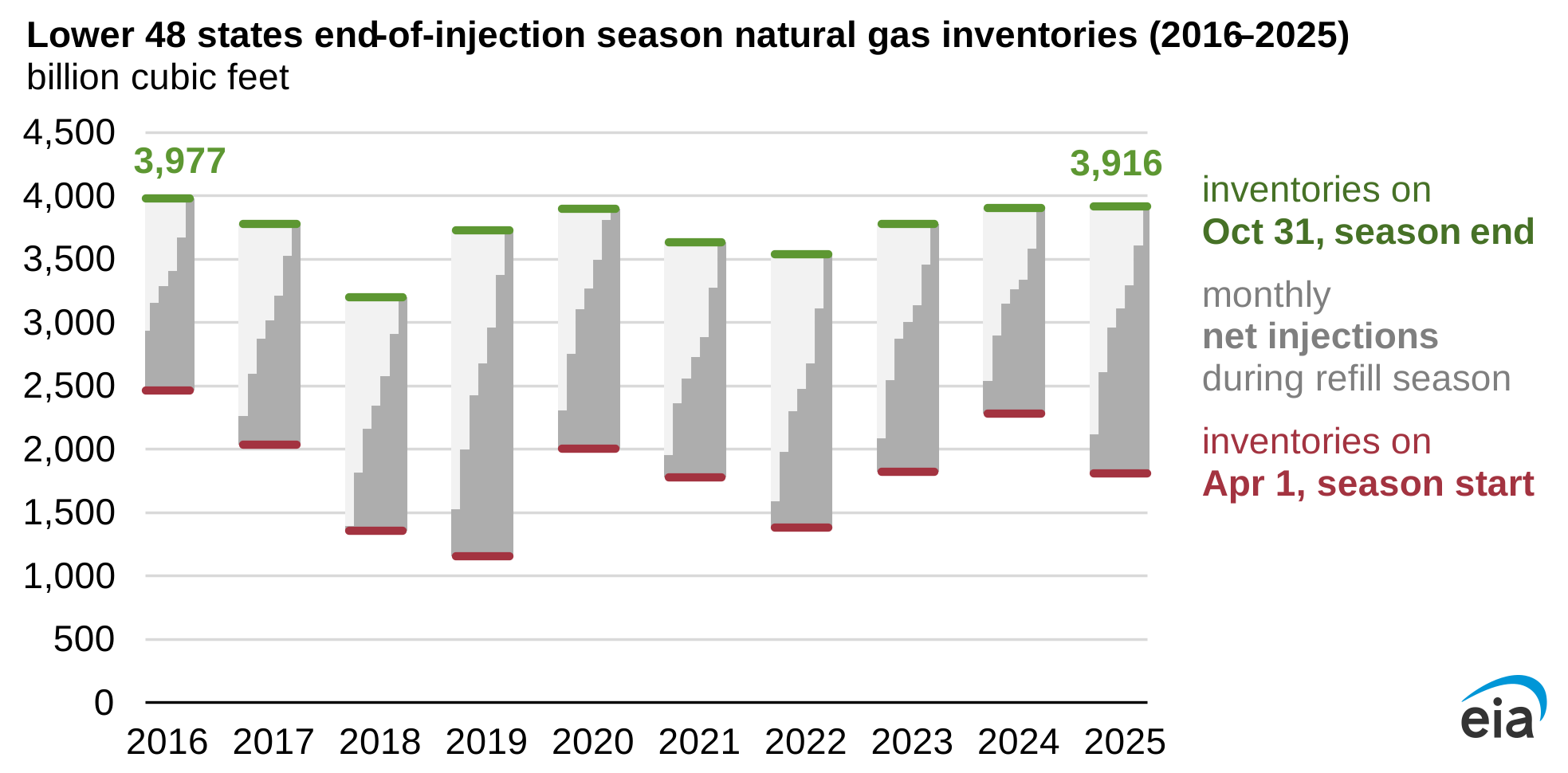
Working natural gas in storage in the Lower 48 states ended the natural gas refill season (April 1–October 31) with more than 3,900 billion cubic feet (Bcf), according to estimates based on data from our Weekly Natural Gas Storage Report released on November 6. U.S. inventories are starting winter 2025–26 at about the same level as last year, the most since 2016. As of October 31, inventories are 4% above the five-year (2020–24) average after above-average injections into storage throughout much of the injection season.
In-brief analysis
Nov 13, 2025
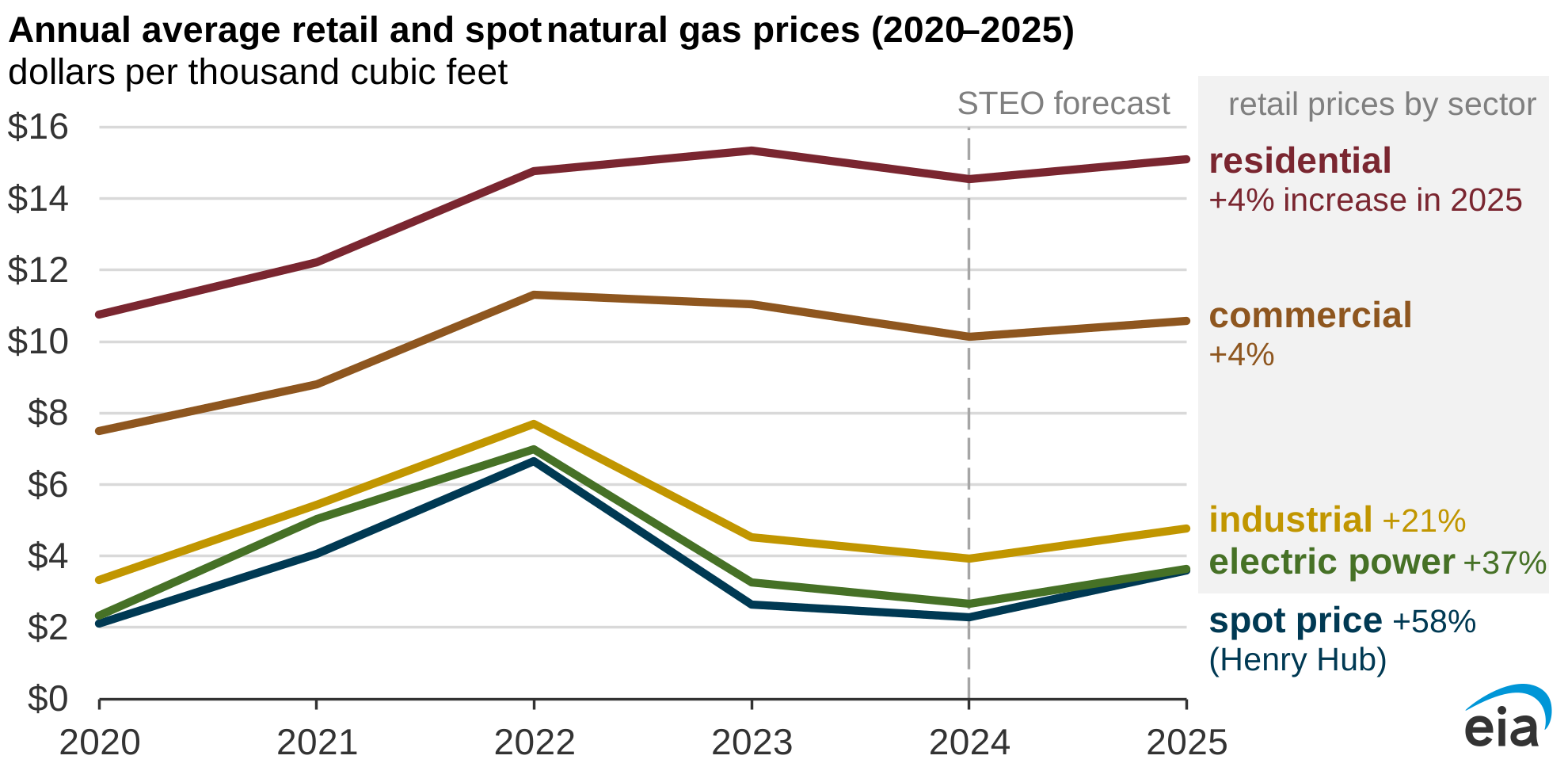
Driven by an increase in wholesale natural gas prices, retail U.S. natural gas prices for every sector have increased so far this year, although the increases are uneven across sectors. In our latest Short-Term Energy Outlook, we expect the 2025 annual average price of natural gas paid by electric power plants to increase by 37% and the price paid by industrial sector customers to increase by 21% compared with the 2024 averages. We forecast that natural gas prices for customers in the commercial and residential sectors will increase by less, at 4% each.
In-brief analysis
Nov 10, 2025
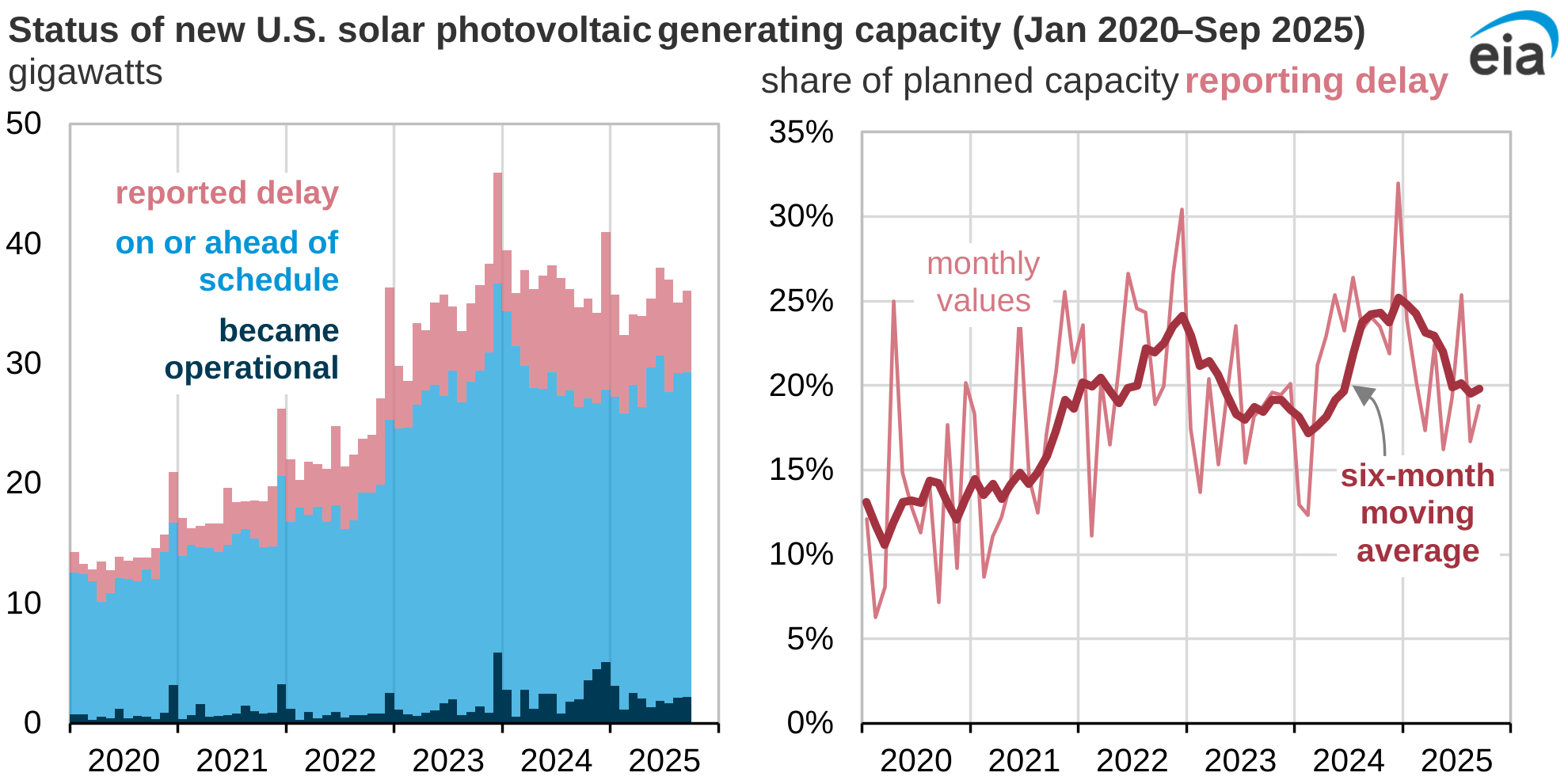
In the third quarter of 2025, solar projects representing about 20% of planned capacity reported a delay, a decrease from 25% in the same period in 2024, based on data compiled from multiple Preliminary Monthly Electric Generator Inventory reports.
In-brief analysis
Nov 7, 2025
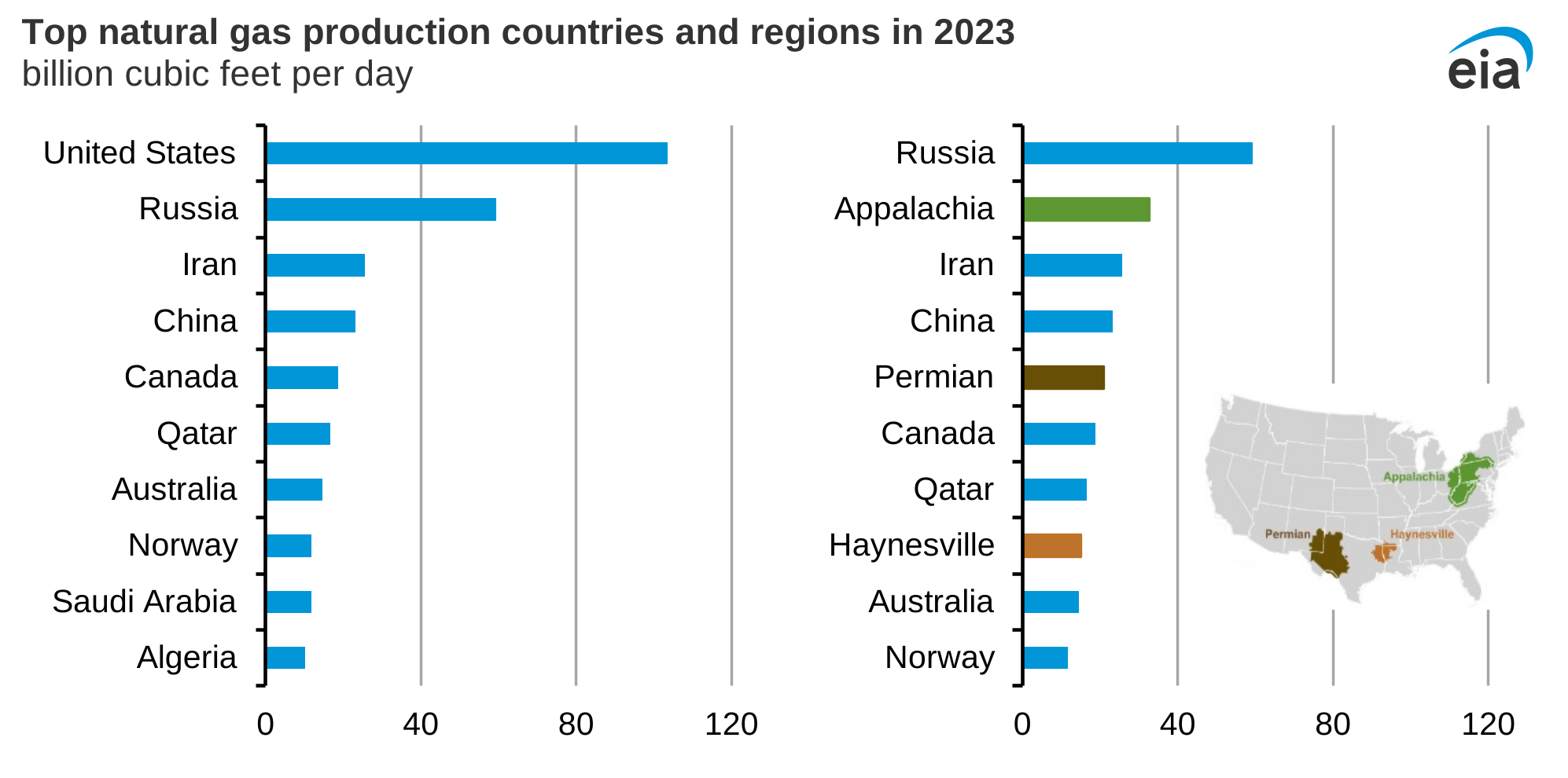
The United States produced 104 billion cubic feet per day (Bcf/d) of natural gas, 75% more than the world’s second-largest natural gas producer, Russia, in 2023, the most recent year for which we have comprehensive worldwide data on natural gas production.
The United States has been the world’s largest producer of natural gas since 2009. More recently, U.S. natural gas production has increased further, averaging 106 Bcf/d for the first half of 2025 (1H2025).
Three regions in the United States are among the top 10 natural gas-producing areas in the world when ranked independently against other natural gas-producing countries:
The Appalachia region, in the northeastern United States, encompasses the Marcellus and Utica shale plays and ranked as the second-largest producer with 33 Bcf/d in 2023. More recently, production from the region has continued to average 33 Bcf/d in 1H2025.
The Permian region, in Texas and New Mexico, ranked fifth worldwide with 21 Bcf/d in 2023. Production from the Permian has since increased to average 25 Bcf/d in 1H2025.
The Haynesville region, in Texas, Louisiana, and Arkansas, ranked as the eighth-largest natural gas-producing area with 15 Bcf/d in 2023. Production from the Haynesville has declined slightly to average 14 Bcf/d in 1H2025.
Read More ›
In-brief analysis
Nov 5, 2025
Data source: Enverus
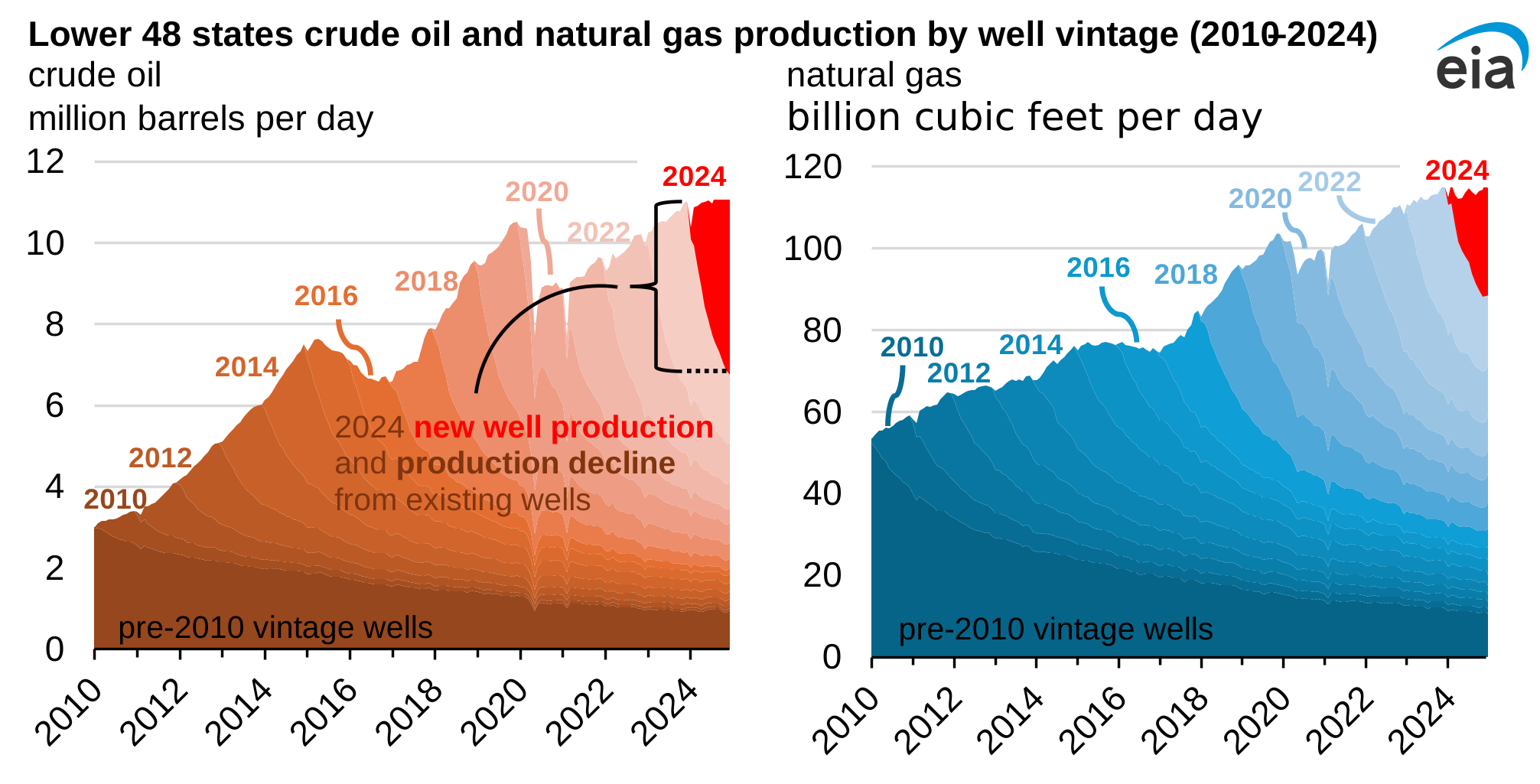
Note: Well vintage is the year a well first begins producing crude oil or natural gas
As U.S. crude oil and natural gas production have increased, so has the volume of production declines from existing wells. To offset the increasing declines, operators today must bring on new wells to sustain or increase production levels.
In-brief analysis
Nov 3, 2025
Data source: U.S. Energy Information Administration, Maritime and Port Authority of Singapore (MPA), Bunker Sales
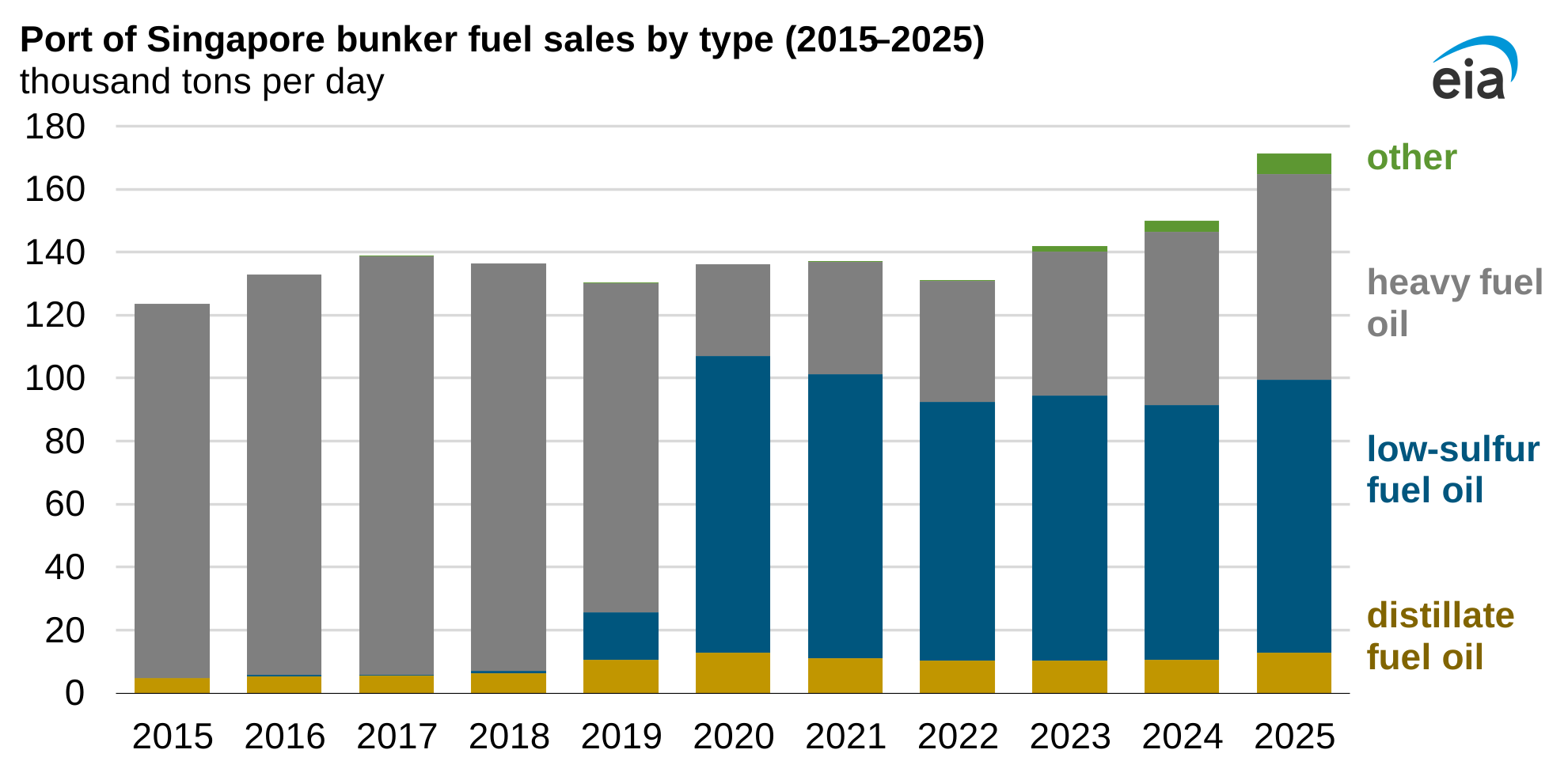
Note: 2025 data are an estimate based on data through September. Distillate fuel oil includes marine gasoil (MGO), marine diesel (MDO), and low-sulfur marine gasoil (LSMGO). Heavy fuel oil includes marine fuel oil (MFO).
When the International Maritime Organization’s lower marine sulfur limit known as IMO 2020 took effect in January 2020, commercial shippers pivoted sharply to fueling their vessels with low-sulfur fuel oil (LSFO). In the years since, high-sulfur fuel oil has reclaimed some market share, as a growing number of commercial vessels install sulfur scrubbers that allow operators to use the heavier, cheaper fuel oils while complying with the new sulfur emission limits.
In-brief analysis
Oct 31, 2025
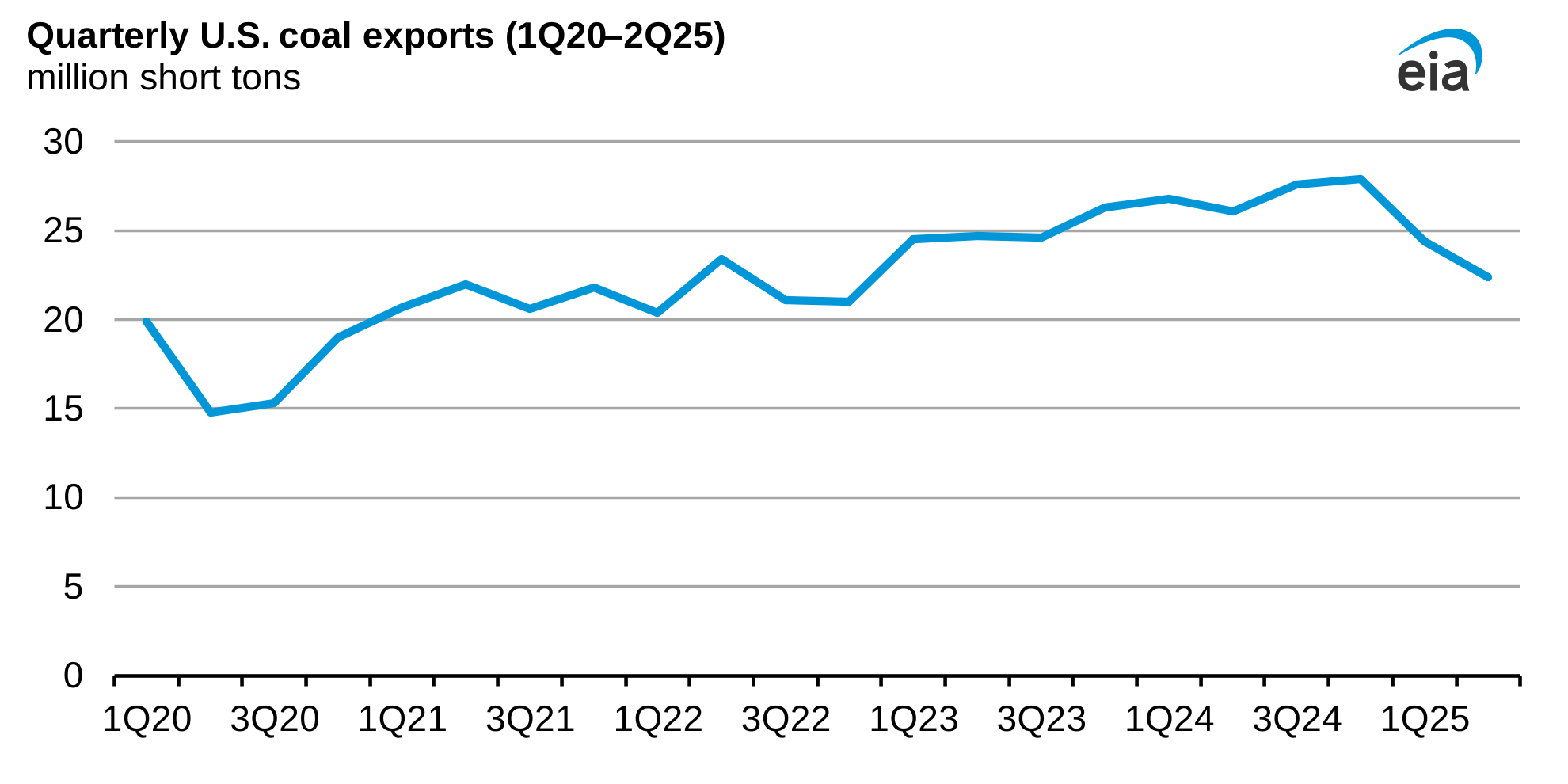
According to data released by the U.S. Census Bureau in September, the United States exported 46.8 million short tons (MMst) of coal in the first half of 2025 (1H25), an 11% decline from 1H24.
Steam coal exports totaled 22.5 MMst, a 10% decline from 1H24. Metallurgical coal exports totaled 24.2 MMst, a 13% decline from 1H24.
Reduced coal exports to China (4.4 MMst) accounted for 73% of the decline in total U.S. net coal exports. China accounted for 76% of the decline in metallurgical coal exports and 68% of the decline in steam coal exports.
U.S. exports to China decreased after China imposed a 15% additional tariff on imports of U.S. coal in February and a 34% reciprocal tariff on imports from the United States in April.
The reduction in total exports also reflects a global market characterized by declining coal prices caused by ample supply and soft demand. Meanwhile, coal consumption in the U.S. electric power sector has risen due to more demand and higher natural gas prices.
In-brief analysis
Oct 29, 2025
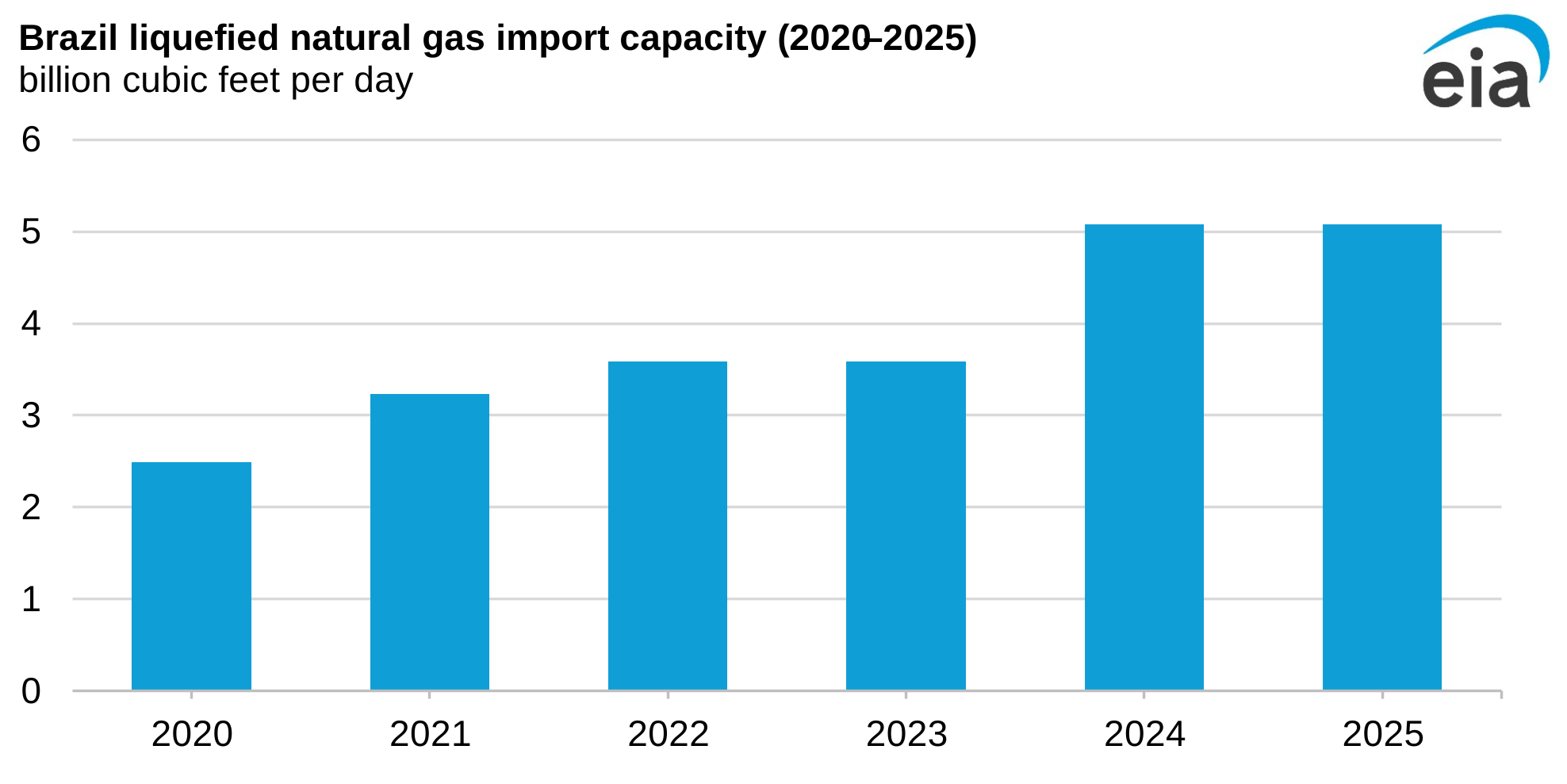
Companies operating in Brazil have expanded the country’s liquefied natural gas (LNG) regasification infrastructure since 2020, more than doubling its import capacity as the country seeks to diversify its energy supply and enhance energy security. Brazil’s regasification capacity grew from 2.5 billion cubic feet per day (Bcf/d) in 2020 to 5.1 Bcf/d in August 2025.
In-brief analysis
Oct 27, 2025
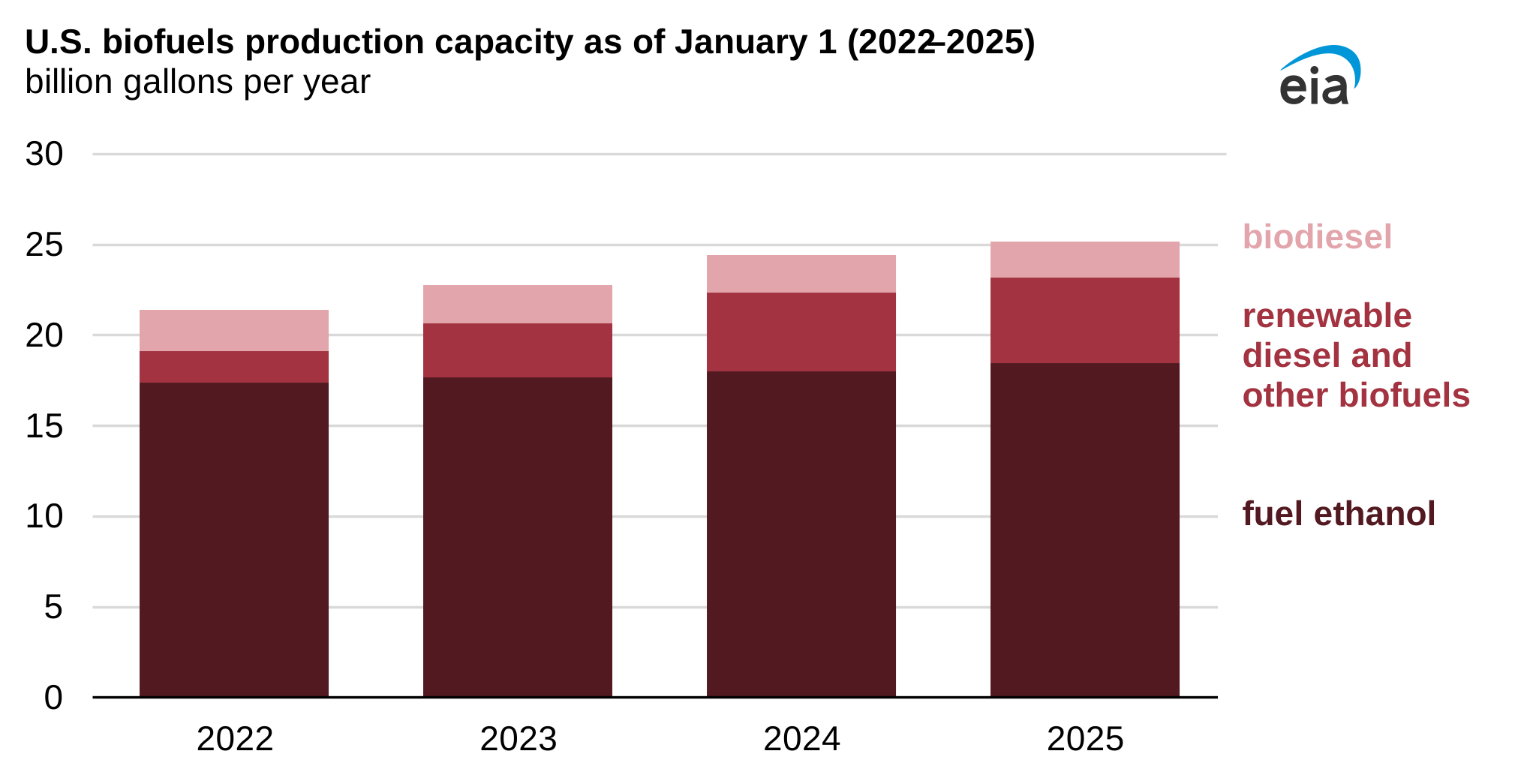
The pace of capacity additions for U.S. biofuel production slowed in 2024, with production capacity increasing by a modest 3% from the start of 2024 to the start of 2025, according to our latest biofuels production capacity reports. A deceleration in production capacity in our category renewable diesel and other biofuels accounted for most of the slowdown in growth. Sustainable aviation fuel (SAF), renewable naphtha, and renewable propane make up virtually all of the other biofuels.
In-brief analysis
Oct 24, 2025
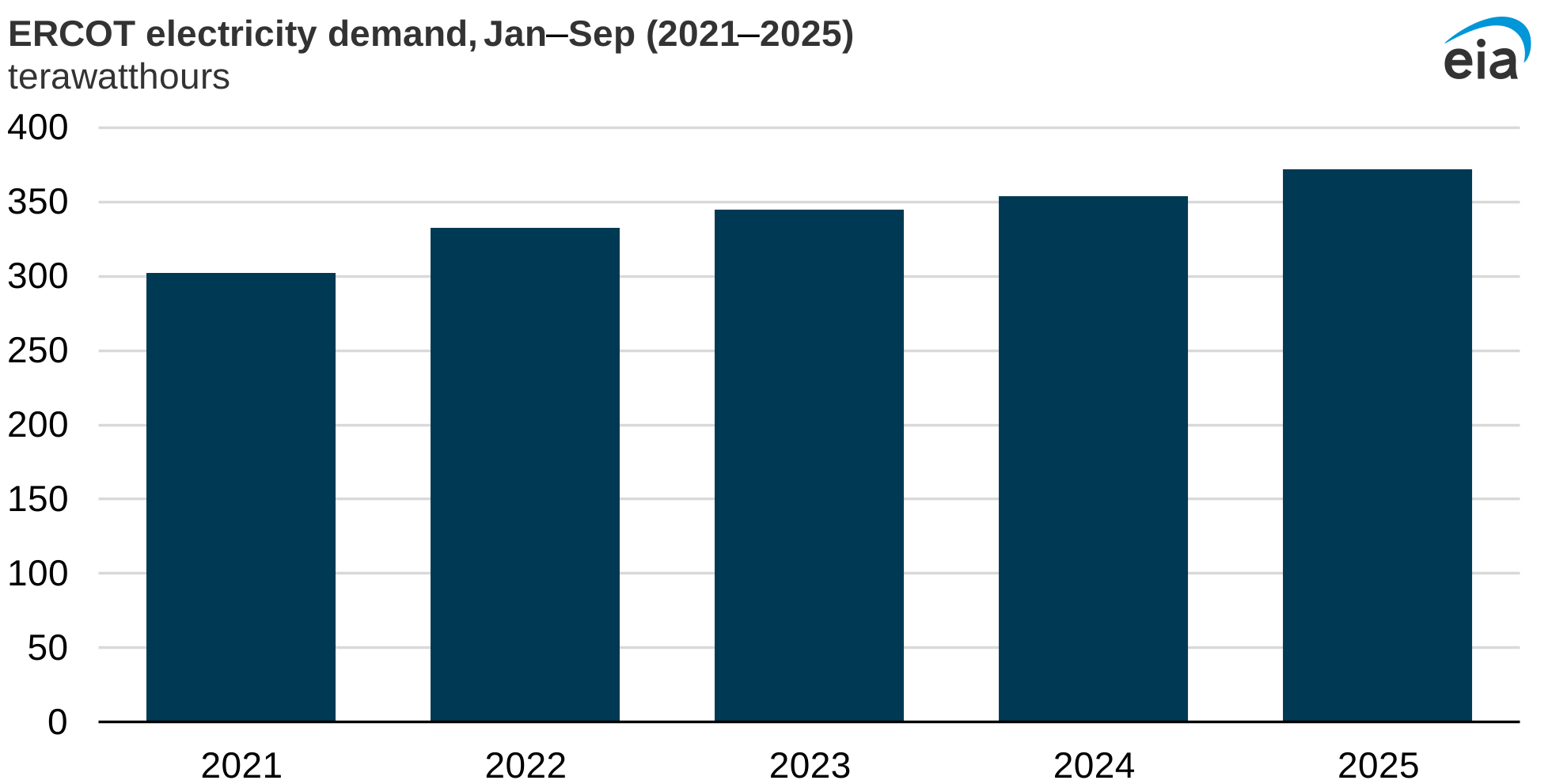
Data source: U.S. Energy Information Administration, Short-Term Energy Outlook
Note: This data set shows demand in the electric power industry only. ERCOT=Electric Reliability Council of Texas
Since 2021, electricity demand within the Texas electricity grid operated by the Electric Reliability Council of Texas (ERCOT) has steadily increased. In the first nine months of 2025, electricity demand in ERCOT, which manages about 90% of the state’s load, reached a record high compared with the same period in previous years. Over those same months, ERCOT had the fastest electricity demand growth among U.S. electricity grids between 2024 and 2025. From January through September 2025, demand for electric power in ERCOT increased 5% compared with the same period in 2024 to 372 terawatthours (TWh), 23% more than the same months in 2021. Since 2023, wind and solar generation, especially utility-scale solar, have been the fastest-growing sources of electricity in ERCOT and are increasingly meeting rising demand.
In-brief analysis
Oct 22, 2025

Data source: U.S. Energy Information Administration, Petroleum Supply Monthly
Note: The 2025 annual average is the year-to-date average through July.
The United States is on track to export a record amount of fuel ethanol for the second year in a row in 2025, driven by growing international demand. This growing market for exports is supporting increased U.S. fuel ethanol production, even as domestic consumption stagnates.
In-brief analysis
Oct 20, 2025
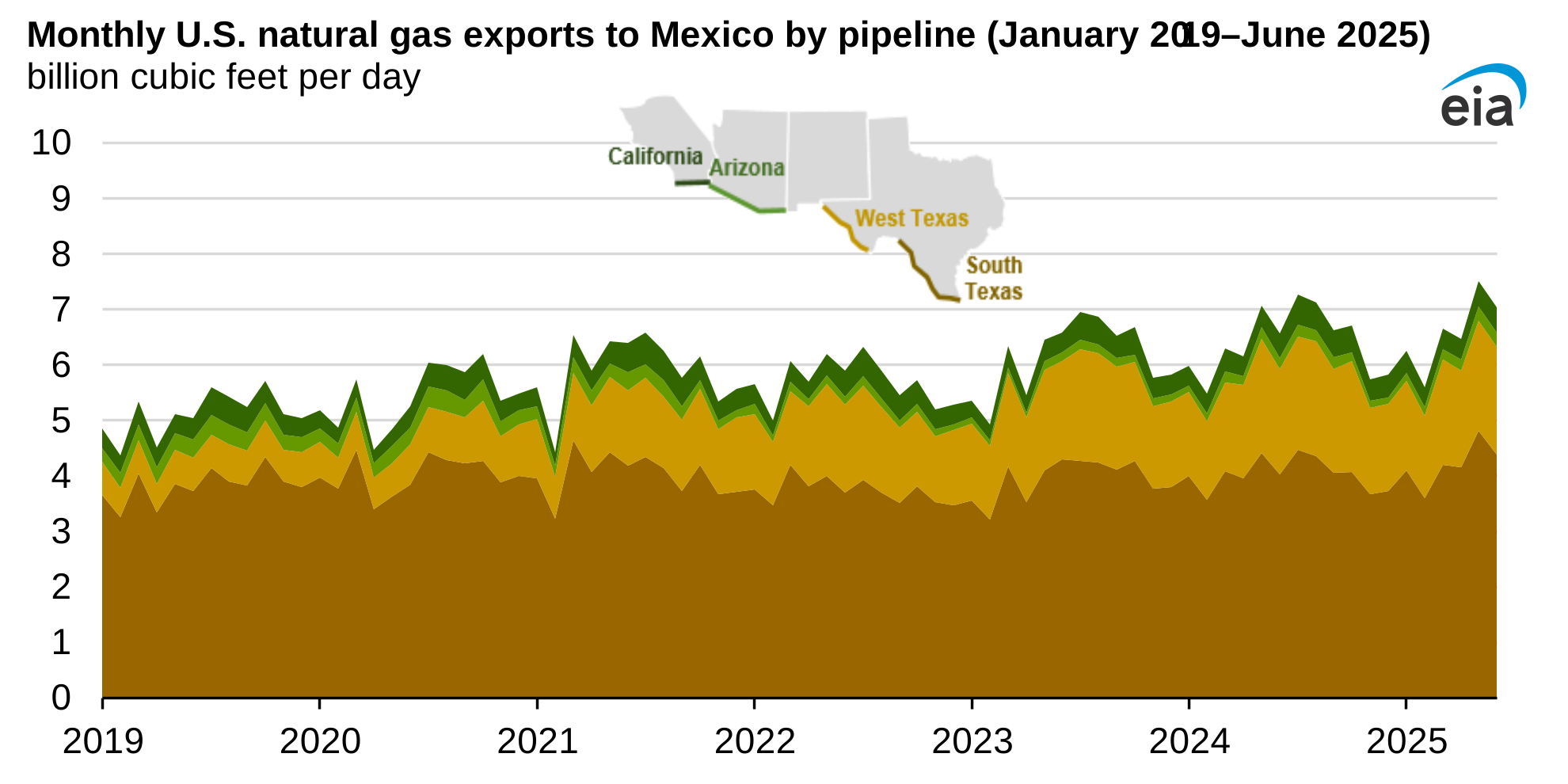
U.S. natural gas pipeline exports to Mexico averaged 7.5 billion cubic feet per day (Bcf/d) in May 2025, the most of any month on record as Mexico’s demand for natural gas, particularly in the electric power sector, increases. On an annual basis, U.S. natural gas pipeline exports to Mexico averaged 6.4 Bcf/d in 2024, a 25% increase compared with 2019 and the highest on record in data going back as early as 1975.
In-brief analysis
Oct 16, 2025
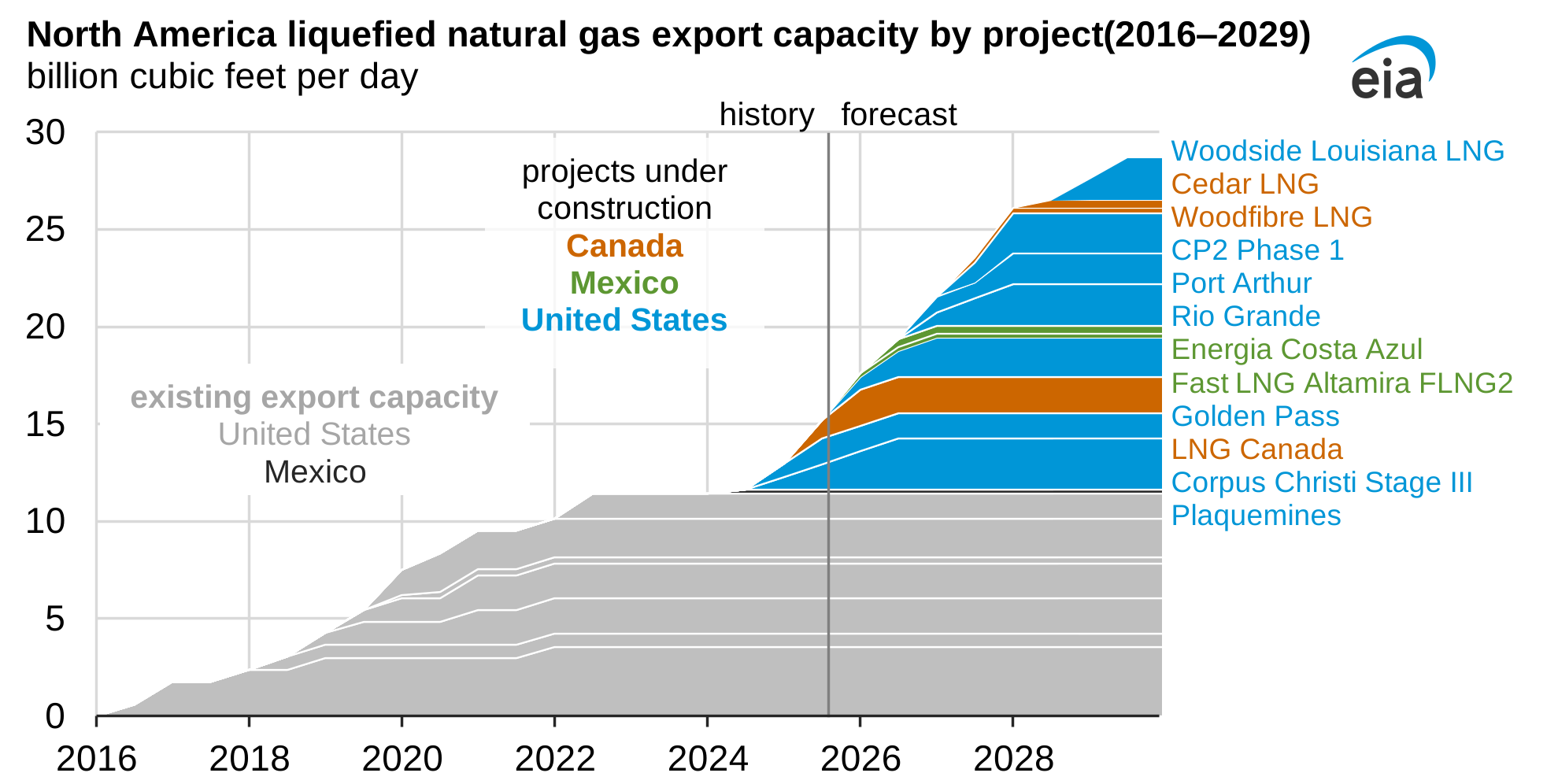
Data source: U.S. Energy Information Administration, Liquefaction Capacity File, and trade press
Note: Export capacity shown is project’s baseload capacity. Online dates of LNG export projects under construction are estimates based on trade press and do not reflect expectations for projects ramping to full production following initial shipment. LNG=liquefied natural gas; FLNG=floating liquefied natural gas
Liquefied natural gas (LNG) exporters in the United States have announced plans to more than double U.S. liquefaction capacity, adding an estimated 13.9 billion cubic feet per day (Bcf/d) between 2025 and 2029, according to our Liquefaction Capacity File and trade press reports. The United States is already the largest exporter in the world with 15.4 Bcf/d of capacity.
In-brief analysis
Oct 15, 2025
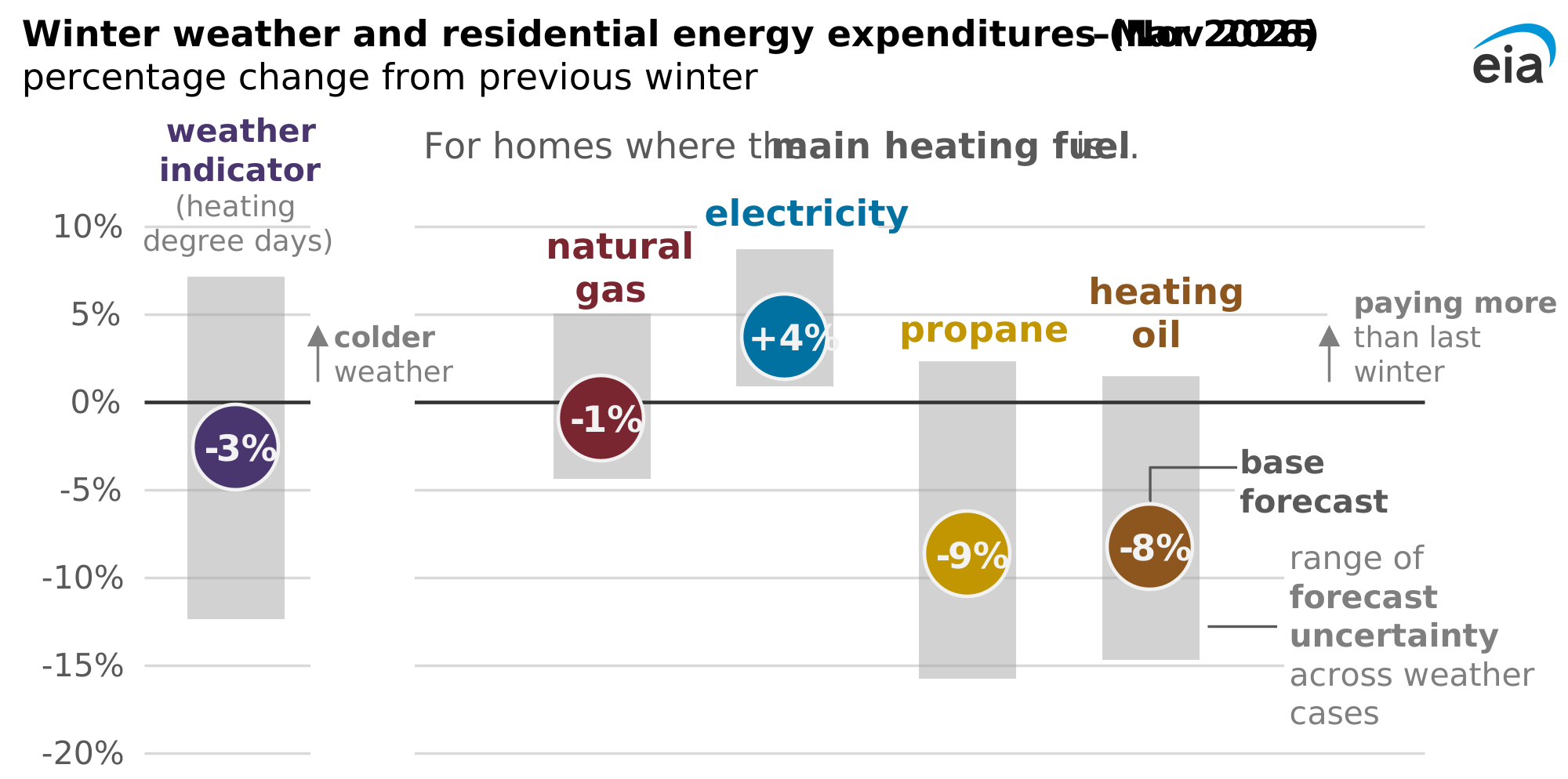
We expect energy expenditures this winter will vary based on a home’s main space heating fuel: homes heating with natural gas will pay about the same amount for natural gas as they did last winter, but homes heating with electricity will pay more than they did last winter. Homes heating with propane or heating oil will pay less than they did last winter.
In-brief analysis
Oct 14, 2025
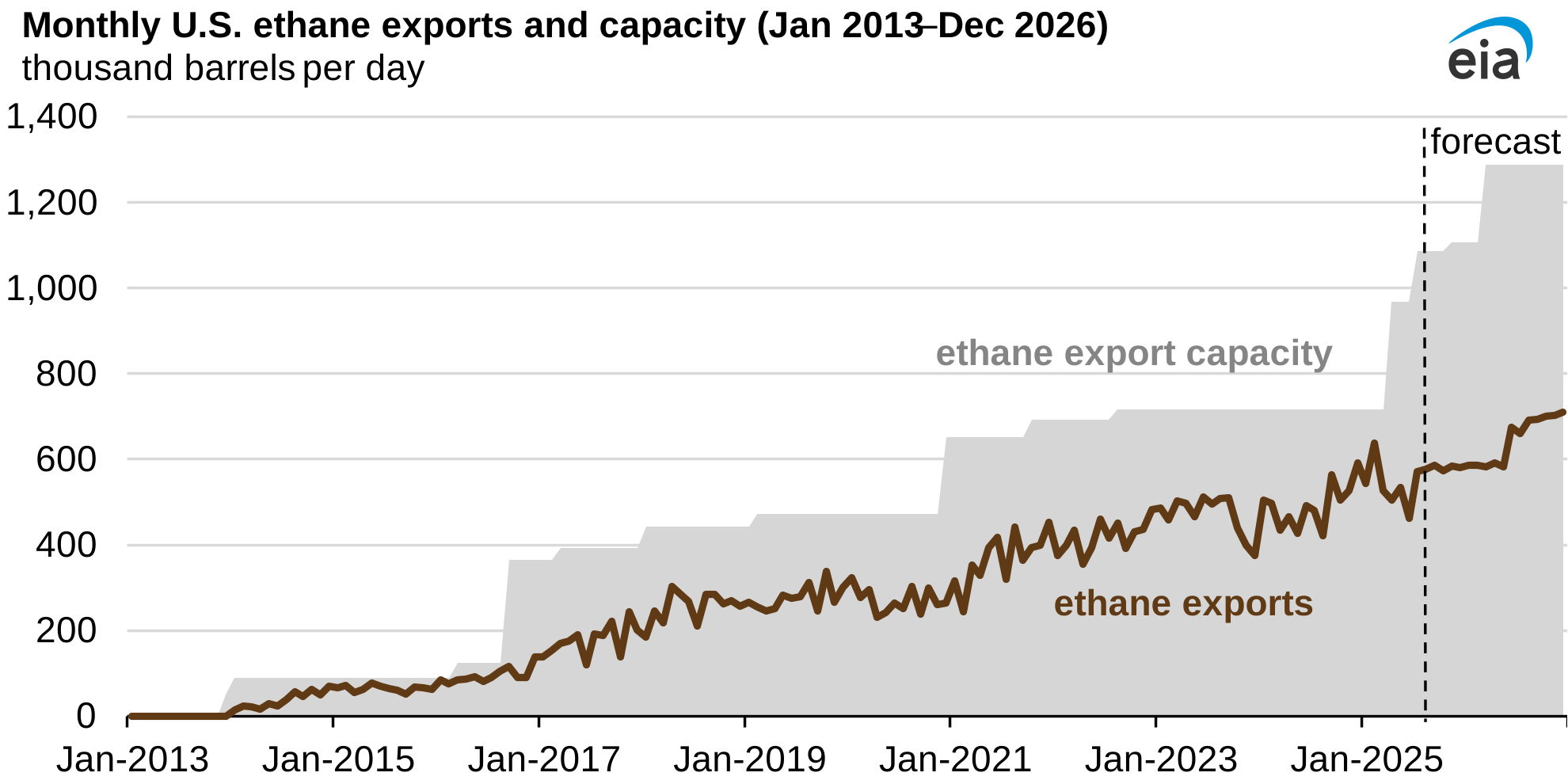
Data source: U.S. Energy Information Administration, Short-Term Energy Outlook, October 2025
Note: Export capacity includes total flexport capacity, which includes other hydrocarbon gas liquid export capacity.
U.S. ethane exports are poised for significant growth through 2026, driven by robust global demand for ethane as a petrochemical feedstock, substantial U.S. export capacity expansions, and larger vessels to carry ethane exports. In our October Short-Term Energy Outlook, we forecast U.S. ethane net exports will grow 14% in 2025, followed by a 16% rise in 2026. The United States does not import ethane.