
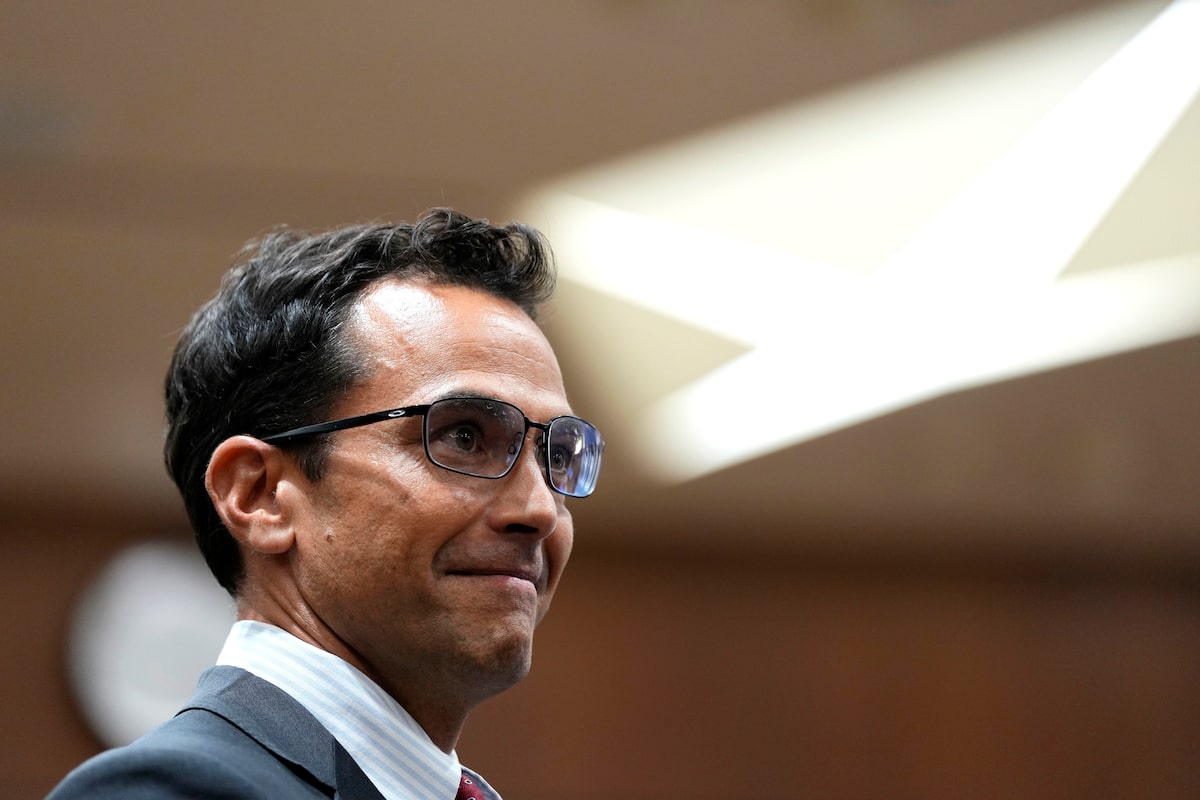
Interim PBO Jason Jacques prepares to appear before a Standing Committee in Ottawa in September. Mr. Jacques said Friday that Ottawa’s new fiscal anchors are unlikely to hold.Justin Tang/The Canadian Press
The interim Parliamentary Budget Officer released a report Friday that includes strong criticism of the Liberal government’s 2025 budget, saying it takes an overly broad definition of capital spending and includes fiscal targets that are unlikely to be met.
One key element of the Nov. 4 budget was a new financial presentation that divides all spending into either operational or capital spending.
The government said this illustrates how it is delivering on Prime Minister Mark Carney’s campaign pledge to “spend less” on day-to-day items in order to “invest more” in capital spending that produces long-term economic benefits.
The Liberals have said this approach is modelled on similar moves by the United Kingdom and other countries.
PBO welcomes shift to fall budgets, but says capital spending definition ‘overly expansive’
The government said in the budget that it would balance the operating budget within three years. It said this, along with shrinking the ratio of the deficit to gross domestic product over the next few years, would be the government’s two fiscal anchors.
However, Jason Jacques, the interim PBO, said in a budget assessment report that the budget categorizes some spending – such as corporate and investment tax credits – as capital that would not be allowed under the U.K. rules.
The report says Ottawa should establish an independent expert body to determine which types of spending should be defined as capital.
By the PBO’s own definition of capital and operating spending, the operating budget would not be balanced over the next few years.
As for the government’s second fiscal anchor, the PBO says there is only a 7.5-per-cent chance that the deficit-to-GDP ratio will decline in every year over the 2026-27 to 2029-30 fiscal years.
“This means the government’s new anchor is unlikely to hold,” Mr. Jacques said in a statement.
The report also notes that the budget marks a formal departure from the government’s previous fiscal anchor pledge that the debt-to-GDP ratio would decline over time.
“Budget 2025 projects the debt-to-GDP ratio will stay mostly stable over the next 30 years,” said Mr. Jacques. “This is different from the last three years, when fiscal policy provided more flexibility to deal with future risks.”
The report says the long-term federal spending plan laid out in the budget is fiscally sustainable, but leaves Ottawa with “limited fiscal room” to cut taxes or increase spending without increasing the debt-to-GDP ratio.
Andrew Coyne: After all the hype, Carney’s first budget fails to meet the moment
The Nov. 4 budget was the first formal update of federal finances since the December fall economic statement. The PBO points out that Ottawa’s bottom line has deteriorated since then.
It notes that the deficit is now projected to average $64.3-billion annually over the 2025-26 to 2029-30 fiscal years, more than double the projections from nearly a year ago.
“This deterioration primarily reflects new ‘day-to-day’ operating measures and increased provisions for liabilities,” the report states.
John Fragos, a spokesperson for Finance Minister François-Philippe Champagne, said in a statement that the report does not account for the longer-term benefits that will come from the budget’s focus on growth and productivity.
“While we respect the PBO and the work they do to provide timely reports to parliamentarians, the report in question takes a narrow outlook of Canada’s fiscal and economic policy trajectory, looking at Canada’s budget in isolation – absent longer-term considerations and knock-on-effects,” he said. “Notably, the PBO itself has noted that the fiscal plan presented in Budget 2025 is sustainable over the long term.”