
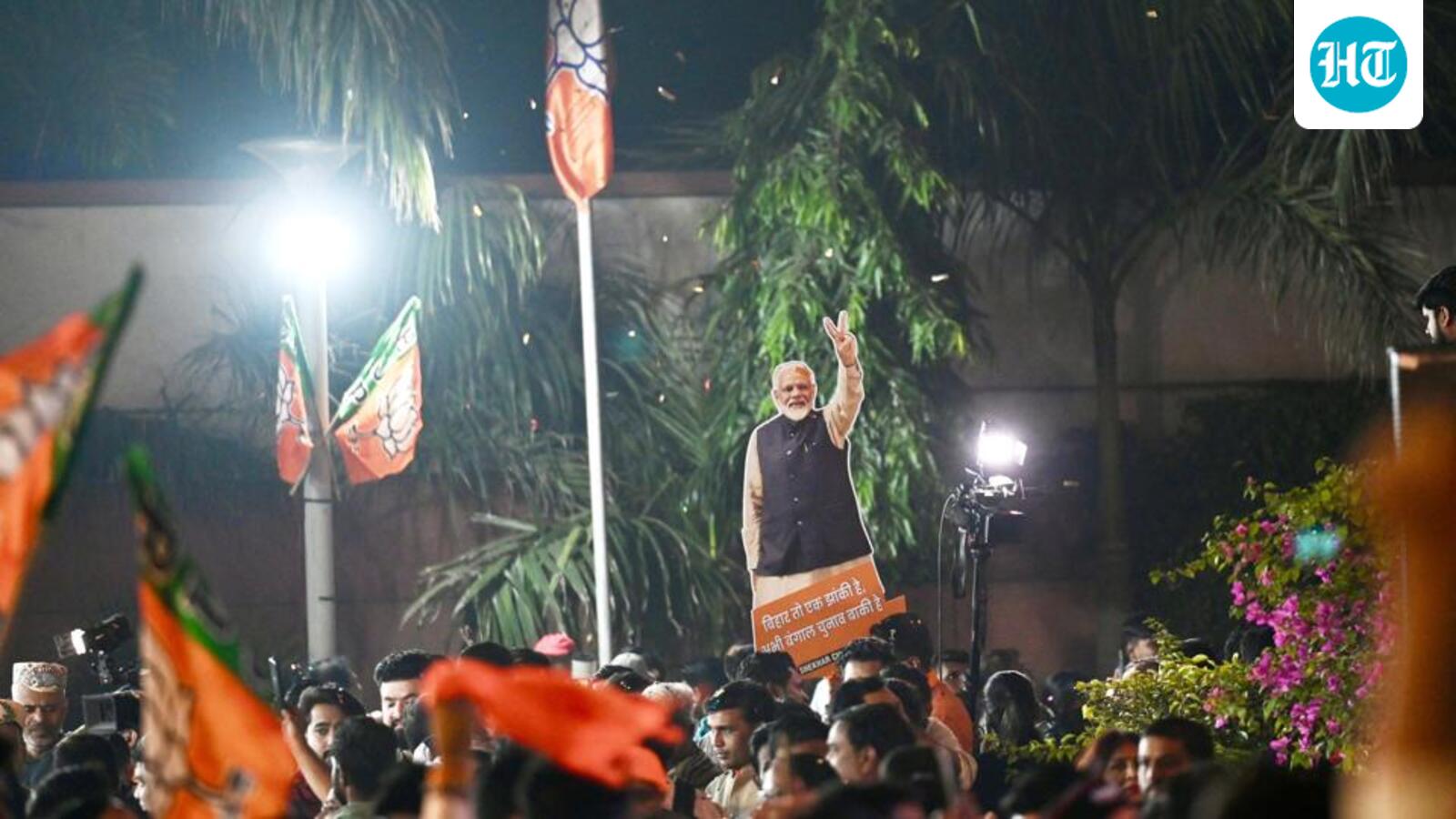
The National Democratic Alliance’s landslide win in Bihar — of a magnitude comparable to its 2010 win — is likely to cause ripples far beyond the state.
 The first place where the impact of the Bihar elections will be felt will be in Parliament’s winter session. (Hindustan Times)
It has, yet again, reiterated the relevance and importance of cash transfers and women-oriented welfare schemes.
It has already prompted questions within the Congress and the larger INDIA bloc of opposition parties, on the former’s ability to lead, and to win.
It has, especially in the wake of Maharashtra and Haryana and Madhya Pradesh, showcased the ability of the Bharatiya Janata Party and the NDA to win elections, even in the face of significant anti-incumbency.
And analysts expect it to have an impact on the functioning of Parliament, and, in the medium-term, boost the National Democratic Alliance’s numbers in the Rajya Sabha.
Also Read | In Bihar elections, NDA scripts grand bloc buster
For when an alliance wins over 200 seats in a 243-member assembly (the NDA actually won 202), said analysts, it means everything went right for it, just as everything went wrong for the opposing grouping.
The first place where the impact of the Bihar elections will be felt will be in Parliament’s winter session. Scheduled from December 1, the Bharatiya Janata Party is expected to display greater confidence in conducting its legislative business, even as the opposition becomes a more divided house. The Tuesday meetings with BJP MPs, which had reduced in frequency since the 2024 elections and are now NDA meetings, may now revert to the original format of Prime Minister Narendra Modi imparting candid advice to his colleagues.
“The big achievement in Bihar — it surpasses the mandate in Maharashtra, Haryana and Madhya Pradesh — is that this is a win that is all our own; there is no RSS presence in Bihar,’’ said a BJP office bearer, who did not want to be named. And so the confidence level of every BJP worker has risen and conversely, the Congress worker is bound to feel demoralised. Parties such as the Trinamool Congress and the Samajwadi Party may increasingly chart an independent path instead of following the Congress line.
Also Read | INDIA bloc should explain failure to stop NDA in Bihar: Owaisi
“The next few elections are do or die for us,’’ said a Congress functionary. “Heads have to roll. Or else, the alliance will collapse”.
Its poor performance in Bihar also means the Congress may have to accept ally DMK’s terms in the Tamil Nadu election next year; be prepared for a repeat of 2021 in the West Bengal election; and enter the Assam campaign on a low.
All these elections are likely to see an enhanced emphasis on welfare schemes, say analysts. In Madhya Pradesh, Maharashtra and Bihar, the incumbent governments were believed to face anti-incumbency, but overcame this by announcing cash transfers to women, said a second BJP leader who asked not to be named. “It is now clear that you need to promise a cash benefit to really win,’’ added this person.
For election managers across party lines, emulating the Bihar model would mean weaving in a smart welfare scheme into their election campaigns. Take Karnataka, for example, where the opposition won a rare election in 2023. The Congress was able to defeat the BJP with its five promises, including a ₹2000 per month transfer to women and free bus rides. Last year the Hemant Soren government held onto power in Jharkhand after promising women voters a monthly transfer of ₹1,000.
Perhaps,no one understands this better than Bengal chief minister Mamata Banerjee. The Trinamool Congress founder is pitching for a fourth term in 2026 and has been proactively responding to the BJP and the Election Commission’s moves in Bihar for the last few months. First, unlike the opposition in Bihar, Banerjee has been preparing for the 2026 election since her 2021 victory. Poll strategist I-PAC never moved out of the state and has been constantly advising the government .