
One minute you’re a rural New Zealander with a cupboard full of tie-dye T-shirts, the next you’re trying to blend in among the rich and famous customers of Ralph Lauren’s flagship store. Ben Fagan recalls the steep learning curve of his OE job.
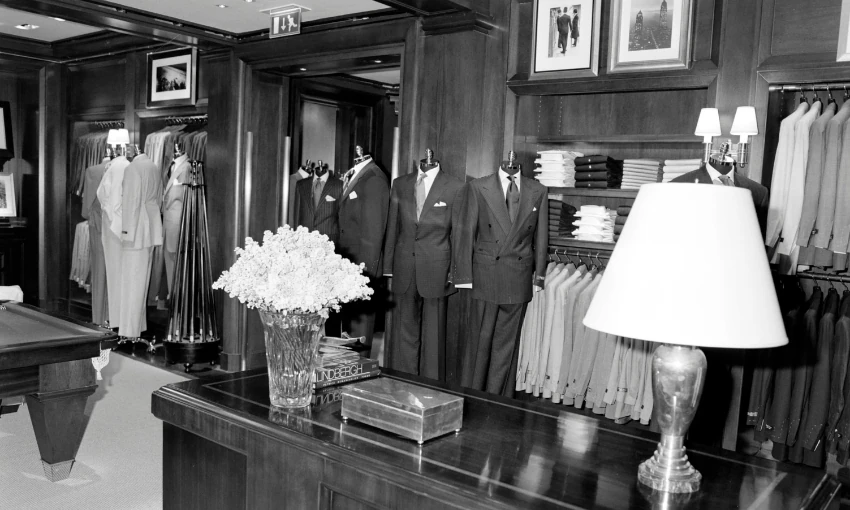
New Bond Street is one of the wealthiest roads in London. It connects Oxford Street and Savile Row, features gilded promenades and invitation-only shops. At 1 New Bond Street is the Ralph Lauren flagship store. Twenty-four thousand square feet of wooden panelling, ornate staircases and four floors of clothes and homewares. Hidden from the public is a maze of stockrooms and offices.
A good old fashioned OE temp job brought me to this store. They’d had success with hiring New Zealanders in the past (thank you if you’re reading), plus as a temp they didn’t have to pay me sick leave and could get rid of me with zero notice. Me, a poorly dressed fish out of water who had spent a decade mostly wearing tie-dye T-shirts. To my interview I wore an orange V-neck jumper over a green office shirt. Worse than the clash of colours was the wrong logo on the jumper. I was entering a one-horse town.
They put me to work in the stockroom, folding, scanning, unpacking fresh clothes. The days turned to weeks, then to months. My boss Geoff was a good sort who said I could keep working there as long as I wanted. Before long I was moving between the stockroom and the shop floor. Fetching clothes for the rich, famous, curious and aspirational. On my walk from the Green Park tube station I’d pass Bill Nighy having his morning coffee and newspaper.
There was free toast. As much as you could eat. White bread and a big wicker basket of those single serve packets of jam and margarine. My colleagues and I would sit around in the staffroom trading war stories and hoovering up carbs and sugar.
Many countries were represented on staff. Dapper Polish men, Italian smokeshows, Big Mike from NYC (who drank me under the table), east end geezers, fiery Spaniards, and a musclebound French pianist. The resident tie expert was from Louisiana. He was a white moustached, Trump-voting descendant of slave owners and had been married four times. He offered all this information within five minutes of meeting and snuck me biscuits from his personal stash.
The morning of the Brexit results I slumped down in a chair in Geoff’s office. We sat and gazed into the middle distance in disbelief. As a citizen of a Commonwealth country living in Britain, I had been able to vote in the referendum while my European colleagues, some of whom had lived in the UK for decades, could not.
 Raincoats – probably not waterproof (Photo: Ben Fagan)
Managers from other RL stores visited to see if they’d be a good fit. One in particular stood out, with a tight ponytail and something to prove. After a punishing session of her barking orders at us, one statuesque colleague leaned over to me with a thick accent. “In Russia we have a saying, the new broom sweeps too hard and scratches the floor.”
I was introduced to a lot of concepts that were new to me. Button-down, boat shoes, Oxford shirts, brogues, boot cut. It was my first time hearing “athleisure” and learning what pool party colours were (at that time, bright yellow, blue, green, orange). My friend Leo was Swiss, but spoke several languages. He taught me the Italian word sprezzatura, meaning to be deliberately relaxed or casual, specifically in relation to fashion. Headphones hanging languidly from your pocket or cuffs undone. Small touches that you might not expect were deliberate.
I quickly realised that dressing well was not a frivolous thing for my colleagues. It was a part of life. The many Italians working in the store tried to explain to me the importance of clothes in Italy. Some had come from industry towns where that industry was textiles or fashion houses. Generations of their family had worked with clothes.
My secret to blending in was a cheap (logoless) clothing shop called Primark. Annoyingly their version of brogues were cardboard thin and being on my feet all day, I wore through a pair every couple of months.
The Primark brogues (Photo: Ben Fagan)
The store made plenty of people uncomfortable. My friend David from Hawke’s Bay tried to visit me once, but left as quickly as he arrived. “They could smell the poor on me.”
Our bags were checked coming in and out of the store. Stock that wasn’t selling was thrown in the skip. So as not to devalue the brand, one of my colleagues had to cut off the labels and logo and then shred the clothes with a boxcutter to make sure no one took it out of the bin. Perfectly good jackets and shirts and trousers shredded to ribbons. Then the skip was locked. As an employee, I received a small discount to buy specific Ralph Lauren items from an outlet store about an hour and a half north of London.
Functionality is not a concern of high end clothing. Up the stairs in the more expensive labels you’d find raincoats that weren’t waterproof and exquisite woollen jumpers that were effectively single-use (getting it on and off would pull it out of shape). I watched a biker return a leather “motorcycle jacket” because the sleeves couldn’t bend forward far enough to reach the handlebars. It was a jacket that evoked a motorcycle jacket. Some of the more expensive pieces were simply wearable art masquerading as clothes.
The top boss who worked in the offices above the store wore his turtleneck like a Bond villain. We had Daniel Craig in one morning to buy a £700 cashmere throw (on the tube at the time there were ads to let us know that for £4 you could buy a survival blanket that would save a Syrian baby over the winter). There were bespoke couture items dotted around the store, including a cage where we kept the £25,000 python skin jacket. Every day I heard great lines. “You wouldn’t go to the gym in cashmere, unless you could afford to.”
Some of the best stories came from the lower ground floor, homeware. We sold beautiful silk bedspreads for thousands of pounds that needed to be kept out of direct sunlight or else they would fade, degrade and fall apart.
Most customers were lovely, but not all. A man yelled at me for the way his socks bunched around his toes. One customer was enraged that her monogrammed pregnancy napkins weren’t ready for pickup. The silk/cashmere towels were to be wrapped around the forearms of her multiple midwives so they could dab her brow at any time during labour. They cost over a hundred pounds each and were an integral part of the decoration of her childbirth.
The sales reps had their regulars. They’d have me fetch tea, coffee, juice, biscuits and wine on a silver platter. I’d run to the supermarket to get champagne “good enough so that those who know, know it’s not terrible”. Kiwis would come in, tanned, with bright clothes and even brighter shoes. “Great to be back at Ralphie!” one shouted. The ones I met did not care that I was also from New Zealand. Personal shoppers for the Beckhams and Robbie Williams and Prince William would come in and buy huge amounts of clothing (the receipts were genuinely a metre long) only to return all but one or two pieces a few days later.
An evocation of a motorcycle jacket (Photo: Ben Fagan)
One day word spread that Ralph himself was going to visit the store. He was on his way to Europe in his jet with his family. Preparations were made. Shirts were refolded and the store deep cleaned. On his arrival, all the top brass were lined up to be inspected. The benefit of working behind the scenes was that I knew all the hidden doorways and vantage points. I scooted around the edges of his entourage, popping up behind floral displays for a closer look. He was small, silver and furrowed with a broad New York accent and an estimated net worth of US$11.9 billion.
At Christmas I arranged poinsettias, festive tartan was draped artistically around the store and the air filled with a trademarked yuletide smell. Getting dressed is a contradictory pursuit. Every choice we make is a balance between wanting to fit in and wanting to stand out. For my part at 1 New Bond Street, I kept my head down.