
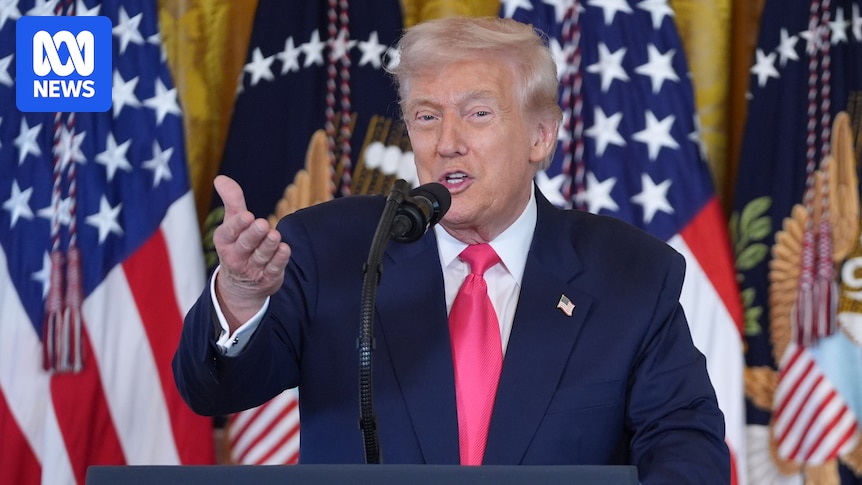
Beef, one of Australia’s largest exports to the US, is among hundreds of food products now exempted from trade tariffs imposed by President Donald Trump, according to an executive order signed on Friday.
The order is in response to concerns about persistently high grocery prices in the US, marking a sharp reversal for the president, who long insisted his import duties were not fuelling inflation.
Mr Trump up-ended the global trade system earlier this year by imposing 10 per cent base tariffs on imports from every country, plus additional specific duties that varied between nations.
The executive order also removes tariffs on tea, fruit juice, cocoa, bananas, tropical fruit and tomatoes.
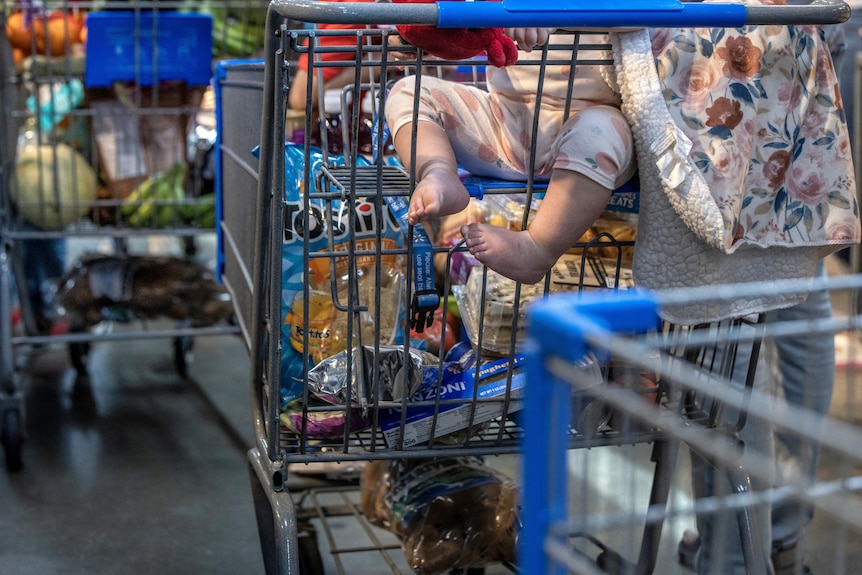
The Trump administration has been under pressure to make groceries more affordable for Americans. (Reuters: Evelyn Hockstein)
Australian Trade Minister Don Farrell welcomed the reversal in a statement on Saturday.
“Tariffs are an act of economic self-harm and ultimately hurt American consumers,” he said.
“We maintain our position that tariffs on Australian products are unjustified, and [we] continue to advocate for their removal.”
Record-high beef prices have been a particular concern, and Mr Trump said he intended to take action to try to lower them.
Meat is one of Australia’s top exports to the US, second only to non-monetary gold.
Australia exported 394,716 tonnes of beef to the US in 2024, valued at $4.16 billion, according to Meat and Livestock Australia.
Cattle Australia chief executive Will Evans said that made up more than 30 per cent of what Australia produced.
He told ABC News the US had remained the largest market for Australian beef exports despite the tariffs imposed since April, with its own domestic production at a 70-year low.
“For us, the effect [of tariffs] is obviously there, but the reality of the supply for domestic beef in the United States at the moment is that it’s very short,” he said.
“So demand has remained really strong for our product.”
The executive order acknowledged that domestic demand for such products outstripped domestic capacity to produce them.
Some of the products covered are not produced in the US at all.
Speaking on Air Force One on Friday evening, the president told reporters he did not think more tariff roll-backs would be necessary.
Pressure over grocery prices
The new exemptions took effect retroactively at midnight on Thursday.
They come after a string of victories for Democrats in state and local elections in Virginia, New Jersey and New York City, where affordability was a key topic.
Friday’s order followed framework trade deals announced on Thursday, which will eliminate tariffs on certain foods and other items imported from Argentina, Ecuador, Guatemala and El Salvador.
Mr Trump has focused squarely on the issue of affordability in recent weeks while insisting that higher costs were caused by policies enacted by former president Joe Biden and not his own.
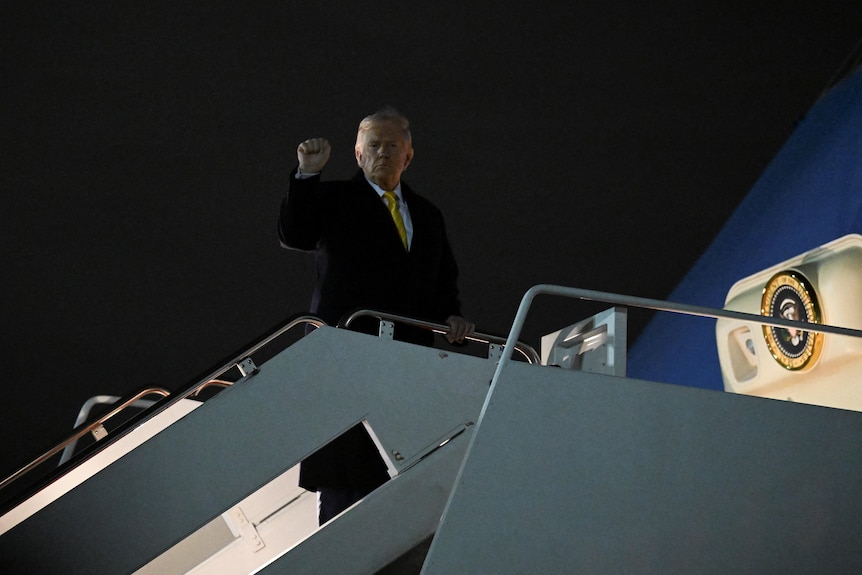
Donald Trump said he was not planning to make further exemptions. (Reuters: Annabelle Gordon)
Economists say high grocery prices have been partly fuelled by import tariffs and could rise further next year as companies start passing on the full brunt of the import duties.
Richard Neal, the top Democrat on the US House of Representatives’ tax-writing body, said the Trump administration was “putting out a fire that they started and claiming it as progress”.
“The Trump administration is finally admitting publicly what we’ve all known from the start: Trump’s Trade War is hiking costs on people,” he said in a statement.
“Since implementing these tariffs, inflation has increased and manufacturing has contracted month after month.”
ABC/AP/Reuters