
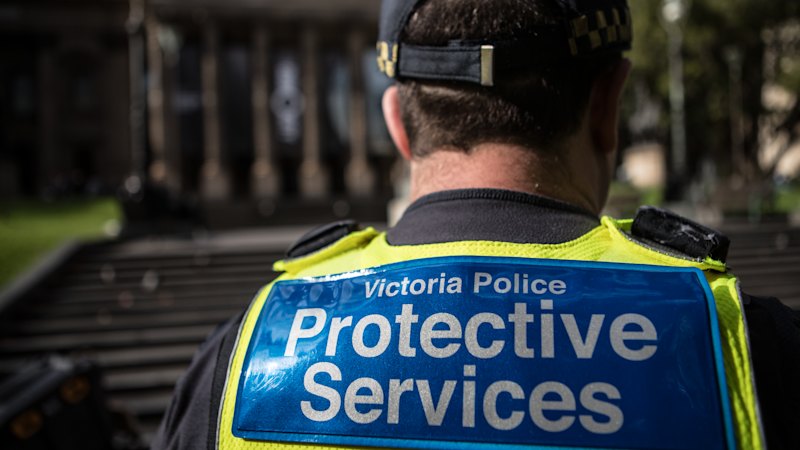
Lord Mayor Nick Reece, who had been pushing for the change, said Melbourne experienced a 20 per cent increase in crime in the past year, mostly in areas near train stations.
“Having more PSOs on the streets, in retail precincts, around stations should be a game changer for the city with the four City Loop stations and five new Metro stations,” Reece said.
Bush said police would also use intelligence and CCTV camera footage in real time to deploy officers to specific locations based on demand.
Police Minister Anthony Carbines said the changes were about gaining the flexibility to deploy PSOs “where they need it most, not where they’ve always been”.
“Our Protective Services Officers are a crime reduction tool, but right now, they’re hamstrung by the past and glued to their seats, even if crime is occurring just down the street,” he said.
He said the changes were informed by police data that suggested crime in train stations largely occurred in the afternoon. Asked whether the permanent presence of PSOs at stations could be the reason behind the lack of offending, Carbines acknowledged criminals took advantage of a lessened police presence to offend, but insisted the deployments would be based on intelligence.
But Professor Graham Currie, chair of public transport at Monash University, said that while he understood the government’s need to address wider concerns about community safety, taking PSO resources from train stations posed a risk to commuters.
“It is a concern if they don’t get this right and if we spread these resources too thin,” he said. “It would be better to see an expansion of their scale rather than using the existing resources. This has to be done well and has to be done carefully.”
The shopping centre patrols will form part of a $2.3 million 90-day operation due to launch before Christmas. They will be staffed on a voluntary basis and counted as overtime.
The state government will also fund 842 new search wands at a cost of almost $1 million for officers to conduct weapons searches. Currently, the force has between 40 and 50.
Carbines said police would use their expanded powers to make the shopping centres designated search areas, and new legislation would not be required to enact the changes.
The Shopping Centre Council of Australia said the operation would help tackle an alarming rise in retail crime rates at one of the busiest times of the year.
Council chief executive Angus Nardi said retailers had been grappling with an increasing number of offenders armed with machetes, knives, crowbars and cricket bats. Gang attacks had also become a worry.
“A visible police presence has a great deterrence effect for crime, but also enables police to respond to crime,” Nardi said.
As part of the changes, Victoria Police will also recruit 200 police reservists to fill low-risk desk jobs, including administrative duties at police stations, to free up officers to go out on the beat.
Bush said he was confident the force would find enough officers willing to volunteer to enact the plan, despite grappling with more than 1100 vacancies across its ranks.
“There’s a lot in it for them, I think they’ll enjoy it. They’ll enjoy being part of the community. They’ll enjoy preventing crime and responding to calls,” Bush said.
But opposition police spokesperson David Southwick said it was wishful thinking to expect officers to volunteer for extra shifts in the lead up to Christmas, and questioned whether frontline staff had been consulted before the changes were announced.
“We know we’ve got PSOs and police already exhausted babysitting protesters. The last thing that they’re going to want to do is go and do another job,” Southwick.
He said pulling officers from train stations was “robbing Peter to pay Paul”, and could potentially expose public transport users in stations no longer permanently policed.
Get alerts on breaking news as it happens. Sign up for our Breaking News Alert.